Flannel Suit Guide: Choosing and Wearing Wool Flannel
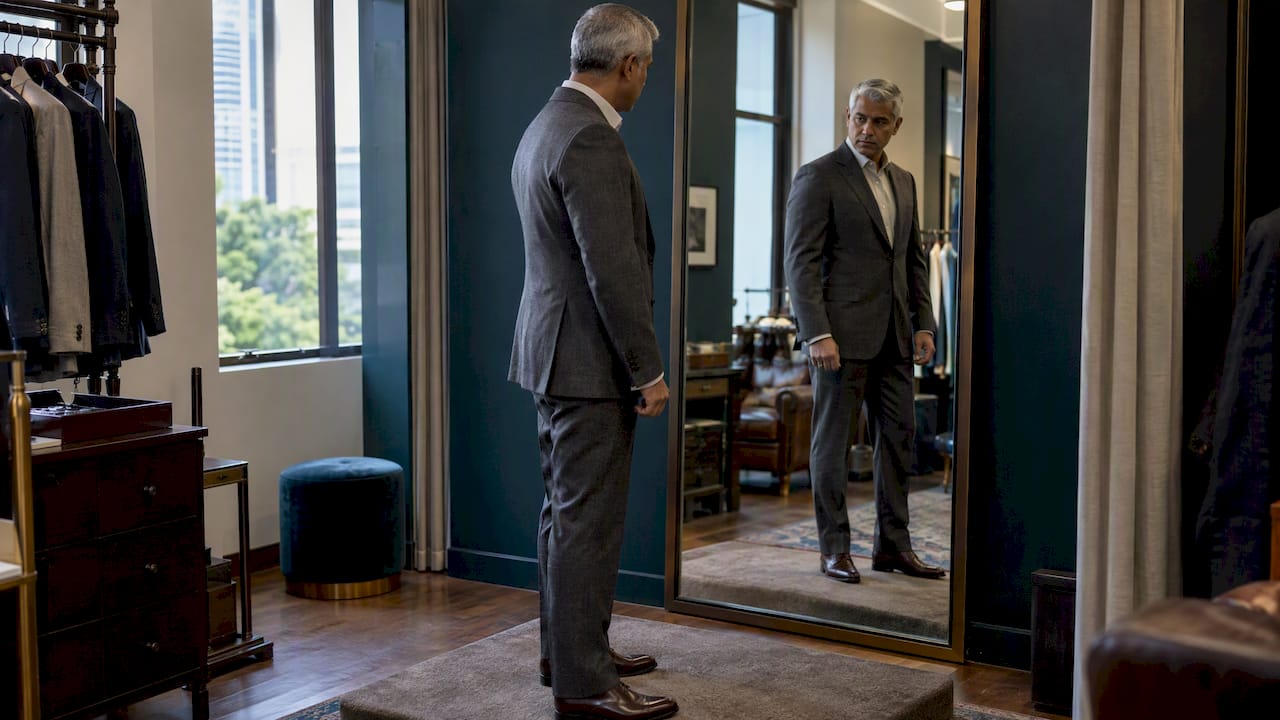
A wool flannel suit is a suit cut from cloth with a soft, lightly brushed surface, prized for warmth, drape and a matte, tactile character that smooth worsteds cannot match. Choose a mid to dark grey or navy, pick the weight for where you will actually wear it, and insist on a fitting in the real cloth. This guide explains each of those decisions, including how a cold-weather cloth fits into life in Singapore.
TL;DR
- Flannel is wool with a brushed (raised) surface that traps air, which is why it feels soft and warm. Yarn, weave and finish matter as much as the weight on the label.
- Standard suiting flannel runs from roughly 280gsm to well over 400gsm. In Singapore, the lighter end suits air-conditioned rooms, travel and evenings; the heaviest cloths are for cold destinations.
- Mid grey, charcoal and navy are the most versatile colours. Keep the first flannel suit plain.
- Flannel behaves differently from smooth worsted, so the canvas, chest piece and trouser crease should be tested in the actual cloth during a bespoke fitting.
- Brush it, rest it and hang it properly. Flannel rarely needs dry cleaning.
Table of Contents
- What makes a suit “flannel”
- Cloth weight: what the numbers really tell you
- Is flannel wearable in Singapore?
- Choosing the colour and pattern
- Cut and construction for flannel
- Perspective: how we approach a flannel suit
- Caring for a flannel suit
- How to wear it
- Flannel compared with other suit cloths
- Commissioning your flannel suit with us
- Buying checklist
- FAQ
- Sources
What makes a suit “flannel”
Flannel is defined by its finish rather than its fibre. The cloth is carded or “raised” so that fine fibres lift from the surface, creating an insulating layer of trapped air. According to a German fabric reference, this structure gives flannel its soft hand and its warmth, which is why it became a staple of autumn and winter tailoring.
That is the reason a flannel suit looks different at a glance. Where a worsted suit is crisp and slightly glossy, flannel is soft-edged and matte. Pleats look gentler, the jacket collapses less sharply and the colour appears deeper because the light is diffused by the nap.
When readers search for a wool flannel suit, they usually mean the classic: a grey or navy two-piece in woollen or worsted flannel. Cotton and synthetic flannels exist, but they belong to shirts and pyjamas more than to tailoring. For a suit that holds its shape and drapes well, wool is the only material we would recommend.
Cloth weight: what the numbers really tell you
Weight is the first figure every tailor will quote you, and the most misunderstood. The same reference gives typical suiting flannel weights as ranging from 280gsm to over 500gsm, with winter-specific cloths often above 400g/m.
Historic mills give a clearer picture of the spread. Fox Brothers & Co, founded in 1772, lists its Original Authentic Flannel at 530 to 560g and its 1772 Flannel at 400 to 430g. A suit in the first would be substantial in an English November. In a Singapore office it would be a burden.
| Weight band | Character | Where it suits |
|---|---|---|
| Around 280 to 350gsm | Light, soft, drapes easily | Air-conditioned offices, evening wear, travel through changing climates |
| Around 350 to 400gsm | Balanced, the classic all-rounder | Cooler destinations, winter trips, cold conference rooms |
| 400gsm and above | Heavy, warm, firm | Genuinely cold weather; poorly suited to equatorial heat |
Treat these bands as a rough guide, not a rule, because the same source makes an important point: weight is not the sole determinant of comfort. Fox Brothers notes that yarn type, spinning technique and weave matter as much. Two cloths of identical weight can perform differently, and a high-twist, traveller-style wool will breathe and recover from creasing better than a carded flannel of the same grammage.
In practice, this means asking three questions of any bolt: is it woollen-spun or worsted-spun, is the finish heavily milled or lightly brushed, and how does it fall when you drape it over your arm? A cloth that feels dense and slightly stiff will wear that way for years. A cloth that moves freely will too.
Woollen flannel versus worsted flannel
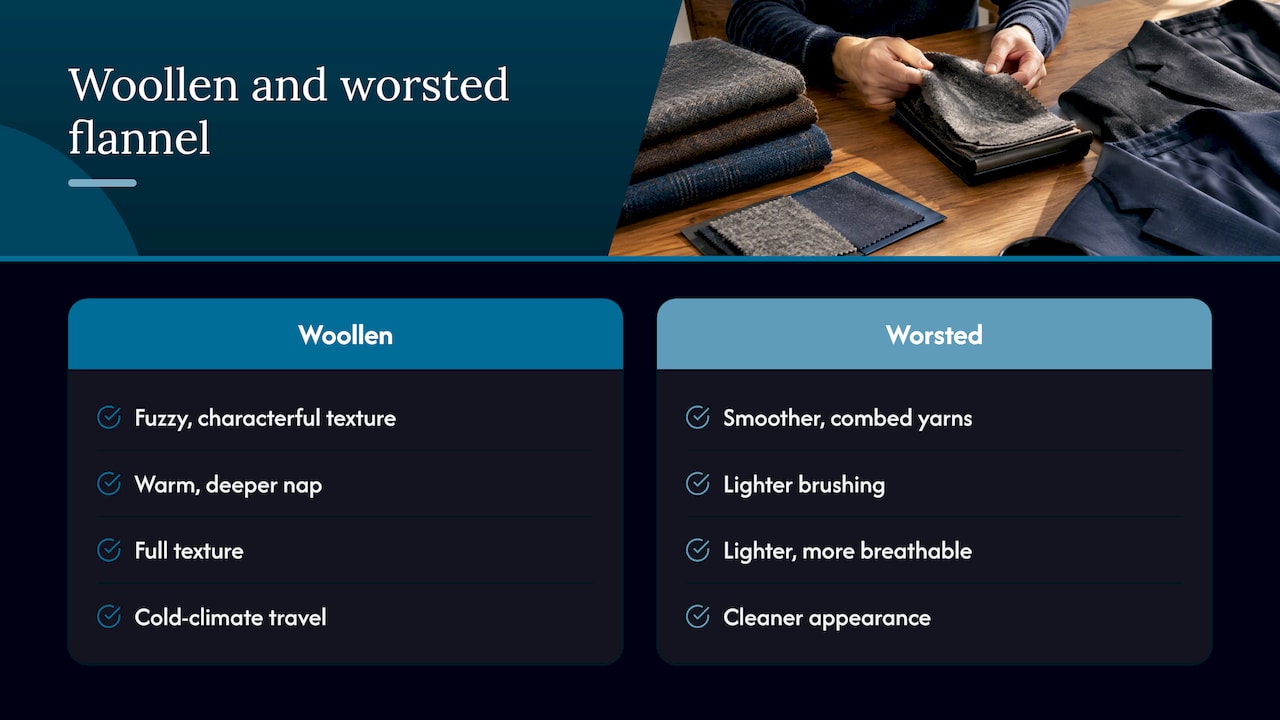
Woollen-spun flannel is fuzzy, warm and characterful, with a deeper nap. Worsted flannel uses smoother, combed yarns and a lighter brushing, so it looks cleaner and tends to be lighter and more breathable. For a first flannel suit worn mainly indoors, many men are happier with a worsted flannel. A woollen flannel rewards the man who travels to cold climates and wants the full texture.
Is flannel wearable in Singapore?
It is, with discipline. Singapore does not have an autumn or winter, so a flannel suit will never be your daily driver outdoors. Where it earns its place is in three situations.
- Air-conditioned rooms. Boardrooms, courtrooms, hotel ballrooms and long dinners are often kept cool. A lighter flannel feels comfortable there, provided your journey between car, MRT and building is short.
- Evening occasions. Dinners, receptions and weddings held after dark, where the formality is higher and the heat has eased.
- Travel. Trips to London, Tokyo, Seoul or New York in the cooler months are where a heavier flannel comes into its own.
The broader principle for Singapore tailoring is to start from a breathable wool. In The Straits Times, a Beams creative director recommends a breathable wool base for suits worn here, which is a useful reminder that wool, correctly chosen, is not the enemy of the tropics. Flannel is simply the heaviest, most textured end of that family.
If your daily need is a suit for the Singapore working week, you will likely be better served by a lighter cloth, and we cover this in our complete suit fabric guide and our notes on making business formal work in warm climates. Think of flannel as the second or third suit, the one chosen for pleasure and for travel.
Choosing the colour and pattern
Flannel is forgiving about colour because the nap softens everything, yet some choices are more useful than others.
- Mid grey. The archetype. It works with navy, white and pale blue shirts, brown and black shoes, and almost any tie. Avoid anything so pale that it loses the character of the cloth.
- Charcoal. More formal and more versatile after dark. A safe choice for a man who wears a suit often.
- Navy. Perhaps the easiest to wear with confidence, and a handsome alternative to the usual worsted navy.
- Brown, olive and earth tones. Excellent as a second flannel, particularly as a sports jacket worn with trousers in a contrasting cloth.
- Patterns. A soft chalk stripe or a subtle Glen check can be striking in flannel, but the stripe loses its sharpness in a heavily brushed surface. Keep the first suit plain.
One point of coordination matters if you commission a suit and a spare pair of trousers. Specialists in wool flannel advise matching the batch and the direction of the nap across jacket and trousers, and checking linings, fit, movement and care in the complete set rather than in the cloth swatch. We agree: a swatch is not a suit.
Cut and construction for flannel
A flannel suit lives or dies by its construction. Soft, textured cloth behaves differently from smooth worsted: the roll of the lapel, the crease in the trouser and the way the shoulder carries the weight are all affected.
The same specialists make the point that the internal canvas and lining should be tested against the heavier cloth, and that a trial fitting in the actual cloth is the way to confirm the chest piece and shoulder support the flannel without stiffness. This is a standard we hold ourselves to in a bespoke fitting.
Shoulder and structure
Flannel suits very naturally with a softer shoulder. A lightly padded or unpadded line complements the cloth’s relaxed character, and it is more comfortable in warm rooms. If you are considering that style, our fit check for a soft shoulder suit sets out four questions worth asking your tailor.
Single or double breasted
A double-breasted flannel suit is the more formal and more dramatic option, and it looks particularly good in charcoal or navy. A single-breasted two-button is the practical choice for most men. We make both, and you can see our double breasted suits if the DB appeals.
Trousers
The trouser is where flannel is most visible. Ask for a fuller leg and a higher rise than you would choose in a fine worsted, perhaps with a single pleat, so the cloth can fall rather than cling. A trouser with a clean break and a turn-up looks well in flannel, and the extra weight at the hem helps the crease hang. Draping the cloth before you decide on the cut, particularly for trousers, is something practitioners recommend.
Lining
In warm climates we favour a half-lined or partly lined jacket in a breathable lining. A fully lined flannel jacket is warmer than most Singapore settings require.
Perspective: how we approach a flannel suit
Ron & Rich was founded in 1979 by master tailor Richard Fan, and nearly five decades of tailoring have taught our house one thing about flannel: it is never an afterthought cloth. It asks for a tailor’s attention.
When a client in Singapore tells us he wants a flannel suit, our first question is not the colour. It is where he will wear it. A man who spends his working week in air-conditioned offices and travels twice a year to colder cities needs a different cloth from a groom planning an evening wedding, and different again from a man who simply loves the texture.
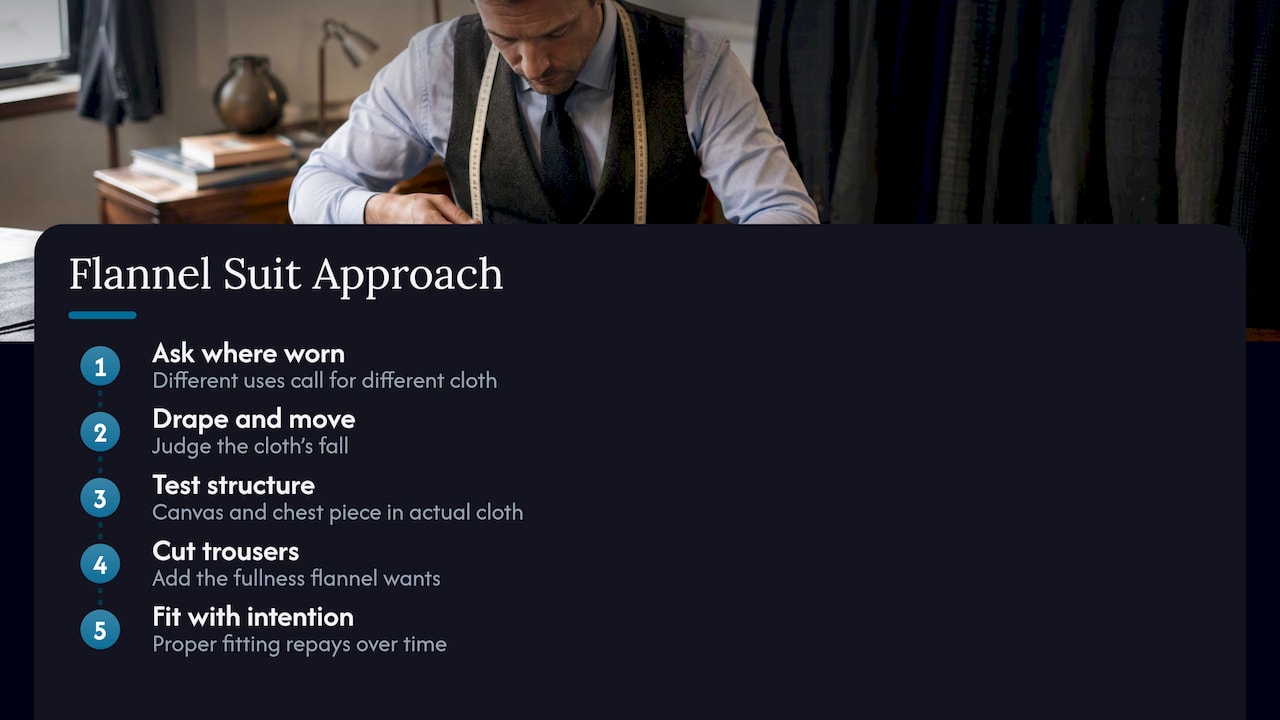
We then place the cloth in his hands, and we encourage him to drape it, move it and judge its fall. We test the canvas and the chest piece in the actual cloth, because flannel will not forgive a structure designed for a crisp worsted. We cut trousers with the extra fullness that the cloth wants. Our aim is a garment that reflects traditional craftsmanship and modern sophistication in equal measure, one that is comfortable on the day it arrives and still looks right years later.
Our honest advice is to treat flannel as the suit of the season you choose to create. Buy it with intention, have it fitted properly, and it will repay you for a long time.
Ron
Caring for a flannel suit
Flannel is one of the more forgiving cloths to look after, provided you respect its nature. Fox Brothers notes that high-quality wool flannel is durable and wrinkle-resistant, and that care mostly consists of gentle brushing to remove surface dust and pilling, since heavy cleaning is rarely needed.
Our routine is simple.
- Brush after wearing. Use a soft natural-bristle brush, working with the nap, to lift dust and keep the surface even.
- Rest the suit. Give it a day or two between wearings so the wool recovers its shape. Rotating suits is the single best way to extend their life.
- Hang it on a shaped hanger. A broad, contoured hanger supports the shoulder. Our guide to suit storage explains what to look for, particularly in Singapore’s humidity.
- Deal with spills quickly. Blot, never rub, and see a professional early. Our note on spot cleaning a suit explains why the first hour matters.
- Avoid frequent dry cleaning. The solvents and pressing can flatten the nap and stress the canvas.
If you are interested in making a suit last, our article on making a suit last 5 to 15 years covers tailoring and care in more depth. If flannel will travel with you, our travel suit care guide shows how to pack it without losing its shape.
How to wear it
Flannel is at its best when you let it be a little informal, even when the suit is formal.
- Shirt and tie. A white or pale blue poplin shirt keeps a grey flannel crisp, while a textured knit tie suits the cloth.
- Knitwear. In cooler climates, a fine merino roll-neck under a flannel jacket is a refined alternative to a tie. Our collections include knits.
- Shoes. Brown suede or polished calf in dark brown looks natural with grey. Black Oxfords suit charcoal for formal occasions.
- Separates. A flannel jacket worn with different trousers is one of the most useful tricks in tailoring. Grey flannel trousers with a navy blazer or a tweed sports jacket is a classic, and a good use of trousers when the full suit is too warm.
Flannel compared with other suit cloths
| Cloth | Feel | Best season | Singapore suitability |
|---|---|---|---|
| Wool flannel | Soft, matte, textured | Autumn and winter elsewhere | Occasional: cool rooms, evenings, travel |
| Fine worsted | Smooth, crisp | All year | Excellent in lighter weights |
| High-twist traveller wool | Light, resilient | All year | Excellent for daily wear and flights |
| Linen blends | Airy, creases easily | Summer | Cool but casual |
If your priority is a suit that stays sharp through long flights and humid commutes, a lighter travel suit fabric is the more practical first purchase, and our piece on wrinkle resistant fabrics explains why wool alone is not the whole story.
Commissioning your flannel suit with us
If you would like a flannel suit made in Singapore, we invite you to visit us for a consultation. We take your measurements, discuss how and where you will wear the suit, show you cloths in the weights that suit that purpose, and fit the garment through successive stages.
Our bespoke suits start from $2,170, sports jackets from $1,790, trousers from $290 and waistcoats from $380, as published on our pricing page. A flannel waistcoat worn with matching trousers is a quiet, elegant option for those who want the cloth without the full suit. To see the range, browse our bespoke suits, or if you wear a suit for work, our business suits.
Buying checklist
Before you commit, run through these points.
- Where and when will I wear it, and for how long at a time?
- Have I handled and draped the cloth, rather than judging from a photograph?
- Do I know whether it is woollen or worsted flannel, not just its weight?
- Has the tailor planned the canvas, chest piece and lining for this cloth?
- Will I get a fitting in the actual cloth?
- Is the colour one that I can pair with the shirts and shoes I already own?
- Do I have a place to hang it and a brush to look after it?
If the answer to each is yes, you are ready.
FAQ
What weight of flannel is best for a suit?
For most men, a mid-weight cloth is the balanced choice, since suiting flannel typically runs from 280gsm to over 400gsm. In Singapore we lean towards the lighter end because the suit will mostly be worn in cooled rooms or for evenings. Remember that yarn and weave affect comfort as much as the number.
Can you wear a flannel suit in Singapore?
Yes, in the right setting. It suits air-conditioned offices, evening events and travel to colder cities, though it is not a choice for midday outdoors. A lighter worsted flannel is the most comfortable option here.
Does a wool flannel suit need dry cleaning?
Rarely. Regular brushing removes dust and pilling, and heavy cleaning is seldom required for wool flannel. Rest the suit between wearings and have stains attended to promptly by a specialist.
Which colour should a first flannel suit be?
Mid grey, charcoal or navy. They pair with the widest range of shirts and shoes and keep the focus on the texture of the cloth. Save browns, olives and patterns for a second suit.
Is a bespoke flannel suit worth it?
Flannel rewards good construction, because the canvas, shoulder and trouser need to be planned for the cloth. A bespoke fitting in the actual fabric lets the tailor adjust them. That is difficult to achieve with an off-the-peg suit.
Sources
- Flanell, TheGentlemanClub
- Cloth Weight Explained, Fox Brothers & Co
- Wollflanell für Anzüge, WoolFlannel
- Wollflanell-Guides für Bekleidungskäufer, WoolFlannel
- Wool over linen: 5 tips on wearing suits in Singapore, The Straits Times