Fit Check: 4 Questions Men Should Ask for a Soft Shoulder Suit
A soft shoulder suit uses little or no shoulder padding, letting the jacket follow the natural line of your shoulder instead of building one up with structure. The result is a relaxed silhouette closely tied to Italian tailoring traditions, especially the Neapolitan school. Choose it if you want comfortable formal wear for smart-casual settings, lean or sloping shoulders, or a suit that moves with your body rather than against it.
TL;DR:
- Soft shoulders rely on full canvas construction and specific techniques like shirring or rolled sleeveheads to maintain shape without padding.
- They tend to flatter sloping or narrow shoulders and require precise fitting, especially around the shoulder seam and armhole, to look natural.
- Fabrics such as tropical wool and lightweight worsteds support a relaxed drape, while fused interlinings can ruin the soft silhouette over time.
- Variants like Neapolitan spalla camicia or rollino suit different formality levels but all emphasize a softer, more relaxed appearance.
- A bespoke soft shoulder suit should be built around the wearer’s natural shoulder line, with thorough fitting and canvas choice to ensure long-lasting shape.
Table of Contents
- What Is a Soft Shoulder, and How Does It Differ From Structured Tailoring?
- How Do Tailors Actually Build a Soft Shoulder?
- Neapolitan, Rolled, and Roped: Naming the Soft Shoulder Variants
- Which Body Types Does a Soft Shoulder Actually Flatter?
- When and Where Does a Soft Shoulder Suit Actually Work?
- What Should You Ask Your Tailor Before Committing to a Soft Shoulder?
- Which Fabrics Support a Soft Shoulder’s Drape?
- Ron & Rich: Where Soft-Shoulder Craft Meets Practical Fit
- An Italian-Influenced Take on Getting the Shoulder Right
- Ready to Commission Your Own Soft-Shoulder Suit?
- Sources
What Is a Soft Shoulder, and How Does It Differ From Structured Tailoring?
Every jacket shoulder falls somewhere on a spectrum, and that spectrum is what makes a suit read as sharp and formal or easy and unstructured. On one end sits the heavily padded shoulder, favored by power-suit tailoring of the 1980s and still common in some corporate uniforms. On the other sits the soft shoulder, which follows the wearer’s own shoulder line with minimal buildup. A natural shoulder sits between the two, adding a small amount of padding for a clean line without exaggeration.
The shoulder is the single most defining element of a jacket’s overall shape, more than lapel width or button stance. A few components decide how it reads:
- Shoulder pad: thin foam or felt insert that shapes the shoulder line, often absent or barely there in soft construction
- Sleevehead: the top curve of the sleeve where it meets the shoulder seam, the part most visible when a jacket hangs on a hanger versus a body
- Canvas: the internal layer of horsehair or wool that gives the chest and shoulder area its shape over time
- Armhole height: how high the sleeve is cut into the body, directly affecting how freely your arm swings
- Sleeve seam: where the sleeve attaches, which can sit naturally on the shoulder point or extend slightly beyond it for a fuller look
Soft construction tends to raise armhole height, which sounds counterintuitive but actually improves how the jacket moves. A higher armhole lets the sleeve rotate with less fabric dragging across the chest, so your posture looks upright rather than boxed in by shoulder seams.
How Do Tailors Actually Build a Soft Shoulder?
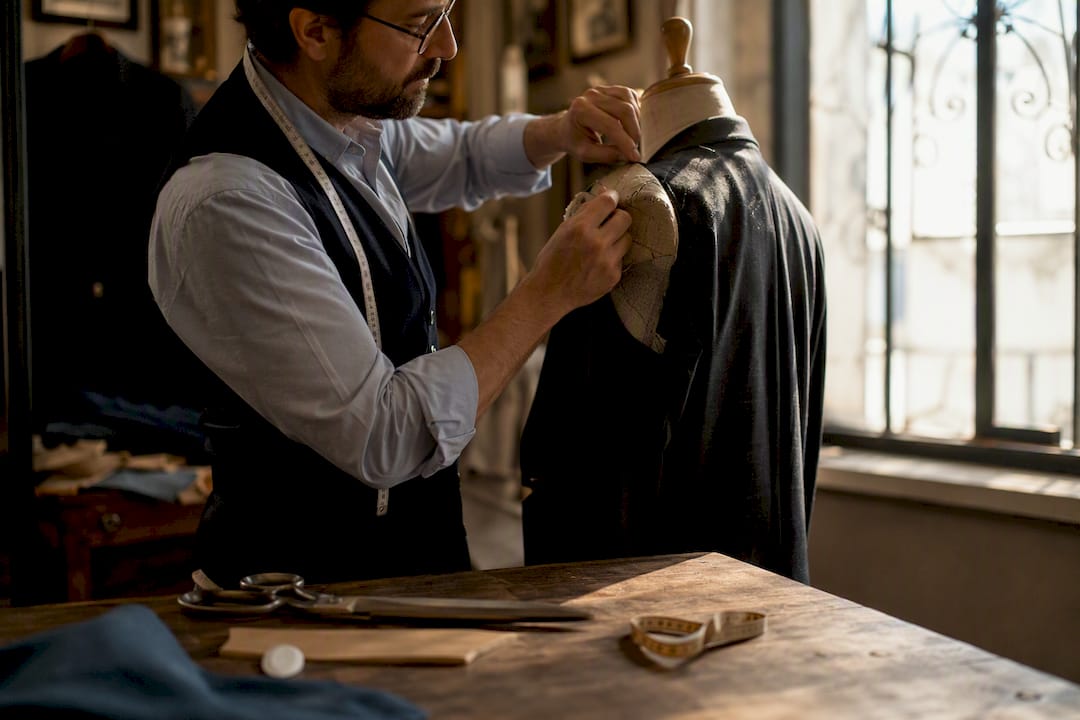
Getting a shoulder to look effortless takes more craft than most people assume. Removing padding is the easy part. Making the jacket hold its shape without that padding is where the skill shows.
The foundation decision is canvas versus fusing. A canvassed jacket uses a floating layer of horsehair and wool stitched by hand or machine beneath the outer fabric, letting the chest and shoulder mold to the body over repeated wear. Fused construction glues a stiffer interlining directly to the fabric, which holds shape initially but can bubble or separate after dry cleaning. Soft shoulders depend almost entirely on canvas work because there’s no padding to hide construction flaws. Every stitch in the shoulder area shows through a soft, unpadded surface.
From there, tailors reach for specific techniques:
- Spalla camicia (shirt shoulder): the sleeve is set in with small pleats or shirring at the seam, mimicking how a dress shirt sleeve attaches. This is the signature Neapolitan technique and the clearest visual marker of soft construction.
- Rollino (rolled sleevehead): a thin roll of fabric is worked into the seam, adding a subtle ridge without the bulk of a full pad.
- High armhole cutting: the sleeve is set higher and closer to the body, improving mobility even though there’s less structure to disguise a poor fit.
Each choice carries a trade-off. Shirring adds character but requires more hand labor, which raises cost. Rolled sleeveheads hold their shape longer than raw shirring but need a skilled hand to avoid looking lumpy. And ready-to-wear soft shoulders, however well made, rarely take major alterations the way a heavily padded shoulder does, because there’s no padding to add or remove; the shape you buy is close to the shape you keep.
Pro Tip: Ask to see the inside of the shoulder before committing to bespoke work. A well-canvassed soft shoulder shows even, consistent stitching with no glue residue. If you see a stiff, shiny interlining instead of woven canvas, you’re looking at fused construction.
Neapolitan, Rolled, and Roped: Naming the Soft Shoulder Variants
Once you start looking closely at jackets, the named variants become easy to spot, and knowing the vocabulary helps you ask for exactly what you want.
- Neapolitan (spalla camicia): the softest of the soft shoulders, with visible shirring at the sleevehead and almost no padding. This is the style most associated with southern Italian tailoring houses and reads as the most relaxed option on this list.
- Con rollino / pagoda shoulder: a rolled ridge runs along the top of the sleeve, giving slightly more definition than spalla camicia without adding real structure. It sits between Neapolitan softness and a natural shoulder.
- Roped shoulder: the sleevehead is built up into a small peak or “rope” at the shoulder point, a British and American technique. It’s structurally closer to natural or even padded shoulders, but worth knowing because people sometimes confuse the raised rope for a soft-shoulder feature.
- Continental soft shoulder: a catch-all for softer builds outside the Neapolitan tradition, often with a touch more shoulder extension than the shirt-shoulder style but still unpadded.
Formality reads in the opposite direction of structure. Spalla camicia looks the most casual and pairs naturally with unlined jackets and open-collar shirts. Rollino carries slightly more polish and works in business settings that still want ease. Roped shoulders, despite technically living outside true soft construction, suit the most formal occasions because the added height projects authority.
If you’re choosing between these for a first soft-shoulder purchase, spalla camicia rewards a lean frame and a genuinely relaxed wardrobe. Rollino is the safer middle ground for someone who wants comfort without giving up a tailored line entirely.
Which Body Types Does a Soft Shoulder Actually Flatter?
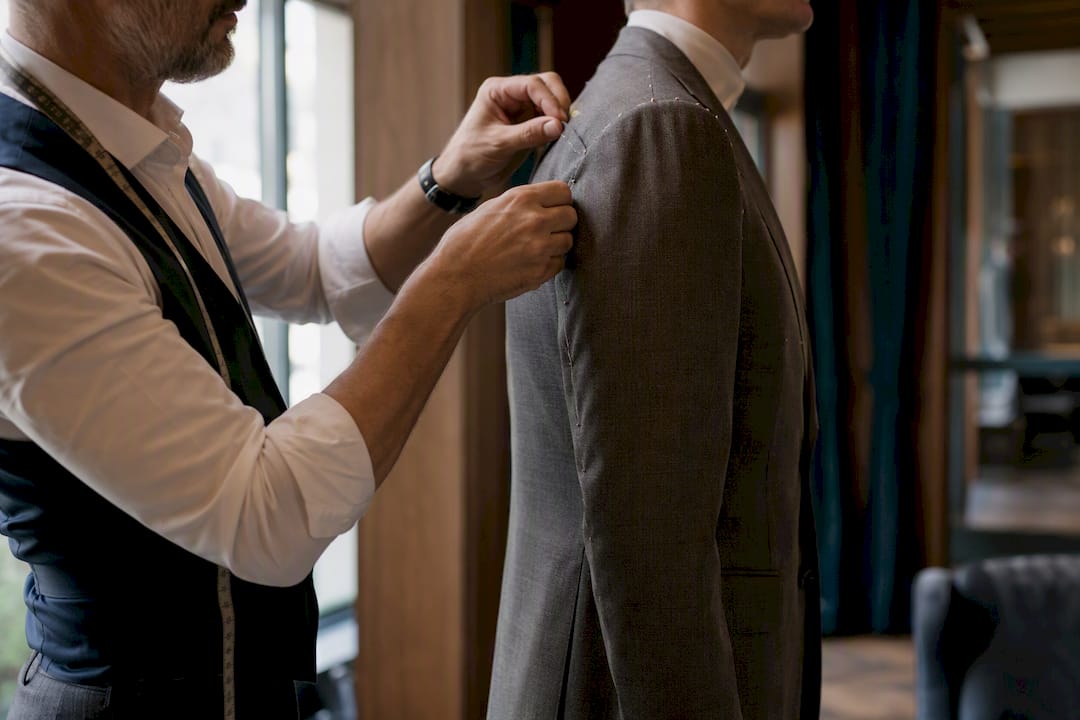
Fit is where a soft shoulder suit either earns its reputation or falls apart, because there’s no padding to mask a poor cut. A structured shoulder can disguise a slightly narrow build by adding shape; a soft shoulder has nowhere to hide.
At a fitting, check these points in order:
- Shoulder seam alignment: the seam should sit exactly at the top of your shoulder bone, not drooping past it or pulling inward toward your neck.
- Sleeve hang: raise your arms partway. A well-cut soft shoulder allows this without the entire jacket lifting off your torso.
- Top-of-arm wrinkling: minor soft folds near the sleevehead are normal and even expected in shirred construction, but sharp, deep divots mean the sleeve is fighting your shoulder shape rather than following it.
- Range of motion: reach forward as if shaking hands. The armhole should let your arm move freely without the shoulder seam yanking upward.
Men with sloping or narrow shoulders tend to benefit most from soft construction, since it follows the shoulder’s natural downward angle instead of fighting it with padding built for a squarer frame. Community discussion among menswear enthusiasts echoes this, noting that soft shoulders “follow the shoulders rather than fight them” and tend to suit a broad range of builds, though very broad or heavily muscled shoulders often look better with a touch of structure to balance visual proportion.
For readers who fall outside the ideal soft-shoulder build, a skilled tailor can still make it work. Small darts at the shoulder seam, minor sleeve pitch adjustments, and choosing rollino over full spalla camicia are common ways to add just enough shape without abandoning the softer silhouette entirely.
When and Where Does a Soft Shoulder Suit Actually Work?
Formality is the real question behind every styling decision here, and the honest answer is that a soft shoulder suit thrives in more settings than most men expect, but not all of them.
Conservative corporate environments, courtrooms, and formal ceremonial events still lean toward a touch of structure, where a fully unpadded Neapolitan shoulder can look underdressed next to boxier competitors in the room. Creative industries, client dinners, smart-casual offices, and social events like weddings held outside strict traditional venues are where soft shoulders genuinely shine. Retailers position soft-shoulder tailoring specifically around this kind of everyday versatility rather than boardroom formality.
Pairing choices shift with the occasion:
- For business-adjacent settings, keep the shirt collar structured and add a tie in a solid or small pattern to counterbalance the jacket’s softness.
- For smart-casual wear, drop the tie, open the collar, and let the jacket’s natural drape carry the look on its own.
- Suede or leather loafers work better with soft shoulders than heavy structured oxfords, since both are aiming for the same relaxed formality.
- A lightweight overcoat, rather than a stiff wool topcoat, keeps the silhouette consistent from shoulder to hem.
Read more on pairing tailored pieces for professional settings if you want a deeper look at building full outfits around this balance. And don’t overlook grooming: a well-kept beard or clean shave changes how a soft shoulder’s relaxed line reads on your face, a detail covered well in this guide to beard and suit pairing.
What Should You Ask Your Tailor Before Committing to a Soft Shoulder?
A good fitting conversation prevents most soft-shoulder disappointments before they happen. Bring these questions with you.
- What canvas are you using, and is it full or half canvas? Full canvas construction holds a soft shoulder’s shape far longer than a partial or fused build.
- How much shoulder extension do you want? Even soft shoulders vary slightly in how far they extend past your natural shoulder point, and this changes how broad you look.
- What armhole height fits my movement needs? If you spend your day at a desk versus on your feet, the ideal height differs slightly.
- Spalla camicia, rollino, or a cleaner unshirred finish? Naming the technique you want, using the vocabulary from earlier in this guide, gets you a far more precise result than describing it vaguely.
During the fitting itself, raise both arms overhead and check for pulling across the back. Reach across your chest and watch whether the shoulder seam holds its line or twists. Look at the sleevehead from the side; a clean soft shoulder should show a smooth transition with no hard edge where sleeve meets body.
Pro Tip: If you’re working with ready-to-wear, ask your tailor honestly whether alterations can achieve genuine soft-shoulder shirring. Most cannot. Bespoke work is where spalla camicia and rollino are truly built in from the pattern stage, not added after the fact.
Which Fabrics Support a Soft Shoulder’s Drape?
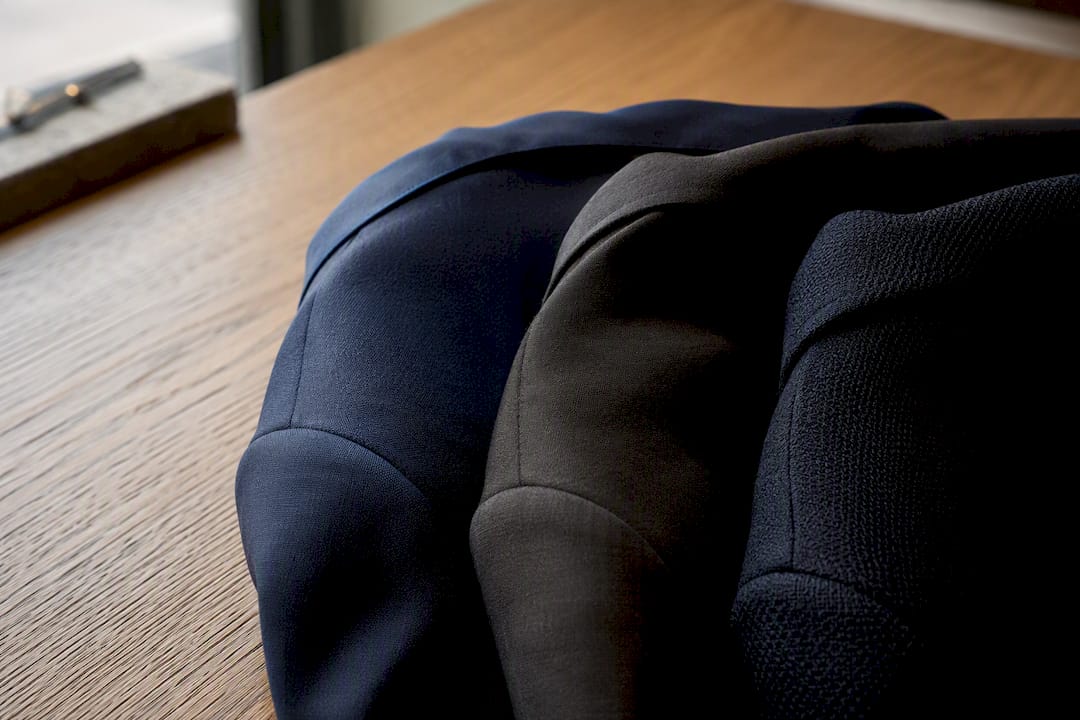
Fabric choice determines whether a soft shoulder looks intentionally relaxed or simply unfinished. Tropical wool and lightweight worsted fabrics are common choices because they hold a clean line without the stiffness that fights an unpadded shoulder. Certain linen blends work for warm climates, though pure linen alone can wrinkle unpredictably at the shoulder seam.
A few practical notes:
- Half or full canvas interiors breathe better than fused interlinings and age more gracefully with soft construction.
- Dry cleaning only is standard for most soft-shoulder suits, since home washing can distort the shoulder’s unpadded shape permanently.
- Hang the jacket on a curved wooden hanger, never a wire one, to preserve the sleevehead’s natural roll between wears.
Ron & Rich: Where Soft-Shoulder Craft Meets Practical Fit
Ron & Rich has built bespoke menswear since 1979, when master tailor Richard Fan founded the house on the belief that fit should serve the individual, not a standard block. Every soft-shoulder commission starts with a personal fitting, where we discuss canvas type, shoulder extension, and whether spalla camicia or a cleaner rollino finish suits your build and wardrobe.
Clients ordering a soft-shoulder suit can expect multiple fitting stages, hands-on adjustment of the shoulder line as the canvas is shaped, and a finished garment built specifically around how you move, not just how you measure standing still. That personalized process, refined over decades, is what separates a soft shoulder that looks effortless from one that simply looks unfinished.
An Italian-Influenced Take on Getting the Shoulder Right
Most guides overstate how much shoulder softness alone determines whether a suit looks good. The real variable is fit precision, and a soft shoulder actually demands more of it, not less, because there’s no padding to paper over a sloppy armhole or a seam that sits half an inch off your natural shoulder point.
The conventional advice to “just ask for a Neapolitan shoulder” skips the harder question: does your build actually suit spalla camicia, or would rollino serve you better? That’s a fitting-room decision, not a Pinterest board decision.
If you’re weighing bespoke against ready-to-wear for 2026, prioritize the canvas conversation before the aesthetic one. A soft shoulder built on full canvas will still look intentional in five years. One built on fused interlining, however fashionable today, tends to lose its shape and its character together.
Ron
Ready to Commission Your Own Soft-Shoulder Suit?
If everything above has you leaning toward a softer, more relaxed silhouette, the next step is a fitting, not another article. Ron & Rich builds every bespoke suit around your actual shoulder line, using full canvas construction and hand techniques like spalla camicia or rollino depending on what your build and wardrobe call for, not a generic house shoulder applied to every client.
Our bespoke process walks you through canvas selection, shoulder extension, and armhole height at your first fitting, so you’re making informed decisions rather than guessing at fabric swatches. If you’d rather start with ready-to-wear before committing to a full bespoke commission, browse our suits and jackets to see how soft construction translates across different fabrics and cuts. Either way, book a fitting and let a soft shoulder actually fit the shoulder you have.