Wrinkle Resistant Fabrics: Why Bespoke Suits Need More Than Wool
The fabrics that resist wrinkles most reliably are synthetics such as polyester and nylon, resilient fibres like wool, and cellulosic materials such as lyocell or cotton finished with durable-press treatments. For everyday and travel garments, we recommend blends or finished natural fibres that combine crease resistance with comfort. This understanding shapes every fabric selection for a client’s wardrobe.
TL;DR:
- For travel suits, choose roughly 250 to 310 gsm in a tight twill or wool blend; fabric weight and weave matter as much as fiber.
- Pure polyester and nylon resist creases but may feel less breathable in heat; finished cotton or lyocell blends offer more comfort.
- Ask whether cotton has a durable press finish; modern polycarboxylic acid treatments can limit formaldehyde release, though heavy finishes may stiffen fabric.
- Wash finished cotton and synthetic blends gently at cooler temperatures, reshape garments while damp, and hang them to dry to preserve crease resistance.
Table of Contents
- Why fabrics wrinkle: fibre chemistry and mechanical causes
- Fabrics and fibres that resist wrinkles: a practical list
- Finishes and treatments that add wrinkle resistance
- How weave, yarn and fabric weight influence creasing
- How to choose wrinkle-resistant fabric for shirts, suits and travel
- Care routines that preserve wrinkle resistance
- RON & RICH: tailoring choices that reduce visible creases
- When bespoke tailoring is the best investment against creasing
- How RON & RICH helps you get wrinkle-resistant garments
- FAQ
- Sources
Why fabrics wrinkle: fibre chemistry and mechanical causes
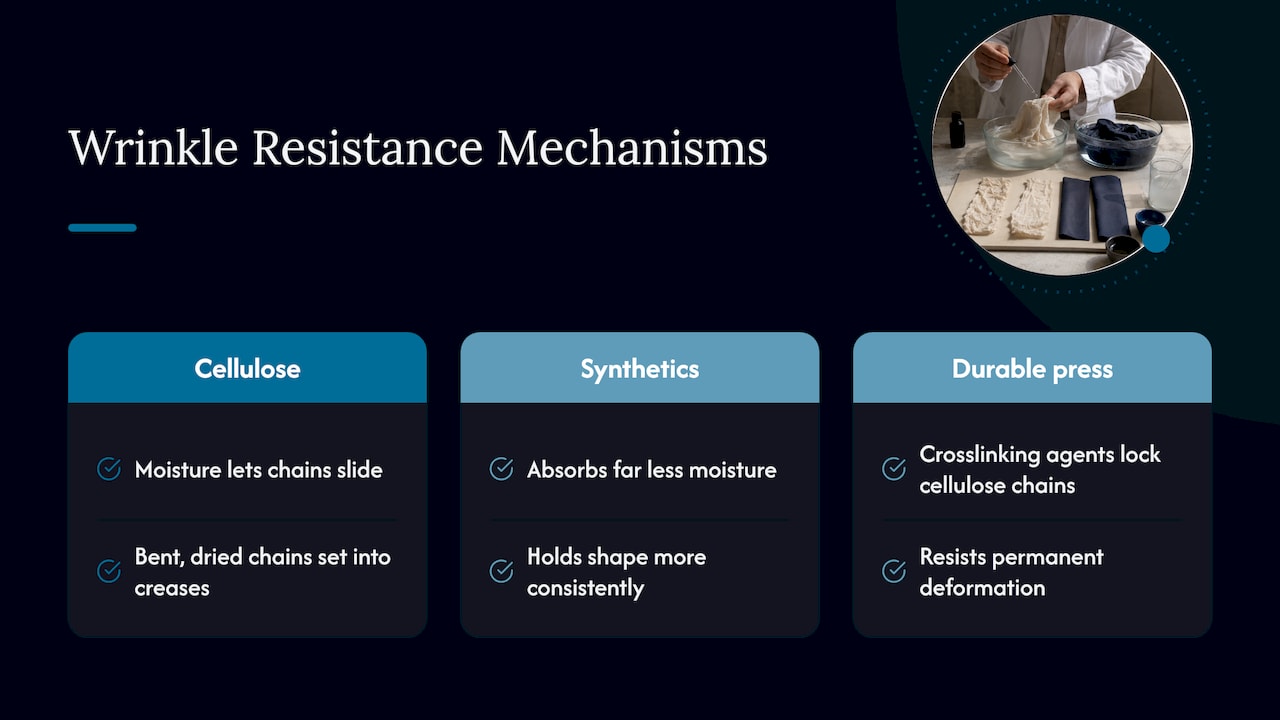
A crease forms when fibres bend, the internal structure shifts, and the fabric fails to spring back. In cellulosic fibres such as cotton and linen, moisture absorption lets the long cellulose chains slide against one another. Once bent and dried in that position, the chains set, and the fold becomes a visible line.
Synthetic fibres resist this because they absorb far less moisture and hold their shape more consistently, which is a primary reason for their wrinkle resistance. Durable-press finishes achieve something similar on cotton by chemically locking the cellulose chains in place with crosslinking agents, so the fibre cannot deform permanently even when bent.
The practical result shows up in three familiar moments: a shirt pulled from a suitcase, trousers after a long flight, and a cotton jacket at the end of a humid afternoon. Fabrics with better chain stability, whether through fibre type or finish, come through all three looking sharper.
Fabrics and fibres that resist wrinkles: a practical list
Fibre choice is the first lever. Some materials recover from creasing almost on their own, while others need a finish or a blend to perform well in daily wear.
- Polyester and nylon resist creasing exceptionally well and suit travel clothing and easy-care shirting, though pure synthetics can feel less breathable against skin in warm climates.
- Wool, including lightweight worsted and merino, recovers naturally from creasing thanks to its elastic fibre structure, making it a long-standing choice for suits and jackets with good drape.
- Lyocell and modern rayon variants offer a soft, natural hand with noticeably better crease recovery than traditional viscose.
- Durable-press cotton and cotton blends retain the breathability and comfort people expect from cotton while resisting the fold lines that untreated cotton develops.
- Pure linen and plain silk crease readily and suit occasions where a relaxed, lived-in look is acceptable rather than a crisp one.
For anyone packing a suit or choosing a weekday shirt, this list is the starting point before weave and finish enter the decision.
Finishes and treatments that add wrinkle resistance
Durable-press (DP) finishing works by crosslinking cellulose chains with resin, restricting the fibre movement that causes permanent creases. Early formulations relied on urea-formaldehyde and melamine resins, which performed well but raised concerns about formaldehyde exposure.
Modern finishing has largely moved toward polycarboxylic acids such as BTCA, which deliver similar crosslinking benefits with lower or no formaldehyde release. Textile research into polyurethane coatings and catalyst systems continues to refine how much wrinkle recovery a finish can add without compromising fabric strength.
The trade-off is worth knowing before buying: a heavily finished cotton can feel slightly stiffer and lose some tensile strength compared with an untreated equivalent, though well-formulated modern finishes keep this effect minimal while still responding well to gentle laundering.
How weave, yarn and fabric weight influence creasing
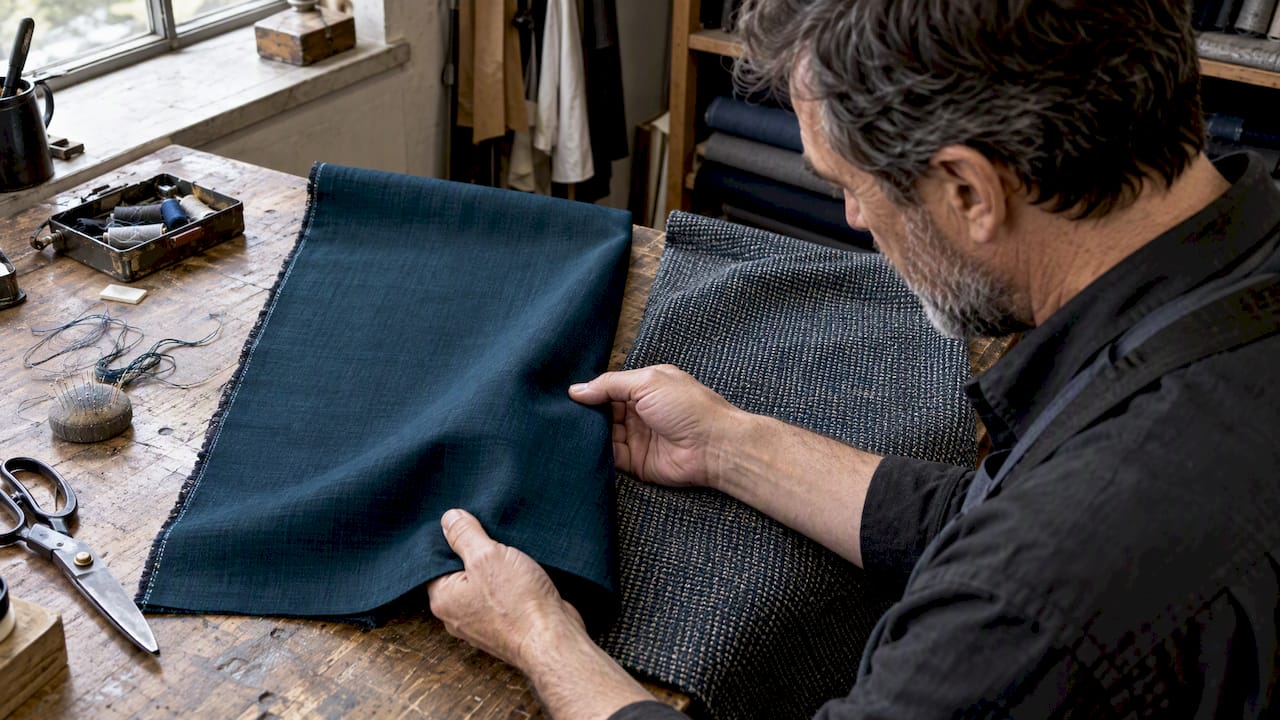
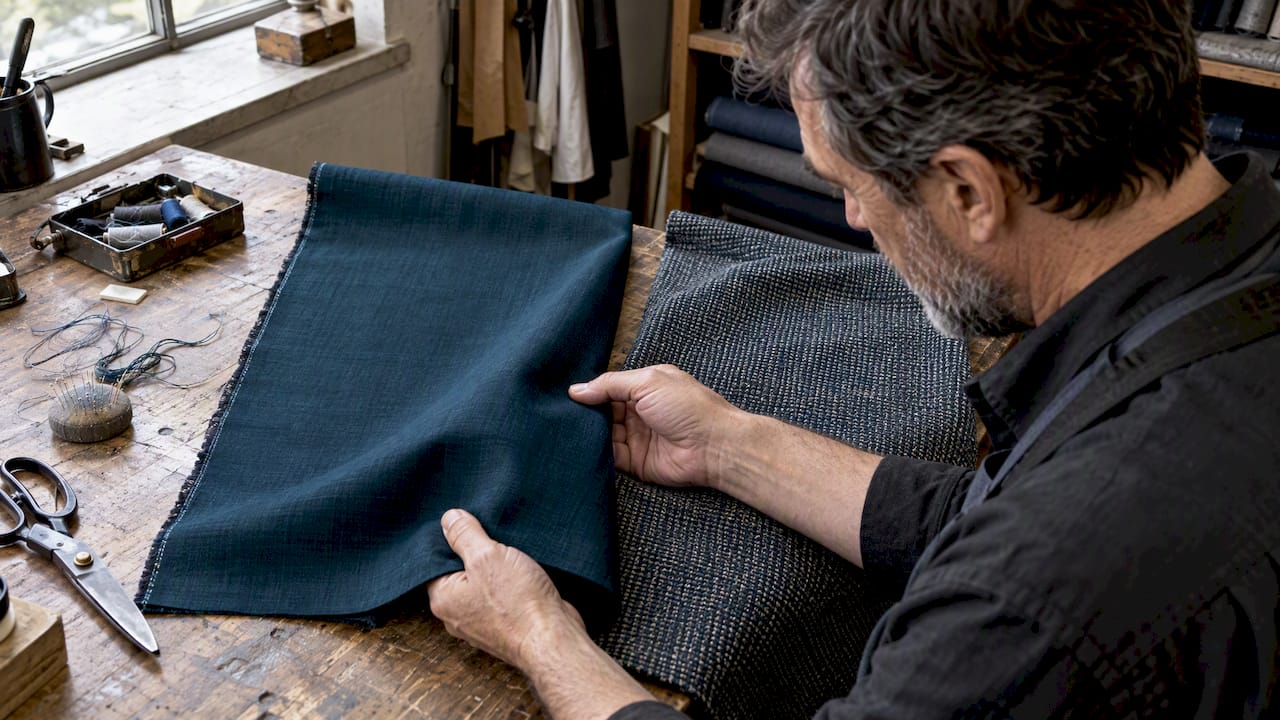
Fibre and finish only tell part of the story. Construction decides how a fabric behaves once it leaves the loom. Tight, dense weaves made with filament yarns give fibres little room to shift under pressure, which limits where a crease can form in the first place.
Open weaves, loose knits and low-twist yarns move more freely, so they crease faster and show it more visibly. Heavier fabric weights can mask small creases simply because the extra bulk resists sharp folding, which is one reason flannel trousers often look tidier through a long day than a lightweight cotton pair.
Abrasion and pilling matter too. A surface that pills unevenly scatters light differently across the fabric, making ordinary creases look rougher than they are. Fabrics and weaves chosen to resist pilling tend to hold a smoother, more even surface over repeated wear, which supports the crease-resistant impression even when the fibre itself is unremarkable.
How to choose wrinkle-resistant fabric for shirts, suits and travel
Choosing well starts with matching the fabric to how the garment will actually be used, then checking composition, finish and construction against that use.
- Identify the garment’s job: daily office shirt, travel suit, or occasional wear, since each tolerates a different level of crease.
- Check the fibre composition percentage, favouring polyester or wool blends for frequent wear and lyocell or finished cotton for warm-weather comfort.
- Ask whether a durable-press or crosslinking finish has been applied, and under what name, since finishes vary in how they respond to washing.
- Assess fabric weight and weave density, choosing tighter constructions and mid-to-heavier weights for travel.
- Confirm the recommended laundering method, since a finish’s performance depends on following it.
Pro Tip: For a travel suit, prioritise a fabric around 250 to 310 gsm in a tight twill or wool blend, since weight and weave do as much work as fibre choice alone.
A travel suit benefits most from wool or a wool-synthetic blend in a tighter weave. An everyday office shirt does well in finished cotton or a cotton-polyester blend. Seasonal choices matter too: lighter lyocell blends suit warm months, while wool holds its crease resistance through cooler ones.
Care routines that preserve wrinkle resistance
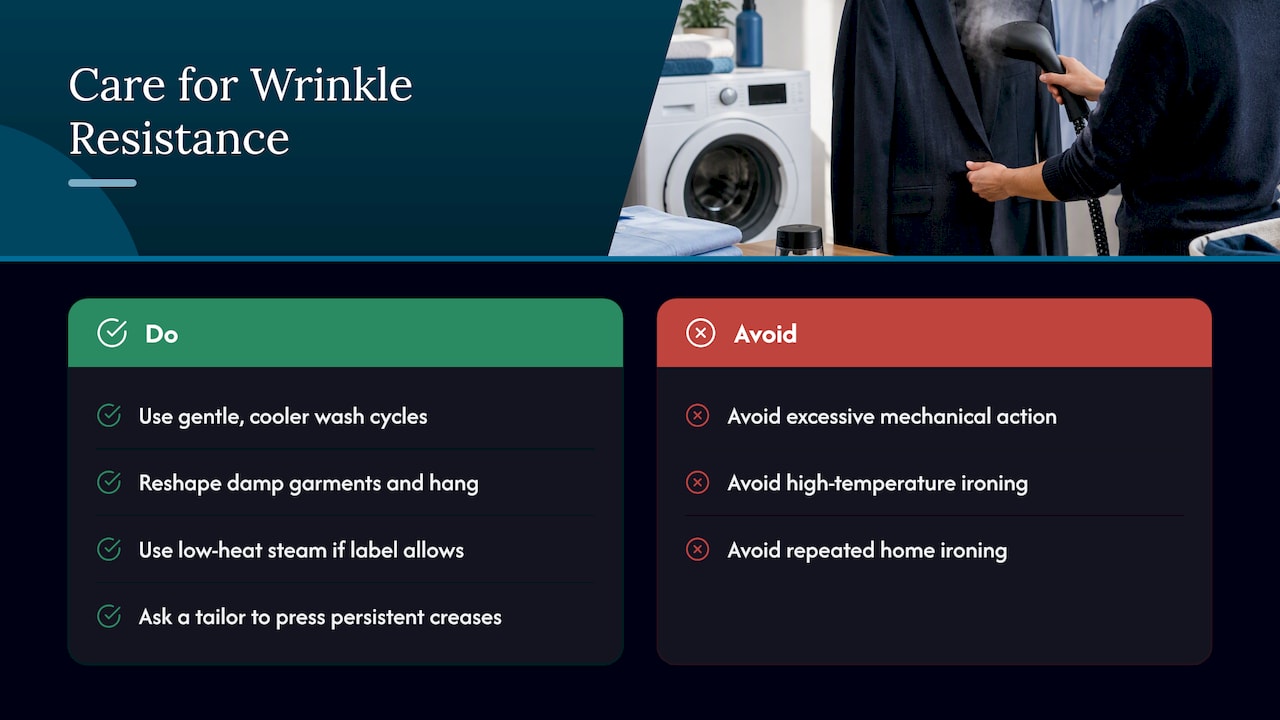
A finish or fibre advantage only lasts as long as the care routine respects it. Gentle wash cycles at cooler temperatures protect finished cottons and synthetic blends alike, since excessive mechanical action accelerates pilling and gradually wears down a durable-press finish.
Drying matters as much as washing. Reshaping a damp garment and hanging it properly lets gravity do the work that an iron would otherwise need to do. Where a finish’s care label allows it, low-heat steam or a handheld steamer refreshes a garment without the risk of scorching that high-temperature ironing carries.
Persistent creasing, especially along a hem or collar, usually calls for professional pressing or a tailor’s attention rather than repeated home ironing, which can thin a fabric over time. For wool suiting in particular, a tailor’s steam press restores shape far more evenly than a domestic iron ever will.
RON & RICH: tailoring choices that reduce visible creases
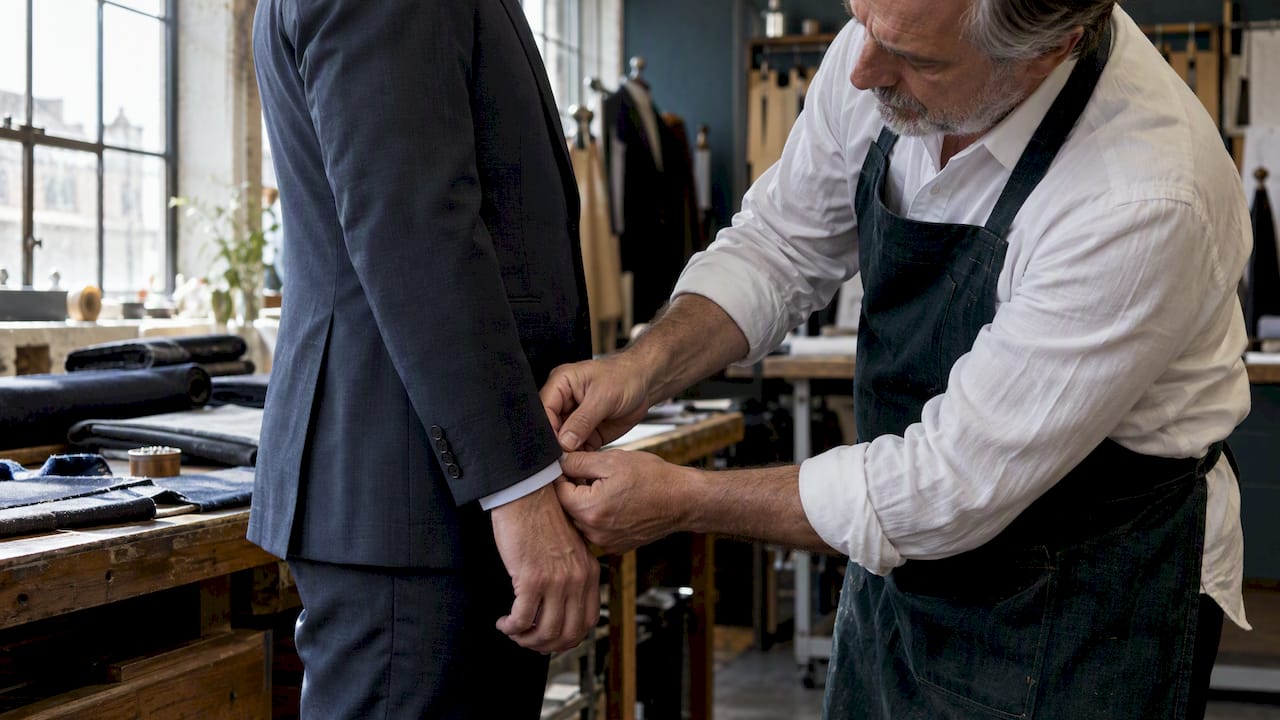
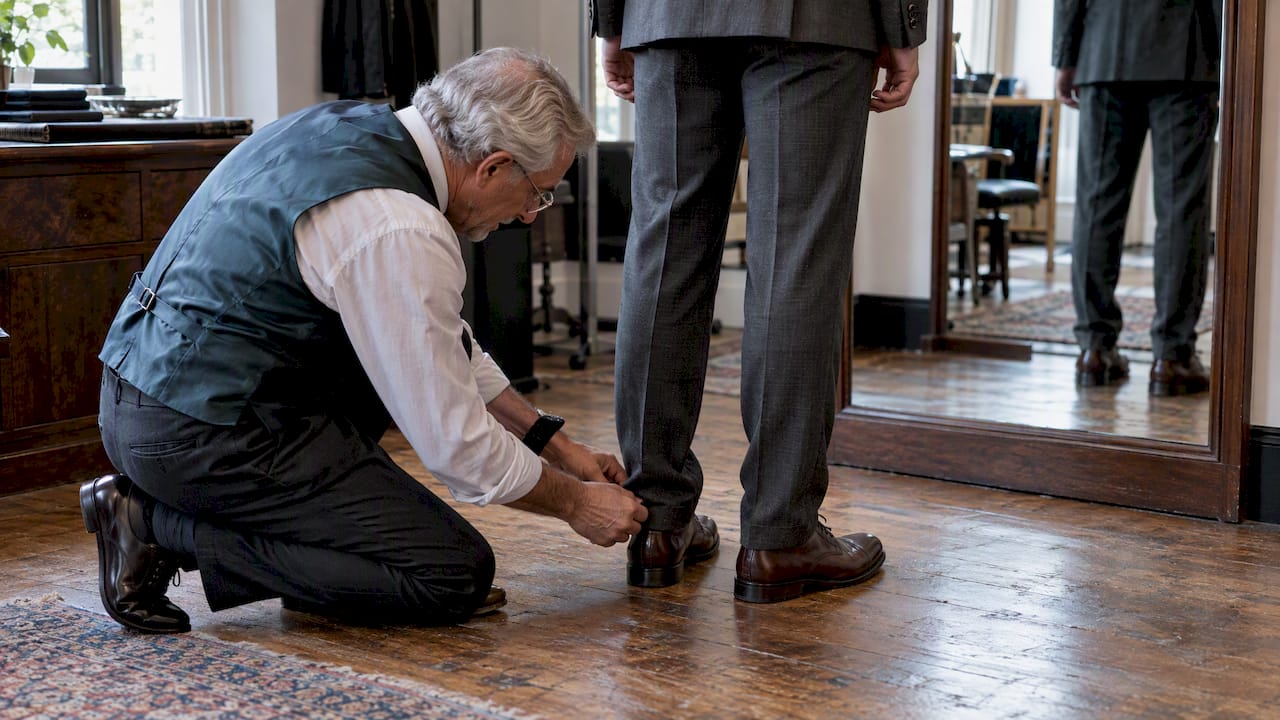
Fabric chemistry sets the ceiling, but construction decides how close a garment gets to it. We pay close attention to patterning, lining and interlining because a precise fit removes the strain points where creases typically start, around the seat, elbow and lapel roll.
Our travel suit fabric guide sets out the weights and constructions we favour for clients who live out of a suit carrier for days at a time. For shirting, our shirting collection brings together finishes and weaves chosen for a crisp look that survives a full working day. Clients weighing fabric and cut together tend to get the most consistent results.
When bespoke tailoring is the best investment against creasing
Fabric choice matters, but fit decides how much that choice is worth. A well-cut garment removes the pulling and bunching that cause most visible creases long before fabric chemistry comes into play.
For frequent travellers and professionals on their feet all day, we have found that construction quality often does more for a crease-free appearance than fabric selection alone, which is why we treat the two as inseparable in every fitting.
Ron
How RON & RICH helps you get wrinkle-resistant garments
We advise on the fabric, finish and construction combination that keeps a garment looking sharp, whether that means a travel-ready wool blend for a suit or a finished cotton for daily shirting.

Our pricing page lists every garment we tailor, with pricing that reflects the fit and fabric choices this guide has covered. If you are weighing options for a suit specifically, our suits collection is a good next stop, and our shirting collection covers made-to-order shirts for those who want wrinkle resistance without sacrificing comfort. Book a fitting to talk through fabric and construction together.
FAQ
Which fabrics do not wrinkle easily?
Polyester, nylon, wool and lyocell resist wrinkling well, largely because synthetics absorb less moisture and hold their shape better than untreated natural fibres. Cotton treated with a durable-press finish also performs strongly for everyday wear.
What is the best fabric for wrinkle resistance?
There is no single best fabric, since the right choice depends on use: wool blends suit suits and jackets, while polyester blends suit travel shirts and trousers. Durable-press cotton bridges the gap for those who want natural comfort with better crease recovery.
What material doesn’t need ironing?
Most polyester and nylon fabrics, along with durable-press finished cotton, need little to no ironing because their fibre structure or finish resists permanent creasing. A light steam after washing is usually enough to keep them looking fresh.
What fabric is most likely to wrinkle?
Pure linen and untreated silk crease the most readily, since their fibres lack the elasticity or finish that helps other materials spring back into shape. This is why both are better suited to relaxed occasions than to travel or all-day wear.