Safari Jacket Fabrics: Linen, Cotton Drill and Wool Compared
The best fabric for a safari jacket in Singapore is a mid-weight linen or a cotton drill, or a blend of the two with a little wool. Linen keeps you coolest, drill holds the jacket’s shape, and wool blends sit between them. The right choice depends on how you will wear it: indoors under air conditioning, outdoors in the heat, or on a journey.
Below we compare each cloth by weight, weave and behaviour. We then cover how the belt and fit change the choice. We have cut bespoke jackets since 1979, and the cloth decides more about a safari jacket than almost any other detail.
TL;DR
- Linen is the coolest and most breathable choice, but it creases readily and softens the structure of the jacket.
- Cotton drill gives the sharpest, most durable jacket, and is the better fabric for a belted, structured design.
- Tropical wool or a linen-wool blend drapes well, resists creasing and recovers better between wears.
- Look at weight and weave, not only fibre content. Roughly 145 to 200 gsm in a plain or twill weave suits linen.
- Choose khaki, olive, sand or stone for the classic look. Dark cloth absorbs more heat.
Table of Contents
- Why the cloth matters more than the pockets
- Linen safari jackets: the coolest option
- Cotton drill: structure and durability
- Wool and blends: the quiet third option
- Fabric comparison at a glance
- Colour: more than a question of looks
- Belted safari jackets and the belt itself
- Tailored safari jacket and fit
- Our view on safari jacket cloth
- Caring for a safari jacket
- Commission your own safari jacket
- FAQ
- Sources
Why the cloth matters more than the pockets
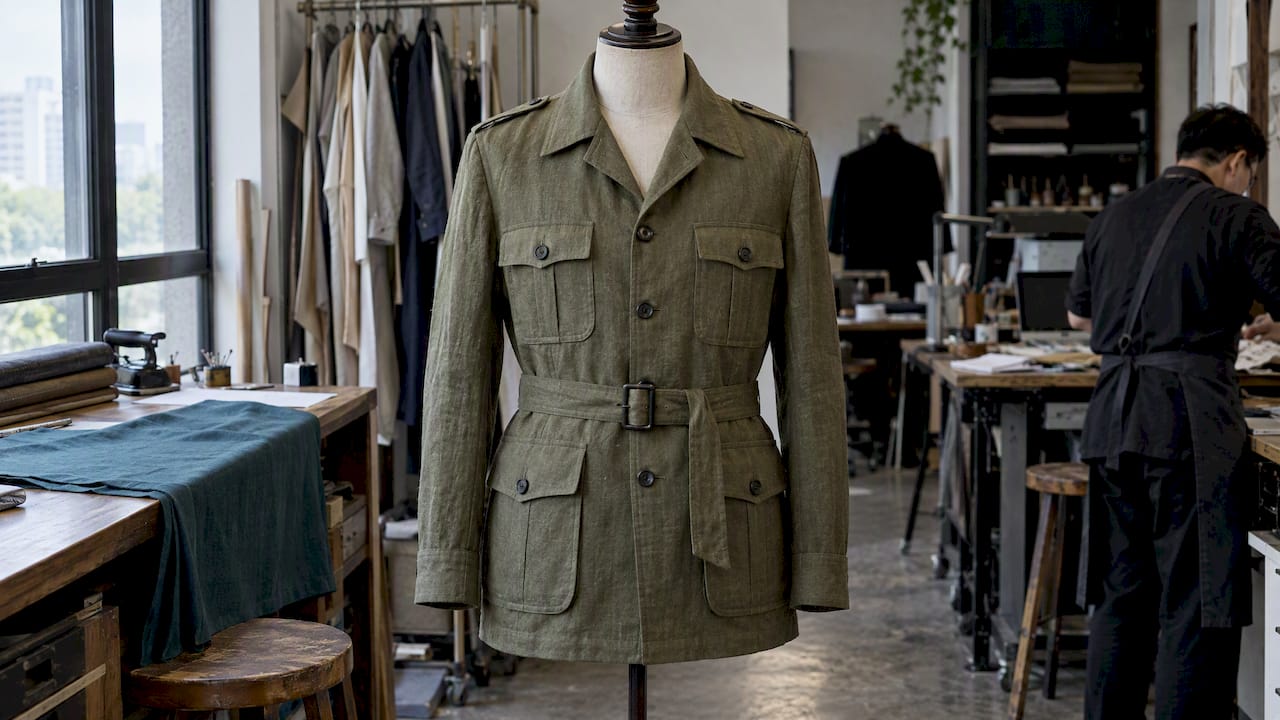
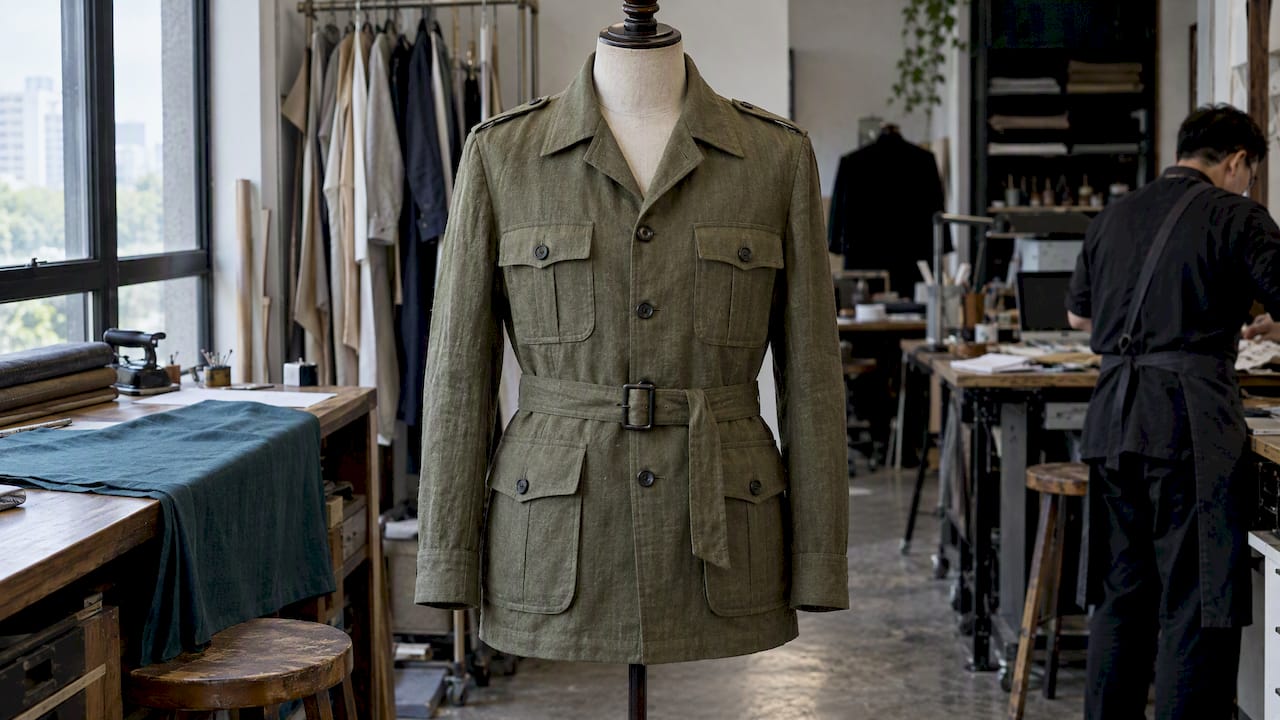
A safari jacket is a simple garment: four patch pockets, epaulettes, a collar and usually a self-belt. With so little construction to hide behind, the fabric carries the whole design. It sets how the pockets sit, how the belt hangs and whether the jacket looks composed after an afternoon outdoors.
Singapore adds its own test. The Meteorological Service Singapore describes a tropical climate with high temperatures and high humidity all year round. Daytime highs usually reach 31 to 33°C and nights rarely fall below 23 to 25°C. A jacket here must breathe and dry quickly, and it still has to keep its form.
Linen safari jackets: the coolest option
Linen is the first answer for heat. According to Alliance Flax-Linen & Hemp, laboratory studies under ISO 11092 show linen has better vapour permeability than cotton, viscose and polyester. It also has roughly double the tensile strength of cotton, so a good linen jacket is more durable than its relaxed look suggests.
The trade-off is familiar. Linen creases, and it relaxes the structure of a jacket. Some of that is part of its charm, and a lightly rumpled linen safari jacket looks intended. If you want a crisp, tailored appearance, you should choose the weight and weave carefully.
What weight of linen to choose
Tailoring guidance from Sainty lists mid-weight apparel linen at 145 to 200 gsm, in a plain or twill weave, as suitable for jackets and trousers. Lighter shirting linen of 100 to 140 gsm is made for shirts and will look limp in a jacket with four loaded pockets.
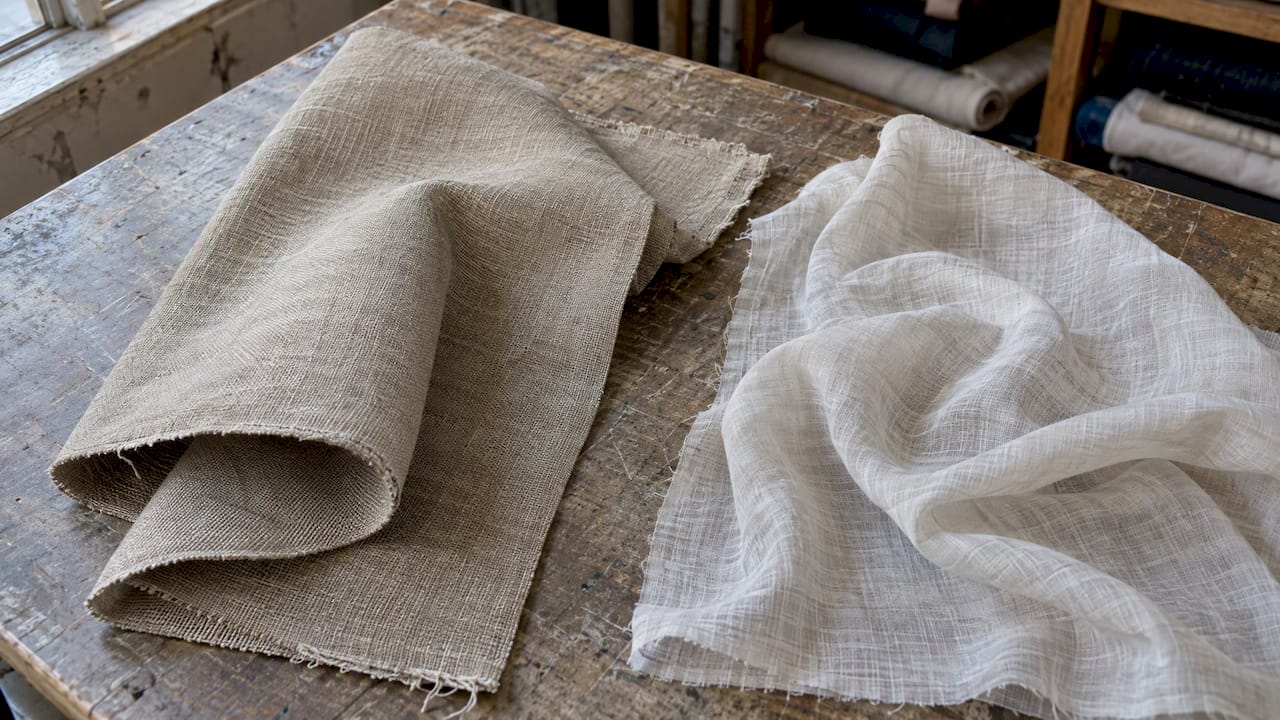
The same source notes that thread count is a poor guide to linen quality. Fibre fineness matters more, and it suggests a minimum breaking strength of 400 N in the warp and 300 N in the weft under ISO 13934-1 for premium apparel linen. You will rarely see those figures on a swatch, but a tailor sourcing cloth should be able to speak to quality in those terms.
Where linen struggles
Linen performs best in dry heat. Eurocraftsmanship notes that pure linen can feel heavy when soaked by humidity or rain, and that blends, such as linen with wool or a small share of synthetic fibre, dry faster and recover from wrinkles better for frequent travellers. In a city of afternoon downpours, that point deserves attention.
Cotton drill: structure and durability
Cotton drill is the traditional safari cloth. It is a dense twill, and it gives the jacket a firm hand. According to the guidance we cite in our own piece on safari jacket style, drill in the region of 8 to 11 ounces gives enough body for the pockets to lie flat and the belt to sit correctly. Much lighter cloth risks a floppy, undefined front.
Drill is also the more forgiving cloth. It creases less than linen, wears well at the elbows and cuffs, and softens agreeably with age. It is warmer than linen, so it suits air-conditioned offices, evenings and travel better than a midday walk.
A lighter cotton poplin or gabardine is an alternative if you want the cotton look with less weight. These are the same cloths that the traditional bush jacket was made from, as the encyclopaedic entry records. We would only use that page for the history, not for current fabric advice.
Wool and blends: the quiet third option
Wool is not the first cloth people think of for a tropical jacket, yet a lightweight tropical wool is one of the most practical. Textile School reports an official commercial moisture regain of 13.6% for wool, and says it can absorb up to 35% of its weight in moisture before it feels wet. That is why wool resists odour and holds its shape through a long day.
Twill-weave wool gabardine is, in the words of Misciano’s materials guide, resistant to creasing and shape-retaining. That makes it a natural cloth for a tailored safari jacket that has to look neat on arrival.
Blends deserve consideration for the same reason. A linen-wool or linen-cotton cloth borrows the coolness of linen and the recovery of the other fibre. For a jacket you will wear often, it can be the wiser choice than 100% of anything. If you want to go deeper on lightweight cloths and weights, our suit fabric guide for every season and our note on fabrics for frequent travellers cover the same ground for suits.
Fabric comparison at a glance
| Fabric | Best for | Cooling | Structure | Creasing | Care |
|---|---|---|---|---|---|
| Linen, 145 to 200 gsm | Hot, dry days, relaxed look | Excellent | Soft | High | Gentle cleaning, careful packing |
| Cotton drill, about 8 to 11 oz | Belted, structured jacket, travel | Moderate | Firm | Moderate | Hardwearing |
| Tropical wool or gabardine | Office, formal smart casual | Good | Good drape | Low | Dry clean as advised |
| Linen-wool or linen-cotton blend | Frequent wear, humid weather | Very good | Medium | Low to moderate | Easier recovery |
Treat the table as a guide to character, not a promise. Two linens of the same weight can feel quite different, so ask to handle the cloth before you commit.
Colour: more than a question of looks
Khaki, olive, sand and stone are the classic colours, and there is a practical reason as well. For actual safari travel, a Tanzania travel specialist advises neutral shades and warns against dark colours such as black, which absorb solar heat. The same page notes that light cotton and linen stain easily from red dust. In the city the dust is different, but the principle holds: mid-tones such as olive or earth brown hide marks better than pale stone.
Belted safari jackets and the belt itself
The belt changes how a fabric should behave. A self-belt cinches the waist, so the cloth must be firm enough to gather without bunching, yet pliable enough to look natural. Drill and twill-weave cloths do this best. Linen belts can crumple and stretch with wear unless the belt is interlined.
A few practical points:
- Belt or no belt. A detachable belt gives two jackets in one: belted for shape, open for a looser layer.
- Half belt. A belt at the back only, or a half-belt, suits softer, unstructured builds in linen or wool.
- Interlining. A lightly interlined belt keeps its width. Ask your tailor how it is made.
- Buckle and fastening. A simple metal or horn buckle looks right. Avoid anything that looks decorative.
Tailored safari jacket and fit
A tailored safari jacket should skim the body, not cling to it. The shoulder is the key: it should sit at your own shoulder line, with the epaulette flat. The chest needs room for movement, and the length should cover the seat or end just below it. Pockets should lie flat when closed, which also depends on the cloth weight we described above.
Fit and fabric interact. A soft linen in a slim cut will wrinkle across the stomach and under the arms. A firmer drill can take a closer cut and still look clean. If you are between sizes or have sloping shoulders, or a fuller chest, bespoke patterning removes the compromise. Our guide on when bespoke matters for a safari jacket goes through five outfits and the fit decisions behind them.
Lining in a warm climate
Most safari jackets are unlined or partly lined. For Singapore we generally suggest a light approach: a quarter-lined construction keeps the jacket’s shape at the shoulders while leaving the back free to breathe. If you want a closer look at lighter linings, read about buggy lining.
Our view on safari jacket cloth
We have made suits and jackets since Richard Fan founded the house in 1979, and the lesson we return to is that a garment is only as good as the cloth chosen for the life it will lead. For a safari jacket in Singapore, we do not believe in a single best fabric.
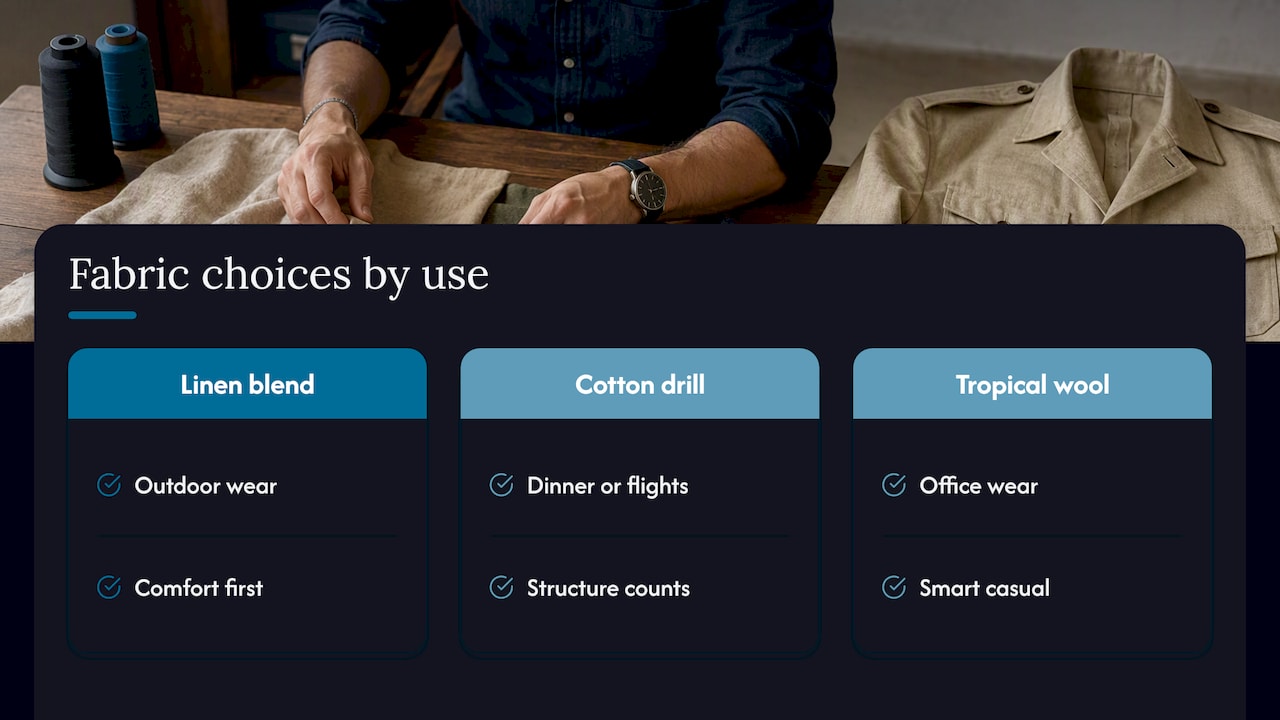
We lean towards a mid-weight linen, or a linen blend, for the man who wears the jacket outdoors and wants comfort first. We lean towards cotton drill when the jacket is to be belted and worn to dinner, or on a flight, where structure counts. And we suggest a light tropical wool when the jacket must pass as smart casual in the office.
Whatever the cloth, we ask the client how and where the jacket will be worn before we show a single swatch. Fabric is a decision about your week, not about the label.
Ron
Caring for a safari jacket
Care depends on the cloth. Linen benefits from gentle cleaning and from being hung to rest between wears. Drill is more robust and takes a steam better. Wool should be brushed and aired. When you travel, roll or fold the jacket carefully, as we explain in our guide to travel suit care.
Commission your own safari jacket
We make bespoke safari jackets from $790, cut to your measurements and in the cloth that suits your climate and your habits. The same house also makes chore coats from $790, and sports jackets from $1790. You can see all the published prices on our pricing page. If you would like to handle swatches and talk through the fit, book a consultation through our suits and jackets page. For a lighter layer underneath, our Weekend Linen Shirt in white is a good companion.
FAQ
What is the best fabric for a safari jacket in a hot, humid climate?
A mid-weight linen, or a linen blend, is the coolest choice. Linen has strong vapour permeability, but pure linen can feel heavy in high humidity, so a blend with wool or cotton often dries faster and creases less. Cotton drill is the better choice if you prefer structure to maximum coolness.
Is a linen safari jacket too casual?
It is relaxed, but not careless. In a good mid-weight cloth and a clean cut, a linen safari jacket works well as smart casual wear with chinos and a shirt. For a crisper look, choose a twill weave or a linen blend.
What weight should a cotton drill safari jacket be?
Drill of about 8 to 11 ounces gives enough body for flat pockets and a well-set belt. Anything much lighter tends to look floppy at the front. Heavier drill is sharper but warmer.
Should a safari jacket have a belt?
Traditionally it does, and a belt gives the silhouette its character. A detachable belt is the most flexible option, because you can wear the jacket belted for definition or open for ease.
Sources
- Meteorological Service Singapore: Climate of Singapore
- Alliance Flax-Linen & Hemp: Flax fibre performance and properties
- Sainty: How to evaluate linen fabric quality
- Eurocraftsmanship: Which fabric should you buy?
- Textile School: Wool fibre properties
- Misciano: Materials and textile quality observatory
- Tanzania Specialist: Welche Kleidung trägt man bei einer Safari?
- Safari jacket, encyclopaedic entry