Four Trouser Breaks: What to Tell Your Tailor About Length
For modern slim suits, choose no break or a quarter break. For classic business trousers, a half break remains the most versatile choice. For relaxed or wide-leg cuts, a full break keeps the proportions balanced. The right length ultimately depends on your trouser’s cut, the fabric’s weight, and the shoes you intend to wear with it, all of which we explain below alongside how to measure and brief your tailor.
TL;DR:
- Leg width controls how much cloth can fold: narrow legs bunch with small excess length, while fuller cuts absorb more without pooling.
- Loafers and trainers expose more of the shoe, so a quarter or no break usually looks cleaner than a half break with either style.
- Lightweight cloth can appear shorter than its measurement, while flannel and tweed bunch more readily, so heavier fabrics generally need a slightly shorter break.
- Check seat and thigh fit before hemming because later adjustments can change how the trouser hangs; assess the pinned length while walking in intended shoes.
- Tell the tailor the exact break and shoes you want, and confirm both legs before stitching, because a hem cut too short cannot be lengthened.
Table of Contents
- The four break positions explained
- How cut, leg width and fabric change the right break
- How tailors measure and alter trousers for a specific break
- Choosing a break by footwear and occasion
- Practical hemming tips and common mistakes to avoid
- Tailor’s perspective: Ron & Rich’s approach to achieving the right break
- Historical evolution of trouser break styles and their fashion significance
- Trouser break differences across various trouser fabrics and weights
- Visual examples or illustrations of each break type for clearer understanding
- Why fit matters more than following a rule
- How we can help: bespoke fitting and hemming services
- FAQ
- Sources
The four break positions explained
The break is the fold that forms at the front of your trouser where the fabric meets the top of your shoe. It is the single detail that determines whether trousers read as sharp, classic, or careless, and it is worth understanding before you touch a tape measure.
Each position creates a distinct silhouette:
- No break: the hem sits just above the shoe with no fold at all, giving a cropped, contemporary line that suits slim and tapered trousers.
- Quarter break: a slight crease forms where the fabric meets the shoe, modern and clean without looking cropped.
- Half break: a single, gentle fold rests on the shoe, the most versatile option for business trousers across most cuts.
- Full break: the fabric folds more generously and partially covers the shoe, a traditional look suited to fuller or pleated trousers.
A quick way to check your own trousers is to stand naturally in the shoes you normally wear with them, then look at the front crease from the side. If there is no fold and the hem sits above the shoe, you have no break. If the fabric just grazes the shoe with a soft crease, that is a quarter break. A clear single fold resting on the shoe is a half break, and visible bunching that partly hides the shoe’s laces is a full break. As Put This On explains, slimmer trousers generally carry less break well, while fuller trousers need more fabric to avoid pooling awkwardly at the ankle.
How cut, leg width and fabric change the right break
Break length is not a fixed number. It is a proportional relationship between the width of your trouser leg and the amount of fabric that falls at the ankle. A narrow leg has less fabric to fold, so even a small amount of extra length reads as bunching, whereas a fuller leg has room to absorb a longer break without looking untidy.
Fabric weight plays a similar role. Lightweight wool or cotton drapes close to the leg and tends to look shorter than its actual measurement, while heavier flannel or tweed has more body and pools more readily at the same length. The choice between a cuff and a clean hem also changes how the break reads: a cuff adds weight that helps the trouser hang straighter, and a narrower cuff, typically in the 3.5 to 5 centimetre range, tends to suit slimmer, more contemporary silhouettes.
- Slim legs generally carry a shorter break more comfortably than full legs.
- Lightweight cloth can look shorter than heavier cloth at the same measured length.
- A cuff adds visual weight and can make a break look more deliberate.
- Proportional balance across the whole leg matters more than chasing an exact centimetre figure.
Pro Tip: Judge the break with your trousers on and your usual shoes on, not with the fabric laid flat on a table.
How tailors measure and alter trousers for a specific break
Getting the break right is a matter of precise measurement combined with a trial fitting, not guesswork at the sewing machine. We work from a few consistent reference points to set the hem accurately.
- Measure the base length from the top of the inseam down to the ankle bone, with the trouser worn at its intended waist position.
- Note the hem position relative to the floor with the shoes you plan to wear, since even a flat versus heeled sole changes the result.
- Check the seat and thigh fit first, since any adjustment there can shift how the trouser hangs and therefore how the hem sits.
- Pin a trial length and walk in it before cutting, so you can see the break in motion rather than standing still.
As a starting point, tailors commonly add a small incremental amount of extra length for no break, a bit more for a quarter break, a moderate additional length for a half break, and the most for a full break, measured from the base length. These figures are a sensible starting guideline rather than a fixed formula, since body proportion and trouser width shift the ideal result in either direction, a point echoed by Put This On’s advice to treat any centimetre rule as something to test at a fitting rather than follow blindly.
Bringing the shoes and socks you will actually wear with the trousers and standing in your natural posture rather than stretching upright is recommended, since slouching or straightening changes where the hem falls by a noticeable margin.
Choosing a break by footwear and occasion
Footwear changes how much break looks right, since a low-profile shoe needs less fabric covering it than a bulkier one. Oxfords and other sleek dress shoes pair well with a quarter or half break, which shows off the shoe’s clean lines. Loafers sit a little lower on the foot, so a quarter break often looks cleanest. Trainers worn with casual trousers tend to suit no break or a very slight quarter break, keeping the line modern.
Occasion matters just as much as footwear:
- Formal and business settings favour a half break for its classic, unobtrusive look.
- Smart casual outfits work well with a quarter break, especially paired with loafers or clean sneakers.
- Casual trousers, particularly slimmer cuts, suit no break or a quarter break for a sharp, current line.
Contemporary tailoring has trended toward shorter breaks over the past decade, but a half break remains a safe, timeless choice for business wear that will not look dated.
Practical hemming tips and common mistakes to avoid
The most common hemming mistakes are easy to avoid once you know what to watch for.
- Avoid hemming trousers too long on the assumption that a tailor can always take more off later, since length removed cannot be added back.
- Check both legs from the front and the side for symmetry before the final stitch, as uneven breaks are a frequent and avoidable error.
- Always bring the actual shoes you intend to wear rather than estimating, since even a centimetre of sole height changes the result.
- Give the tailor a precise instruction, such as “quarter break with these loafers” or “half break for business wear”, rather than a vague request for something that “looks right.”
A temporary baste, pinned rather than permanently stitched, lets you walk around in the trousers and confirm the break before committing. One or two trial fittings are normal for a bespoke hem, and asking for a second look costs far less than redoing a finished pair.
Pro Tip: Bring a written note of the break you want to each fitting so the instruction stays consistent across visits.
Tailor’s perspective: Ron & Rich’s approach to achieving the right break
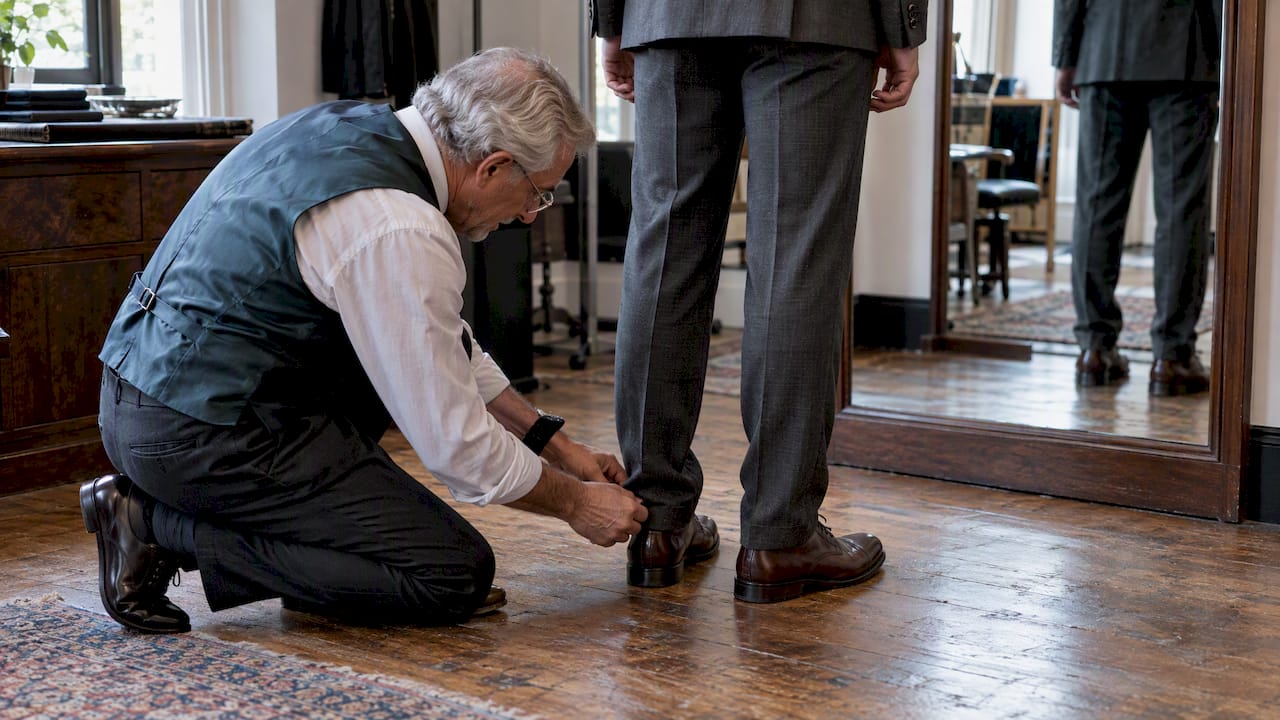
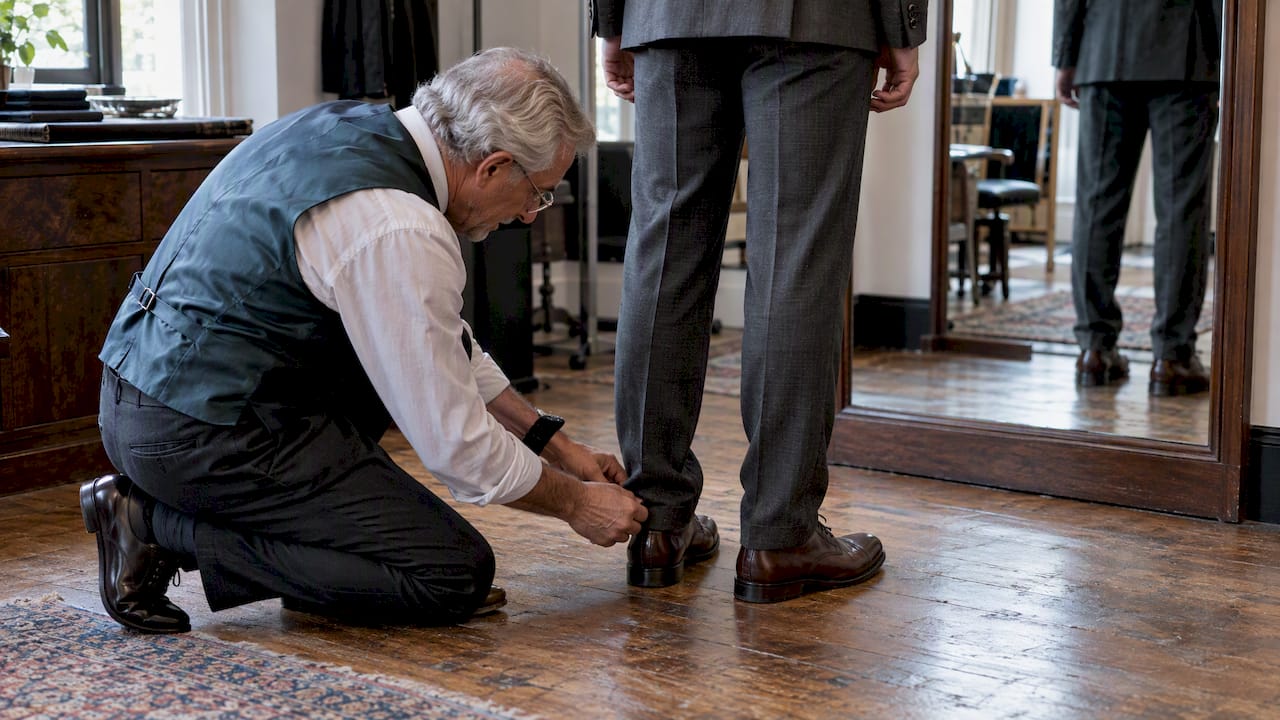
During an initial fitting, measurements are taken with the client standing in their own shoes, then a trial length is pinned and the client is asked to walk, sit, and stand before any permanent stitch is made. Multiple bastings are common, particularly for trousers meant to pair with more than one style of shoe, since a break that suits an oxford can look slightly long against a loafer.
Common requests range from a crisp quarter break for slim business trousers to a fuller, traditional break for pleated formal wear. Fabric choice shapes our advice too: in humid conditions, lighter wools and breathable blends hold their shape and drape more predictably over a full day than heavier cloths, which can soften and lengthen the apparent break as the fabric relaxes. This is factored into the hem from the outset rather than leaving it to chance.
Historical evolution of trouser break styles and their fashion significance
The trouser break as we know it is a relatively modern refinement. Early twentieth century tailoring favoured a generous, almost puddling length, partly because wider-legged trousers and higher-rise cuts were the dominant silhouette and a longer break suited that fuller cut. Through the mid-century decades, as trousers slimmed slightly and cuffs became standard on formal wear, the half break emerged as the balanced, versatile default that tailors still favour for business dressing today.
The shift toward shorter breaks accelerated from the 2000s onward, driven by slimmer suit silhouettes and a broader move toward cropped, cleaner lines in menswear generally. No break and quarter break options, once considered unusually casual or even unfinished by earlier standards, became associated instead with a deliberate, contemporary fit. That shift reflects a wider change in tailoring philosophy: proportion and personal fit took precedence over a single inherited rule about correct length.
What has not changed is the underlying logic. Every era’s preferred break has tracked the dominant trouser cut of its time, wider legs calling for more fabric at the hem, narrower legs calling for less. Understanding that relationship matters more than memorising which decade favoured which look, since it lets you apply the same reasoning to whatever cut you are wearing now.
Trouser break differences across various trouser fabrics and weights
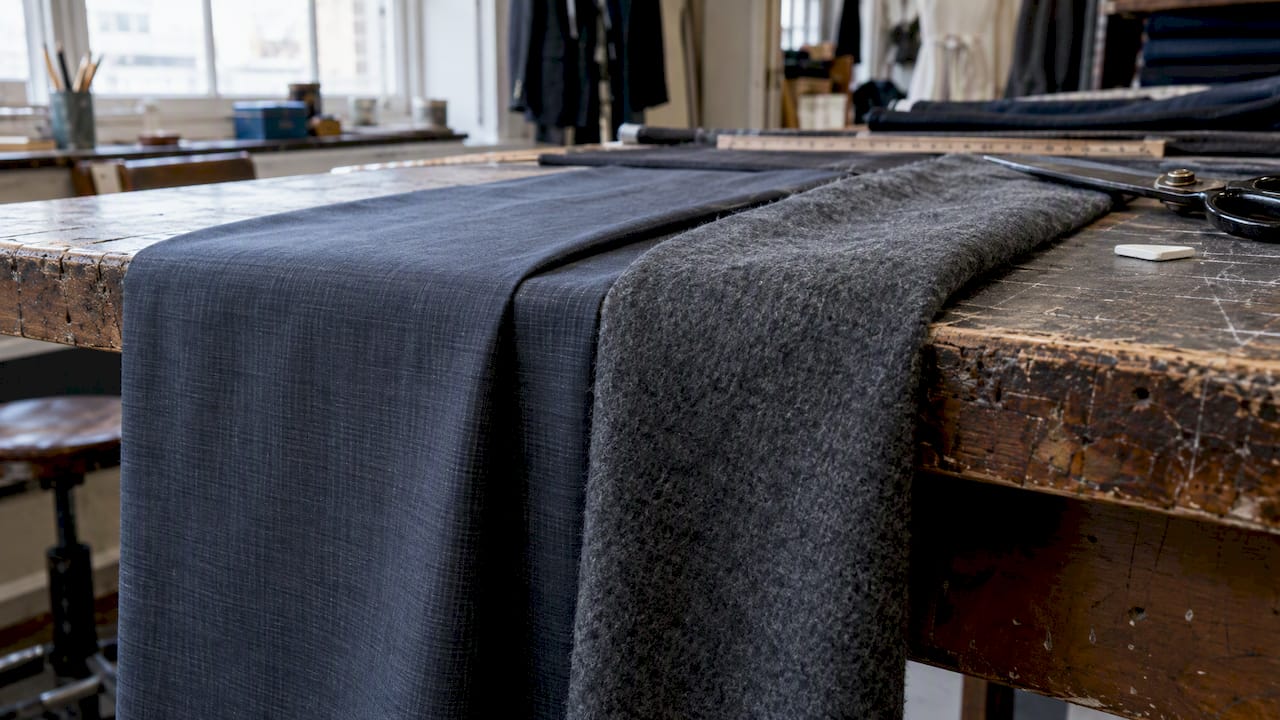
Fabric weight and drape change how a given break behaves on the leg, sometimes significantly. Lightweight wools, fine cottons, and linen blends fall close to the body and tend to look shorter than their measured length, because there is less fabric volume to create a visible fold. Trousers in these cloths can often carry a slightly longer break than a stiffer fabric would suggest, since the drape keeps the line clean rather than bunched.
Heavier cloths, including flannel, tweed, and thicker wool twills, hold more structure and are more prone to visible bunching at the same length. These fabrics often look best with a marginally shorter break than lighter cloths, since the extra body of the material fills out the fold more than a fine wool would.
Seasonal and climate considerations matter too. In warmer, humid conditions, lighter fabrics are the more practical choice regardless of break preference, since they resist the sagging that heavier cloth can develop over a long day of wear. That sagging, however slight, can turn an intended quarter break into something closer to a half break by the afternoon, which is why fabric choice deserves as much attention as the hem measurement itself when the trousers are meant for regular wear in a warm climate.
Visual examples or illustrations of each break type for clearer understanding
Picturing each break side by side makes the differences concrete. Imagine four pairs of otherwise identical grey trousers, hemmed only differently at the ankle.
The first pair, hemmed with no break, shows a crisp horizontal line sitting just above the top of the shoe, with the sock sometimes faintly visible when walking. The second, with a quarter break, grazes the shoe with a single soft crease, the hem’s edge angled slightly rather than flat. The third pair, hemmed to a half break, drapes over the front of the shoe with one clear fold, covering the laces’ top eyelets without touching the ground. The fourth, cut for a full break, bunches more noticeably, with fabric gathering at the ankle and occasionally brushing the floor at the back.
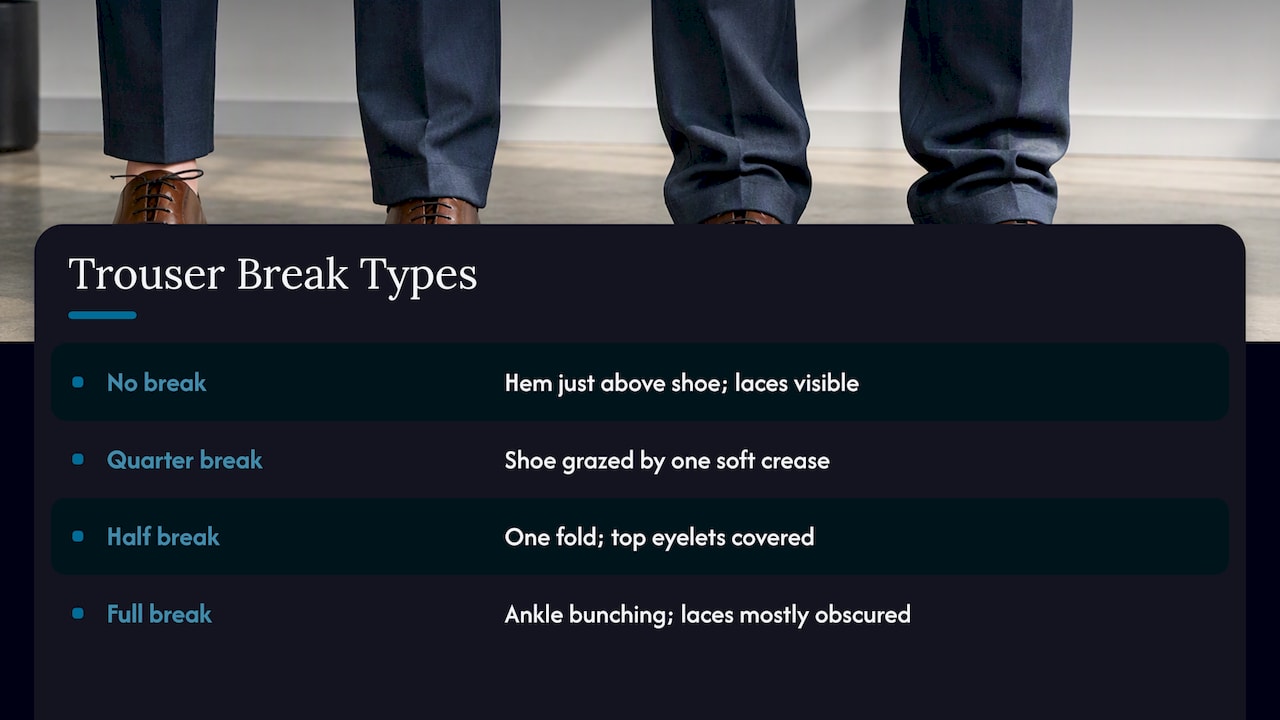
Side-on views make the distinction clearest, since the front crease is most visible in profile as the leg moves forward in a stride. A straight-on view mainly shows how much of the shoe remains visible, which is often the easier test for a quick visual check in a mirror. If you want a simple mental benchmark, compare how much of your shoelaces are visible: fully visible laces point to no break or a quarter break, laces partly covered point to a half break, and laces mostly obscured point to a full break.
Why fit matters more than following a rule
I have hemmed enough trousers to know that no measurement ever overrides what a client sees and feels when they stand in front of a mirror. Proportion matters, but so does personal preference, and the two do not always align with a textbook rule. My advice is to try small adjustments, half a centimetre at a time, rather than committing to a dramatic change based on a chart. The right break reveals itself gradually, not in a single cut.
Ron
How we can help: bespoke fitting and hemming services
Getting a break right by eye is difficult without a trial fitting, which is exactly what a bespoke appointment with us is built around. We measure your trousers with the shoes you intend to wear, pin a trial length, and walk through quarter, half, or full break options with you before any permanent hem is cut.
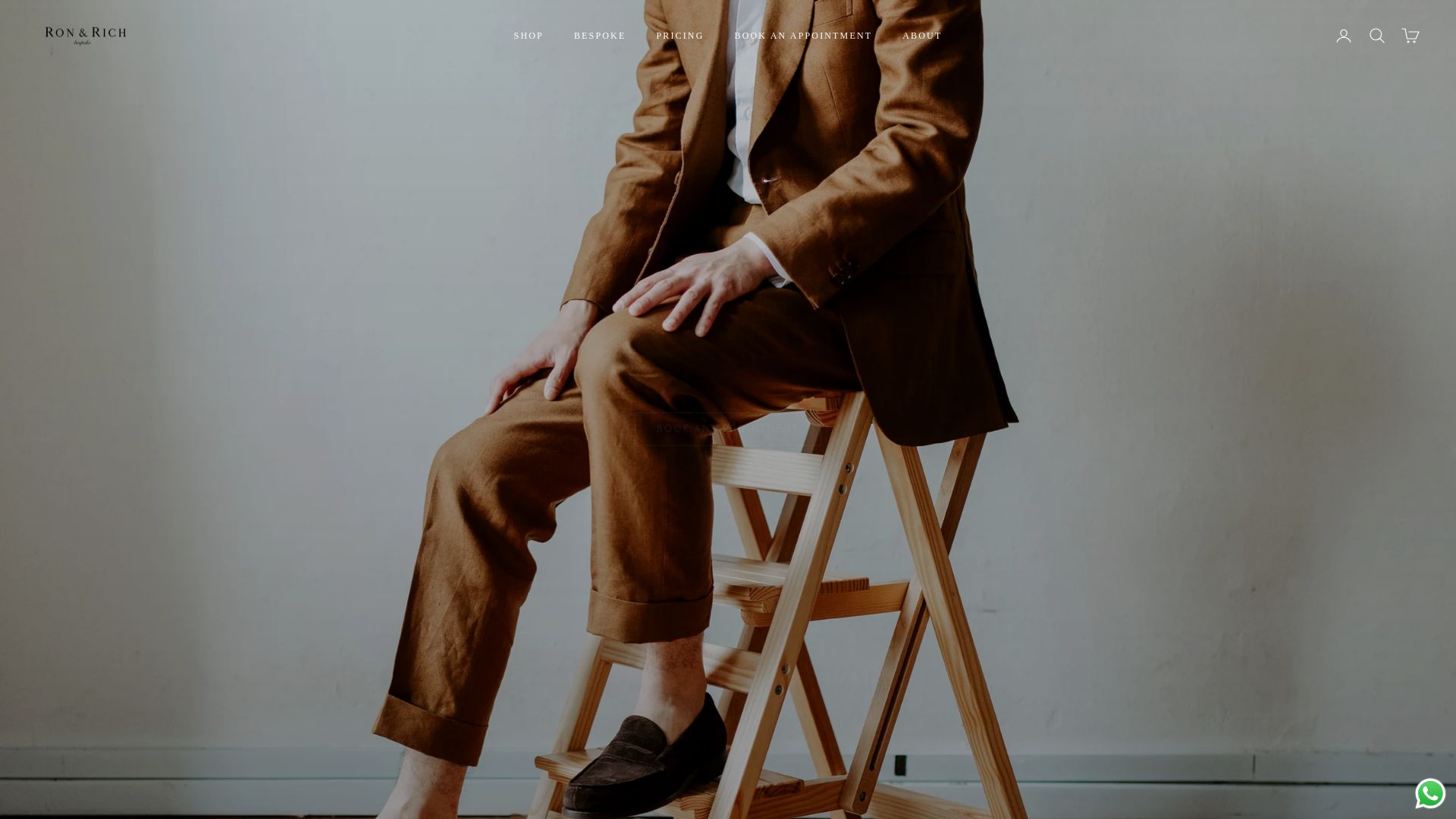
Bring the shoes, socks, and any trousers you would like matched in style, and we will talk through what suits your cut and your wardrobe. Our trouser offering starts from $290, with suits, sports jackets, and tuxedos available for those building a full wardrobe around the same proportions.
FAQ
What is the difference between no break and a slight break?
No break means the hem sits above the shoe with no fold forming at all, giving a cropped, modern line. A slight or quarter break just grazes the top of the shoe with a soft crease, which is slightly more traditional while still reading as contemporary.
How long should trousers be for business wear?
A half break is generally the safest choice for business trousers, since it offers a classic, unobtrusive line that suits most cuts and shoe styles. Slimmer modern suits can carry a quarter break instead without looking out of place in most offices.
How do I measure my trousers for the correct break?
Measure the base length from the inseam to the ankle while wearing the trousers at their intended waist height, then check the hem against the floor in the shoes you plan to wear, as Put This On recommends. A trial pinned length, walked in before cutting, gives a far more reliable result than a flat measurement alone.
Does trouser fabric affect the ideal break length?
Yes, lighter fabrics drape closer to the leg and can look shorter than their measured length, while heavier cloths like flannel or tweed bunch more readily at the same length. Choosing a slightly shorter break for heavier fabrics generally keeps the line cleaner.
What should I bring to a trouser fitting?
Bring the specific shoes and socks you intend to wear with the trousers, since even a small change in sole height shifts where the hem falls. Standing in your natural posture, rather than stretching upright, also helps the tailor judge the break accurately.