Steam a Suit: 6 Steps to Protect Bespoke Shape
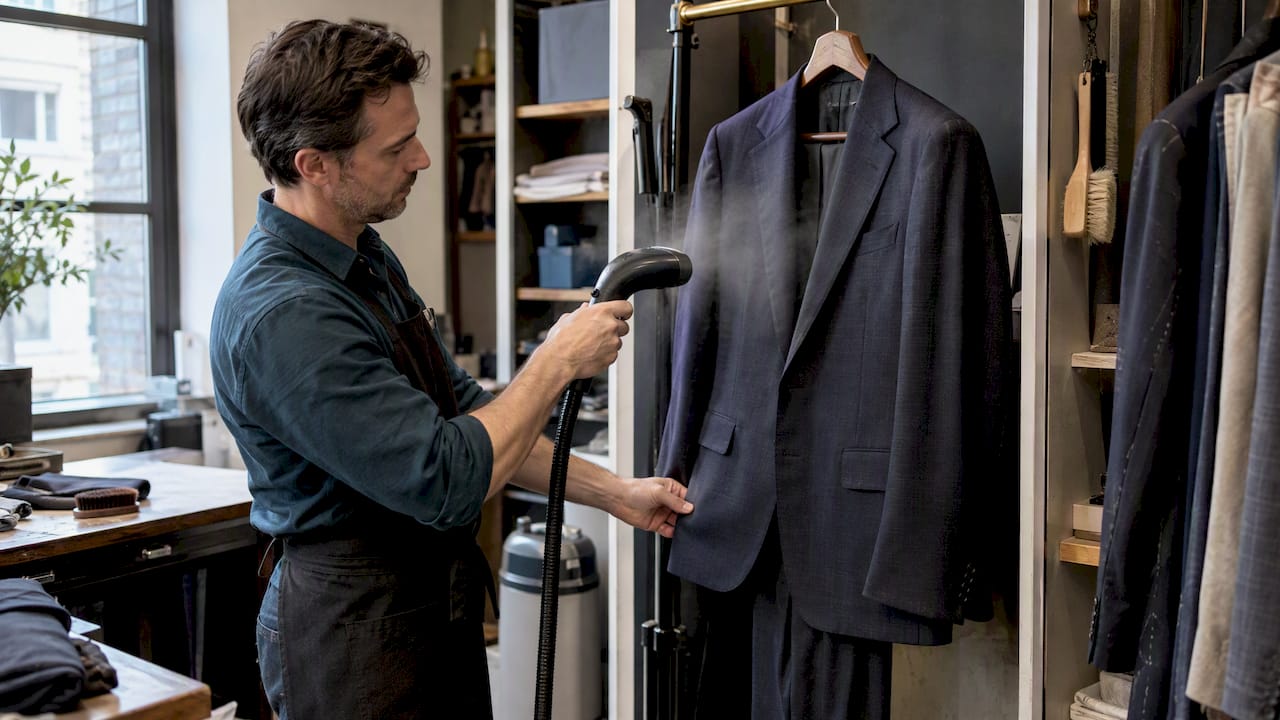
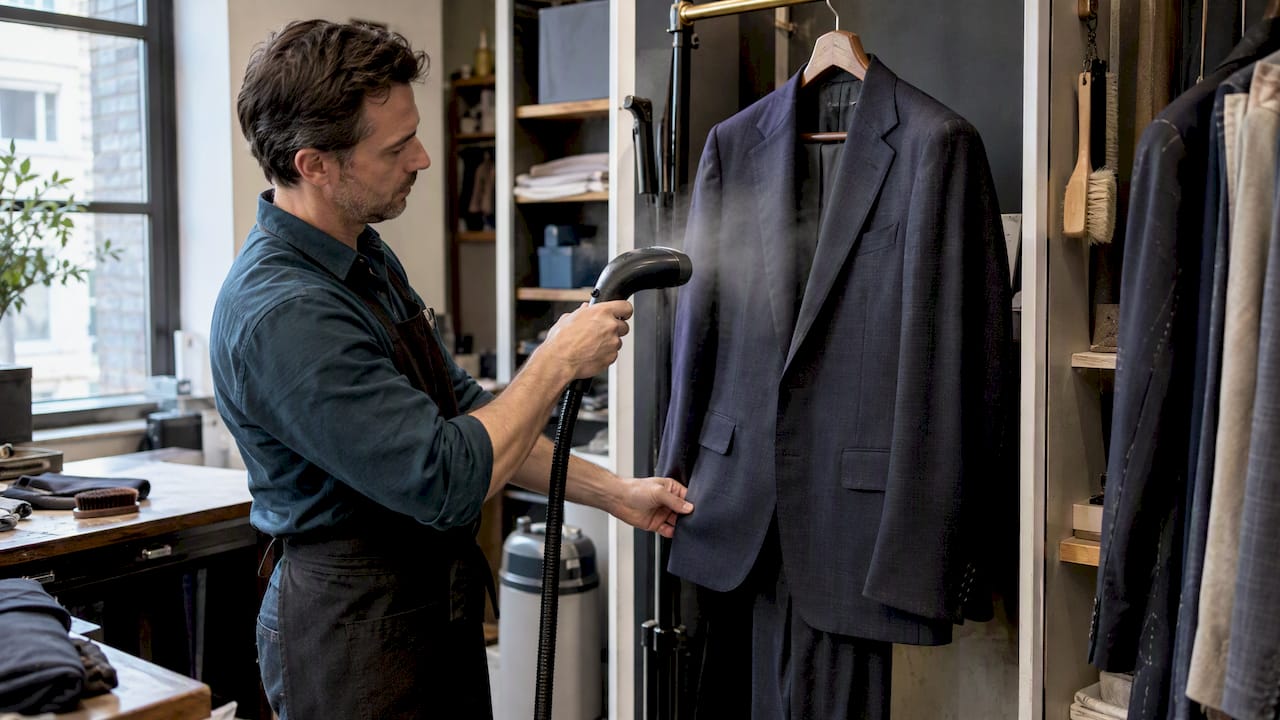
Yes, you can steam most suits to remove light wrinkles and refresh them, provided you check the care label and use controlled, distant passes. Steaming is a gentle maintenance step, not a substitute for professional cleaning when a garment is heavily soiled or structurally compromised. Use a handheld or upright steamer, hang the suit on a wide hanger, work evenly across the fabric, and let the suit air afterwards before you wear it.
TL;DR:
- Check the care label first: one iron dot caps heat at about 110°C, while two dots allow about 150°C; test delicate fabrics discreetly.
- Use distilled water and short, downward passes, holding the steamer away from the cloth; steam inside the jacket when possible to protect its finish.
- Preserve trouser creases by steaming the inside fold and smoothing it by hand, then leave the garment hanging until it is cool and fully dry.
- Choose professional cleaning for deep stains, heavy soiling, persistent odors, shifted canvas, or a dry clean only label when steam may harm the finish.
Ron & Rich
Keep Your Suit Looking Its Best
Ron & Rich creates bespoke suits with careful craftsmanship and personalized fitting for men who value a lasting, considered wardrobe.
Visit Ron & RichTable of Contents
- What you need: tools and preparation
- Check the care label and fabric before you begin
- How to steam a suit jacket safely
- How to steam suit trousers and creases
- Common mistakes and safety tips when steaming a suit
- When steaming is enough, and when to see a professional
- Short maintenance routine between professional cleans
- A tailor’s perspective on caring for bespoke suits
- How we can help with bespoke care and pressing
- FAQ
- Sources
What you need: tools and preparation
A handful of simple tools makes the difference between a crisp refresh and a disappointing result. We recommend keeping the kit minimal so the process stays quick and repeatable between cleans.
- A handheld garment steamer or a vertical steamer with a steady steam output.
- A wide wooden hanger that holds the shoulder shape rather than a thin wire one.
- Distilled water for the steamer’s reservoir.
- A press cloth or clean white cotton towel for sensitive areas.
- A lint brush to clear surface dust before you begin.
Before steaming, clear the pockets, unfasten every button, and hang the suit at a height that lets you work without stooping. Test the steam on an inside seam or the lining first; if the fabric puckers or darkens, stop and treat the garment more cautiously.
Pro Tip: Let the steamer reach full temperature before it touches the suit. A weak, lukewarm burst leaves damp patches instead of smoothing fibres.
Check the care label and fabric before you begin
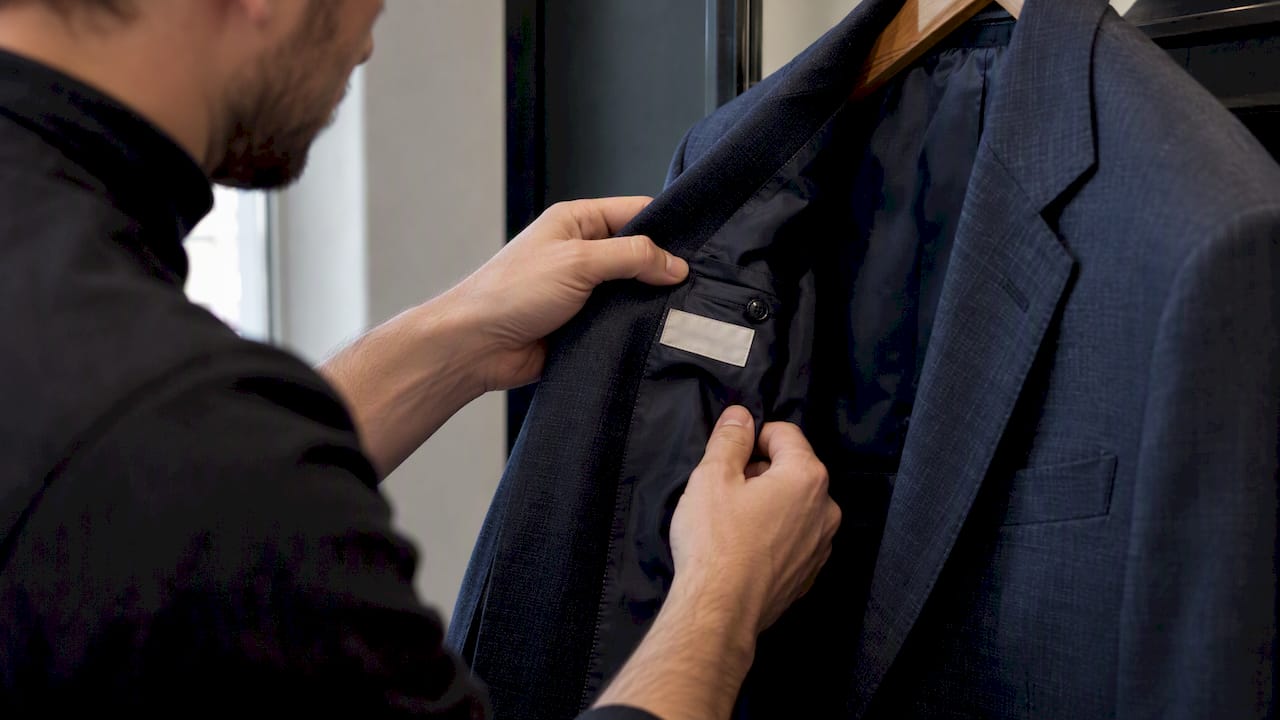
Every care label carries a story in symbols, and the iron icon tells you what heat and steam the fabric can take. Under ISO-based care labelling, one dot on the iron symbol restricts heat to around 110°C, while two dots permit moderate heat of about 150°C. Treat these dots as your ceiling for steam as well as for direct ironing.
Fabric behaviour varies just as much as the symbols do:
- Wool and wool blends, the backbone of most tailored suits, respond well to steam and spring back into shape easily.
- Linen tolerates steam but creases again quickly, so work in small sections and finish promptly.
- Silk linings, technical blends and coated fabrics deserve extra caution; test an inconspicuous spot before committing to the whole garment.
How to steam a suit jacket safely
A jacket holds its shape through canvassing and careful pressing, so the steaming motion matters as much as the heat.
- Hang the jacket on a wide hanger with every button undone, and choose a well-lit, ventilated spot to work in.
- Begin at the inside shoulder seams and lapel edges, where wrinkles tend to settle first.
- Hold the steamer head at a cautious distance from the fabric and use short, downward passes rather than lingering in one place.
- Work methodically down the body and sleeves, letting the fabric relax before you move to the next section.
- Shape the lapels and collar by hand once the steam has softened the fibres, smoothing any remaining seam lines.
- Leave the jacket hanging until it is completely dry before you put it on or return it to the wardrobe.
Pro Tip: Steam from the inside of the jacket where you can, since the lining takes the heat first and protects the outer cloth’s finish.
How to steam suit trousers and creases
Trousers reward a slightly different approach, mainly because the front crease is the feature you are trying to protect rather than remove.
- Hang the trousers by the waistband, or fold them over a hanger so both legs hang straight, and work from the waist down to the hem.
- To preserve the crease, steam the inside fold first and smooth it with your hand rather than pressing direct heat onto it without checking the label.
- Pass a press cloth over stubborn creases if needed, using gentle pressure instead of a hot iron.
- Let the trousers hang until they are cool and fully dry, since creases set properly only once the fabric has had time to settle.
Common mistakes and safety tips when steaming a suit
Most steaming mishaps come from impatience rather than the tool itself.
- Avoid holding the steamer too close or too long in one spot, which can wet and weaken fibres or disturb the glued canvas inside a tailored chest piece.
- Use distilled water rather than tap water to avoid mineral deposits and visible steam marks on the cloth.
- Keep steam away from trims, leather details and glued areas unless a tailor has confirmed it is safe.
- Protect buttons and linings from direct heat, and test an inconspicuous area first whenever you are unsure of a fabric’s limits.
When steaming is enough, and when to see a professional
Steaming earns its place as a quick fix for light wrinkles, a lingering odour or a crease that has softened after travel. It will not lift a deep stain or repair a jacket whose canvas has shifted or separated.
- Reach for the steamer when the suit looks slightly tired but is otherwise clean and structurally sound.
- Book a professional when the garment is heavily soiled, shows signs of canvas trouble, carries a persistent odour, or the label reads dry-clean only and you suspect water-based steam could affect it. As one guide on steamers versus dry cleaners notes, steaming refreshes a garment but is not a substitute for proper cleaning, and misapplied steam can affect finishes such as water repellency. For a fuller view on frequency, our guide on how often to dry clean a suit covers the signs worth watching for.
Short maintenance routine between professional cleans
A short routine after each wear keeps a suit presentable far longer than steaming alone ever could.
- Hang the suit as soon as you take it off, allowing moisture and odours to release before it goes back in the wardrobe. Routine airing reduces the need for frequent chemical cleaning, which can wear fibres down over time.
- Brush the surface regularly to lift dust and grit before it embeds in the weave.
- Spot-treat marks as soon as you notice them, and give the suit a brief steam to refresh it between cleans.
- A light fragrance refresh can complement airing without masking odours the way heavier scents sometimes do.
For a longer view on pacing this routine against how often you wear the suit, our piece on making a suit last sets out a sensible cadence by fabric and frequency of wear.
A tailor’s perspective on caring for bespoke suits
Bespoke construction is built to move with you, not to be forced into shape by heat alone. We have always treated airing and careful steaming as the first line of defence, reserving the needle and the tailor’s eye for anything structural. That instinct comes from preserving the shape and finish of garments we have cut ourselves.
Ron
How we can help with bespoke care and pressing
When a suit needs more than a home steam, a tailor’s hand restores what steam cannot. We offer bespoke tailoring, repairs and professional pressing alongside honest advice on whether your garment needs cleaning, re-canvassing or simply a careful press.

- Browse our suits, sports jackets and tuxedos if you are weighing a repair against a replacement.
- Visit our suits page to see how we build garments meant to hold their shape for years.
- If packing and travel are behind your wrinkles, our guide to travel suit care is worth a read before your next trip.
FAQ
How long should you steam a suit?
A full jacket and trousers take varying amounts of time to steam, depending on the fabric and how heavily creased they are. Rushing the process is what causes damp patches, so slow, even coverage matters more than total time.
Do steam cleaners really work on clothes?
Steam loosens the fibres enough to release light wrinkles and freshen the fabric, making garments look and smell cleaner between washes or professional cleans. It works well for maintenance, though it will not lift embedded stains or deep soiling the way proper cleaning does.
Where does the dirt go when you steam clean?
Steaming does not remove dirt or stains; it relaxes fibres and releases surface odours and light creasing through heat and moisture. Any visible soil or embedded grime still needs washing or professional cleaning to actually lift it from the fabric.
What does pressing a suit mean?
Pressing applies direct heat and pressure, usually with an iron and press cloth or a pressing machine, to set a crisp, flat finish into the fabric. It is a more forceful technique than steaming and is typically carried out by a professional as part of a full clean or finishing service.