Spot Cleaning a Suit: Act Within an Hour to Protect Bespoke Structure
Yes, you can safely remove small, fresh marks from most suits at home if you check the care label, test a hidden area and blot carefully from the edge to the centre. Act within the first hour, use minimal moisture and the gentlest tools available. If the mark is large, set, on a structured panel or the label says “dry clean only” beyond light blotting, stop and take the garment to a specialist.
TL;DR:
- For coffee or tea, blot with cool water and avoid heat; blot red wine with a dry cloth, and keep water away from ink.
- Wool can develop rings if left damp, while silk should only be blotted and never saturated.
- A dry clean only label permits light blotting, not washing; test treatment on a hidden seam with a white cloth and check for dye transfer.
- Use a specialist for large or set stains, dye migration, ink, or marks on structured areas such as lapels and shoulders.
- Brush the jacket after each wear, air it for 24 hours, and aim for professional cleaning every three to four months.
Table of Contents
- A quick, step-by-step method you can use now
- Stain-by-stain quick reference for common spills
- Fabrics, care labels and tests: deciding what’s safe to try
- When to stop and bring the suit to a professional cleaner
- Protecting bespoke structure and spacing out dry cleans
- A tailor’s emergency checklist
- How we can help with care, repair and tailored advice
- FAQ
- Sources
A quick, step-by-step method you can use now
Before touching the stain, gather a few simple tools and work through the steps in order. Rushing straight to water or a cleaning agent is the most common way a small mark becomes a lasting one.
- Lay out white cotton cloths, a blunt spoon or card, a little talc or cornflour, and a soft clothes brush.
- Check the care label and fibre content, then test your chosen method on an inside seam or hem.
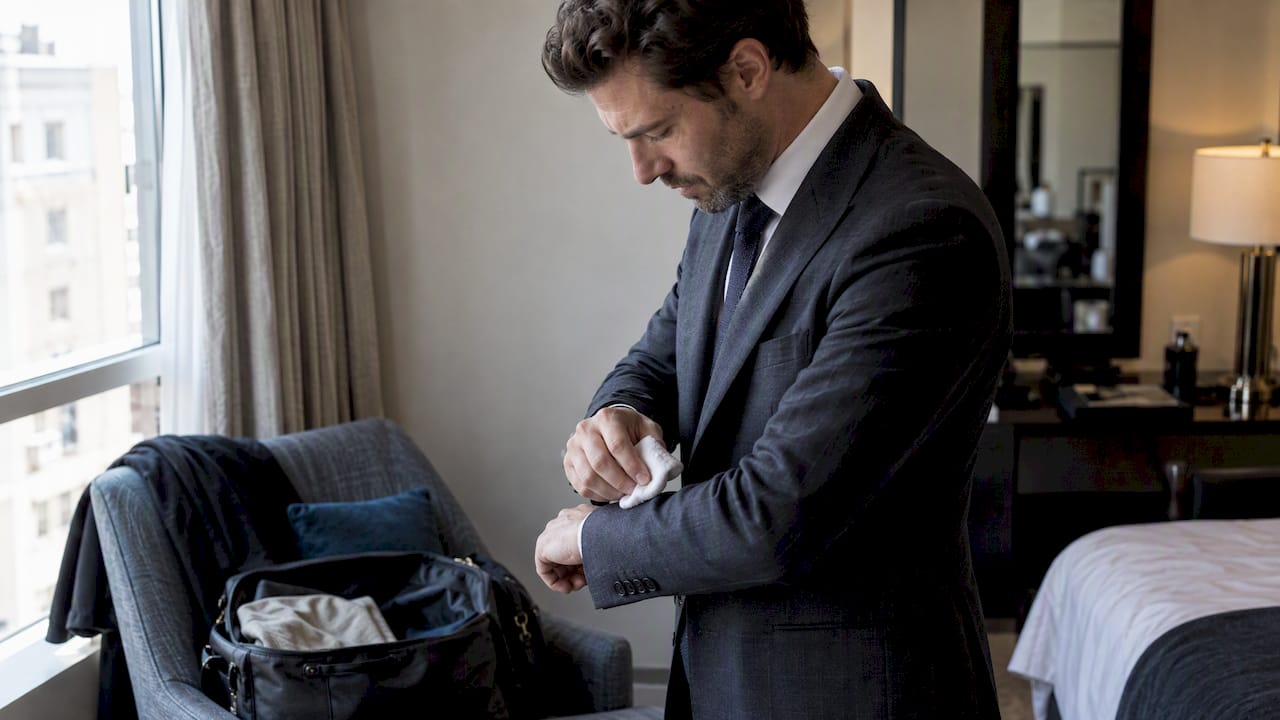
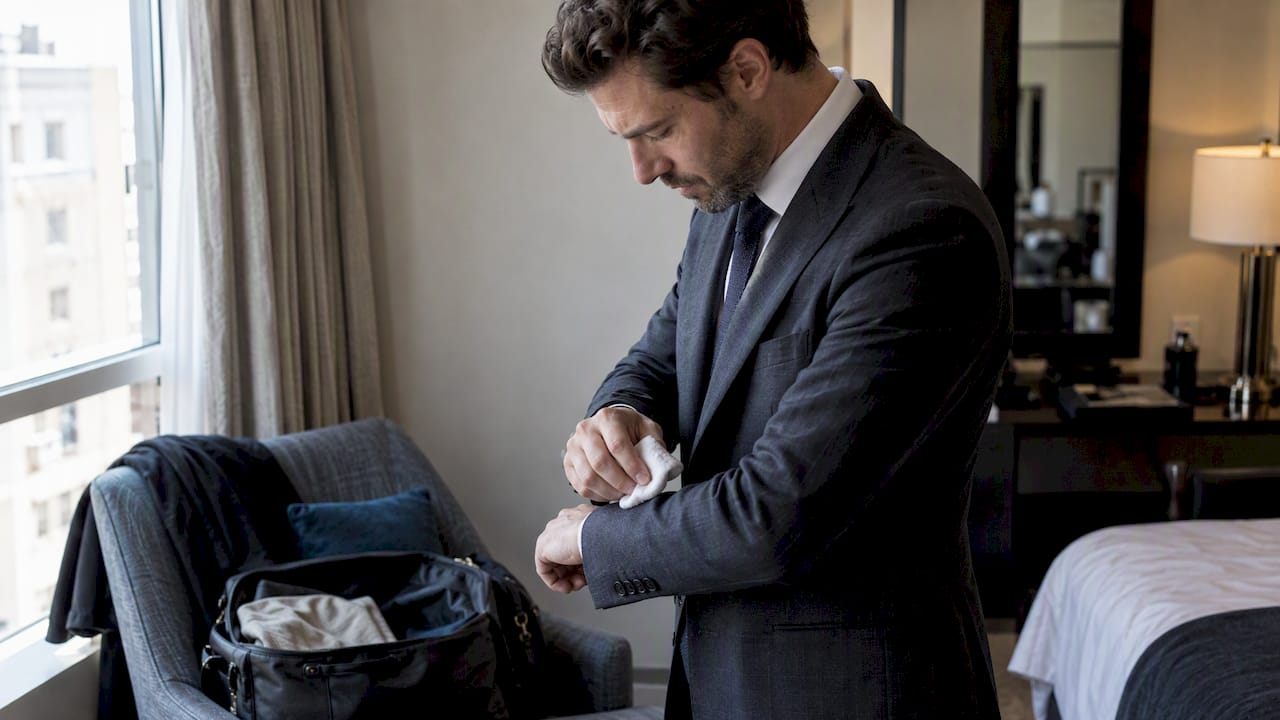
- Lift any solids with the blunt edge, then blot (never rub) from the outer edge of the mark toward its centre using a clean white cloth.
- For water-based marks, use plain cool water. For grease, dust on an absorbent powder and leave it to draw the oil out. Add a trace of wool-safe detergent only if the label permits it.
- Hang the jacket on a contoured hanger to air-dry away from direct heat, radiators and sunlight. Never iron or tumble dry a spot-cleaned area.
Fresh stains respond far better to this sequence than marks left to set, and removing solids before blotting prevents a stain from spreading further into the weave, as Hamlet Laundry notes.
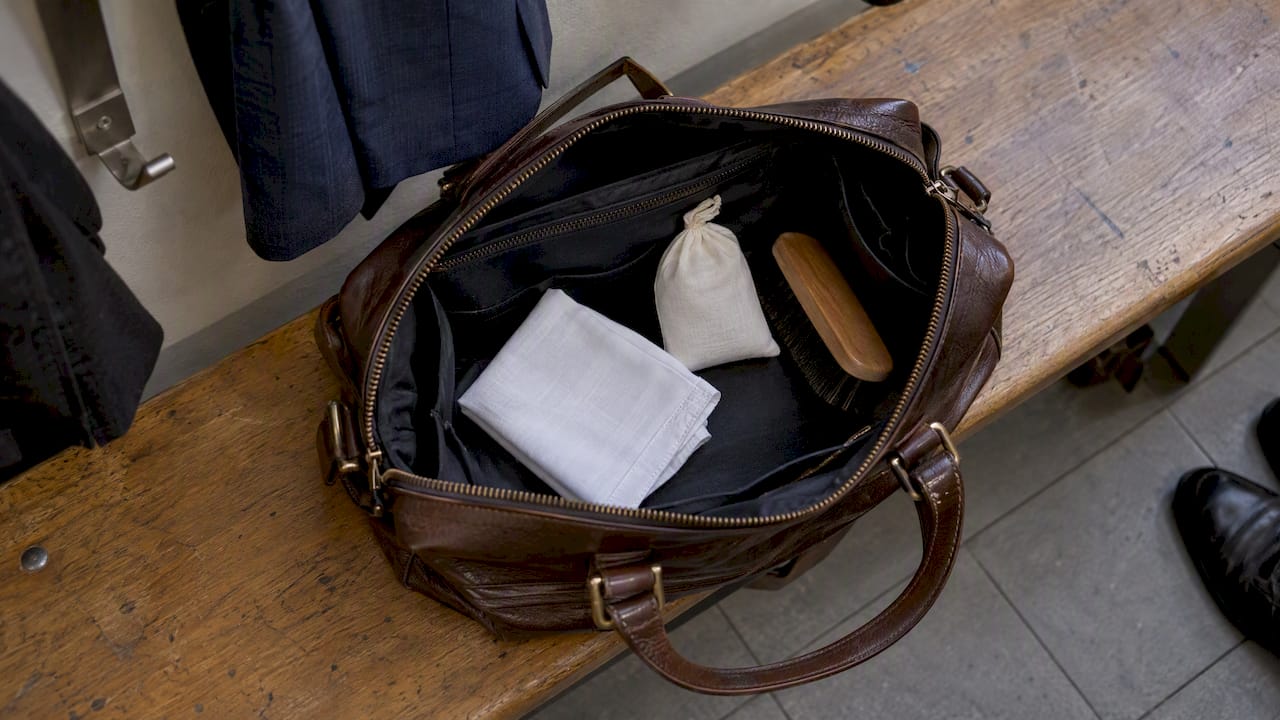
Pro Tip: Keep a compact emergency kit, a folded white handkerchief, a small sachet of talc and a travel-size brush, in your bag or wardrobe so you’re never caught without the basics.
Stain-by-stain quick reference for common spills
Different stains call for different first moves. Matching the response to the spill gives you the best chance of avoiding a permanent mark.
- Coffee and tea: blot with a cloth dampened in cool water, working from the edge in, and avoid any heat, which can set the tannins permanently.
- Red wine: blot immediately with a dry cloth to lift as much liquid as possible; if colour remains, resist home solvents and take the jacket to a specialist promptly.
- Grease and oil: lift any solid residue, dust the area with cornflour or talc to draw out the oil, brush gently once dry, and seek professional treatment if a mark persists.
- Ink: avoid water entirely, slip a dry cloth behind the fabric to catch any bleed-through, and arrange specialist spotting as soon as you can.
- Blood: use cool water only and dab gently rather than rubbing; larger or dried patches need professional attention, since heat and rubbing can set protein stains deeper into the fibres.
- Mud: let it dry fully before touching it, then brush away the residue; wiping wet mud only pushes particles further into the weave.
- Sweat and deodorant: blot fresh marks and air the garment thoroughly, though lined jackets with set-in marks usually need professional treatment to lift residue without damaging the lining.
Blotting with a white cloth rather than a coloured one avoids transferring dye onto the suit, and working from edge to centre keeps the stain from spreading outward, a principle Hamlet Laundry applies across nearly every fresh-stain scenario. For a closer look at treating deodorant marks on shirting before they set, our guide on fixing deodorant stains covers the same cool, gentle approach.
Fabrics, care labels and tests: deciding what’s safe to try
Not every suit tolerates the same handling, so the fabric and the label come before any treatment.
- Wool and wool blends tolerate light moisture and gentle blotting reasonably well, but prolonged dampness can leave rings or shrink the fibres.
- Linen and cotton are generally more forgiving of water, though they crease and shrink more readily than wool.
- Silk is highly sensitive to water marks and should only ever be blotted, never saturated.
- Polyester and synthetic blends often tolerate a little more handling, but some suits, particularly cotton, linen or polyester blends, may only tolerate careful home washing when the label explicitly allows it, while wool, silk and lined suits usually should not be washed at home, according to Whirlpool.
Check the label for “dry clean only”, a hand-wash symbol or a numbered wash-tub icon, since each tells you how much moisture the fabric and construction can bear. Before applying anything, dab a small amount of your chosen agent on an inside seam or hem with a white cloth and wait a few minutes to confirm no colour transfers. When the label reads “dry clean only,” treat that as permission for light blotting alone, with professional attention to follow as soon as practical.
When to stop and bring the suit to a professional cleaner
Some marks are simply beyond the scope of home care, and recognising the threshold early protects the garment.
- Hand the suit to a specialist when the stain is large, sits on a structured area like a lapel, shoulder or pocket edge, involves ink or a set protein stain, shows dye migration, or has already survived one or two home attempts.
- Professional cleaners work in stages, starting with dryside solvents for oil-based marks and moving to wetside, water-based agents for water-soluble ones, always testing colourfastness first and progressing from the weakest treatment to the strongest, as described by Cleaners Monthly.
- Tell the cleaner what caused the spill, roughly when it happened, and exactly what you tried at home, since this shapes which treatment they reach for first.
- Ask for a turnaround estimate and a price upfront. Specialist spotting usually takes a few days longer than a routine clean, so it helps to plan ahead of any event.
Protecting bespoke structure and spacing out dry cleans
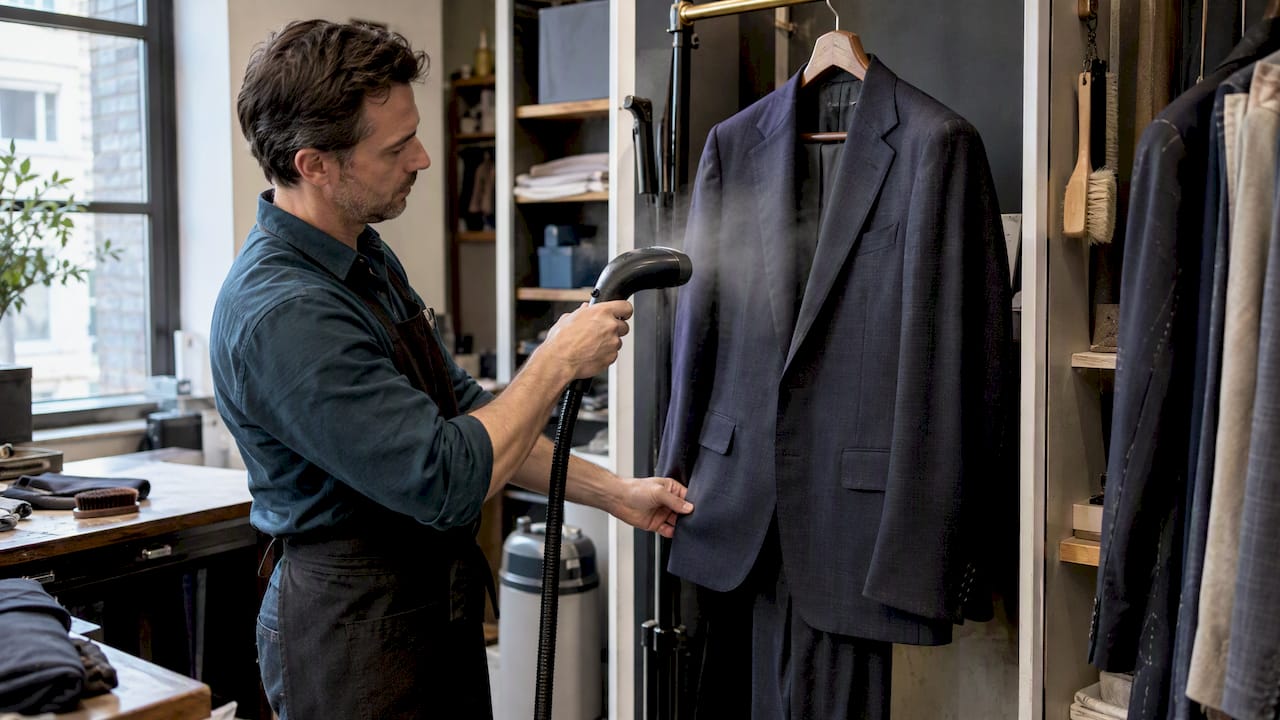
A bespoke jacket carries more inside it than fabric: a canvas, shoulder pads and interlinings all shape how it drapes. Machine-washing a “dry clean only” suit risks irreversible shrinkage, distortion of that internal canvas and permanent loss of shape, a risk Pressto Dry Cleaners highlights plainly. We recommend dry cleaning a bespoke suit only occasionally where possible, reserving solvents for when they’re truly needed. Between cleans, brush the jacket after each wear, let it air for 24 hours on a proper hanger, and use gentle steam to refresh the cloth and lift odour.
Regular brushing and airing between wears does more for a suit’s longevity than any cleaning product ever will.
A tailor’s emergency checklist
Check the label. Blot, never rub. Test on a hidden seam. Apply the smallest amount of treatment that will do the job. Air the garment properly before wearing it again. If anything about the stain or the fabric gives you pause, hand it to a professional rather than risk the cloth. We have built our reputation on careful, considered handling of fine cloth.
Ron
How we can help with care, repair and tailored advice
A spot-cleaning kit solves the small emergencies, but a bespoke suit also benefits from a knowledgeable tailor. We provide guidance on fabric care alongside repairs and alterations for garments that need more than a wipe and a brush.

At a consultation, we assess the cloth, the construction and the specific mark before recommending a path forward, whether that’s a conservative home routine or specialist spotting on our side. Browse our suits and pricing or explore our suit offerings to see what a tailored approach to both fit and care looks like, and get in touch when you’d rather leave a stubborn mark to us.
FAQ
What happens if you accidentally wash a “dry clean only” suit?
Washing a “dry clean only” suit at home risks irreversible shrinkage and distortion of the jacket’s internal canvas, which can permanently change its shape, according to Pressto Dry Cleaners. Heat and agitation from a washing machine are generally incompatible with structured tailoring, so it’s worth taking the garment to a specialist for assessment rather than attempting a repeat wash.
What is the best way to clean a suit?
The safest approach combines prevention with occasional professional care: brush the suit after each wear, air it for 24 hours, and use gentle steam to refresh it between cleans, as recommended by Laundry Services. We suggest booking a professional dry clean only every three to four months where possible, with spot cleaning reserved for small, fresh marks in between.
What does “spot clean” mean?
Spot cleaning means treating a single small, fresh mark directly rather than washing or dry cleaning the entire garment. It involves removing any solids, blotting gently from the edge toward the centre with a clean white cloth, and using the smallest possible amount of water or cleaning agent appropriate to the fabric.
Should you dry clean a suit?
Dry cleaning suits a suit when a stain is large, set or sits on a structured area such as a lapel or shoulder, or when the care label calls for it. For everyday upkeep, regular brushing, airing and light steaming reduce how often solvent-based cleaning is needed, since repeated unnecessary dry cleaning can strip natural oils from the fibres over time, per Laundry Services.
Sources
- Worst that could happen if don’t dry clean, Pressto Dry Cleaners (Singapore)
- How often should you dry clean suits and dresses?, Laundry Services (Singapore)
- How To Remove Suit Stains Without Ruining It, Hamlet Laundry
- Dry- and Wetside spotting, Cleaners Monthly