3.5–5 cm Cuff Width: A Tailor's Guide to Choosing Cuffs or Clean Hems
Choose cuffs for traditional, heavier cloth and classic suiting; choose no cuffs for modern, minimal and lightweight looks. A cuff adds weight and a traditional finish to the leg, which flatters structured fabrics and relaxed cuts, while a clean hem gives a leaner, more formal line that suits slim tailoring. If you are unsure, the fabric and the occasion should decide, not personal habit alone.
TL;DR:
- Slim or tapered trousers usually look cleaner without cuffs, while straight or fuller cuts can carry the added hem weight without disrupting proportion.
- Choose cuffs for flannel, tweed, or heavier worsted wool in classic cuts; lightweight linen and tropical wool tend to collapse into limp folds.
- For formal tailoring, minimal silhouettes, or trousers worn with braces, choose a clean hem; sleek oxfords and loafers also suit uncuffed trousers.
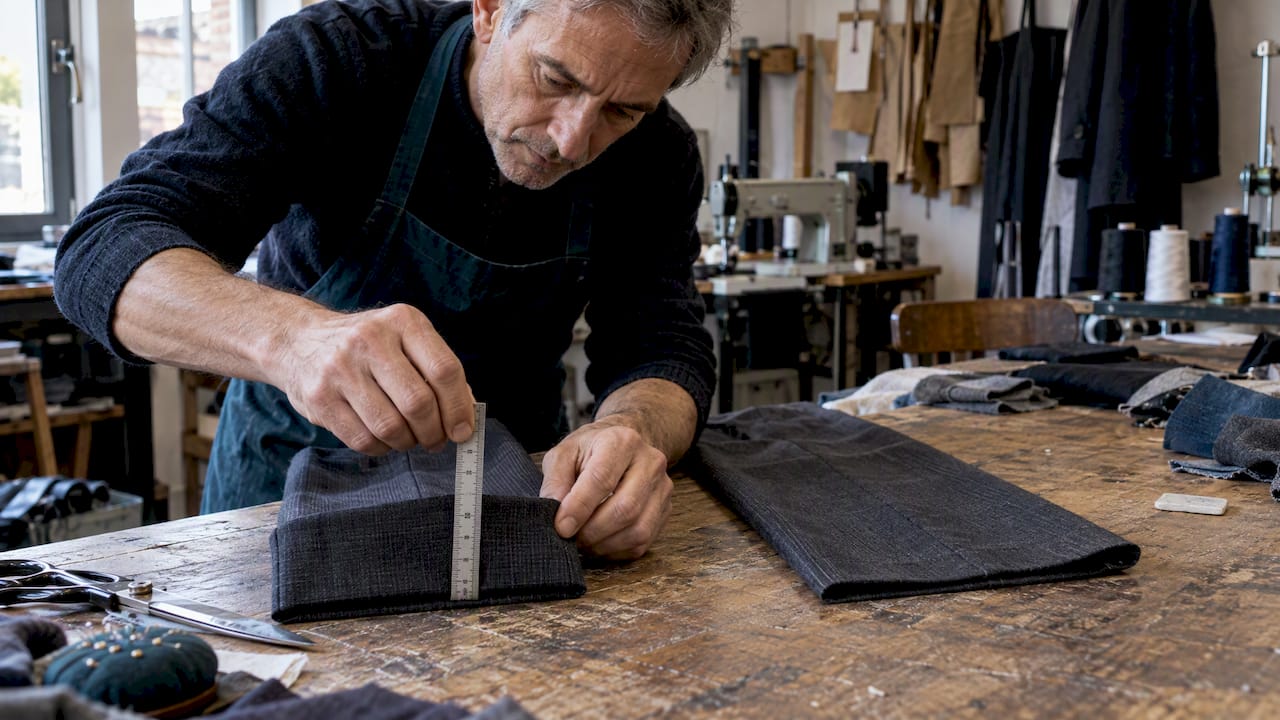
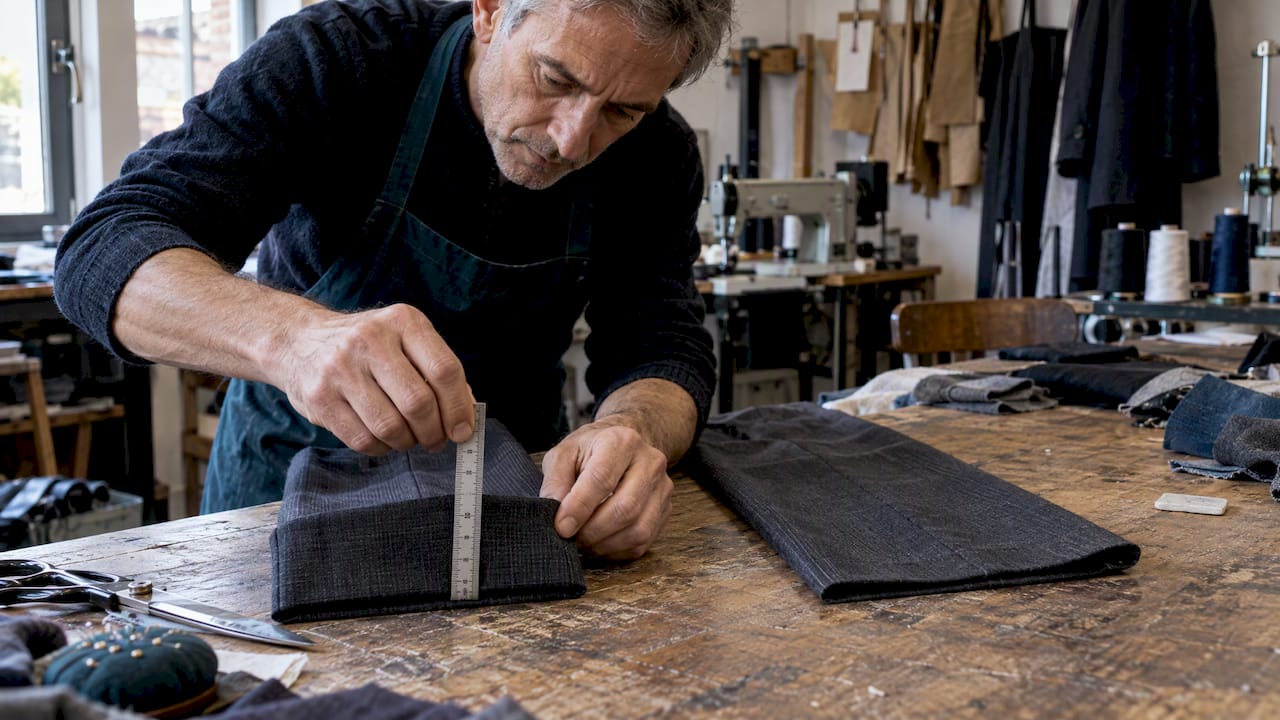
- A cuff usually measures 3.5 to 5 centimetres and needs a slight break; test the length with your actual shoes before cutting.
Table of Contents
- How cuffs change trouser proportions: break, drape and silhouette
- When to choose cuffs and when to skip them
- How to wear cuffs correctly: measuring break, turning the cuff and temporary fixes
- Fabric and construction: why some cloth favours a cuff
- Common mistakes and simple maintenance for a crisp finish
- Our tailoring perspective at Ron & Rich
- Book a fitting for the correct hem
- FAQ
- Further reading and sources
How cuffs change trouser proportions: break, drape and silhouette
A cuff is a small piece of engineering. By folding the hem back on itself, it adds visible weight to the bottom of the leg, which shortens the perceived length of the trouser and anchors the silhouette. That is why cuffs suit fuller or straight-leg cuts: the extra fabric at the ankle balances the volume above it. On a slim or tapered leg, the same fold can look bulky, interrupting the line a narrower cut is built to create.
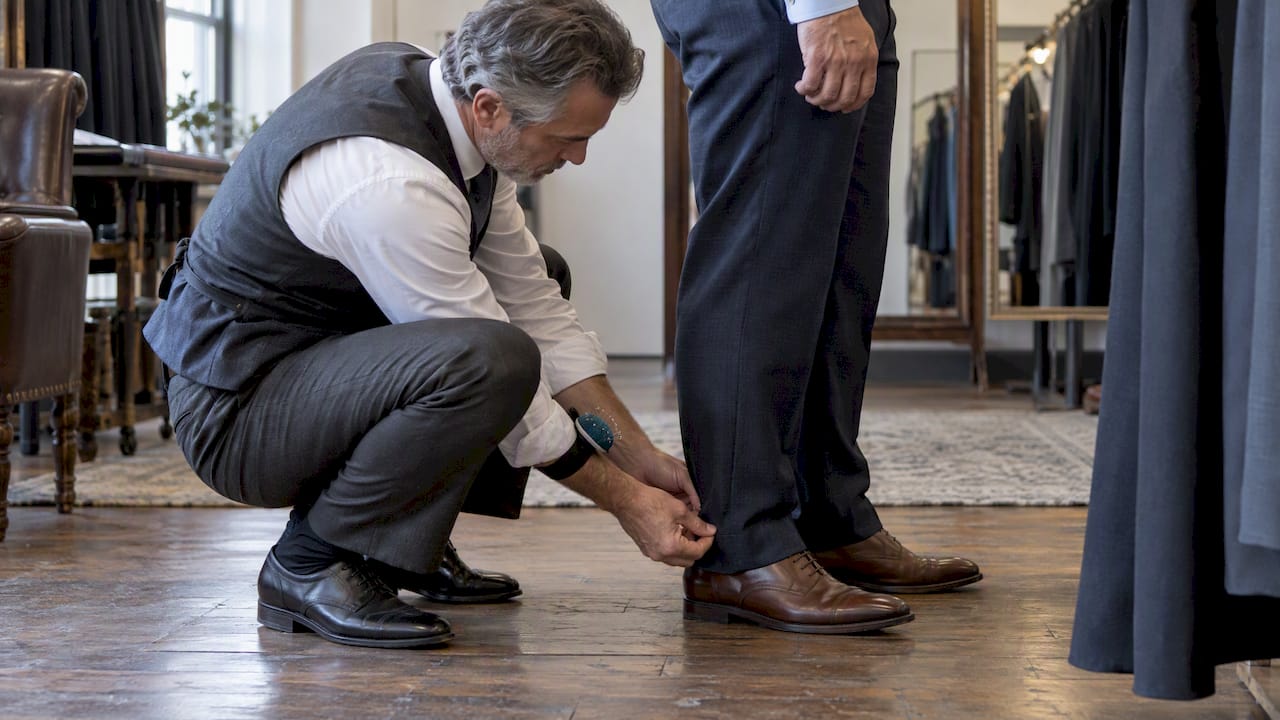
Cuff width and break work together. “Break” describes how the hem folds over the shoe, from “no break” (hem skims the shoe) to a “full break” (visible crease at the front). A cuffed hem is usually cut with a slight break so the cuff sits level all the way round, front and back, without dragging on the ground.
- Slim and tapered trousers generally resist cuffs; the added fold competes with the narrow line.
- Straight and full cuts accept cuffs well; the weight at the hem balances the volume through the thigh.
- A shorter break keeps a cuff looking sharp; too much break collapses the fold and hides it under the shoe.
When to choose cuffs and when to skip them
Occasion and footwear do most of the deciding. A classic worsted suit for the office or a formal event reads cleaner with no cuff, especially under a slim or modern-fit jacket. Cuffs, by contrast, earn their place in more traditional, vintage or country-inspired outfits, where the extra texture and structure add character rather than bulk.
- Choose a clean, uncuffed hem for formal tailoring, minimal silhouettes and anything worn with braces for a continuous line.
- Choose cuffs for flannel, tweed or heavier worsted trousers worn in a classic or relaxed cut, particularly with a belt.
- Pair uncuffed trousers with sleek oxfords or loafers, where a straight line to the floor keeps the look sharp.
- Pair cuffed trousers with derbies or boots, which carry the extra visual weight at the ankle without looking top-heavy.
Tailors who coordinate hem finish with how the trouser is held up, braces, belt or side adjusters, tend to get the proportion right the first time rather than correcting it later.
How to wear cuffs correctly: measuring break, turning the cuff and temporary fixes
Most turn-ups sit between 3.5 and 5 centimetres, with narrower cuffs suiting slimmer trousers and wider ones suiting fuller cuts. Before committing to a permanent hem, check the break with the actual shoes you intend to wear: stand naturally and look at the fold from the front and from behind, since an uneven break is one of the most common hemming faults.
- Try a temporary neat roll or a few pins to test proportion before any fabric is cut.
- A tailor’s clip can hold the fold in place for a fitting without damaging the cloth.
- Once you are happy with the length, ask for a permanent hem with extra allowance built in.
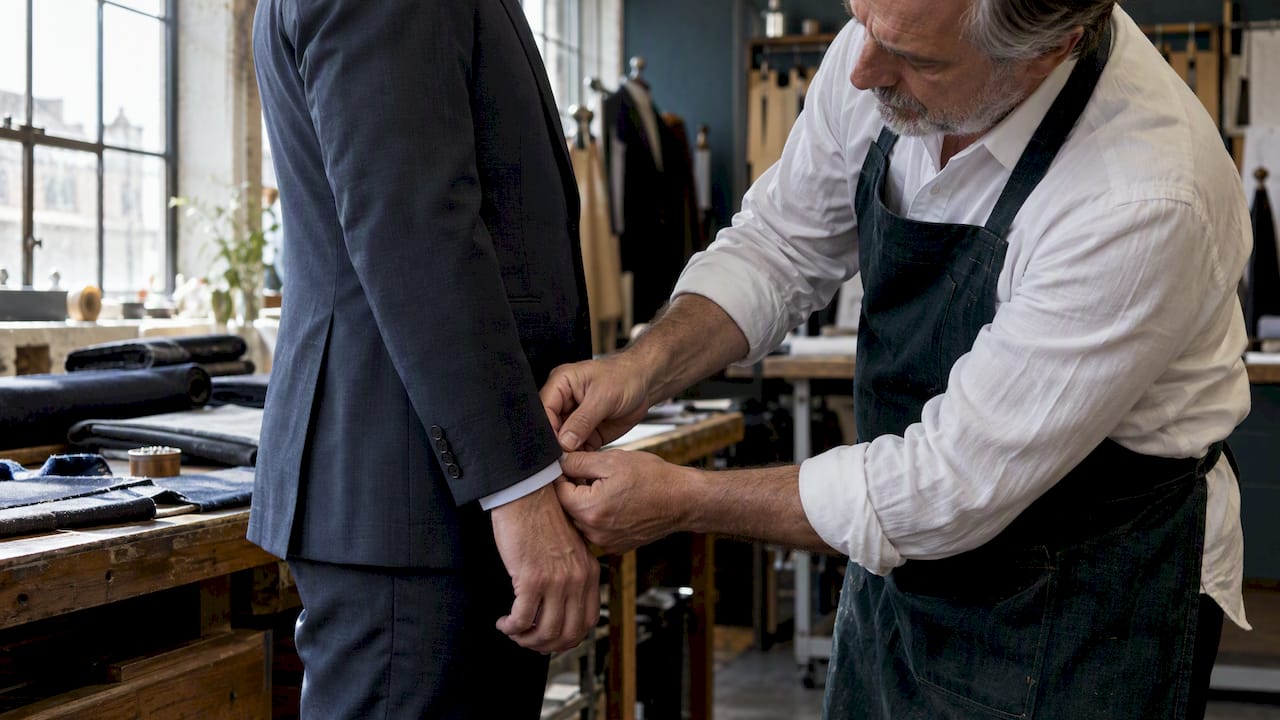
When you brief a tailor, be specific: state the cuff width you want, the shoe you will wear most often with the trousers, and whether you prefer a slight break or none at all. That phrasing gives a tailor the measurements needed to cut the hem allowance correctly the first time.
Pro Tip: Bring the actual shoes to your fitting, not a similar pair. A half-centimetre of sole height changes the break more than people expect.
Fabric and construction: why some cloth favours a cuff
Not every cloth behaves the same way once it is folded. Heavier flannels and worsted wools hold their shape and give a cuff the structure it needs to sit flat and level. Lightweight linens and tropical wools, by contrast, tend to collapse under their own weight, making a cuff look limp rather than deliberate.
Construction matters just as much as cloth weight.
- Pleated trousers, cut fuller through the thigh, generally pair well with cuffs because both features belong to the same classic silhouette.
- Flat-front trousers lean modern, and often look cleaner with no cuff at all.
- Side adjusters or a waistband built for braces can shift how the leg hangs, which changes how the hem reads once cuffed.
A tailor may add reinforcement inside a heavier hem so a permanent cuff keeps its shape through repeated wear and laundering, rather than softening and losing its fold over time.
Common mistakes and simple maintenance for a crisp finish
The most visible cuff mistakes are easy to avoid once you know to look for them: a cuff that is too wide for the trouser, one leg sitting slightly longer than the other, or a break that was never checked against the shoes actually worn with the trousers.
- Check both legs stand level before leaving a fitting, not just one.
- Steam or press cuffed trousers along the fold rather than crushing it flat with heavy pressure.
- Hang cuffed trousers by the hem occasionally to let the fold relax rather than set into a hard crease.
- Re-hem if the break changes noticeably after a wash or a change of regular shoes.
A quick press before wearing and a careful eye at the fitting keep a cuffed or clean hem looking intentional rather than accidental.
Our tailoring perspective at Ron & Rich
We have spent nearly five decades refining tailored suits at Ron & Rich, and a hem is never decided in isolation. We look at cloth weight, cut and how the trouser will be held up before recommending a cuff, much as we weigh french cuff against barrel cuff choices on a shirt sleeve. A cuff earns its place when it completes a silhouette, not when it is added out of habit.
Ron
Book a fitting for the correct hem
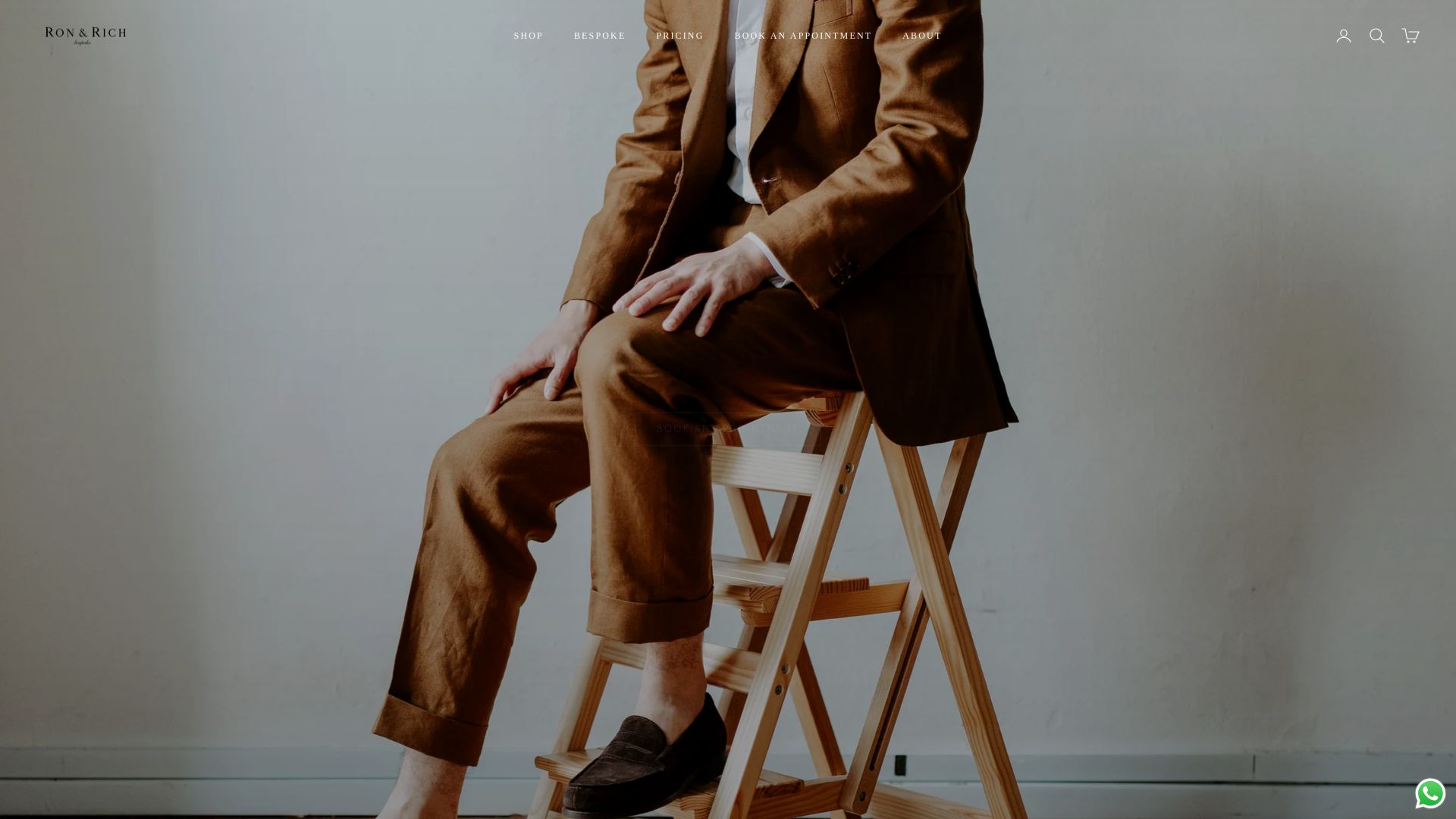
A trial cuff at a proper fitting settles the question that guesswork cannot: how your chosen cloth, cut and shoes behave together once the hem is turned. Our bespoke process builds that trial into the fitting itself, so you see the break before anything is cut permanently.
- Bring the shoes you will wear most with the trousers, along with any cloth or photo references you like.
- Tell us whether you want a traditional cuffed finish or a clean modern hem, and we will cut the allowance to match.
- Browse our trouser and suiting pricing to see where a bespoke hem fits your budget.
Book a fitting with us and leave with a hem that was measured against your own shoes, not a general rule.
FAQ
Is it better to cuff or not cuff jeans?
Jeans are casual by nature, so the choice comes down to the cut: a looser or straight jean often looks balanced with a rolled or cuffed hem, while a slim or tapered jean usually reads cleaner with no cuff. There is no formal rule here, only proportion.
Are cuffed or uncuffed pants better?
Neither is universally better: cuffed trousers suit heavier cloth, fuller cuts and more traditional outfits, while uncuffed trousers suit lighter cloth, slim cuts and formal settings. The better choice depends on the fabric, the cut and the occasion rather than a fixed preference.
What does “cuff” mean in slang?
In fashion and tailoring, a cuff is the folded hem at the bottom of a trouser leg, sometimes called a turn-up. The word has unrelated slang meanings elsewhere, but in menswear it always refers to this hem detail or to a shirt sleeve cuff.
Are cuffed pants outdated?
Cuffed trousers are a classic rather than a dated detail: they remain common in traditional and bespoke tailoring, particularly with flannel, tweed or heavier wool. They simply suit certain fabrics and cuts better than others, which is why both cuffed and uncuffed hems coexist in current menswear.
Further reading and sources
For more on hem and fit decisions, see our guides on tailored business suits, shirt cuff styles and our bespoke process. For proportion and fit beyond trousers, see oversized versus regular fit from Elite Bloodlines Apparel.