Black Tie Dress Code: Tailoring Rules and Climate Smart Fabrics
Black tie means evening formalwear: a tuxedo or dinner jacket for men, and a full-length gown or an elevated cocktail alternative for women. Modern invitations sometimes stretch the rules, allowing creative variations or a dark, well-tailored suit when marked “black tie optional.” Where the code is strict, choose a proper dinner jacket; where it flexes, favour quality and fit over improvisation.
TL;DR:
- A properly fitted dinner jacket in black or midnight blue with satin lapels is essential, with no alternative fabric or color for formal occasions.
- Men should wear matching trousers with satin side stripes, suspenders instead of a belt, and a self-tied silk bow tie for authentic black tie events.
- Women can opt for a floor-length gown or a formal cocktail dress made of luxurious fabrics, emphasizing fit and simple embellishments for elegance.
- Creative black tie allows personalized touches like velvet jackets or patterned bow ties, but core structure and restraint remain key.
- When uncertain about dress code flexibility, asking the host ensures appropriateness, especially regarding suit color and event season.
Table of Contents
- What men wear for black tie: the essential components
- What women wear for black tie: gowns and modern alternatives
- Creative black tie, white dinner jackets and midnight blue explained
- Black tie optional and black tie invited: how to choose your outfit
- Fit, fabric and climate: what actually makes an outfit formal
- Tailor’s notes: fit and fabric rules that lift a black tie outfit
- Where black tie comes from
- How to behave at a black tie event
- Hair, makeup and grooming for black tie occasions
- Choosing accessories: cufflinks, pocket squares and jewellery
- Black tie around the world: regional variations to know
- Balancing tradition with personal style
- How RON & RICH can help you get black tie right
- Sources
- FAQ
What men wear for black tie: the essential components
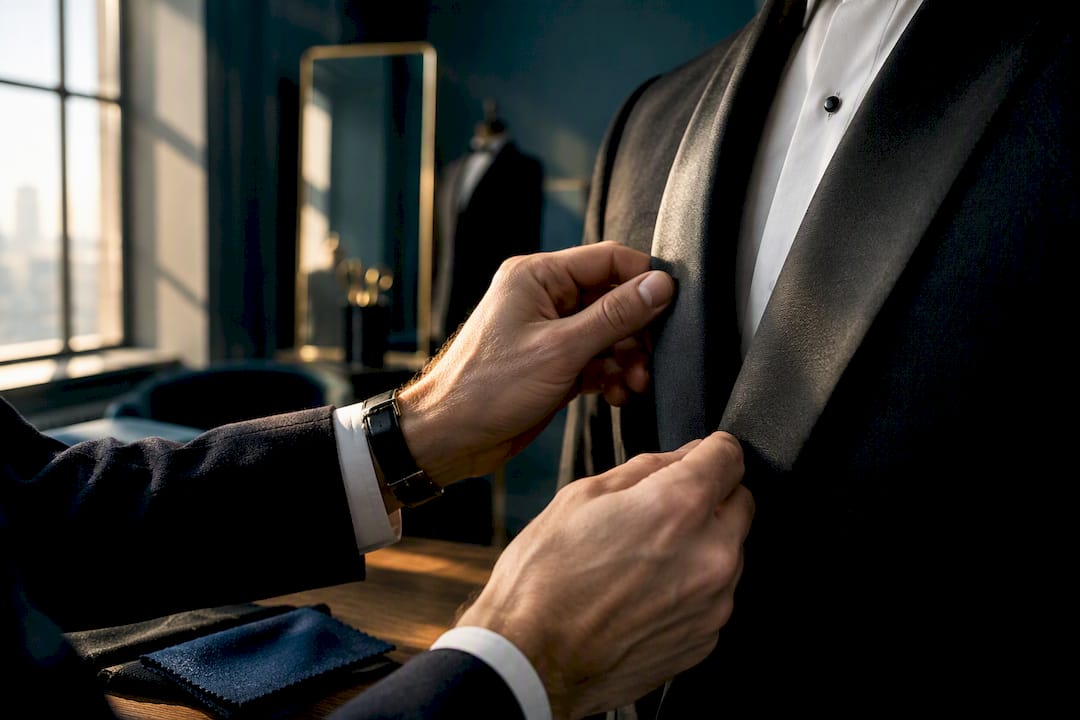
The traditional black tie outfit for men has few variables, and each one matters. The dinner jacket sits at the centre of it: black or midnight blue, with a satin or grosgrain lapel that distinguishes it from an ordinary suit jacket. Single-breasted with one button is the modern default, though a double-breasted jacket needs no shirt studs beneath it and suits a broader chest.
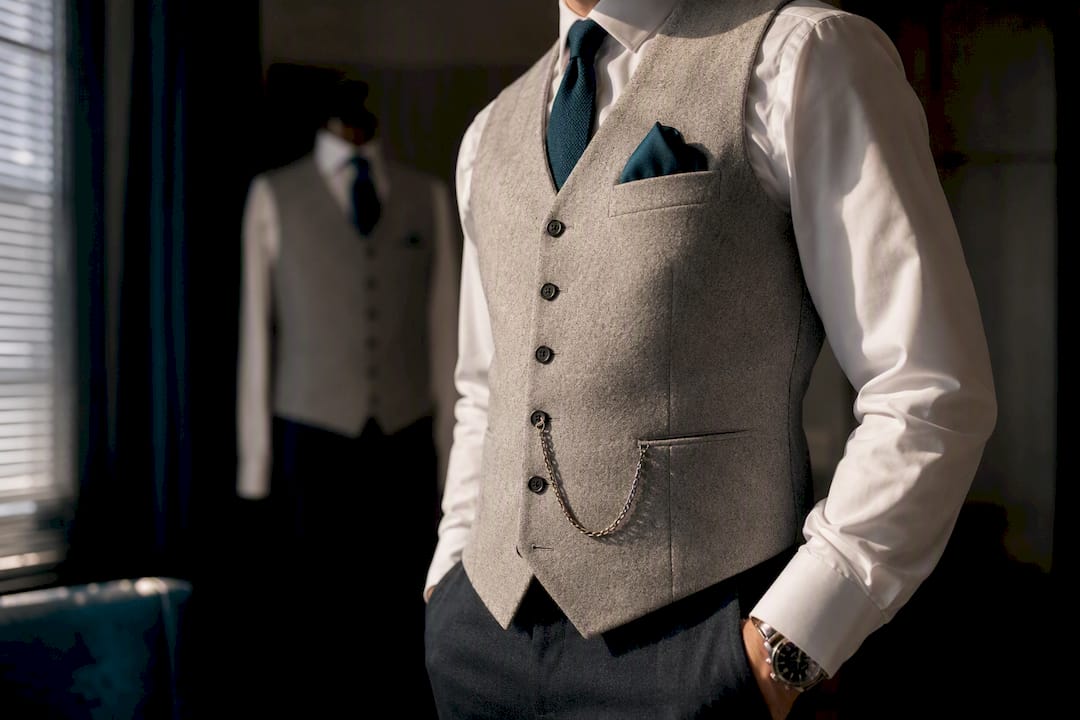
Trousers match the jacket’s fabric and carry a satin side stripe down the outer leg. They have no belt loops. Braces, not a belt, hold them at the natural waist, which keeps the silhouette clean under a fitted waistcoat or cummerbund.
The shirt is white, formal, with a turn-down or wing collar, worn with a black silk bow tie that you tie yourself rather than clip on. Shoes are black patent leather or highly polished oxfords, paired with thin black socks. Jewellery stays minimal: a set of studs and cufflinks is enough.
- Dinner jacket in black or midnight blue with satin or grosgrain lapels
- Matching trousers with a satin stripe and no belt loops
- White formal shirt with a self-tied black silk bow tie
- Black patent shoes and thin black socks
Pro Tip: Practise tying your bow tie well before the event. A slightly imperfect, hand-tied knot looks far better than a flawless clip-on.
What women wear for black tie: gowns and modern alternatives
A floor-length gown remains the traditional choice for women at a black tie event, and fabrics like silk, chiffon, satin and velvet all read as appropriately formal. The cut matters more than the colour: a gown with clean lines and a considered fit will always outperform an elaborate dress that fits poorly.
A formal cocktail dress is an accepted alternative, particularly for events described as “black tie optional” and a tailored trouser suit or jumpsuit in a formal fabric can work just as well, especially for guests who prefer a sharper silhouette to a gown. The deciding factor is formality of construction, not length alone.
- Floor-length gowns in silk, satin, velvet or chiffon for strict black tie
- A formal cocktail dress or tailored jumpsuit where the code allows flexibility
- Structured, minimal jewellery and a small clutch rather than a large bag
- Darker or jewel tones generally read as more formal than pale, casual shades
Embellishment is welcome in moderation. A heavily sequinned dress can tip into costume territory, while a single striking detail, a sculpted neckline or a well-placed slit, keeps the look elevated without competing with the occasion.
Creative black tie, white dinner jackets and midnight blue explained
Creative black tie invites tasteful personalisation within the traditional silhouette: a velvet jacket, a patterned bow tie, or a coloured waistcoat, while the core structure of dinner jacket, formal trousers and bow tie stays intact. It rewards restraint rather than experimentation for its own sake.
The white dinner jacket is a recognised warm-weather and summer evening variant, traditionally worn in summer or at events held in tropical or coastal settings. Midnight blue is not a compromise. Under artificial light it appears blacker than true black, which is why many tailors consider it the more flattering choice for evening wear.
- Creative black tie: personalise cummerbunds, waistcoats or bow ties, not the silhouette
- White dinner jacket: suited to warm-weather and summer evening events
- Midnight blue: reads as pure black under evening lighting and suits most skin tones
- Let the venue, season and host’s own wording guide which variant you choose
Black tie optional and black tie invited: how to choose your outfit
“Black tie optional” or “black tie invited” means the host would prefer formal dress but recognises it may not suit every guest, so a high-quality dark formal suit or elevated cocktail dress is an accepted substitute. The intent behind the wording still points towards formality, not casual smartness.
- Read the venue and time: an evening gala signals formal expectations even without explicit wording.
- Check the invitation’s exact phrasing, since “optional” and “invited” both permit alternatives but still favour dressing up.
- When genuinely unsure, ask the host directly, which etiquette guidance treats as entirely acceptable and far better than guessing.
A charcoal or midnight-blue suit works well as a men’s alternative; a mid-grey or bright navy suit does not carry the same formality and should be avoided.
Fit, fabric and climate: what actually makes an outfit formal
Sartorial experts consistently point to fabric quality and precision of fit as the details that separate genuine black tie from an ordinary suit worn with a bow tie. Shoulder seams that sit exactly at the shoulder bone, sleeves that end at the wrist bone, and trousers with a clean break all matter more than any single accessory.
Barathea wool and fine worsted wool are the traditional choices for the jacket and trousers, offering the drape and matte finish evening wear needs. In warmer climates, a lighter open-weave wool with a reduced lining keeps the silhouette intact while remaining wearable for several hours indoors.
- Check shoulder seams, sleeve length and trouser break before the event, not on the night
- Choose barathea or fine worsted wool for structure and drape
- In warm venues, favour tropical-weight wool and lighter jacket linings
- Bring the actual shoes you will wear to any fitting, since heel height changes trouser length
Pro Tip: A dinner jacket that fits through the shoulders but feels loose at the waist is nearly always fixable with a simple side adjustment, far cheaper than buying a new one.
Tailor’s notes: fit and fabric rules that lift a black tie outfit
At RON & RICH, most black tie fit problems trace back to three areas: sleeve pitch, trouser rise and waist shaping. Correcting the pitch of a sleeve, so the arm hangs naturally rather than pulling at the shoulder, does more for the overall line than any accessory choice.
We recommend barathea wool for classic evenings and a lighter tropical wool where the venue runs warm, a distinction covered in our guide on tailoring for warm climates. During a fitting, ask specifically about waist suppression and trouser break, since both are quick adjustments with a visible effect.
- Ask about sleeve pitch if the jacket pulls across the back when the arm moves
- Request waist suppression for a cleaner line through the torso
- Confirm trouser break with the actual shoes you plan to wear
- A rented jacket can often be brought closer to a bespoke fit with targeted alterations
Where black tie comes from
Black tie began in the late 19th century as a more relaxed alternative to white tie and tailcoats, worn first for informal dinners at home before spreading to clubs and private events. The dinner jacket itself is often traced to tailoring commissioned for wear at English country houses, from where it travelled to America and took on the name tuxedo, after the Tuxedo Park club in New York where it became fashionable among the social set of the 1880s.
Over the twentieth century, black tie settled into the standard it holds today: a dinner jacket with silk lapels, worn with matching trousers, a white shirt and a black bow tie. The core construction details, satin lapels, the trouser stripe, the silk bow tie, all trace back to this period and have changed remarkably little since.
What has shifted is context. Black tie once signalled a specific social occasion held after dark among a particular class of guest. Today it signals formality itself, applied to galas, weddings, award ceremonies and state dinners, worn by anyone the invitation reaches rather than a narrow social circle. The Wikipedia entry on the code notes its continued use at events held after 18:00, a detail that still shapes how the dress code is applied.

How to behave at a black tie event
Black tie events carry their own quiet etiquette alongside the dress code. Arrive close to the stated time rather than early, since formal dinners and award ceremonies often run on a fixed schedule that assumes guests are seated before proceedings begin.
Jackets stay on for the duration of formal proceedings, including speeches and dinner itself, and only come off later in the evening if the host signals it is appropriate, typically once dancing begins. Removing a jacket during dinner or a ceremony reads as overly casual, whatever the room temperature.
Conversation and conduct at these events tend towards the measured rather than the boisterous. A black tie invitation is not simply a request for a particular outfit, it is a signal about the tone of the evening as a whole, and dressing well is only the first part of meeting it.
Hair, makeup and grooming for black tie occasions
Grooming for black tie follows the same logic as the clothing: understated and precise rather than elaborate. For men, this means a fresh haircut in the days before the event rather than on the morning of, a close, even shave or a neatly trimmed beard, and minimal, clean-smelling fragrance.
For women, classic black tie grooming leans towards polished updos or smooth, defined waves, styles that hold through a long evening of dinner and dancing without needing constant attention. Makeup tends towards a defined eye or a strong lip, rarely both, which keeps the overall look controlled rather than heavy.
Nails, in either case, benefit from being simple and well kept rather than elaborate. The goal throughout is a groomed, deliberate appearance that supports the outfit rather than competing with it, consistent with the restraint that runs through every other part of the black tie code.
Choosing accessories: cufflinks, pocket squares and jewellery
Accessories in black tie exist to add a small point of interest, never to dominate the outfit. Cufflinks are the most visible personal touch a man can make: silver, onyx or mother-of-pearl in simple geometric shapes suit the formality of the occasion far better than novelty designs.
A white pocket square, folded flat rather than puffed, is the traditional choice, though a subtle contrast in dark silk is acceptable within creative black tie. Traditional etiquette advises against an ordinary wristwatch, with a pocket watch considered the historically correct accessory, since it keeps the sleeve line uninterrupted and the visual focus on the ensemble as a whole.
For women, jewellery works best when it picks one focal point, either the ears or the neckline, rather than both at once. A structured clutch in a metallic or matching tone completes the look without introducing an oversized or casual bag into an otherwise formal outfit.
Black tie around the world: regional variations to know
The core structure of black tie, dinner jacket, formal trousers, bow tie or gown, holds steady across most countries, but small regional habits are worth knowing before you travel to an event. In warmer, tropical settings, white dinner jackets and lighter fabrics appear far more often at evening events than they would in a temperate climate, reflecting both custom and comfort.

Some regions treat black tie invitations with slightly more flexibility than others, particularly at weddings, where a well-tailored dark suit is quietly accepted even without the invitation stating “optional.” When travelling for a formal event, it is worth checking local custom in addition to the invitation itself, since the written dress code and the room’s actual expectations do not always match perfectly.
The safest approach anywhere is the same one etiquette guides consistently recommend: when a detail is unclear, ask the host directly rather than guess. It costs nothing and removes any risk of standing out for the wrong reason.
Balancing tradition with personal style
Matching an event’s formality is a form of respect, both for the host and for the occasion itself. A guest who arrives underdressed at a genuine black tie evening draws attention for the wrong reason, however good their intentions.
That said, one or two considered touches, a patterned bow tie, an unusual cufflink, a velvet jacket in creative settings, let personality through without breaking the code. Chase fit and fabric before you chase trend. A perfectly cut jacket in the right cloth will always outdress a fashionable one that fits poorly.
— Aaron Fan
How RON & RICH can help you get black tie right
A hired tuxedo rarely fits the way it should, and an off-the-rack one usually needs more adjustment than most men expect. Custom tailors build dinner jackets, trousers and shirts around your own measurements, addressing common fit issues such as sleeve pitch, trouser rise, and waist shape.
- Bespoke tuxedos in classic barathea or lighter tropical wool for warmer venues
- Made-to-measure adjustments to sleeve pitch, trouser break and waist shaping
- Fabric guidance drawn from nearly five decades of tailoring experience
Tuxedos start from $2,270, with full pricing for suits, jackets and shirts available on our pricing page. Book a fitting and we will build the details, not just the outfit.
Sources
- Black Tie Optional: What It Means for Men (Dapper Confidential)
- Stil-Knigge: What black tie means (WELT)
- Black tie (Wikipedia)
FAQ
What exactly is the black tie dress code?
Black tie is an evening formal dress code requiring a dinner jacket and matching trousers for men, and a floor-length gown or elevated cocktail dress for women. It traditionally applies to events held after 18:00, such as galas, weddings and formal dinners.
What should you wear if the dress code is black tie?
Men should wear a black or midnight-blue dinner jacket with satin lapels, matching trousers, a white shirt and a black silk bow tie. Women typically choose a floor-length gown, though a formal cocktail dress is acceptable where the invitation allows some flexibility.
What are the rules for a black tie dress code?
The core rules cover the jacket’s lapel fabric, matching trousers with no belt loops, a white formal shirt, and a self-tied bow tie for men, alongside a full-length gown or formal alternative for women. Fit and fabric quality, not just following the checklist, are what make the outfit read as genuinely formal.
What should you avoid wearing to a black tie event?
Avoid a standard business suit worn with a bow tie, a mid-grey or bright navy suit substituted for black or midnight blue, and any casual footwear such as loafers without a polish or trainers. For women, overly casual fabrics, short hemlines outside a cocktail-length alternative, and oversized casual bags all undercut the formality of the occasion.