White Dinner Jacket: Off White, Bespoke Fit, No Costume
A white dinner jacket is the warm-weather answer to the black tuxedo, and choosing it well comes down to two decisions: shade and fit. Reach for off-white or ivory in a breathable natural fabric, and have it tailored to your frame rather than bought straight off the rack. Save it for resort evenings, summer galas, and outdoor formal occasions where a black jacket would feel heavy and out of place.
TL;DR:
- Choose an ivory or off-white shade in breathable fabrics like tropical worsted wool or gabardine for enhanced sophistication and comfort.
- Wear a white dinner jacket mainly during warm weather or in tropical climates from early summer to early fall, especially for outdoor or waterfront events.
- Ensure a impeccable fit by having the jacket tailored, paying close attention to shoulders, chest, sleeve length, collar fit, and jacket length to avoid visible flaws.
- Pair the jacket with black or midnight-blue trousers, a white formal shirt, a black bow tie, and patent leather shoes for a classic, refined look suitable for high-end events.
- Avoid synthetic fabrics, contrasting satin lapels, or wearing the white jacket indoors during winter or at traditional indoor black-tie dinners to maintain proper etiquette.
Table of Contents
- When and Where to Wear a White Dinner Jacket
- Choosing the Right Shade, Fabric, and Construction
- Why Fit Matters More on a White Jacket
- How to Style a White Dinner Jacket
- Common Mistakes and Etiquette to Avoid
- Caring for and Buying a White Dinner Jacket
- RON & RICH Perspective: Why Bespoke Matters for a White Jacket
- Get a White Dinner Jacket Built for Your Fit and Climate
- Sources
When and Where to Wear a White Dinner Jacket
The white dinner jacket started life as a practical solution: a lighter alternative to wool tuxedos for men sweating through formal seaside evenings in the early 20th century. That origin still shapes the etiquette today. Climate decides whether the jacket reads as elegant or out of season.
In temperate regions, tradition confines it to the warmer months, roughly the stretch between Memorial Day and Labor Day in the United States. In tropical and subtropical climates, where summer never really ends, a white jacket can work year-round without breaking any rule.
The jacket belongs at:
- Garden and outdoor weddings held in daylight or early evening
- Yacht clubs, marinas, and other waterfront social events
- Resort black-tie dinners at warm-weather destinations
- Seaside galas and summer charity events
Invitations sometimes signal this directly with phrases like “resort formal” or “tropical black tie.” Environmental cues matter just as much: palm trees, open-air venues, and daytime start times all favor white over black. Indoors, in winter, or at a formal dinner in a wood-paneled ballroom, a black tuxedo remains the safer, more correct choice.
Pro Tip: If the invitation doesn’t specify and you’re unsure, call the host or check the venue. A quick question beats standing out for the wrong reason.
Choosing the Right Shade, Fabric, and Construction
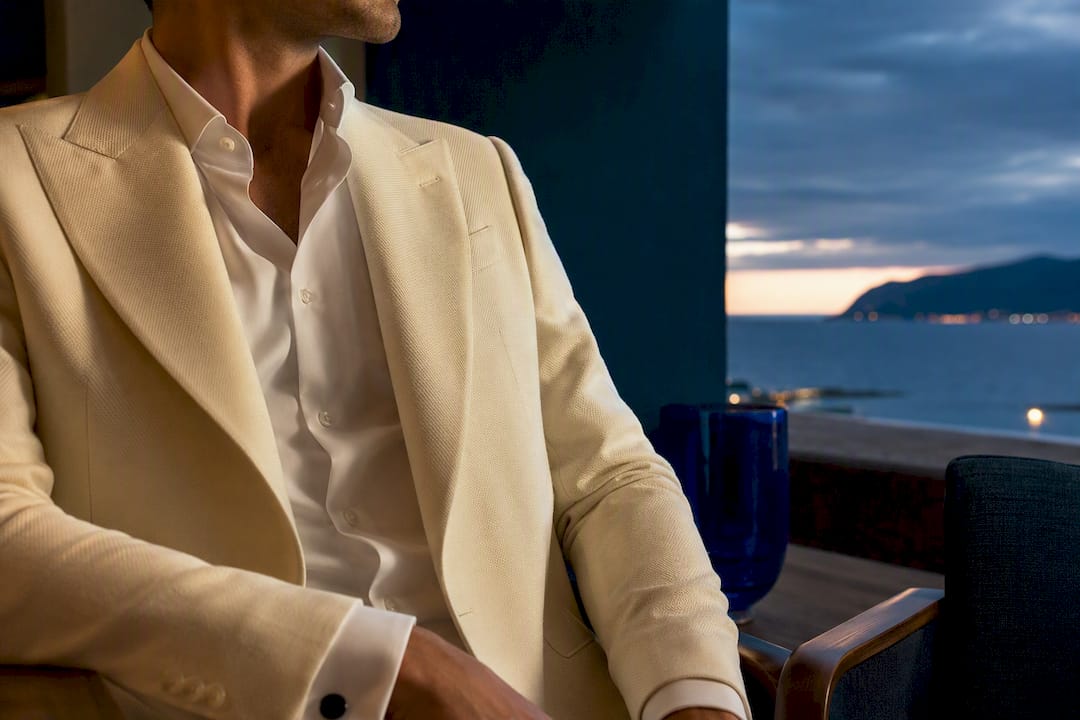
Shade matters more than most men realize. Off-white or ivory tends to look more sophisticated than stark, optic white, which can read as flat, uniform-like, or even slightly cheap under evening light. Ivory carries warmth against most skin tones and photographs better indoors and out.
Fabric choice determines whether the jacket feels like a costume or a genuine piece of formalwear. Look for:
- Tropical worsted wool, woven looser and lighter for airflow
- Wool blends marketed as “summer worsted,” which hold shape while staying breathable
- Gabardine, prized for its smooth drape and durability
- Linen blends, better suited to casual daytime resort events than formal evenings
Suitsupply and other retailers now stock several of these tropical-weight options as standard seasonal offerings, which tells you the category has moved well past novelty status. Avoid synthetic polyester blends entirely. They trap heat, wrinkle within an hour of wear, and shine under artificial light in a way that instantly signals a rental.
Construction details separate a refined jacket from a theatrical one. Unlined or half-lined jackets breathe better in tropical heat. Lapels should be self-faced, meaning cut from the same fabric as the jacket rather than contrasting satin, which traditional etiquette treats as a modern, showy deviation from correct styling. Save linen for daytime, casual resort functions; reserve wool blends for anything after sundown that carries real formality.
Why Fit Matters More on a White Jacket
Dark fabrics hide flaws. White does the opposite: every pull, pucker, or loose fold catches light and draws the eye directly to it. A jacket that would pass unnoticed in navy or charcoal becomes a visible problem in ivory, which is exactly why style consultants push bespoke tailoring harder for white jackets than for almost any other formalwear piece.
Before you commit to a jacket, run through these checkpoints:
- Shoulders should lie flat with no divots or bunching at the seam.
- Chest and waist balance should follow your natural taper without pulling across the buttons.
- Sleeve length should end at the wrist bone, showing a quarter inch of shirt cuff.
- Collar gap at the back of the neck should be nonexistent; any daylight between collar and shirt signals a bad fit.
- Jacket length should cover the seat without extending past mid-thigh.
Silhouette choices carry visual weight too. A one-button shawl collar reads as classic evening elegance and pairs naturally with the white jacket’s resort origins. A double-breasted cut adds formality but demands a leaner build to avoid bulk in warm fabric. Ventless backs look cleaner for photographs; center vents move better if you plan to dance.
This is where a tailor earns the fee. A bespoke house adjusts not just the cut but the lining weight, canvas structure, and seam allowances specifically for tropical wear, something a rack jacket simply cannot offer. If you want a fit checklist to work through before your first fitting, this fit guide breaks down each measurement point in more detail.
Pro Tip: Try the jacket on under bright, direct light before you buy or approve a fitting. Fluorescent showroom lighting hides wrinkles that sunlight or flash photography will expose later.
How to Style a White Dinner Jacket
The jacket is the statement piece, so everything else should stay disciplined and traditional. Classic black-tie rules still govern the rest of the outfit, even though the jacket itself breaks from black.
Build the outfit around these anchors:
- Trousers: black or midnight-blue formal trousers with a satin side stripe, never white or ivory to match the jacket
- Shirt: a plain white formal shirt, pleated or plain front, with a turndown or wing collar
- Neckwear: a black bow tie, self-tied rather than pre-tied for anyone attending a genuinely formal event
- Waist covering: a black cummerbund or waistcoat to conceal the trouser waistband
- Footwear: patent leather pumps, opera pumps, or well-polished black oxfords, paired with black dress socks
Small accents add personality without undercutting the formality. A folded white or pastel pocket square, simple silver or onyx cufflinks, and a black leather belt (if trousers require one) all work. What doesn’t work: contrasting black satin lapels on the jacket itself, which clash with the self-faced tradition and edge the whole look toward costume territory. Keep sheen and texture in balance. If the jacket has any luster at all, keep the shirt matte and the shoes the only glossy element in the outfit.
Common Mistakes and Etiquette to Avoid
Most white dinner jacket mishaps trace back to one of three errors: wrong shade, wrong lapel, or the wrong occasion.
- Wearing stark, bright white instead of ivory, which can look sterile under evening lighting
- Adding contrasting satin lapels, a departure from the self-facing tradition that reads as theatrical rather than elegant
- Choosing cheap synthetic fabric that wrinkles within the first hour and shines unnaturally in photos
- Wearing the jacket to a formal indoor winter event where black tie is clearly expected
When in doubt, black tie wins. A white jacket only outperforms black when climate, venue, and invitation language all point toward warm-weather formality.
Pro Tip: If the invitation says “black tie” with no other qualifier, wear black. “Black tie optional” at a summer resort venue is your green light for white.
Caring for and Buying a White Dinner Jacket
Light fabric shows every stain and yellows faster than dark wool, so upkeep matters as much as the initial purchase.
- Treat spills immediately and dry-clean within a few days rather than letting stains set.
- Dry-clean sparingly, only after visible soiling, since frequent cleaning breaks down fibers and accelerates yellowing.
- Store the jacket on a wide hanger, breathable garment bag, away from direct sunlight and humidity.
- Choose off-the-rack for occasional wear, made-to-measure for a closer fit at moderate cost, and bespoke if you’ll wear formalwear regularly or need precise adjustments.
- Before wearing, check that jacket and shirt shades match under natural light and test arm movement in the fitting room.
RON & RICH Perspective: Why Bespoke Matters for a White Jacket
Warm-climate tailoring rewards precision. Lightweight fabrics move differently than heavy wool, and every seam decision, from lining weight to lapel width, has to account for that. At Ron & Rich, founded by master tailor Richard Fan, we’ve built our bespoke process around exactly this kind of nuance: matching fabric behavior to fit, not just measurements to a chart.
Aaron Fan
Get a White Dinner Jacket Built for Your Fit and Climate
Ron & Rich is the tailoring route for men who want a white dinner jacket that fits their frame and the local climate, not a rental-rack compromise. Off-the-rack sizing forces you to accept someone else’s proportions; bespoke starts from yours.

Our process begins with a consultation where we walk through shade options, tropical-weight fabrics, and construction choices suited to warm-weather wear. From there, we select fabric together, take full measurements, and schedule fittings to refine shoulder line, sleeve length, and jacket balance before final delivery. If you prefer to start with a ready-made option and adjust later, our ready-to-wear collection offers a faster path. For a jacket cut entirely to your measurements, explore our bespoke tailoring process or browse our suits and jackets to book your first fitting.
Sources
For deeper etiquette background, the Gentleman’s Gazette guide to off-white dinner jackets covers history and shade selection. The Arkansas Democrat-Gazette’s etiquette breakdown explains lapel tradition in detail. For warm-weather event dressing more broadly, see this guide to modern leisure wardrobes.
- Off White Dinner Jacket, Warm‑Weather Black Tie (Gentleman’s Gazette)
- When, where it is correct to wear white dinner coat (Arkansas Democrat‑Gazette)