Wedding Suit Colors: Singapore Grooms Stay Cool With Light Cloth
For Singapore weddings, navy, light grey, cream, burgundy and sage can all be considered, depending on the venue and the look you want. Pick the one that matches your setting, then speak to a tailor about a lightweight fabric and a half-lined jacket before you commit to anything else.
TL;DR:
- With daily highs of 31–33°C and mean humidity near 82%, choose tropical wool, linen blends, or cotton with a half lined jacket.
- Test swatches outdoors at ceremony hour and photograph them, since daylight and venue backgrounds can alter color, and pale cream may disappear against light walls.
- Confirm color expectations with both families: some Chinese families avoid white, while Malay and Indian celebrations may favor coordinated traditional tones or rich jewel shades.
- Use tonal or complementary suits for groomsmen, reserve distinctive accents for the best man, and keep fathers in restrained navy or charcoal.
- Bespoke suits require several fittings, so confirm the tailor’s schedule early and begin well before the wedding rather than relying on a rushed final adjustment.
Table of Contents
- 1. Which colours work best for a Singapore groom?
- 2. How do you choose a colour that suits you and your wedding?
- 3. Which fabrics and jacket constructions keep you cool in Singapore?
- 4. How should you coordinate shirts, ties and groomsmen?
- 5. How do culture and the season affect your suit colour?
- 6. What should the best man and father of the bride wear?
- 7. What most grooms underestimate about colour
- 8. How we help grooms choose and make a wedding suit
- FAQ
- Sources
1. Which colours work best for a Singapore groom?
Local style guides regularly list navy, grey, cream and burgundy among the popular choices for Singapore grooms, alongside earthy tones. Here is how each one behaves in practice.
- Navy: the all-rounder for formal and semi-formal weddings. It pairs with a crisp white shirt and tan or black shoes, and it flatters almost every skin tone.
- Light and mid grey: ideal for daytime, garden and hotel ceremonies. Grey photographs cleanly in bright sunlight without the glare that very pale shades can create.
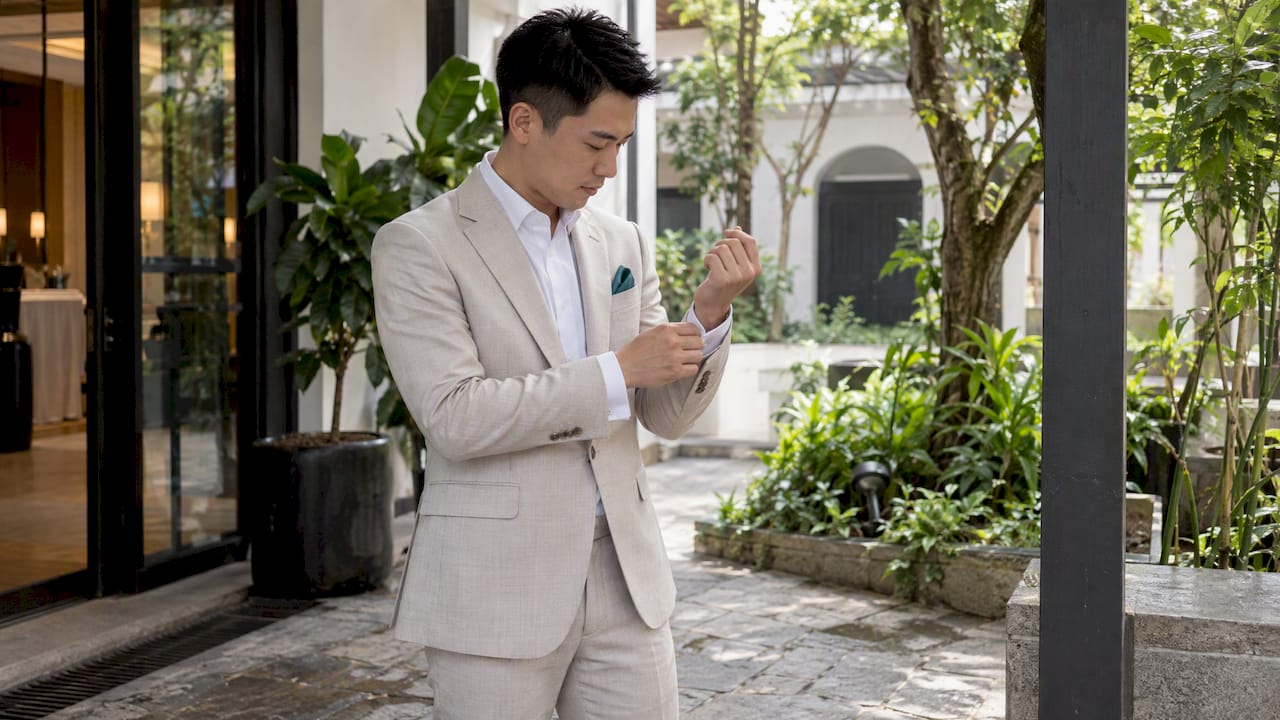
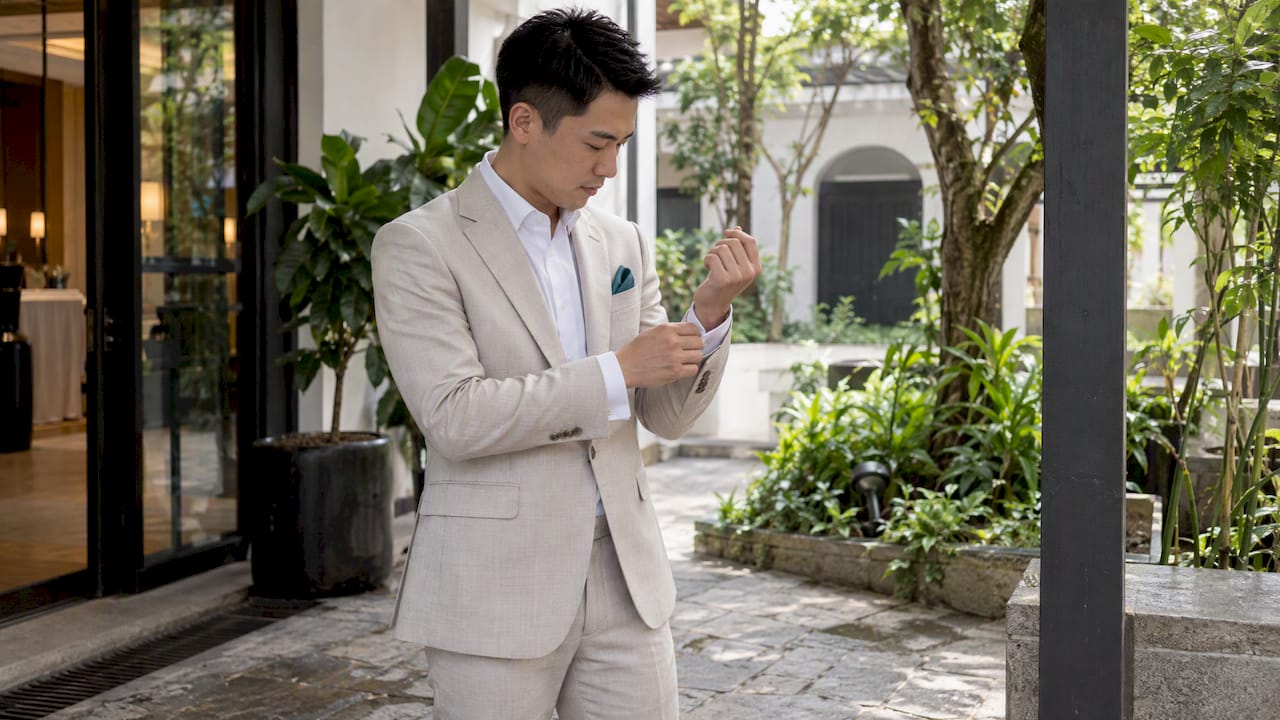
- Cream and beige: suited to beach and tropical daytime ceremonies. Choose a breathable linen blend with a half lining so the jacket stays comfortable.
- Burgundy and deep jewel tones: best for evening receptions or a statement look. Choose a matte cloth, because a shiny burgundy can look costume-like under flash.
- Sage and olive: a modern, nature-inspired option for Singapore’s parks and gardens. Sage and olive offer a modern, nature-inspired option for Singapore’s parks and gardens.
Black and white tuxedos are generally suited to formal evening or black-tie occasions. At a daytime or outdoor wedding, they tend to look heavy and feel hotter than they look.
Colour carries the mood, but cut and cloth decide whether you enjoy the day. A well-chosen sage in the right fabric will outperform a “safe” navy that is too heavy for the afternoon. We cover that next, after the checklist below.
2. How do you choose a colour that suits you and your wedding?
Work through these steps in order. Each narrows the field until one shade is left.
- Set your formality. Black tie points to midnight navy or charcoal. Cocktail suits navy, mid grey or burgundy. A relaxed garden or beach wedding opens the door to cream, sage and lighter greys.
- Test against your skin tone. Hold fabric swatches near your face in daylight and take photographs. Cooler complexions often suit navy and grey, while warmer ones tend to carry olive, cream and burgundy well.
- Coordinate the groomsmen by contrast. Choose complementary or tonal shades rather than exact matches, so you stand out as the groom without anyone looking mismatched.
- Ask your photographer. Their view of the venue’s background and light tells you whether you need more contrast. A cream suit against a pale wall can disappear in photographs.
- Check lead times and budget. Bespoke work needs several fittings, so confirm the timeline before you fall for a cloth. Our guide to bespoke, made-to-measure and off-the-rack suits helps you choose the route that fits your schedule.
Pro Tip: Photograph your shortlisted swatches outdoors at the same hour as your ceremony. Midday glare and evening lighting can change a colour completely.
3. Which fabrics and jacket constructions keep you cool in Singapore?
Singapore is hot and humid all year, so cloth and lining matter as much as colour. Planning for the weather is part of choosing the suit.
Singapore typically sees daily maximum temperatures of 31–33°C and a mean annual relative humidity of about 82%, so breathability and moisture management should drive every fabric decision.
Your best options are these:
- Tropical wool: a lightweight, open-weave wool that breathes and still holds a sharp line.
- Lightweight wool blends: a good middle ground for formal weddings in air-conditioned halls.
- Linen blends: excellent for outdoor and beach settings, though they crease and are best for a relaxed look.
- Lightweight cotton: comfortable for daytime ceremonies and smart-casual dress codes.
- Unstructured or half-lined jackets: less padding and less lining let air move through the jacket while keeping the shoulders neat.
Avoid heavy full linings and dense synthetic cloth. On very hot days, when hourly-average WBGT reaches 33°C, natural, breathable fibres are the more sensible choice because synthetics can trap humidity against the skin.
For care, air your suit on a wide hanger after each wear, and keep it in a breathable garment bag rather than plastic. Steam out creases and avoid storing it in a damp wardrobe.
4. How should you coordinate shirts, ties and groomsmen?
A few simple formulas keep the whole look balanced.
- Shirt: crisp white works for most suits because it sharpens contrast in photographs. Cream or soft pastel shirts can suit a cream or sage suit if the tones stay close.
- Tie and pocket square: let one of them carry a contrasting colour and keep the other quieter. Never match them exactly.
- Shoes: brown or tan with navy, grey and sage. Black with formal navy, charcoal or evening burgundy.
- Groomsmen: use complementary hues, a tonal palette, or the same suit with accent-colour ties, so you remain the focal point.
- Boutonnière: choose a small, sturdy bloom and pin it securely, as soft petals wilt quickly in the humidity.
If you want matching shirts made to your measurements, our tailored shirts can be cut to complement your chosen suit colour.
5. How do culture and the season affect your suit colour?
Singapore weddings often blend traditions, and colour carries meaning in each. The following points are general guidance, so it is wise to confirm preferences with both families.
In many Chinese weddings, red and gold are celebratory colours, and the bride often wears them. Grooms commonly choose navy, charcoal or black for the ceremony, and keep a touch of red in a tie or pocket square if they wish to nod to tradition. White is generally avoided in some families, so check before you settle on cream.
For Malay weddings, grooms often wear traditional attire in coordinated tones with the bride. If you choose a suit for part of the day, soft neutrals, sage and earthy shades sit comfortably beside traditional colours.
Indian weddings typically feature rich colours and heavy embroidery. A suit in deep jewel tones, such as burgundy, can complement the celebration, while ivory and cream are common for the ceremony itself in many communities.
Season matters too, though less than in temperate countries. Singapore’s climate is hot and humid year-round, but the NEA notes a wetter period from October to December. For outdoor ceremonies in those months, choose a mid-tone colour that hides splashes better than pale cream, and keep the cloth lightweight.
6. What should the best man and father of the bride wear?
Each role has a different job in the photographs, so colour choices should reflect that.
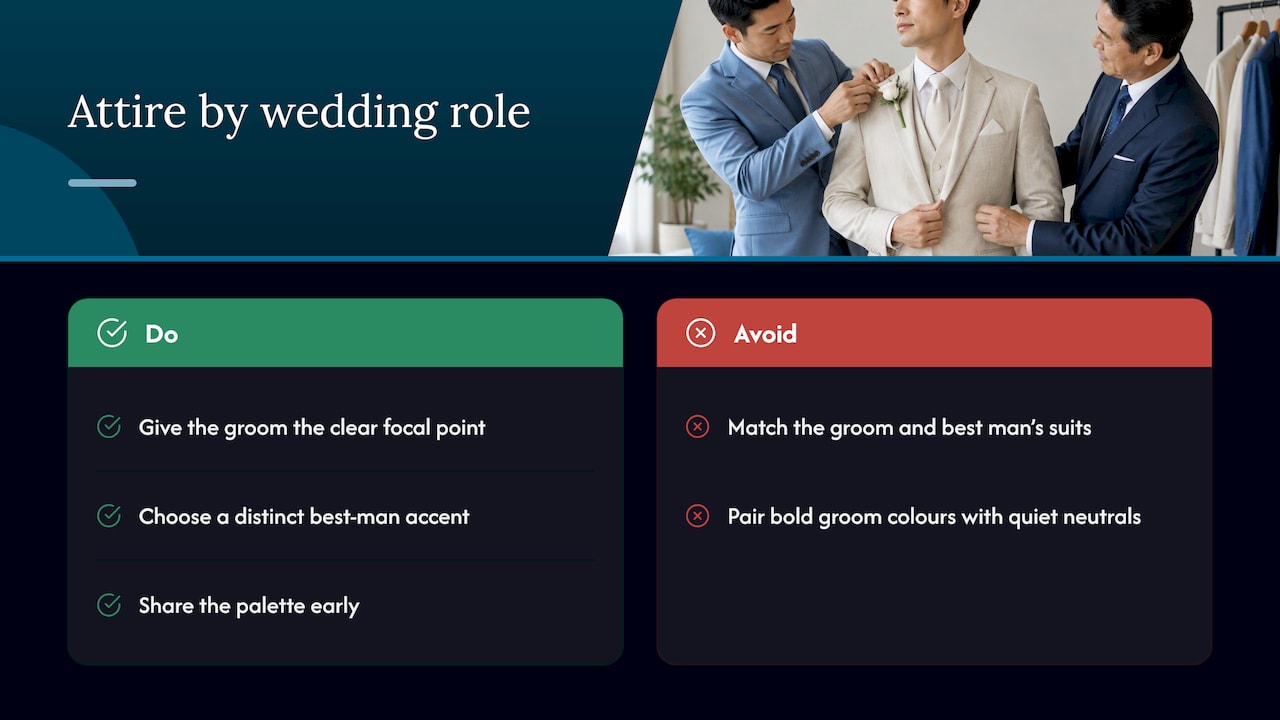
The groom should be the clear focal point. If you wear navy, the best man can wear a lighter or darker shade of navy, or a complementary grey, rather than an identical suit. A different tie or pocket square signals his role without competing with you.
The best man usually sits just below the groom in formality. Matching the groom’s shirt and shoe style keeps the pair cohesive, while a distinct accent colour sets him apart. Groomsmen can follow the best man’s palette with simpler details.
The father of the bride traditionally dresses formally but with restraint. A charcoal or classic navy suit works for nearly any theme and avoids drawing attention from the couple. If the groom chooses a bold shade, such as burgundy or sage, the fathers look best in quieter neutrals.
Share your palette with all fathers and groomsmen early. A short note about colour and formality prevents clashes, and gives everyone time to arrange suits, particularly if tailoring is needed. For a closer look at how we handle group timelines, see our wedding suit tailor guide.
If the bachelor party falls in the same week, plan it so that fittings stay clear. A relaxed activity such as laser clay shooting gives the group a lively day out without pressure on the suit schedule.
7. What most grooms underestimate about colour
Most grooms start with colour and treat construction as an afterthought. I would reverse that order. A lightweight cloth, half lining and a sharp fit will do more for your comfort and your photographs than any single shade.
The pattern I see is a groom falling for a swatch under shop lighting, then discovering it looks different outdoors at noon. Ask to see cloth in daylight, and book more than one fitting so adjustments are never rushed. Bespoke work takes time, so allow a generous window and confirm the timeline with your tailor rather than assuming it.
Ron
8. How we help grooms choose and make a wedding suit
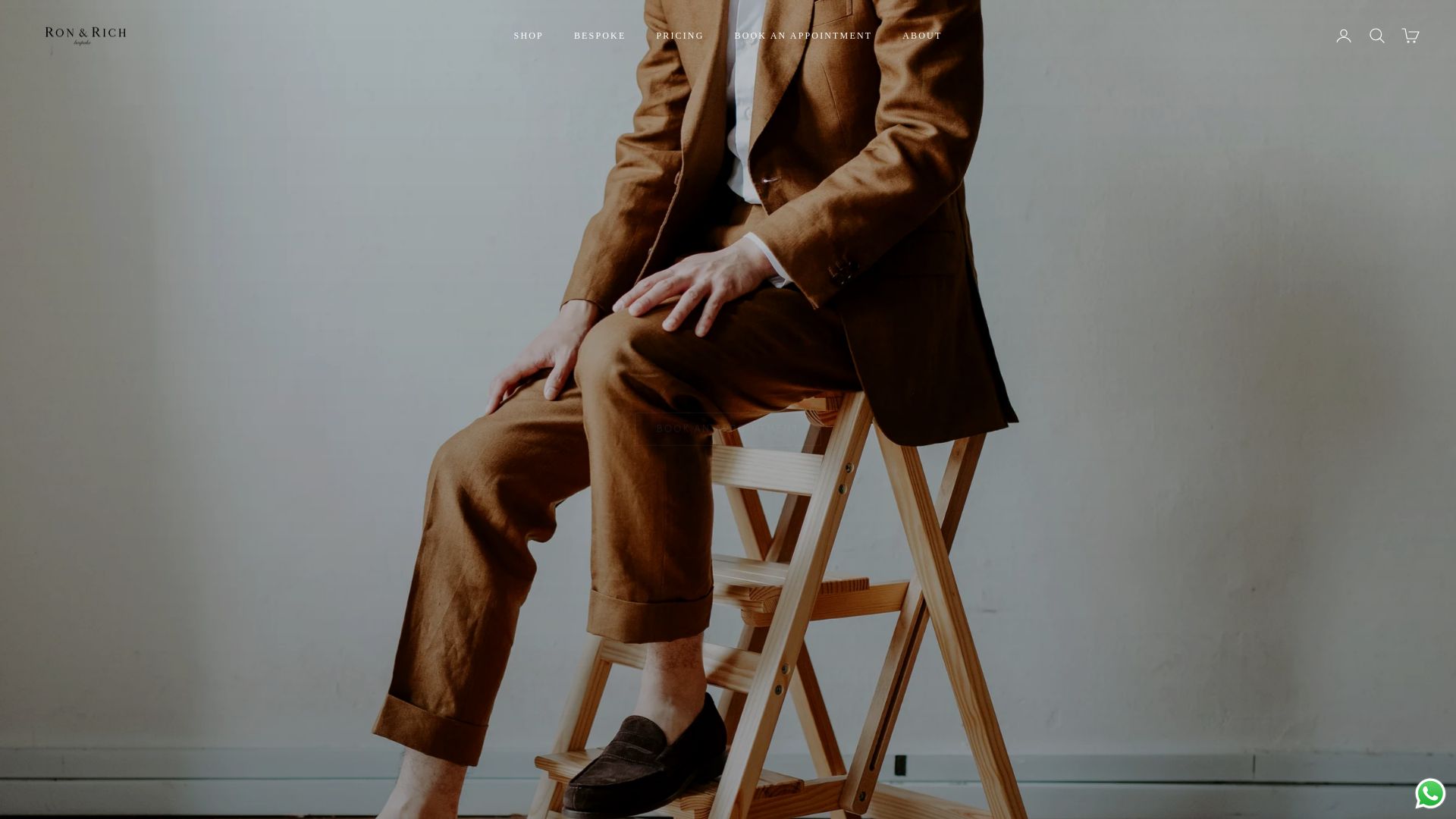
We make bespoke wedding suits for grooms in Singapore, starting with a fabric-swatch consultation where we match colour, cloth and cut to your venue and the climate. We can build jackets to keep you comfortable on the day. Our suits start from $2,170 on our pricing page.
- Browse our suits to see styles and construction options.
- Review our pricing and book a consultation.
- Read why a custom wedding suit tailor suits a Singapore groom.
FAQ
What is the most popular wedding suit colour in Singapore?
Navy is a dependable choice for many venues and skin tones. Local guides also list grey, cream, burgundy and earthy shades as common picks.
Is a black suit suitable for a Singapore wedding?
Black works for formal evening or black-tie weddings. For daytime or outdoor ceremonies, navy or grey is usually cooler and more flattering in photographs.
What fabric is best for a wedding suit in Singapore’s heat?
Tropical wool, lightweight wool blends, linen blends and light cotton breathe best. Ask your tailor for a half-lined or unstructured jacket to improve airflow.
Should groomsmen wear the same colour as the groom?
Not necessarily. Complementary or tonal shades, or matching suits with accent-colour ties, keep the groom as the focal point.
How early should I order a bespoke wedding suit?
Start well ahead of the wedding, as bespoke work involves swatch selection and several fittings. Confirm the exact timeline with your tailor.