Office Wear in Humidity: A Singapore Guide to Staying Sharp
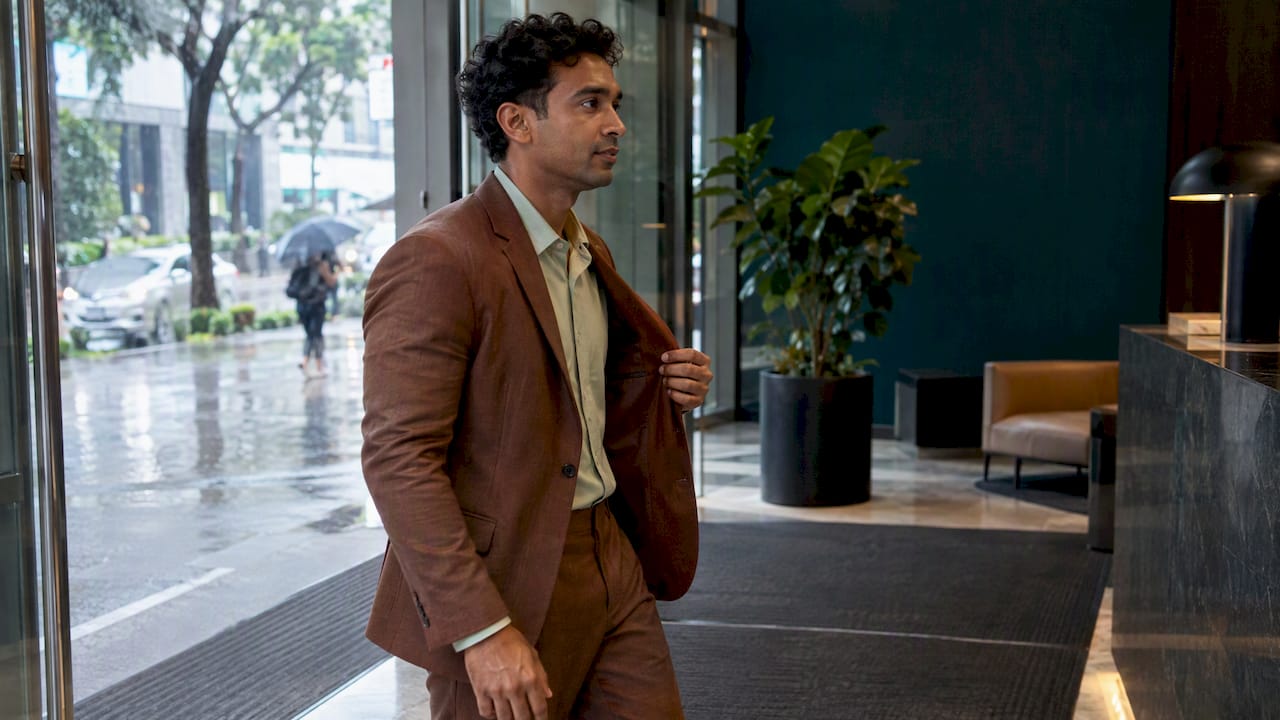
The best office wear in humidity is a lightweight, open-weave cloth, cut to fit properly and made with minimal lining. Tropical wool, a linen-wool blend or a fine cotton shirt will each do the work, provided the weave lets air move and the garment does not cling. In Singapore, the aim is a suit that looks composed at 9 am and still composed after a lunchtime walk to the next meeting.
We have tailored for Singapore professionals since 1979. What follows is what we have learnt about dressing well in a climate that never quite lets up.
TL;DR
- Choose the weave before the fibre: open weaves such as hopsack and fresco let air through cloth when sweat will not evaporate.
- Tropical wool suits formal days; a linen-wool blend suits lighter ones; pure linen creases too quickly for client-facing hours.
- Keep the jacket half-lined or unlined, and choose cupro over polyester when a lining is needed.
- Fit matters as much as fabric: a garment that skims rather than clings stays cooler and looks sharper.
- Carry a considered rotation, not one “universal” suit.
Table of Contents
- Why Singapore’s humidity changes the way you dress
- Start with the weave, then the fibre
- Fabric by fabric: what works at the office
- Construction: where a jacket keeps its cool
- Fit: the quiet factor
- Building a humidity-ready office wardrobe
- Small habits that keep you polished
- Our perspective: heritage tailoring for a tropical city
- Bespoke for humid days: what we make
- Frequently asked questions
- Sources
Why Singapore’s humidity changes the way you dress
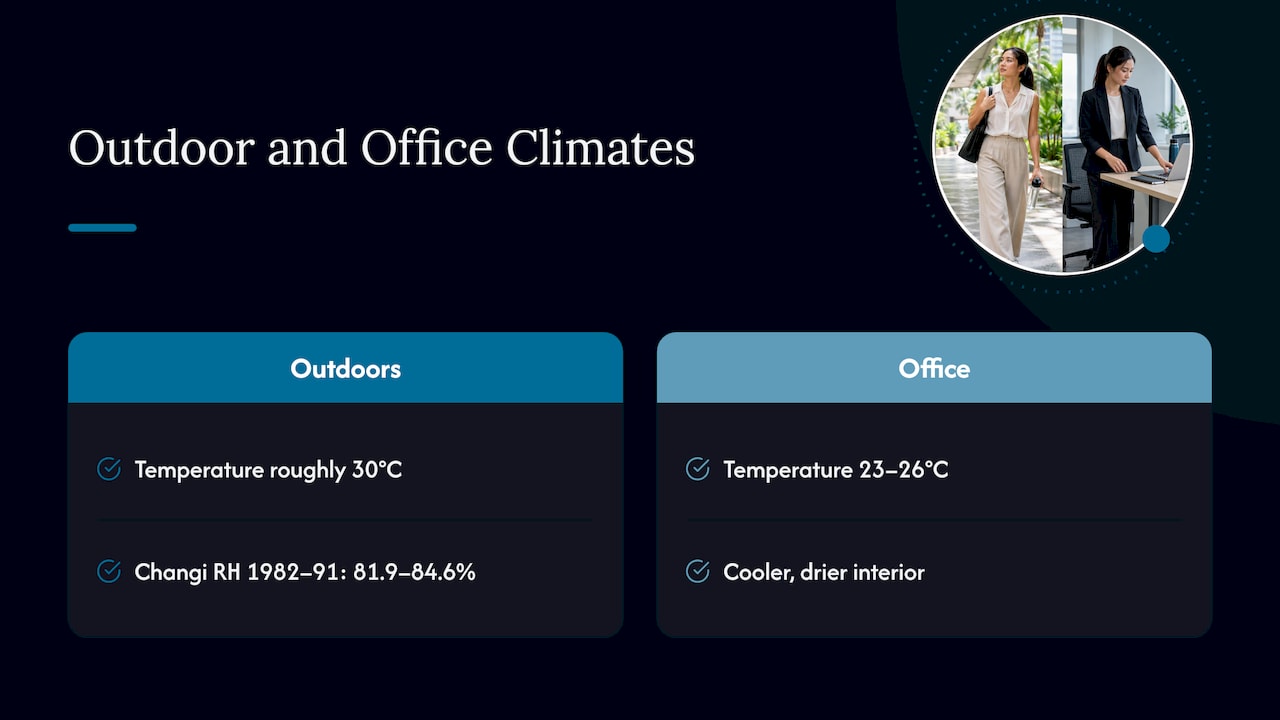
Heat alone is manageable. Humidity is what makes it tiring. Annual mean daily relative humidity at Changi was between 81.9% and 84.6% in each of the first ten years of NEA records, from 1982 to 1991. Air that damp takes sweat slowly, so the cloth against your skin stays wet for longer.
The result is familiar to anyone who has stepped from an air-conditioned lobby into the street: collars soften, shirt backs darken and trousers cling. The office then adds the opposite problem, a cold interior.
That swing is built into the system. Guidance on thermal comfort in Singapore workplaces recommends an indoor temperature of 23°C to 26°C for general office work, and notes that slightly cooler or warmer rooms are not a health risk if people dress suitably. Building operators work to SS 554, the code of practice for indoor air quality in air-conditioned buildings, which treats air-conditioning and ventilation as the means of controlling both temperature and humidity.
So you dress for two climates in one day: roughly 30°C and very humid outside, and a cool, drier room inside. Your clothes must manage the first without leaving you chilled in the second.
Start with the weave, then the fibre
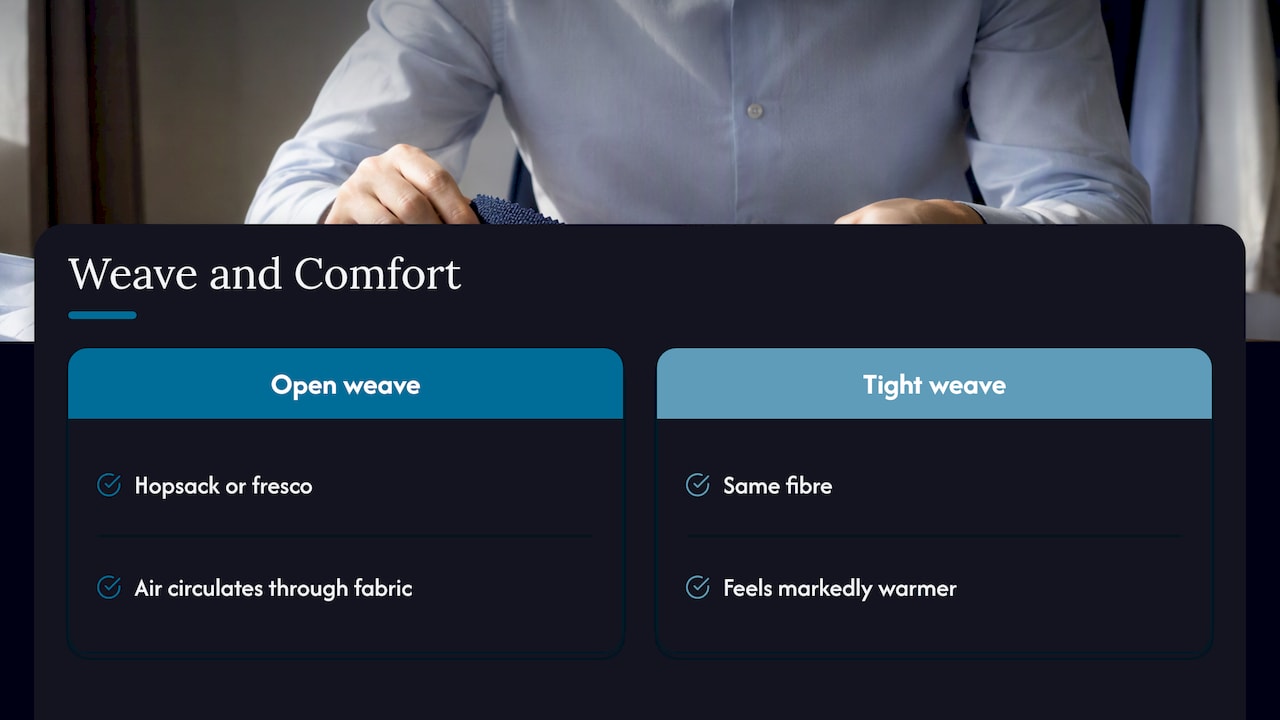
Most advice begins with “wear natural fibres”. It is a fair start, but the weave decides more than the fibre does. An open-weave cloth, such as hopsack or fresco (a high-twist worsted wool), lets air circulate through the fabric itself, which matters when sweat does not evaporate quickly. A tightly woven cloth of the same fibre will feel markedly warmer.
Weight is the second variable. For tropical suiting, the same guide points to roughly 7 to 9 oz. Heavier cloth acts as insulation and holds heat against the body.
When you visit us, we will put swatches in your hand and ask you to hold them up to the light. If you can see tiny points of daylight through the weave, it is a good sign. It is a simple test, and it tells you more than a label.
Fabric by fabric: what works at the office
| Fabric | Strength in humidity | Weakness | Best for |
|---|---|---|---|
| Tropical wool (hopsack, fresco) | Breathes, handles moisture, keeps its shape and recovers from creasing | Costs more than cotton | Boardroom days, client meetings, formal events |
| Linen-wool blend | Airy, with some structure and crease recovery | Still shows some creasing | Business casual, travel, less formal days |
| Pure linen | Maximum airflow | Creases within the first hour or so | Weekend smart casual, not the executive desk |
| Cotton shirting | Breathable, comfortable, widely available | Slow to dry once damp; can cling and show sweat marks | Shirts in fine, open weaves |
Tropical wool
Wool surprises people who associate it with winter. Worsted wool woven open and light is a different material altogether. It absorbs moisture vapour without feeling wet, holds its structure, and shakes out creases overnight on a hanger. For a suit you wear several times a week, this is the cloth we most often steer clients toward.
Linen and linen blends
Linen is superb for airflow and poor at staying smooth. Its creasing is a permanent trait of the fibre, not a flaw of any particular cloth. Blending it with wool keeps most of the airiness and adds the structure that wool provides. For professionals who must look sharp throughout the day, a blend with a healthy share of linen is the sensible compromise. Wear pure linen when a relaxed, lived-in look is part of the intent.
Cotton
Cotton has a reputation as the easy summer choice, yet it takes water up slowly and dries slowly. Workwear specialists note that damp cotton tends to cling to the skin, and that is exactly when sweat patches appear. A fine, open-weave cotton shirt remains an excellent choice. It simply works best under a jacket made of something better suited to the job.
If you want to compare how cotton and other natural fibres behave against the skin, this look at hemp versus cotton for breathability is a helpful companion.
Construction: where a jacket keeps its cool
Two suits in the same cloth can feel entirely different on the body. The difference is construction.
- Lining. A half-lined or unlined jacket carries less bulk and traps less heat between garment and skin. A fully lined jacket is a small oven by midday.
- Lining material. When some lining is wanted, for a cleaner drape or for longevity, cupro (Bemberg) is more breathable than standard polyester. Polyester holds sweat and gives that clammy feeling.
- Padding. Light shoulders and minimal canvas bulk mean fewer layers between you and the air.
- Trousers. Cut with enough room through the seat and thigh, and finished with a comfortable rise, trousers move air as you walk. Our trousers and shorts are made to measure for this reason.
Every one of these is a decision made at the fitting, which is why bespoke has a real advantage in this climate. Ready-made suits arrive with the lining and structure the factory chose for a temperate market.
Fit: the quiet factor
A garment that clings to the body holds sweat against it. One that is too loose bunches, creases and looks careless. The correct fit skims the body, with a little ease at the chest, back and thigh, so air can pass between cloth and skin.
Our own business dress code guide makes a related point: a well-fitted chino and collared shirt reads as more polished than an ill-fitting suit. We agree, and would add that in humidity, fit is also a comfort feature.
Building a humidity-ready office wardrobe
No single fabric is right for every day. A better approach is a short rotation, each piece assigned to an occasion.
- One tropical wool suit for formal meetings, presentations and events. Navy or mid-grey is the most versatile.
- One linen-wool jacket for business casual days, paired with tailored trousers.
- Two or three fine cotton shirts in open weaves, rotated so each rests between wears.
- Lightweight tailored trousers in tropical wool, which can be worn with a shirt alone when you have no client meeting.
- A spare shirt at the office for the days when the commute wins.
Rotation also extends garment life. Cloth needs a day or two to release moisture and recover its shape, and a suit worn daily never gets that chance.
Layering without overheating
One light layer is usually enough. Many professionals find the correct approach is to keep the jacket at the desk or on the back of the chair for the commute, and put it on once inside. What you wear next to the skin counts, too: a moisture-managing undershirt and underwear can help, and this comparison of modal or cotton underwear shows how fibre choice changes comfort for those who sweat heavily.
Small habits that keep you polished
- Rotate and rest. Hang suits on a proper shaped hanger and give each one at least a day between wears.
- Ventilate the wardrobe. Humidity also affects stored clothing, so keep cupboards dry and avoid sealing garments in plastic.
- Steam rather than press. Steaming relaxes creases without flattening the cloth.
- Keep a handkerchief and a spare collar-ready shirt. It is a small thing that reads as preparation.
- Choose pale or mid tones. Mid-grey and lighter blues show less heat-related marking than very dark cloth.
For wider context on what is expected in Singapore offices, our guide to how to stay polished in Singapore’s tropical climate goes into detail by situation.
Our perspective: heritage tailoring for a tropical city
Since Richard Fan founded our house in 1979, we have fitted generations of men who work in this climate. The lesson that has not changed is that comfort and elegance are not opposed. They are both outcomes of the same craft.
We do not believe in one perfect fabric. We believe in the right cloth for the right occasion, cut to the individual. A tropical wool suit for a board presentation and a linen-wool jacket for a lighter day will serve you better than any single compromise.
We also believe that the details you cannot see matter most: a half-lined interior, a breathable lining, a canvas that moves with you. These are choices we discuss at every fitting, because they are the difference between a suit you wear and a suit you endure.
Our house takes traditional techniques seriously and pairs them with modern lines. For Singapore, that means premium fabrics chosen for the climate, and a fit that stays comfortable and composed from morning to evening.
Ron
Bespoke for humid days: what we make
If you want office wear built around this climate, we make each piece to your measurements, with the cloth, lining and structure agreed at the fitting. Our published prices begin at the following:
- Suits: from $2,170
- Sports jackets: from $1,790
- Trousers: from $290
- Shirts: from $199
- Waistcoats: from $380
See the full pricing page, or explore our business suits and tailored shirts. Tell us about your working week at the first consultation, and we will recommend the cloth and construction to match.
Frequently asked questions
What should I wear to the office in Singapore’s humidity?
Choose lightweight, open-weave fabrics: tropical wool for formal days, a linen-wool blend for business casual, and fine cotton shirts. Keep jackets half-lined or unlined. Pick a fit that skims the body rather than clinging.
Is linen or wool better for an office suit in humid weather?
For a full working day in client-facing settings, light tropical wool is usually the better suit cloth because it holds its shape and recovers from creasing. Linen breathes beautifully but creases quickly, so it suits relaxed days. A linen-wool blend sits between the two.
How do I avoid sweat patches on a dress shirt?
Choose a fine, open-weave shirt, since damp cotton clings and shows moisture. Rotate your shirts, and consider a lighter-coloured cloth or a moisture-managing undershirt. Keep a spare shirt at the office on the days you need one.
Do I need a fully lined suit in Singapore?
Not usually. A half-lined or unlined jacket traps less heat. If you want some lining, ask for cupro rather than polyester, as it breathes better.
Sources
- Relative humidity, annual mean, Changi Climate Station (NEA, data.gov.sg)
- Thermal Comfort Guidelines and Policy
- SS 554:2016+A1:2021 indoor air quality code preview
- Best Suit Fabric for Hot Weather and Humid Climates
- Fabric guide: tropical tailoring
- CWS Workwear: die besten Sommerstoffe