Linen Suits and Singapore Weather: How to Wear One Well
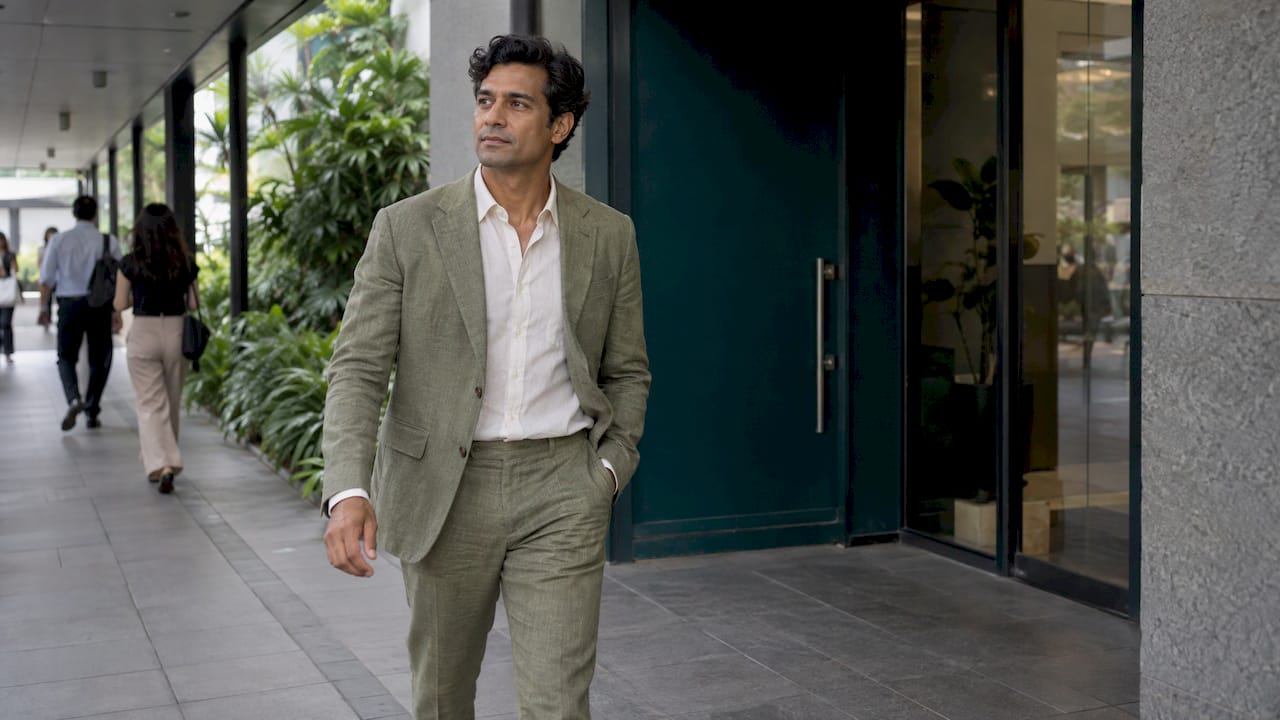
A linen suit suits Singapore’s weather when it is cut with room to move, kept light in construction and cared for between wears. Linen is a breathable, open-weave natural fibre, and that is why men reach for it in a climate that stays hot and humid all year. The fabric is only half the answer. What decides whether you look composed at 3pm on Orchard Road is the fit, the lining and the way the suit is made for your body.
At Ron & Rich, our house has tailored suits for individual clients since 1979, and the questions below are the ones we hear when a client asks about warm-weather cloth.
TL;DR
- Singapore’s daytime highs of 31 to 33°C and year-round humidity reward breathable, lightweight cloth, and linen is a natural fit for that.
- Linen creases as part of its character. A suit cut with a little extra ease, and sleeves and trouser legs left a touch long, wears the creases gracefully.
- Unlined or half-lined jackets and lightweight trousers make the biggest difference to comfort.
- Linen suits are accepted at warm-weather weddings and relaxed business settings, but not at black-tie events.
- Air the suit after each wear, hang it properly and have it cleaned by someone experienced with natural fabrics.
Table of Contents
- What Singapore’s climate asks of a suit
- Why linen works for the climate
- Creasing: how to make it part of the look
- Construction that makes the difference
- A quick guide to the weights and weaves you will hear about
- Styling a linen suit for work, weddings and evenings
- Handling sweat, rain and air-conditioning
- Caring for a linen suit
- Make your suit with us
- FAQ
- Sources
What Singapore’s climate asks of a suit
Singapore has a tropical climate with high, uniform temperatures and high humidity throughout the year. According to the Meteorological Service Singapore, night-time temperatures usually do not fall below 23 to 25°C, and daytime highs do not often rise above 31 to 33°C. Average annual rainfall is 2,113.3 mm over 171 rain days, measured across 1991 to 2020.
Three things follow from those numbers for a man who wears a suit:
- There is no cool season to dress for. A suit that works in January must work in July as well.
- Humidity matters as much as heat. In a humid environment, sweat evaporates less effectively, and evaporation is the body’s main way of releasing heat. Fabric that lets air pass through and moisture escape helps in a way that dense cloth cannot.
- You move between two climates. The US Commercial Service notes that public buildings, indoor restaurants and taxis are air-conditioned, and it advises business visitors to pack summer-weight suits. You walk from heat into cold and back again, sometimes several times in a morning.
What you wear also counts. A study from Singapore General Hospital, reported by The Straits Times, found that heat strain is driven not only by the weather but also by attire and activity. That is a quiet argument for choosing the cloth of a suit as carefully as its colour.
Why linen works for the climate
Linen is made from flax. The fibre is strong, the weave is naturally open, and the cloth sits away from the skin instead of clinging to it. In practice that gives you three advantages in Singapore.
Airflow. An open weave lets warm air leave the jacket and cooler air in, which matters on the walk from the MRT station to the office.
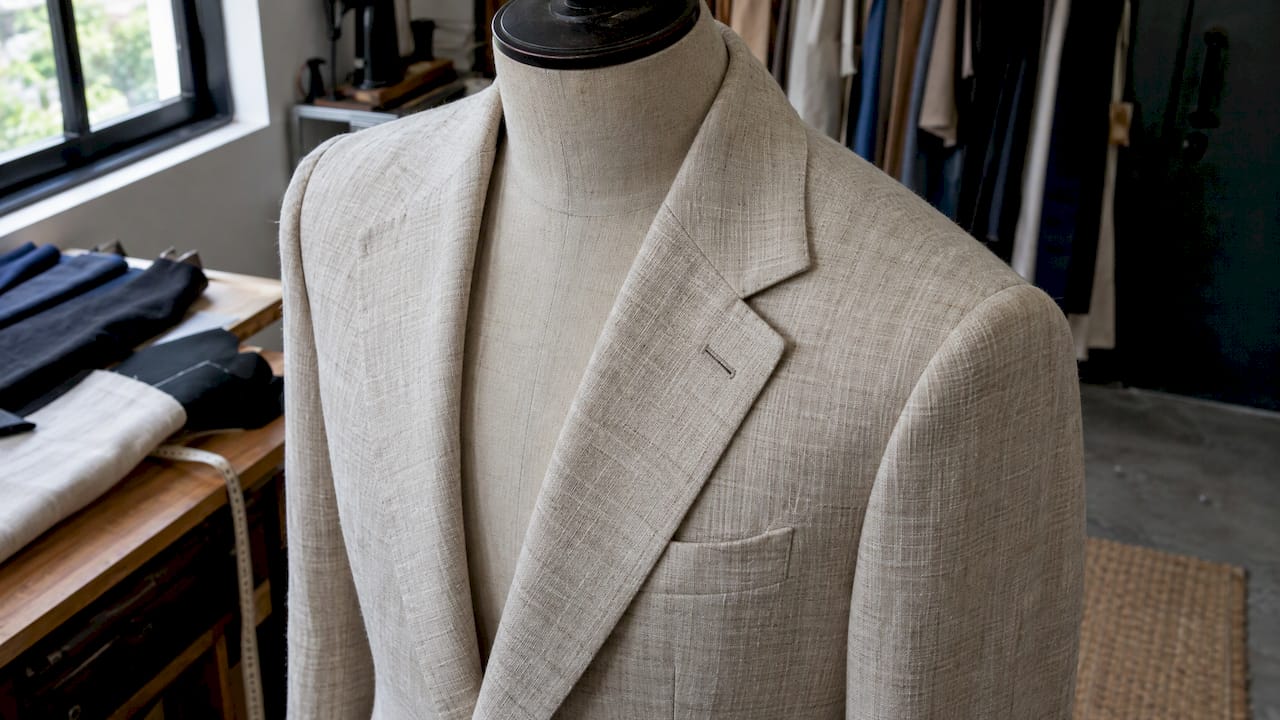
Dryness. Linen feels dry against the skin sooner than many denser cloths, so a brisk walk or a sudden shower is less likely to leave you feeling weighed down.
A relaxed, refined look. Linen has a texture and drape that read as considered rather than casual. It suits a man who wants to look polished without looking buttoned up.
The cloth is only one variable. A heavy, fully lined linen jacket with a slim cut will still feel warm. A well-made, lighter-constructed one can feel almost weightless. This is where tailoring does its work.
Creasing: how to make it part of the look
Every linen suit creases. The fibres lack the natural crimp and springback of animal hair, so the cloth does not bounce back the way a fine worsted does. The sensible approach is to plan for it, not fight it.
British GQ quotes the stylist Derek Guy on two practical points in its 2026 guide to linen suits:
- The suit should not be cut too slim. He suggests a “hug test”: wrap your arms across your chest, and if the back feels tight, the suit is too small.
- Sleeves and trouser legs can be made a little longer at first, because wrinkles accordion the fabric and shorten it after a few hours of wear.
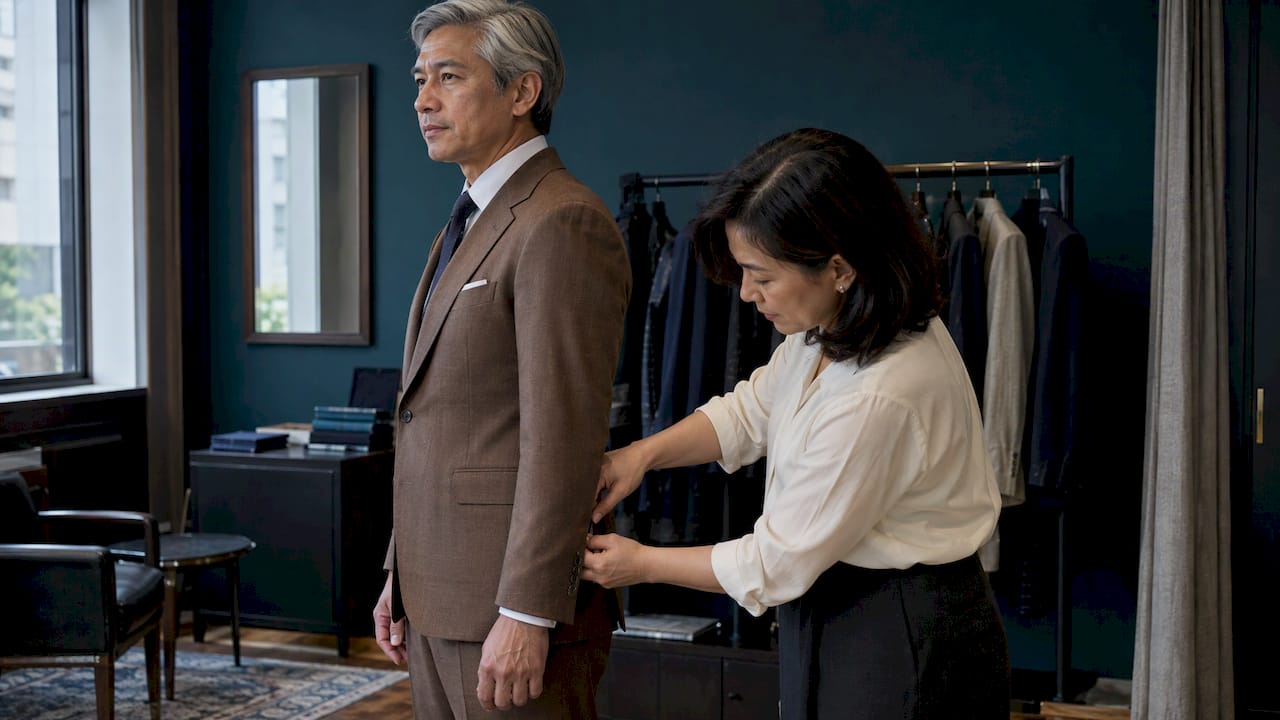
Both points are about proportion, and proportion is what a bespoke cut controls. When we take your measurements, we are building a garment around how you stand, sit and move, including how you will sit at a desk or a wedding table. Light creasing across the lap and elbows then looks like the ease of good linen, not the strain of a suit that is too small.
A useful habit: expect a crease line after a meeting and treat it as the cloth doing what linen does. Hang the suit up when you get home, and the lighter creases tend to fall out.
Construction that makes the difference
In Singapore, construction can matter more than the fibre. Four decisions shape comfort.
Lining
A full lining adds a second layer of fabric across your back and shoulders. Unlined or partly lined jackets remove it. In a Straits Times feature on wearing suits in Singapore, the founder of a local menswear label called unlined jackets and lightweight trousers “game changers” for comfort here. If you will wear the jacket for a long day outdoors, ask for the lightest lining option.
Trousers
Trousers are where most men feel the heat first. A lighter cloth, a comfortable rise and a slightly fuller leg allow air to move. A good trouser pattern should also keep a clean line from hip to hem when you sit, which is something measured, individual tailoring handles well. Our tailored trousers are made to your own measurements.
Fit
Fit is where linen is least forgiving of a poor pattern. Because the cloth will crease anyway, a suit that is too tight at the back or across the chest will look worse faster. If you want a refresher on what a good fit should feel like, this short guide to picking the right suit size covers the basics. A bespoke suit goes further, since it is cut to your body from the start.
Colour
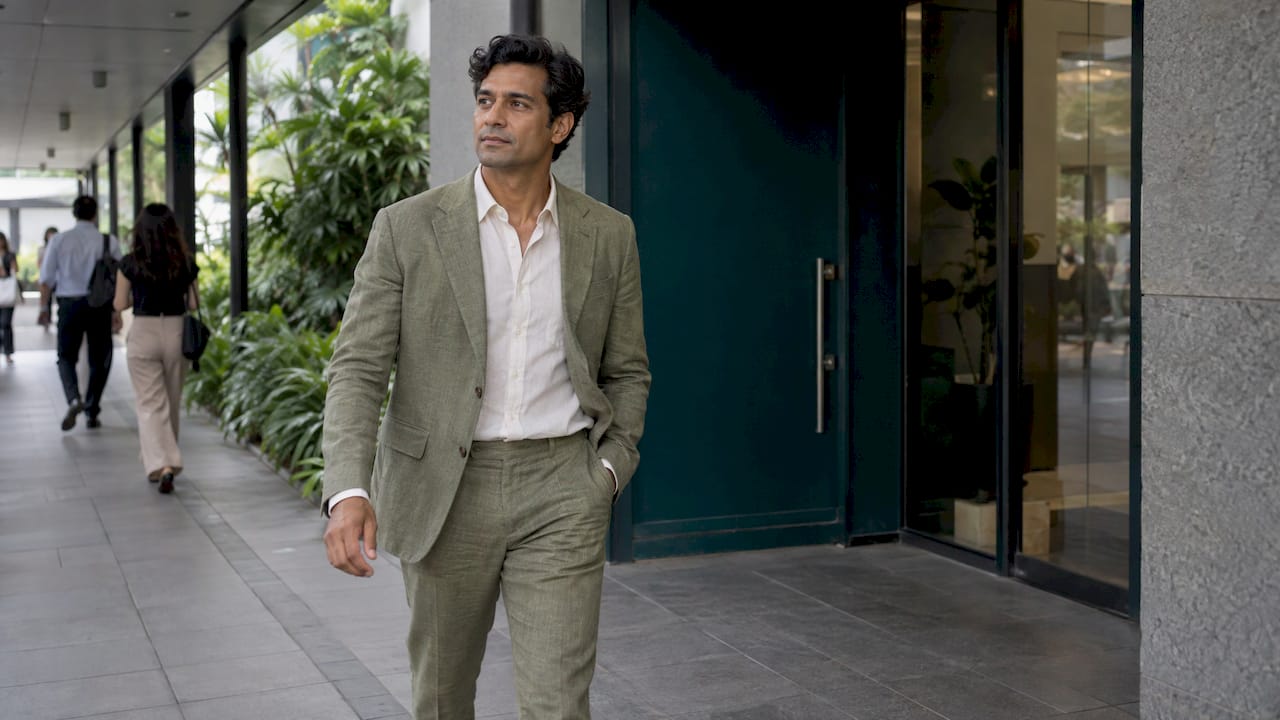
Lighter shades reflect more sun and show less of the faint tonal variation that linen develops through the day. Earth tones, sand, stone, soft blue and light grey are all reliable. If you are planning a wedding, our guide to wedding suit colours for Singapore grooms goes into light cloth in more detail.
A quick guide to the weights and weaves you will hear about
When you discuss cloth with a tailor, you will hear a few terms. Here is what they mean in plain words.
| Term | What it means | Why it matters in Singapore |
|---|---|---|
| Cloth weight | How heavy the fabric is for its size, usually in grams per metre | Lighter weights feel cooler and move better in humid air |
| Open weave | A looser structure with small gaps between the threads | Allows airflow and helps moisture escape |
| Lining | The inner layer inside the jacket | Less lining means less heat trapped against the back |
| Half-lined or unlined | Lining only across part of the jacket, or none | Lighter on the body and quicker to air out |
| Drape | How the cloth falls from the body | Good drape keeps a relaxed suit looking intentional |
We cut suits in premium fabrics chosen for Singapore’s climate, and we are glad to talk you through weight and construction when we meet. Seeing and handling the cloth in person tells you more than any description can.
Styling a linen suit for work, weddings and evenings
At the office
Singapore offices run cold indoors and hot outdoors, so a light jacket is useful. The travel guidance from SINGOHAN notes that indoor temperatures often run 20 to 24°C and that smart casual without a tie is widely accepted, though a jacket is the safer choice for a first meeting or a formal dinner. A linen suit in a mid-tone grey or navy-blue, with a crisp shirt, fits that brief well. Our guide to office wear in humidity goes further on keeping sharp through a working day.
Dressing it down
A suit need not mean a formal shirt and tie. The Straits Times feature mentioned above suggests knitted T-shirts and light leather shoes to relax a two-piece, or a resort-style shirt with a matching jacket or trousers. This is the easiest way to get more wear from a single suit: the jacket works with a polo or fine knit, and the trousers work with a clean shirt.
At a wedding
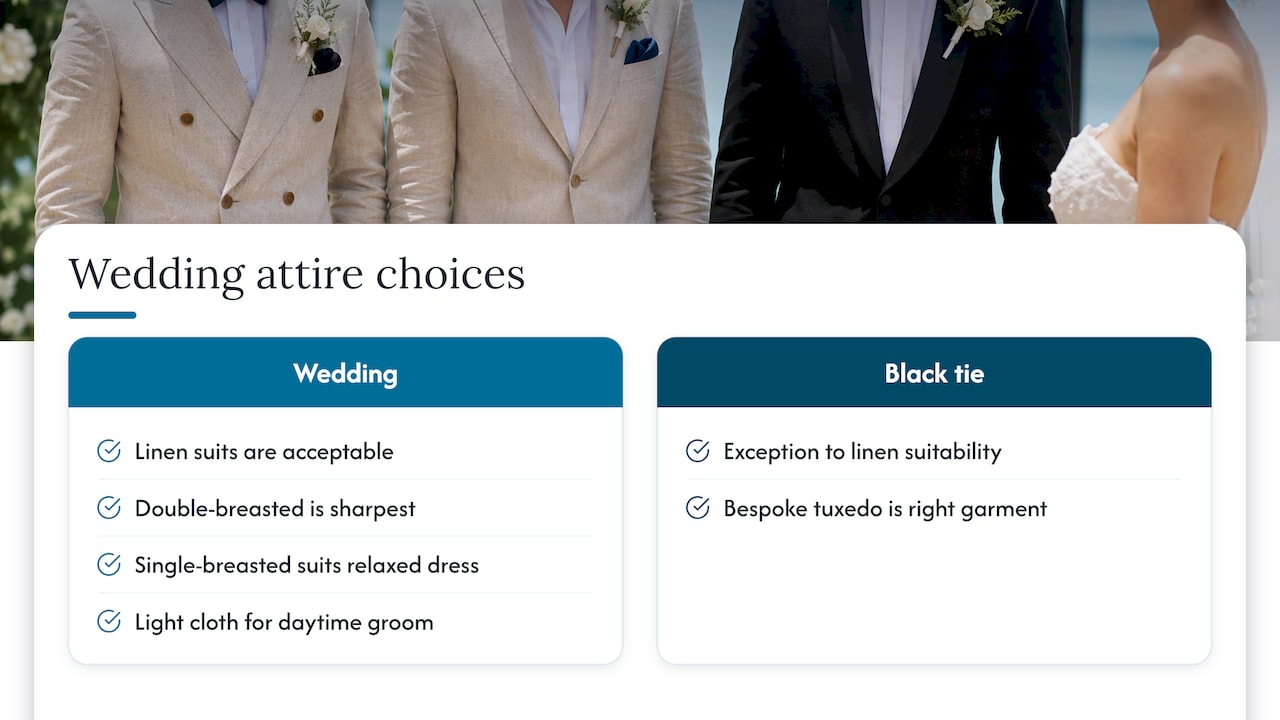
British GQ says linen suits are entirely acceptable for weddings and a go-to for warm-weather celebrations. It describes a double-breasted cut as the sharpest option and a single-breasted as better suited to a relaxed dress code, and it names black tie as the exception. For a groom who wants to stay cool through a daytime ceremony and photographs, light cloth is a sensible starting point. Our groomsmen attire guide helps you coordinate the whole party. If the invitation says black tie, a bespoke tuxedo is the right garment.
Three-piece or two-piece?
A waistcoat adds a layer, so in linen it is best saved for evening or indoor events. For most daytime wear in Singapore, a two-piece is the better choice. If you like the look of a full set, our three-piece suits can be made with this in mind.
Handling sweat, rain and air-conditioning
The real test of a suit in Singapore is the day, not the fitting room. A few habits help.
- Carry a spare layer of comfort. An extra undershirt and a compact umbrella are practical for the rain days that average 171 a year.
- Let the jacket come off in transit. Carry it over your arm on a long walk, then put it on just before you arrive.
- Choose shoes with care. Light leather shoes cope better with a damp pavement than heavy ones.
- Do not fight the aircon. If the room is cold, the jacket earns its place. If it is hot, it can come off without the suit looking unfinished, because a well-cut waistcoat or trouser and shirt still looks intentional.
Caring for a linen suit
Good care keeps a linen suit looking its best for years, and Singapore’s humidity makes the routine more important.
- Air it after each wear. The Straits Times advises airing the suit in a well-ventilated place after light use before it goes back in the wardrobe.
- Use a good hanger with room around it. British GQ recommends a quality hanger with space to breathe, so that light creases fall out on their own.
- Clean it carefully. The same guide suggests professional dry-cleaning by someone experienced with natural fabrics such as linen.
- Keep the wardrobe dry. In a humid climate, never store a suit while it is damp, and keep the cupboard ventilated.
- Steam, do not press hard. Steaming relaxes the fibres and gives a softer finish than a hot iron.
Our view from the cutting table
We have worked in tailoring for nearly five decades. Our founder, master tailor Richard Fan, opened the house in 1979 on a simple belief: a suit should be made for the man who wears it, not adjusted to him afterwards.
That belief matters more in Singapore than almost anywhere. The heat is constant, the humidity is constant, and a man may wear his suit from a taxi to a boardroom to a rooftop dinner in a single day. Good cloth helps, but the garment that serves him best is one whose shoulders, chest, sleeves and trouser line were cut to his proportions and finished with the climate in mind.
This is why we prefer to begin with a conversation. How do you spend your day? Do you walk or drive? Do you remove your jacket in the office? Are you dressing for a wedding that begins at noon? The answers shape the cloth, the lining and the fit, and they allow us to make a suit that carries traditional craftsmanship with modern sophistication into a tropical working life.
A linen suit, handled with this care, is not a compromise. It is a considered choice.
Ron
Make your suit with us
If you are considering a suit for Singapore’s weather, we would be glad to meet you, discuss cloth and construction, and take your measurements. Our bespoke suits start from $2,170, sports jackets from $1,790, trousers from $290 and shirts from $199, as set out on our pricing page. You can also see our full range of bespoke suits and jackets.
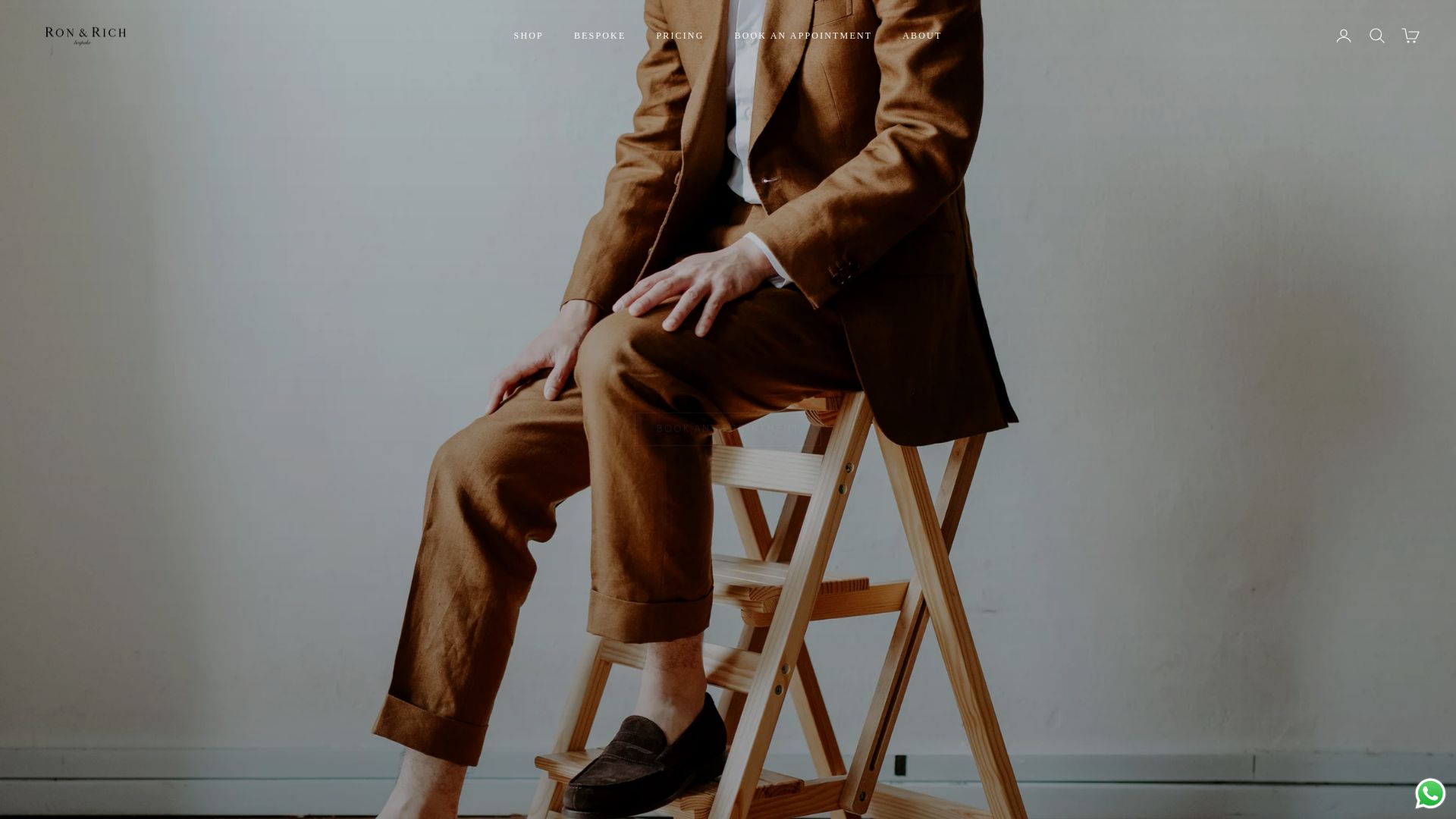
We also offer a seersucker option for readers who want another warm-weather cloth to consider.
FAQ
Is a linen suit too hot for Singapore?
No. Linen is breathable and an open weave lets air move, which suits temperatures that reach 31 to 33°C by day. Comfort improves further with a light or partial lining, lighter trousers and a cut that is not too close to the body.
Will a linen suit look messy by the afternoon?
Linen creases by nature, and that is part of its appeal. A suit cut with enough ease, with sleeves and trouser legs a little long at first, wears those creases well. Hanging it properly when you get home lets lighter creases fall out.
Can I wear a linen suit to a wedding in Singapore?
Yes, for a warm-weather celebration, and it is a popular choice for daytime ceremonies. Black-tie events are the exception, where a tuxedo is the right choice. Single-breasted cuts suit a relaxed dress code, while a double-breasted jacket looks sharper.
How should I care for a linen suit in humid weather?
Air it after each wear, hang it on a good hanger with space around it and keep the wardrobe ventilated. Never store it damp. For cleaning, use a cleaner experienced with natural fabrics, and steam the suit to freshen it between cleans.
How much does a bespoke suit cost at Ron & Rich?
Our suits start from $2,170 as published on our pricing page. Prices for other garments, including trousers and shirts, are listed there too.
Sources
- Climate of Singapore, Meteorological Service Singapore
- Singapore Business Travel, trade.gov
- Majority of heat injury patients at SGH are young adults, The Straits Times
- Gel-based cooling wear trialled in Singapore, The Straits Times
- 5 tips on wearing suits in Singapore, The Straits Times
- Best Linen Suits for Men, British GQ
- Visiting Singapore in June, SINGOHAN