Executive Wardrobe Essentials for Men in Singapore
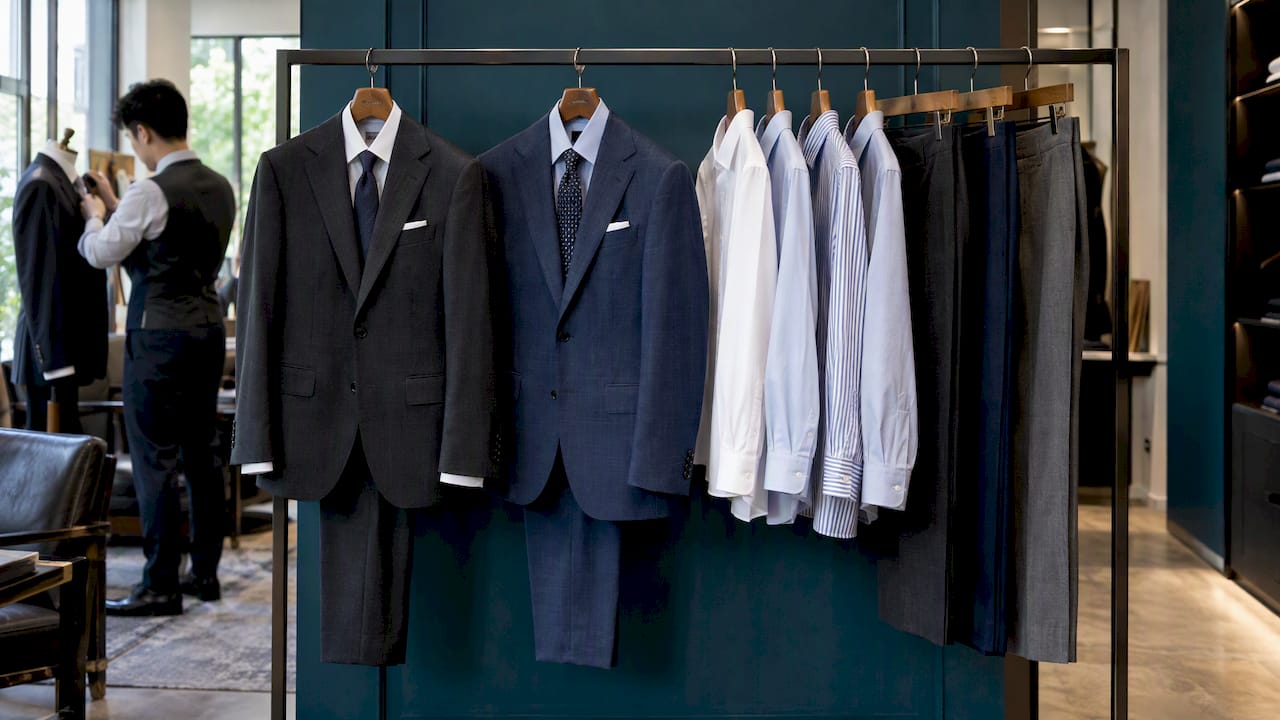
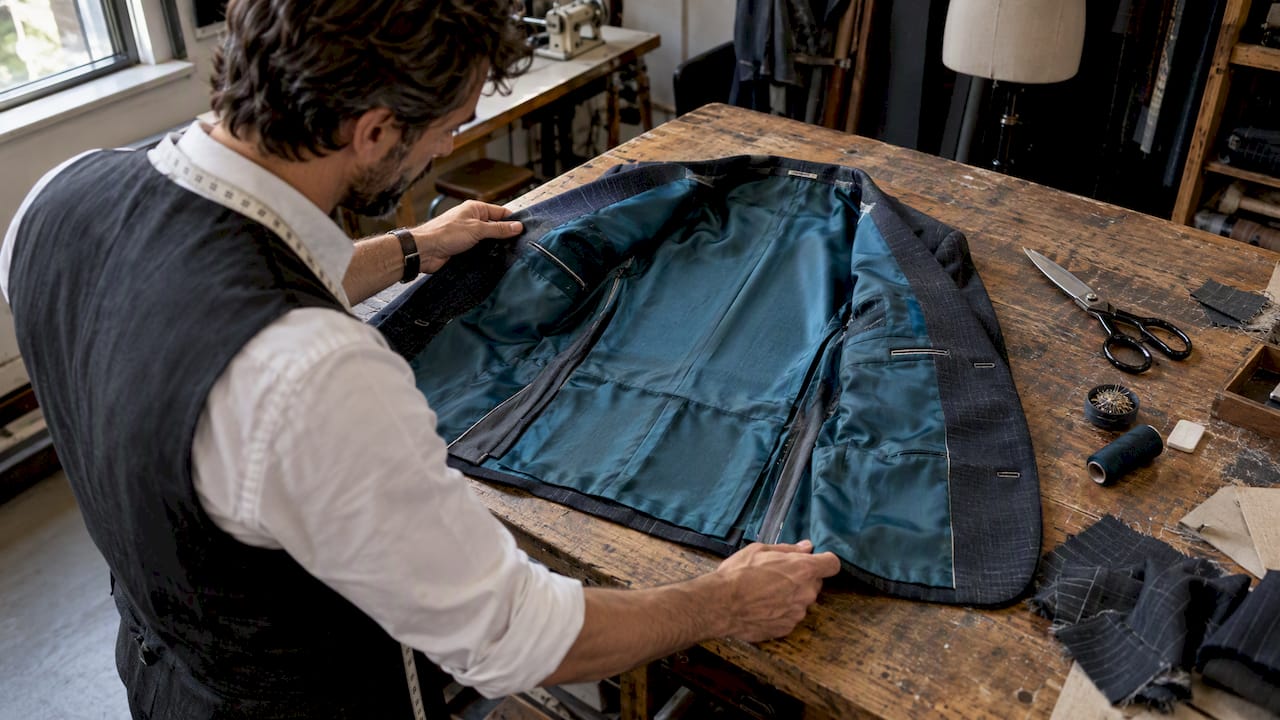
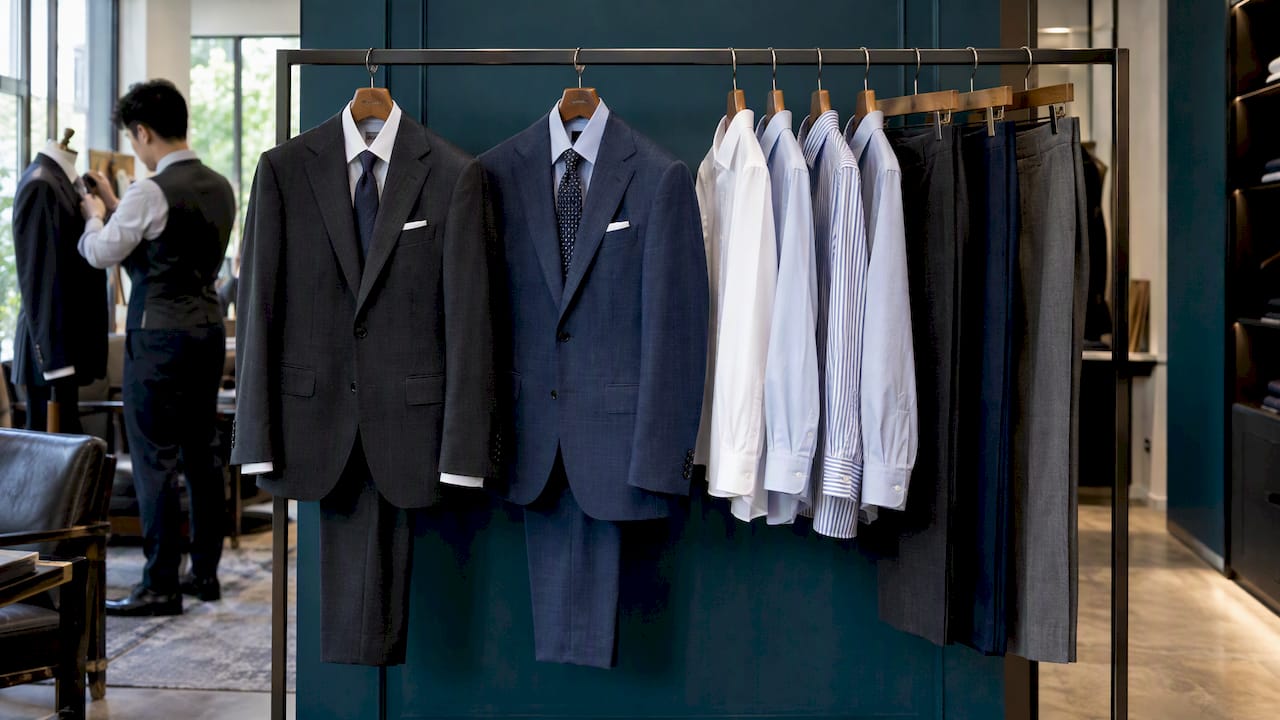
An executive wardrobe in Singapore rests on a short list: two lightweight wool suits, a deep bench of well-fitted long-sleeved shirts, three or four tailored trousers, one or two soft jackets, two pairs of leather shoes and a few quiet accessories. Everything else is a refinement. What separates a wardrobe that works from one that merely fills a cupboard is fit, fabric chosen for the climate, and the discipline to own fewer, better pieces.
We have tailored for professional men since 1979, and this is how our house thinks about the question.
TL;DR
- Build around two lightweight suits, five or more shirts, three to four trousers and one or two unstructured jackets, rather than a rail of occasional pieces.
- In Singapore’s heat, choose breathable wool, unlined or half-lined jackets and shirts that are ventilated but not so thin that they cling.
- The shirt is the garment people see most, so it deserves the closest attention to fit.
- Two leather shoes, a belt and a watch complete the look; keep them polished and let suits air between wears.
- Fit decides everything: shoulders, sleeve length and collar matter more than the label.
Table of Contents
- What an executive wardrobe actually needs
- The suit: begin with two
- The shirt: the true executive investment
- Trousers: the quiet workhorse
- Jackets and knits: the layer between formal and casual
- Shoes, belts and accessories
- Formal or business casual: dressing for the room
- Making a small wardrobe work: a week of outfits
- Caring for what you own
- Our perspective
- Begin your executive wardrobe with us
- FAQ
- Sources
What an executive wardrobe actually needs
Most advice on this subject is written for cold-climate offices, where a heavy overcoat and a layered jacket do half the work. Singapore asks a different question. The U.S. International Trade Administration describes a constant tropical climate with very high humidity and frequent rain, and advises business visitors to bring summer-weight suits, several dress shirts and an umbrella. Long-sleeved shirts are the standard, and a tie may be left off except for some formal meetings.
That single paragraph tells you most of what you need. The wardrobe is built from light fabrics, it leans on shirts, and it keeps a suit ready for the moments that call for one.
We organise the essentials in five groups:
- Suits, the foundation for formal meetings, client presentations and boardrooms.
- Shirts, the working layer you wear every day.
- Trousers, which carry both your suits and your smart-casual days.
- Jackets and knits, for the many days when a full suit is more than the room requires.
- Shoes and accessories, which finish the outfit and are noticed first when neglected.
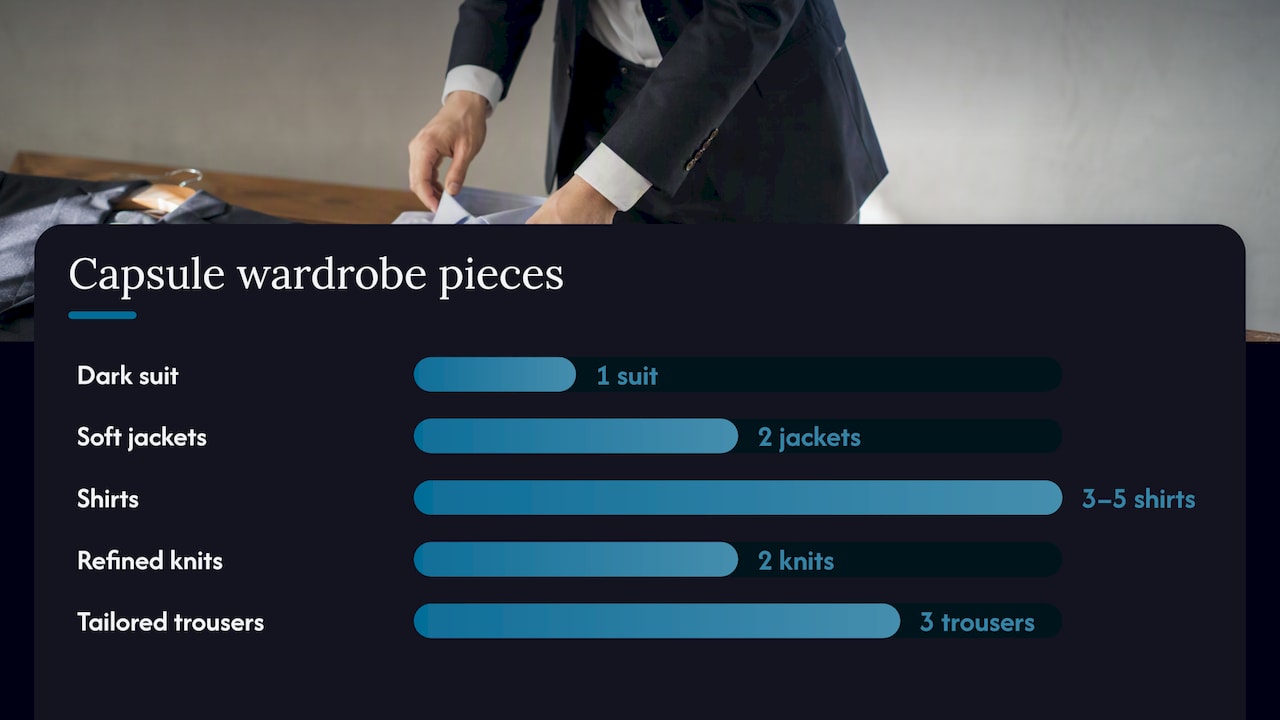
A useful reference point is the capsule suggested by a Singapore-based stylist, Manasa Subramani: at least two lightweight, unlined or half-lined jackets, three to four versatile trousers, and a run of lightweight cotton, Oxford or linen-blend shirts. Another executive capsule, from The Curated Outfit, begins with one dark suit, two soft jackets, three to five shirts, two refined knits, three tailored trousers, one smart-casual trouser, two pairs of leather shoes, a belt, a watch and weather-appropriate outerwear. The proportions differ slightly, yet the logic is the same: few pieces, each doing several jobs.
The suit: begin with two
If you own one suit, make it dark, plain and cut to your body. If you own two, the second should differ enough in colour or texture to be worn in rotation, so that neither wears out first.
For formal business or interview settings, Cornell’s professional-dress guide points to charcoal or navy, worn with a white or conservative blue shirt, a simple tie and polished dark lace-up shoes. We agree with that palette. Charcoal and navy are the two colours that suit nearly every complexion, every industry and every season.
Why wool, and why light
It is tempting to assume linen is the sensible answer in a humid city. The Straits Times reported in April 2026 that Singapore tailoring experts recommend breathable wool as the base of a suit, because linen and cotton wrinkle readily in the local climate, while wool needs cleaning less often. The same article recommends lightweight trousers and unlined jackets for comfort.
This matches what we see at our fittings. A fine, open-weave tropical wool holds its line through a day of lifts, taxis and air-conditioned rooms, and it recovers overnight. Linen has its place in a second, more relaxed jacket, but it is a poor foundation for the suit you rely on.
The fit checklist
The same Straits Times piece gives a practical test for any jacket. Check that:
- the shoulder seam sits where your shoulder ends;
- the sleeve finishes a quarter to half an inch shorter than your shirt cuff;
- the lapels lie flat and clean;
- the waist closes without pulling;
- the jacket covers the seat; and
- the collar sits snug against your neck.
When several of these fail at once, the problem is rarely your body. It is that the garment was cut for someone else. This is the case for bespoke tailoring: every measurement is taken from you, and every adjustment is made on you. If you are weighing your options, our guide to bespoke, made-to-measure and off-the-rack suits sets out what each route costs and delivers.
The shirt: the true executive investment
In a city where jackets are often impractical outdoors, the shirt does the visible work. Thomas Mason, the historic shirting mill, quotes CYC Singapore’s Bernice Chia on exactly this point: the shirt is the central professional garment in Singapore. The same article notes average humidity of 84% and noon temperatures often above 33°C, which is why the fabric matters as much as the cut.
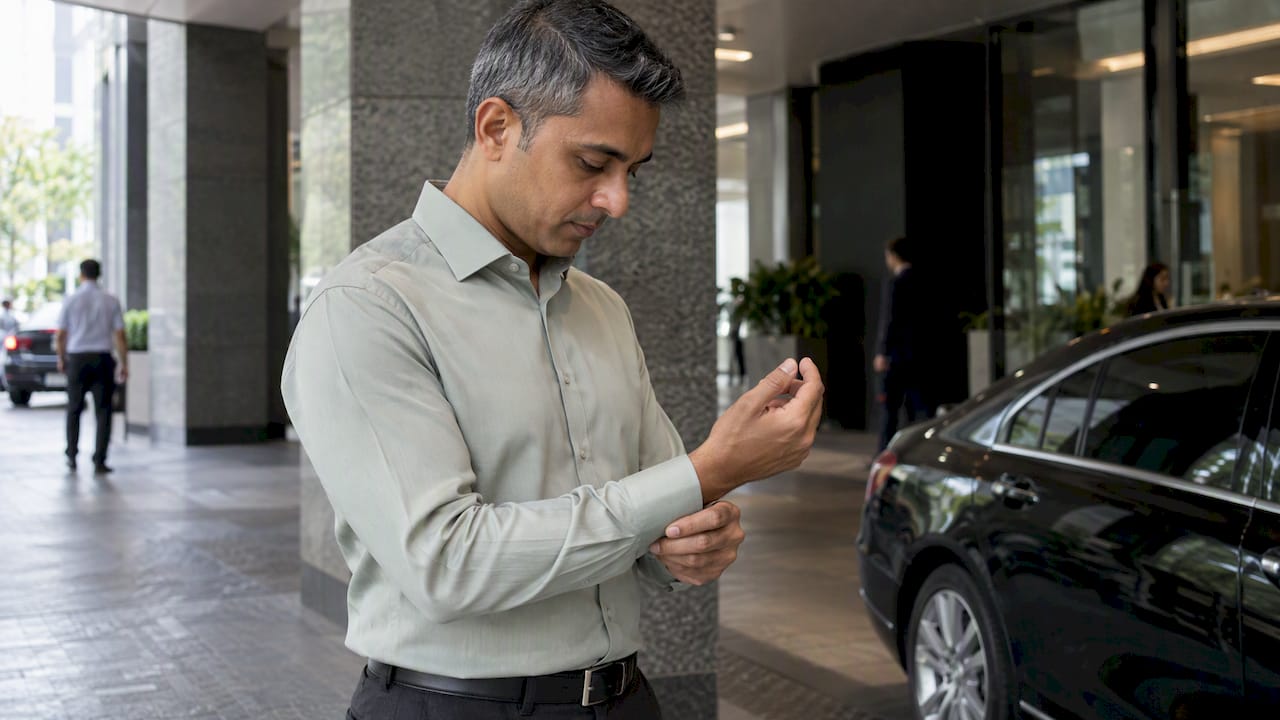
Its advice for shirts is simple. They should fit properly, use flattering colours or patterns, and be ventilated without being so thin that perspiration makes them cling. We would add one practical note: a shirt that is too thin shows what a good one conceals.
How many, and in what colours
Five is a sound minimum for a working week, which lets each shirt rest and be laundered properly. A workable mix:
- two white, one in a fine poplin and one in a textured weave;
- two light blue, one plain and one with a fine stripe or check;
- one shirt in a quiet third colour, such as pale grey or a soft pink, for variety.
Collar shape is the detail that most affects how a shirt reads under a jacket. A well-cut spread or semi-spread collar holds its shape with or without a tie. If you wear a tie, Cornell’s guide advises that it finish just above the belt buckle.
Our tailor-made shirts are cut to your measurements, and our shirting collection offers a range of fabrics suited to the climate. Shirts begin from $199.
Trousers: the quiet workhorse
Trousers are the piece most often neglected, and the one that wears hardest. A jacket may appear a few times a week; trousers appear daily. The stylist and capsule guides above agree on three to four tailored pairs, and we think that is right.
A sensible set:
- charcoal, to pair with your charcoal or navy suit jackets as separates;
- navy or mid-grey, a lighter wool for everyday wear;
- stone or light grey, for warmer-toned smart-casual days;
- one trouser in a textured or tonal fabric, for days with no client meetings.
Pleats, rise and taper are matters of personal comfort, but the principle is constant: the trouser should hang from the waist without a belt fighting it, and break lightly on the shoe. Our tailored trousers start from $290.
Jackets and knits: the layer between formal and casual
Few executives wear a full suit all day in Singapore, and fewer still need to. The Straits Times notes that a relaxed, Singapore-appropriate suit can be worn with a knitted T-shirt and light leather shoes. That tells us the soft jacket and the refined knit are no longer a compromise; they are the daily uniform in many offices.
Two jackets cover most needs:
- A navy unstructured blazer in tropical wool or a wool blend, unlined or half-lined. It works with grey trousers, stone trousers and, at a pinch, jeans on a Friday.
- A textured sports jacket in a lighter tone or a subtle check, for days when the first jacket would be too serious.
To these we add one or two fine knits in merino or a cotton blend, which can stand alone in an air-conditioned office or sit under a jacket. Our sports jackets begin from $1,790, and our knits are available online in our collections.
For a more relaxed weekend wardrobe, safari jackets and chore coats are worth considering; both begin from $790 and wear well over a shirt in warm weather.
Shoes, belts and accessories
Two pairs of leather shoes are enough: one dark brown or black lace-up for formal days, and one loafer or Derby for everything else. Cornell’s guide advises polished dark lace-ups with matching belt and shoes in formal settings, with dark socks coordinated to the outfit and white socks avoided.
For business-casual workplaces, JobStreet Singapore lists loafers, Oxfords, Derbies, Chelsea boots and restrained leather or canvas trainers as options, while ruling out flip-flops, sandals, tattered trainers and chunky-soled shoes. We would hold to the shorter list, with polished leather first. Our own guide to footwear, accessories and grooming in Singapore offices goes into more detail.
A leather belt that matches your shoes, a watch with a clean dial and, for formal occasions, a tie and perhaps cufflinks are all you need. Beyond the office, a considered men’s cap collection can round out a smart-casual weekend capsule without disturbing the rest of your wardrobe.
Formal or business casual: dressing for the room
What you wear depends on the room more than the title on your card. AEMorph-style guidance and the formal-setting norms above agree that law, banking and government lean towards the tailored suit, long-sleeved shirt, tie and dress shoes. Creative, technology and many multinational offices are more relaxed.
The Curated Outfit proposes a ladder that we find helpful, because it shows that formality is a dial rather than a switch:
| Level | What to wear |
|---|---|
| Relaxed | Tailored trousers, knit polo, loafers |
| Smart | Add a soft jacket |
| Formal | A suit with an open-collar shirt |
| Highest formality | Suit, dress shirt and your most polished shoes |
For business casual, SEEK advises that clothing be well fitted, clean and pressed, with a belt usually expected and a tie not. JobStreet’s Singapore guide describes business formal as a two-piece suit, button-down shirt, matching tie, dress shoes and accessories such as tie clips or cufflinks. For a fuller picture of local expectations, read our Singapore business dress code guide.
Making a small wardrobe work: a week of outfits
The purpose of a capsule is that every piece combines with several others. Here is how a handful of garments becomes a working week, using only the pieces described above.
| Day | Outfit |
|---|---|
| Monday | Navy suit, white poplin shirt, tie, dark brown lace-ups |
| Tuesday | Charcoal trousers, light blue shirt, navy unstructured blazer, loafers |
| Wednesday | Charcoal suit, light blue striped shirt, no tie, black lace-ups |
| Thursday | Stone trousers, fine knit, no jacket, Derbies |
| Friday | Navy blazer, white textured shirt, grey trousers, loafers |
Five days, five outfits, and no repeated combination, from two suits, three shirts, three trousers, one blazer and a knit. Add a fourth shirt and a textured jacket and the number of combinations more than doubles.
Three rules keep this working:
- Keep the palette narrow. Navy, charcoal, grey, white and light blue combine freely, so nothing is ever mismatched.
- Vary texture before colour. A smooth poplin with a textured jacket creates interest without risk.
- Break up your suits. A navy suit jacket worn with grey trousers, or suit trousers with a knit, doubles the use of each piece. Choose cloth for the second suit with this in mind.
Caring for what you own
A well-made garment lasts for years if it is allowed to rest. The Straits Times advises airing a suit in a well-ventilated place after light use, which reduces the need for dry cleaning and keeps the cloth in better condition. Our practical habits:
- rotate suits so none is worn on consecutive days;
- hang jackets on wide, shaped hangers;
- use cedar shoe trees in leather shoes after each wear;
- give shoes a day off between wears; and
- steam rather than press wool, where possible.
More on keeping sharp in the humidity is in our guide to office wear in humidity.
Our perspective
After nearly five decades at the cutting table, we have come to a simple view. A wardrobe is not measured by how much it holds, but by how rarely you have to think about it. The executive who opens the cupboard and finds five shirts that fit, two suits that breathe and shoes that are ready has already made the harder decisions.
We also believe that fit is the one element that cannot be borrowed. A fine cloth badly cut will always look like a compromise, and a modest cloth cut precisely to your shoulders will look considered. That is why we begin every commission with a conversation and a tape measure, and why we choose premium fabrics suited to Singapore’s climate rather than those suited to a brochure.
Start with the suit, then the shirts, then the trousers. The rest follows in time.
Ron
Begin your executive wardrobe with us
Our house makes each piece to your measurements, from business suits to shirts, trousers and soft jackets. Suits begin from $2,170, and you can see every product line with its starting price on our pricing page.
Book a consultation and we will build a first capsule around your working week, your industry and your budget.
FAQ
How many suits does an executive need in Singapore?
Two is a sound starting point: one navy and one charcoal, both in lightweight wool. This lets you rotate them and rest each between wears. Add a third only when your calendar calls for it.
Is a tie necessary in Singapore offices?
Not always. The U.S. International Trade Administration notes that long-sleeved business dress is standard and a tie may be omitted, though some formal meetings call for a jacket and tie. Keep a tie in your drawer for those occasions.
What fabric is best for a suit in Singapore’s climate?
Breathable, lightweight wool. According to The Straits Times, local tailoring experts prefer it to linen and cotton because it wrinkles less and needs cleaning less often. Unlined or half-lined jackets add further comfort.
What is the difference between business formal and business casual?
Business formal is a two-piece suit, button-down shirt, matching tie and dress shoes. Business casual relaxes this to a collared shirt with tailored trousers or chinos, often with a soft jacket and leather shoes, and usually without a tie.
What should I buy first if I am starting from scratch?
Begin with a dark suit cut to your measurements, then add shirts and trousers. A well-fitted suit anchors the wardrobe, and the other pieces are built around it.
Sources
- Singapore - Business Travel (U.S. International Trade Administration)
- CYC Singapore: Equatorial Sartorialism (Thomas Mason)
- Executive Capsule Wardrobe for Men (The Curated Outfit)
- Professional Dress Tips for Men (Cornell)
- Wool over linen: 5 tips on wearing suits in Singapore (The Straits Times)
- Men’s Personal Stylist in Singapore: Wardrobe Guide
- Guide for men’s business casual fashion (JobStreet Singapore)
- A guide to business casual attire (SEEK)