Fix Deodorant Stains on Shirts Before Heat Sets Them, or See a Tailor
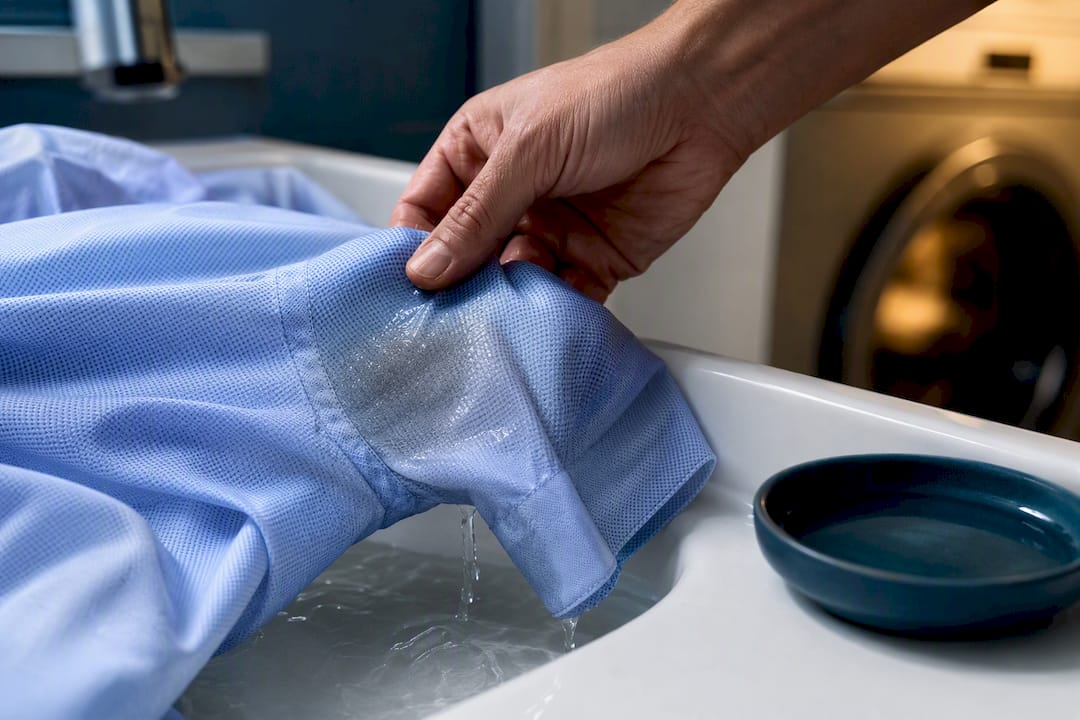
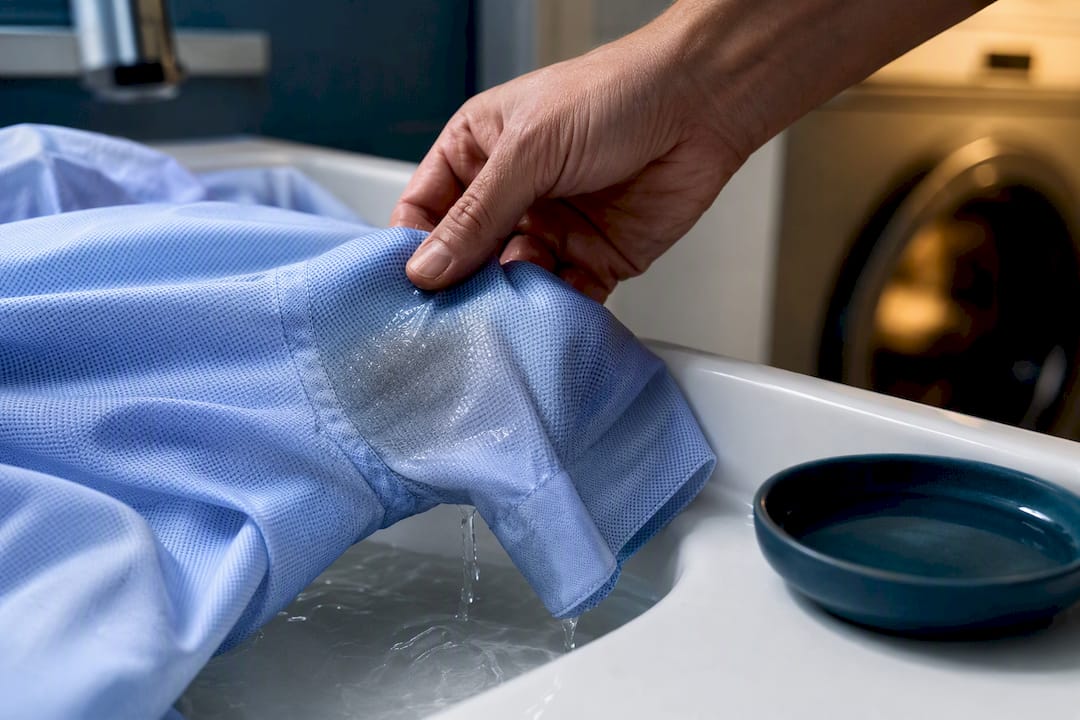
Pre-treat the mark with a little liquid detergent or a mild paste, work it in gently, then wash the shirt at its safest labelled temperature. Leave heat well alone until the stain has actually lifted, since a hot wash or tumble dryer can fix what’s left in place for good. If the shirt is silk, wool, or a bespoke piece with linings and trims, test an inside seam first, or better yet, ask a tailor before you touch it with anything stronger than soap.
TL;DR:
- Immediate treatment with a gentle brush and a bicarbonate paste can often remove fresh deodorant marks within 20 minutes.
- Hot washes and tumble drying can set aluminium and sweat reactions into fabric, making stains permanent and harder to remove.
- Older yellow stains require oxygen-based bleach soaks or strong alkaline treatments, but strong chemicals risk damaging delicate or colored fabrics.
- Silk, wool, and bespoke shirts should never be treated harshly at home, and professional assessment is recommended for valuable or delicate garments.
- Preventative habits, such as allowing deodorant to fully dry and wearing undershirts, significantly reduce the frequency and severity of deodorant stains.
Table of Contents
- Why deodorant marks form and why some stick
- Quick, step-by-step fixes for fresh marks
- How to tackle older, set-in yellow stains
- Adjust your method for cotton, synthetics, silk and bespoke shirts
- Simple habits to reduce future deodorant stains
- A tailor’s view on when to stop treating it yourself
- The order of operations that actually works
- Ron & Rich: when a stain is the least of a shirt’s problems
- Sources
- FAQ
Why deodorant marks form and why some stick
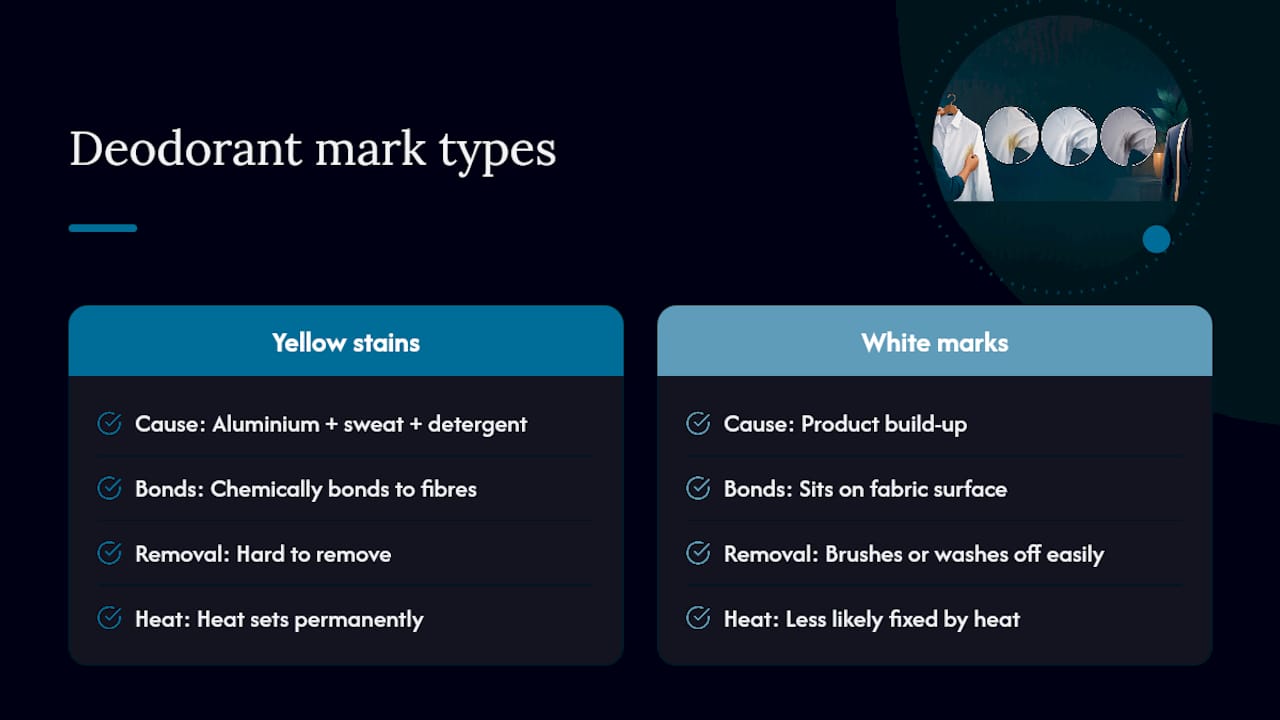
Yellowing under the arms is not simply sweat. It is usually the aluminium compounds in antiperspirants reacting with sweat and with detergent residues left behind in the fabric, a combination that gradually stains the fibres themselves rather than sitting on the surface. On darker shirts, the white marks you see are a different problem entirely: product build-up that has not chemically bonded with the fabric, which is why it often brushes or washes off far more easily than yellow staining does.
Heat is what separates a stain you can still fix from one you cannot. A hot wash or a spell in the tumble dryer can set the aluminium and sweat reaction into the weave permanently, turning a treatable mark into a fixed one. That single habit, drying on high heat before checking the stain has gone, causes more ruined shirts than any deodorant formula does.
Quick, step-by-step fixes for fresh marks
Catch a mark early and you can usually clear it in under half an hour with things already in your kitchen cupboard.
- Brush off dry residue first. For white marks on dark fabric, a soft brush or a damp cloth rubbed gently with a bar of soap often lifts the build-up before you even reach for the wash.
- Apply a paste or detergent directly. Mix bicarbonate of soda with a splash of water into a thick paste, or dab on a small amount of liquid laundry detergent straight onto the mark, then leave it for 10 to 20 minutes to break down the residue.
- Rinse and wash as normal. Launder on the garment’s safe setting and check the stain before drying. If any trace remains, repeat the treatment rather than moving to the dryer.
Soap and brushing, a bicarbonate paste, or a short vinegar soak all work as effective first-line steps for fresh marks, and white vinegar diluted with water makes a decent pre-soak for cotton whites specifically. Skip vinegar on anything with colour you have not tested, since its mild acidity can dull or shift certain dyes.
Pro Tip: Treat the mark while the shirt is still at room temperature, not fresh out of a warm laundry basket. Residual body heat can make the stain harder to shift, even before it goes anywhere near a washing machine.
How to tackle older, set-in yellow stains
Once a stain has been through a hot wash or sat for weeks, gentle methods rarely finish the job on their own. You need something with more lifting power, applied patiently rather than aggressively.
- Oxygen-based bleach soak: dissolve a colour-safe oxygen bleach in warm water, submerge the stained area for the time stated on the product, usually an hour or more, then rinse thoroughly before washing as normal.
- Washing-soda or strong laundry booster: a stronger alkaline soak works well on cotton and poly-cotton shirts that have tolerated regular washing without fading, and is worth trying before you reach for bleach.
- Enzyme pre-treaters and sweat-stain sprays: these target the protein content in sweat rather than the aluminium residue, so they help most on stains that are more sweat-based than product-based, and less on old, purely chemical yellowing.
- Never use chlorine bleach on coloured garments. It is reserved for plain whites only, and even then, oxygen-based bleach and washing-soda soaks are the safer standard recommendation for stubborn stains.
Repeat a soak once or twice if the stain fades but does not fully clear. Beyond that, stop escalating once you notice any colour loss or the fabric starting to feel thin or weak, because at that point you are trading a stain for a damaged shirt.
Adjust your method for cotton, synthetics, silk and bespoke shirts
Cotton and poly-cotton shirts are the most forgiving. They generally tolerate soaking and alkaline treatments well, though it is still worth checking the care label before a bleach-based soak, since some finishes and blends react differently than plain cotton does.
Synthetics need a lighter touch. High heat and heavy scrubbing can glaze or damage synthetic fibres, so stick to gentle enzyme pre-treaters and avoid anything that requires prolonged hot soaking.
Silk, wool, and shirts with embroidery, monograms, or bespoke internal construction deserve the most caution of all. Strong soaks and alkaline boosters can strip colour or damage delicate weaves, so a specialist cleaner or a tailor is the safer route. Any home remedy, from bicarbonate paste to a citric-acid soak, should be patch-tested on a hidden seam first. Apply a small amount, wait 10 to 15 minutes, and check for colour change or texture damage before treating the visible mark.

Simple habits to reduce future deodorant stains
Most stains are avoidable with a change in routine rather than a change in deodorant.
- Let deodorant dry fully before getting dressed. Damp product transferring onto fabric is one of the most common causes of both white residue and eventual yellowing.
- Dab away any excess with a tissue immediately after application, rather than leaving it to soak into your skin and then your shirt.
- If stains keep recurring despite good habits, try an aluminium-free or anti-mark formulation, which removes the chemical reaction that causes yellowing in the first place.
- Wear a thin undershirt beneath lighter or more delicate shirts, and wash anything you have sweated in promptly rather than letting it sit in a laundry basket for days.
- Always check the care label before washing, and hold off on tumble-drying until you have confirmed the stain is fully gone.
A tailor’s view on when to stop treating it yourself
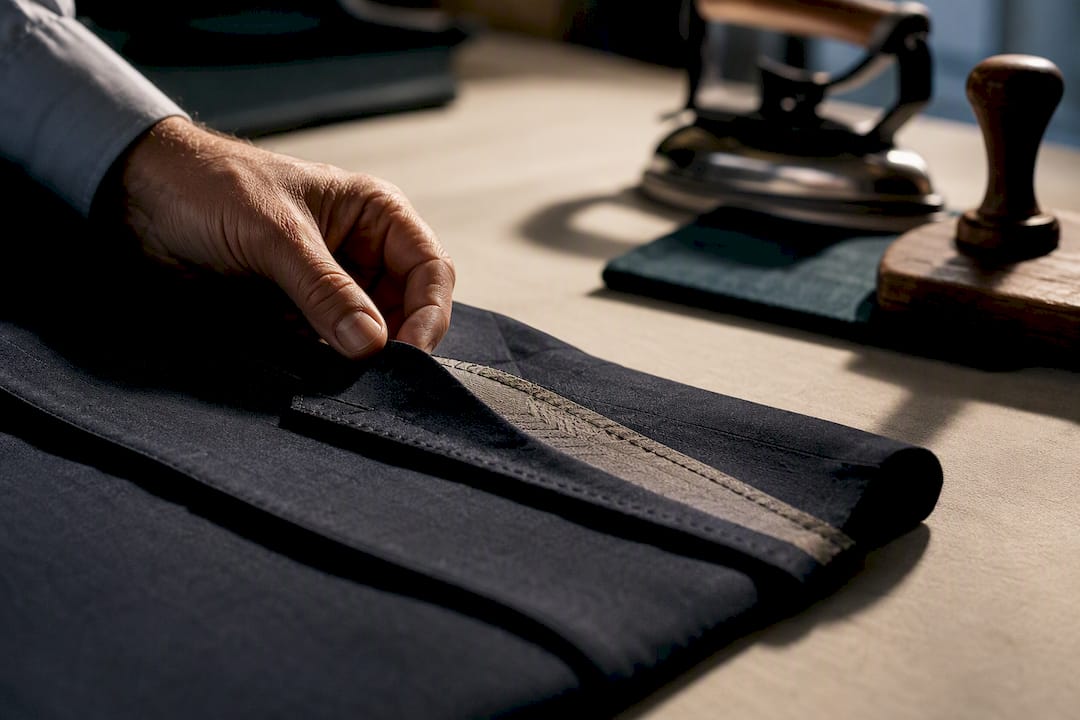
If the shirt in question is bespoke, lined, monogrammed, or finished with delicate trims, home chemistry is a gamble not worth taking. A strong soak that would barely trouble a high-street cotton shirt can lift dye or distort stitching on a garment built to measure.
General guidance is straightforward: test discreetly, and if you are at all unsure, bring the shirt in rather than risk a treatment you cannot reverse. The same caution applies to heat exposure generally. If you have ever wondered why a favourite shirt came out of the wash fitting differently, our piece on dress shirt shrinkage covers the washing habits worth avoiding long before staining becomes the issue.
The order of operations that actually works
Start gentle, always. Soap and a brush, then a bicarbonate paste or diluted vinegar, covers the majority of fresh marks without any risk to the fabric. Only escalate to an oxygen-based soak or a washing-soda treatment once the gentle route has genuinely failed, and never skip straight to chlorine bleach out of impatience.
If a stain survives two or three proper attempts, it has likely bonded with the fibres beyond a full recovery. At that point, further scrubbing only damages the shirt. A tailor’s reweave, a dye touch, or simply retiring the shirt to casual duty are more sensible outcomes than a fourth aggressive soak.
Ron
Ron & Rich: when a stain is the least of a shirt’s problems
A stubborn stain has a way of revealing how a shirt was made in the first place. Cheaper fabric and looser weaves show damage from soaking and scrubbing far quicker than a shirt built properly does, which is where Ron & Rich’s bespoke-shirt service comes in.

The company providing bespoke shirting services has longstanding tailoring experience that extends to advising on whether a stained shirt is worth saving or replacing. If a favourite shirt has reached the point where home treatment feels too risky, our tailored shirting collection is a sound next step, with prices starting from $199 per shirt as listed on our pricing page. Book a consultation, bring the shirt in for an assessment, and let a tailor tell you whether it is a stain worth fighting or a shirt worth replacing properly.
Sources
The stain-removal steps and cautions in this guide draw on established laundry and skincare references, including Persil’s guidance on deodorant stains, Sure’s stain removal advice, NDR’s household remedy guide, and NIVEA’s prevention tips.
- Deodorant flecken entfernen | Persil Waschwiki
- How To Remove Deodorant Stains From Clothes | Sure® UK
- Deoflecken entfernen | NIVEA
FAQ
How do I get deodorant stains out of shirts quickly?
For fresh marks, brush off any dry residue, work in a little liquid detergent or a bicarbonate paste, and leave it for 10 to 20 minutes before washing. This clears most fresh white residue and light yellowing within one wash cycle, provided you skip the tumble dryer until the stain is confirmed gone.
Why do I keep getting deodorant stains on my shirt?
It usually comes down to applying too much product, dressing before it has dried, or washing on a heat setting that fixes the residue rather than removing it. Switching to an aluminium-free or anti-mark deodorant and letting product dry fully before dressing solves it for most people.
Are deodorant stains permanent?
Not always, but they can become effectively permanent once heat from a hot wash or tumble dryer has set the aluminium and sweat reaction into the fibres. Catching the mark before it meets heat, and escalating to an oxygen-based bleach soak for older marks, gives you the best chance of full removal.
How do I remove armpit stains from shirts on delicate fabrics?
Test any treatment on a hidden seam first and watch for 10 to 15 minutes before touching the visible stain, since silk, wool, and bespoke shirts react badly to strong soaks. For a valued or tailored shirt, it is worth having Ron & Rich assess the garment before attempting anything beyond soap and water at home.