$150–$1,800+: Ron’s Budget Breakdown for Grooms' Wedding Suits in Singapore
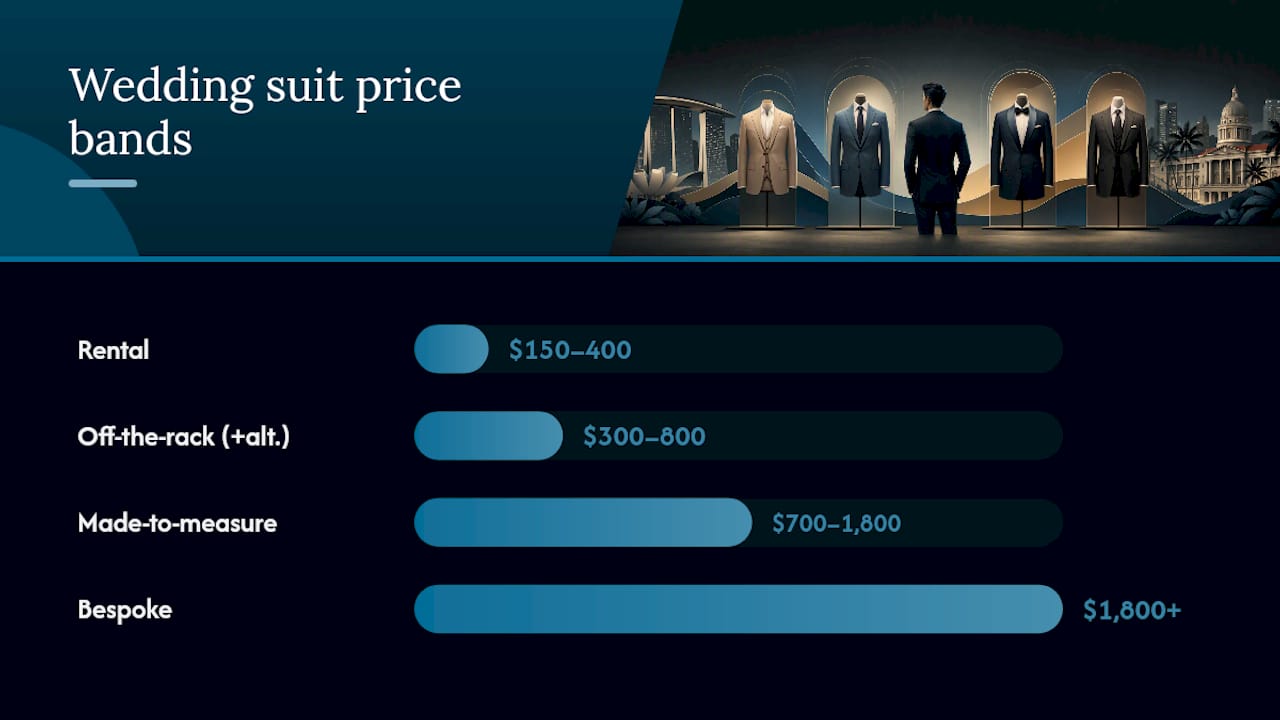
A wedding suit in Singapore typically costs between $150 and $400 to rent, $400 to $900 off-the-rack with alterations, $700 to $1,800 made-to-measure, and $1,800 upwards for bespoke. Most grooms land comfortably in the made-to-measure band. If your wedding is under eight weeks away, skip ahead to the timeline section before you commit to anything bespoke.
TL;DR:
- Most grooms in Singapore opt for made-to-measure suits, which typically cost between $700 and $1,800, depending on fabric and finishing, offering the best balance of fit and value.
- The cost of a wedding suit is influenced mainly by fabric origin and construction, with full-canvas bespoke suits costing from $1,800 and high-end fabrics and details pushing prices above $3,000.
- Booking timelines vary from two to four weeks for rentals to over ten weeks for bespoke suits, making early planning crucial to avoid rush fees.
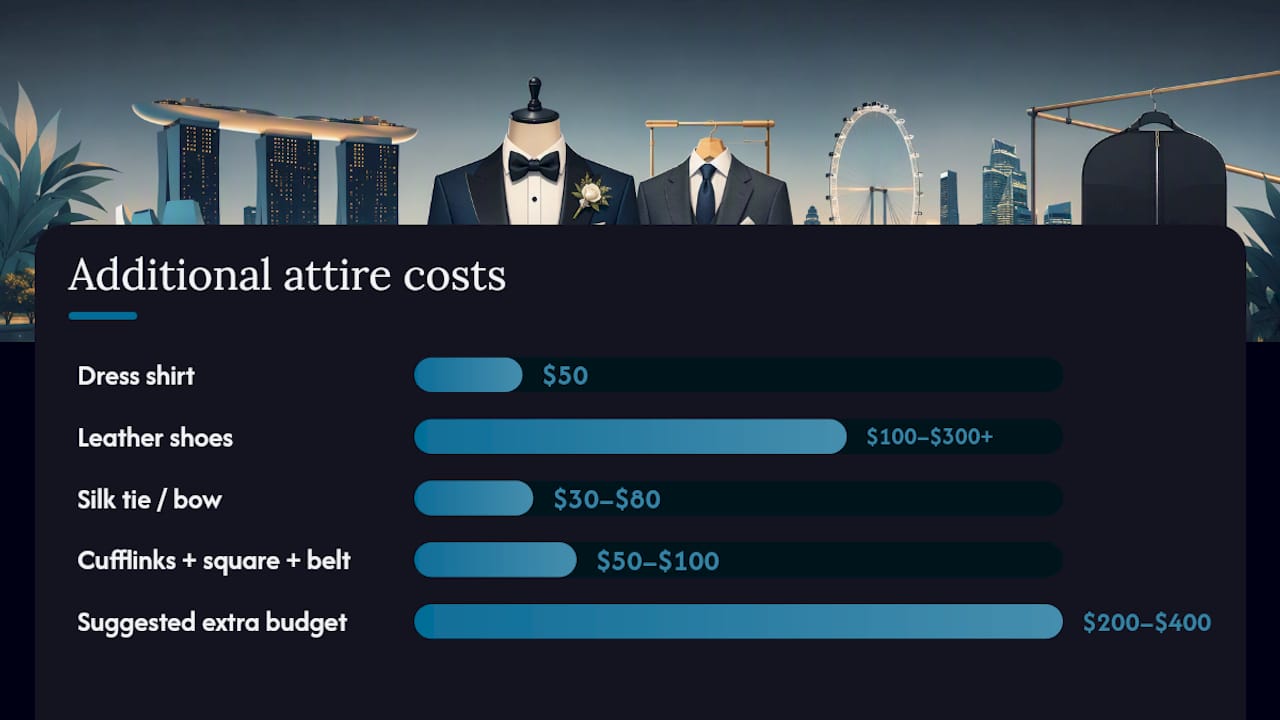
- Additional attire, such as shirts, shoes, and accessories, can add $200 to $400 to the overall wedding outfit budget, with quality fit and fabric choosing to prioritize over brand labels.
- For the best fit and comfort in Singapore’s heat, prioritize fittings and fabric choices over brand or fabric labels, especially when opting for MTM or bespoke options.
Table of Contents
- How much does a wedding suit cost in Singapore?
- What actually drives the price on your quote?
- Which budget band actually fits your wedding?
- How far ahead should you book your wedding suit?
- What premium bespoke actually delivers, and how to judge a quote
- What else adds to your wedding attire budget?
- Fit first, fabric second: an editorial view
- Book your wedding suit consultation with Ron & Rich
- Sources
- FAQ
How much does a wedding suit cost in Singapore?
Your budget determines your route, and each route delivers something genuinely different. It helps to think in bands rather than a single number, because a “wedding suit” in Singapore can mean four very different garments depending on how it’s made.
Rental sits at the lower end, generally $150 to $400 for a jacket, trousers, and sometimes a shirt and tie bundled in. This suits grooms who want a sharp look for one day without the commitment, or who are covering multiple outfit changes (church ceremony, tea ceremony, reception) and don’t want to own three suits. The trade-off is fit. Rental houses stock a limited range of sizes, so a groom with an athletic build or unusual proportions may struggle to get a genuinely flattering silhouette.
Off-the-rack and retail suits run roughly $300 to $800 before alterations, with tailoring adjustments in Singapore typically adding another $50 to $150 depending on how much reworking the garment needs. A slim-cut retail suit that needs the shoulders taken in and trousers shortened is a different cost story to one that only needs a hem.
Made-to-measure (MTM) starts around $700 and runs to about $1,800 depending on fabric and finishing. MTM works from an existing pattern block that’s adjusted to your measurements rather than drafted from scratch, which is why it costs less than full bespoke while still fitting noticeably better than retail. Entry-tier MTM packages often include two fittings; mid-tier packages extend to three and offer more fabric choice.
Bespoke starts from roughly $1,800 and can run well past $3,000 for premium fabrics and full handwork. Local pricing evidence shows just how wide the spread really is. A local roundup of Singapore wedding suit tailors lists value packages under $400 alongside bespoke and Italian-fabric options comfortably over $1,500. Reviews of individual tailoring houses show the same pattern: some reputable local tailors price entry bespoke and premium MTM work starting from several hundred dollars, while others sit much higher once you factor in full-canvas construction and multiple basted fittings.
Bespoke costs more because the tailor builds a pattern unique to your body from the first cut, rather than adjusting a standard block. That process demands more skilled labour hours and usually two to four fittings, which is precisely why it commands a premium over MTM.
What actually drives the price on your quote?
Two suits that look identical on a hanger can carry very different price tags, and the difference almost always comes down to five factors.
Fabric origin and mill matter more than most grooms expect. A suiting cloth from an established mill, whether British, Italian, or a well-regarded Asian producer, drapes and breathes differently to a generic blend, and that shows up directly in cost per metre. For a Singapore wedding, breathability under humidity matters as much as how the fabric photographs, which is why sartorial guidance consistently points grooms toward fabric suited to the climate and the day’s movement rather than whatever looks most expensive on the bolt, as one local menswear feature on wedding tailoring puts it plainly.
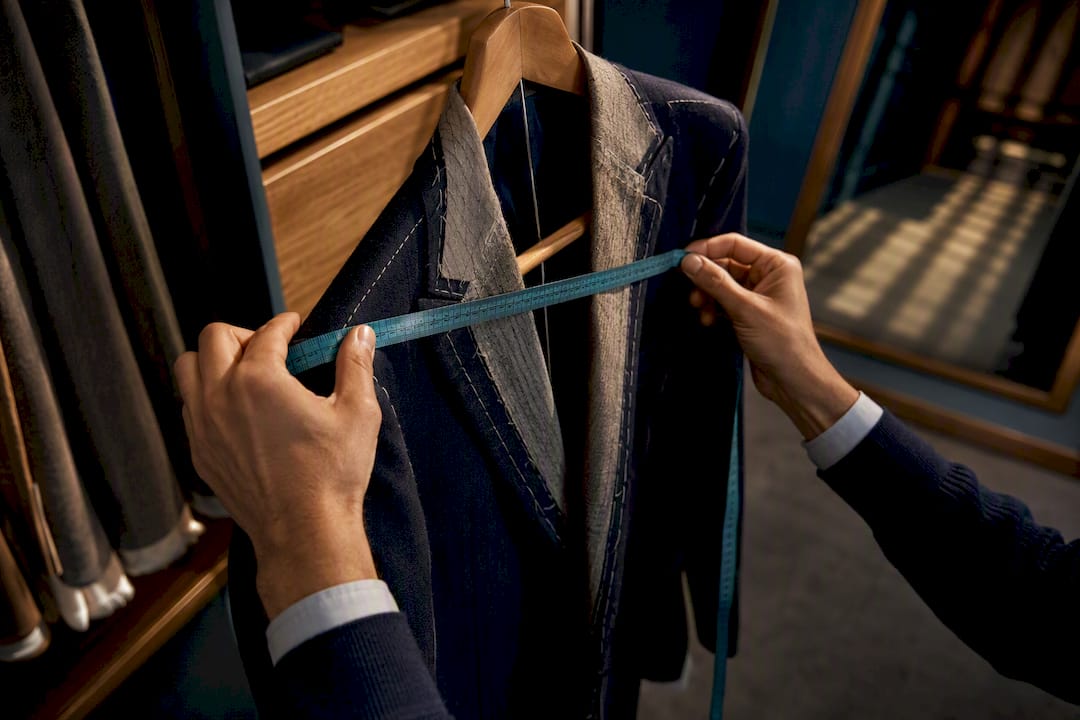
Construction is the next lever. Half-canvas jackets use a partial internal structure and machine work for speed; full-canvas construction is hand-stitched throughout the chest piece, holds its shape for years, and takes considerably longer to build. That labour difference is a major reason bespoke costs more than MTM, since the two methods work from fundamentally different starting points: bespoke drafts a new pattern from scratch, while MTM adjusts one that already exists.
Custom details add up quickly once you start choosing them individually:
- Bespoke linings (patterned or personalised) typically add a moderate premium over stock lining
- Hand-stitched buttonholes cost more per hole than machine buttonholes
- Monograms on the lining or cuff are usually a small flat add-on
- Working cuff buttons (“surgeon’s cuffs”) add labour time compared to decorative buttons
Fittings are usually capped in a package (commonly two for MTM, three or more for bespoke), and going beyond that cap brings extra alteration charges. Confirm what’s included before you sign anything, because a quote that looks like a bargain can quietly exclude a fitting you’ll need.
Rush timelines push prices up across every category. Fast-tracking a bespoke order to fit a six-week deadline usually means the workshop resequences other clients’ work, and that convenience carries a fee.
Pro Tip: Ask every tailor the same question before comparing quotes: “Does this price include all fittings and post-wedding alterations, or just the initial fitting?” The answer changes what looks like the cheaper quote more often than fabric choice does.
Which budget band actually fits your wedding?
Matching your spend to your wedding rather than to a generic “suit budget” saves both money and regret. Work through these in order:
- Check your venue and dress code first. A civil ceremony at the Registry of Marriages has a different formality bar to a hotel ballroom reception, and a garden wedding in Singapore’s heat rewards lighter, breathable fabric over heavier worsted wool.
- Decide honestly whether you’ll wear it again. If the suit is heading straight to storage after the reception, rental or a well-fitted retail suit is hard to beat on value. If you’ll wear it to work events or future weddings, MTM or bespoke earns back its cost over years of use.
- Weigh comfort against customisation. Singapore’s humidity punishes a heavy, over-structured suit; a lighter half-canvas MTM jacket in a breathable weave often feels better on the day than a heavier bespoke piece chosen purely for prestige.
- Map the trade-off explicitly. Rental costs least but offers the worst fit and zero customisation. Retail plus alterations improves fit modestly. MTM buys a genuinely tailored silhouette with two or three fittings. Bespoke buys the best possible fit, full customisation, and years of wear, at the highest price and the longest lead time.
For a civil ROM ceremony, retail with good alterations or entry-tier MTM covers most grooms comfortably. For a garden wedding, prioritise fabric weight over price tier, since comfort in the heat outlasts any compliment about the cut. For a hotel ballroom reception, mid-to-premium MTM or bespoke tends to match the formality of the room and photographs well under indoor lighting.
How far ahead should you book your wedding suit?
Booking on the right timeline is the single easiest way to avoid paying a rush premium.
- Rental: two to four weeks is usually enough, though popular sizes near peak wedding season (year-end and school holidays) can sell out faster.
- Retail with alterations: three to four weeks, allowing time for at least one alteration fitting after purchase.
- Made-to-measure: six to ten weeks from first consultation to final collection, covering fabric selection, two to three fittings, and finishing.
- Bespoke: eight to twelve weeks minimum, sometimes longer for premium fabrics on backorder or a workshop’s busy season.
Before your first consultation, bring or know: your wedding date and venue, the dress code the couple has set, a rough sense of colour and formality (a photo you like is genuinely useful), and your budget ceiling stated upfront. Tailors work faster and quote more accurately when they know the number you’re working with from the start, a point local tailoring guidance makes repeatedly.
The most common pitfall isn’t leaving it too late, it’s booking a bespoke suit with only five or six weeks to spare and then paying a rush fee that erases the savings you thought you’d locked in by booking “early enough.”
What premium bespoke actually delivers, and how to judge a quote
Bespoke earns its price through process, not just fabric. A proper bespoke journey runs through an initial consultation on fit, posture, and lifestyle, followed by fabric guidance suited to Singapore’s climate and the wedding’s setting, then a sequence of fittings where the pattern is refined in stages rather than adjusted once and shipped.
When comparing bespoke quotes from any tailor, ask these questions before you commit:
- How many fittings are included, and what happens if a further one is needed?
- Is the construction full-canvas or half-canvas, and can I see the difference in the workshop?
- What is the realistic turnaround from first consultation to final collection?
- Does the price cover alterations after the wedding, if my fit changes?
Pro Tip: A tailor who asks about how you’ll be standing and moving on the day, not just your measurements, is usually building genuine bespoke rather than dressing up an MTM process with a bespoke price tag.
Bespoke makes the most sense in Singapore when the groom is the one member of the wedding party wearing the suit for years afterwards, or when standard blocks simply don’t sit right on his frame. For a one-day rental replacement, it’s rarely worth the premium.
What else adds to your wedding attire budget?
The suit itself is only part of the outfit, and shirts, shoes, and ties are where budgets quietly creep upward if you don’t plan for them.
A dress shirt to match a wedding suit typically runs from around $50 for a quality retail option to considerably more for a tailored fit, which matters because an ill-fitting collar undercuts an otherwise sharp suit faster than almost anything else. Leather dress shoes suitable for a wedding sit anywhere from $100 for a solid retail pair to $300 and above for a premium or made-to-order option; resoleable leather construction is worth the extra cost if you’ll wear the shoes again. A silk tie or bow tie generally costs $30 to $80, and cufflinks, a pocket square, and a belt can add another $50 to $100 combined if you’re starting from scratch.
Bundling matters here. Many tailoring packages in Singapore include a shirt with the suit order, and checking current promotions before you commit can materially shift your effective total, since bundled offers and seasonal package deals are common in the local market. Budgeting an extra $200 to $400 on top of your suit figure for shirt, shoes, and accessories keeps your total wedding attire cost realistic rather than a surprise the week before the big day.
Fit first, fabric second: an editorial view
Grooms tend to fixate on fabric names, Italian wool, Super 150s, before they’ve settled on fit, and that’s backwards. A middling fabric cut brilliantly for your body reads better in every wedding photo than a beautiful cloth hanging wrong on the shoulders. If you’re choosing where to spend your limited budget, put the money into fit and fittings before you spend it chasing a fabric label.
For most Singapore weddings, that means at least one dedicated fitting after the initial order, even on a modest MTM budget, because heat and humidity change how a jacket sits differently to how it felt in an air-conditioned fitting room. Don’t skip that second appointment to save time.
If you’re weighing whether bespoke or MTM suits your wedding, a consultation with RON & RICH’s wedding tailoring team will tell you more in twenty minutes than another hour of browsing price lists online.
— Ron
Book your wedding suit consultation with Ron & Rich
Where a rental house offers you a suit already made and a retail rack offers you the nearest available size, Ron & Rich builds around your exact measurements from the first fitting, backed by tailoring craft that traces back to 1979. That’s the real difference: you’re not choosing the closest fit available, you’re getting one made for you.
Booking starts with a consultation where we talk through your wedding date, venue, and the level of customisation that makes sense for your budget, whether that’s a made-to-measure suit or a fully bespoke piece with full-canvas construction. Suits start from $2,170, tuxedos from $2,270, and shirts from $199, with full details on our pricing page. Bring your wedding date and venue details to your first visit so we can map a fitting schedule that avoids rush fees. Explore the full suits and jacket range or get in touch to book your first fitting.
Sources
For further reading on Singapore-specific pricing, the Aluxe engagement budget guide contextualises attire spend within a full wedding budget, while SingaporeBrides’ tailor roundup shows the market’s full price spread. Prices shift with fabric costs and promotions, so always confirm a current quote directly with the tailor.
- Should you tailor or rent your wedding suit? — AsiaOne
- 20+ men’s wedding suits tailors and stockists — SingaporeBrides
FAQ
What is a reasonable price for a wedding suit in Singapore?
A reasonable price depends on the route you choose: roughly $150 to $400 for rental, $400 to $900 for retail with alterations, and $700 to $1,800 for made-to-measure. Most Singapore grooms find made-to-measure the best balance of fit and cost, sitting well within the common attire budget range couples set aside for wedding attire.
How much does a suit cost in Singapore on average?
Retail and MTM suits for everyday or wedding use commonly average between $400 and $900 in Singapore, though premium bespoke options routinely exceed $1,500 once full-canvas construction and premium fabric are included. Ron & Rich’s tailored suits start from $2,170 for fully bespoke construction.
Is $700 an expensive price for a suit in Singapore?
No, $700 is generally considered reasonable rather than expensive in Singapore. It typically buys a well-made two-piece made-to-measure suit or a quality retail suit with alterations, which local buyer experiences confirm is a common and fair price point rather than an inflated one.
Should I rent or buy my wedding suit?
Rent if you won’t wear the suit again and want the lowest upfront cost with acceptable, if limited, fit. Buy, whether retail, MTM, or bespoke, if you want a suit that fits your body precisely and that you’ll wear again for work or future events, since tailoring built around movement and venue tends to outperform a rented, mass-sized option on the day itself.