Stop Gaping Collars: Unstructured Blazer Fit, Fabrics, Bespoke
An unstructured blazer is a jacket built with little or no shoulder padding, minimal canvassing and often no lining, giving it a soft drape rather than a crisp silhouette. It brings smart-casual polish to warm weather, travel, and relaxed business settings, without the stiffness of a suit jacket. Choose one when comfort and breathability matter as much as sharpness.
TL;DR:
- An unstructured blazer relies on minimal padding and lining, which makes it more breathable, flexible, and suitable for casual or warm-weather wear.
- It can be identified by a soft shoulder seam that follows your natural shoulder line and a relaxed collar gap when buttoned.
- Fabrics like linen, lightweight cotton, and textured wools are preferred, as they shape the jacket’s relaxed silhouette without internal structure.
- Fit is critical, especially in the shoulders, since padding cannot conceal a poor fit, making tailored or bespoke options ideal for uneven or broad shoulders.
- Buying choices range from quick, inexpensive ready-to-wear to custom-made bespoke tailoring, with bespoke offering precise shoulder fit and fabric control.
Table of Contents
- What makes an unstructured blazer different
- How to spot an unstructured blazer in the shop or wardrobe
- Best fabrics for an unstructured blazer by season
- Outfit formulas for wearing an unstructured blazer
- Getting the fit and alterations right
- Where to buy: ready-to-wear, made-to-measure or bespoke
- Why bespoke changes the unstructured equation
- Book a fitting for a bespoke unstructured jacket
- Sources
What makes an unstructured blazer different
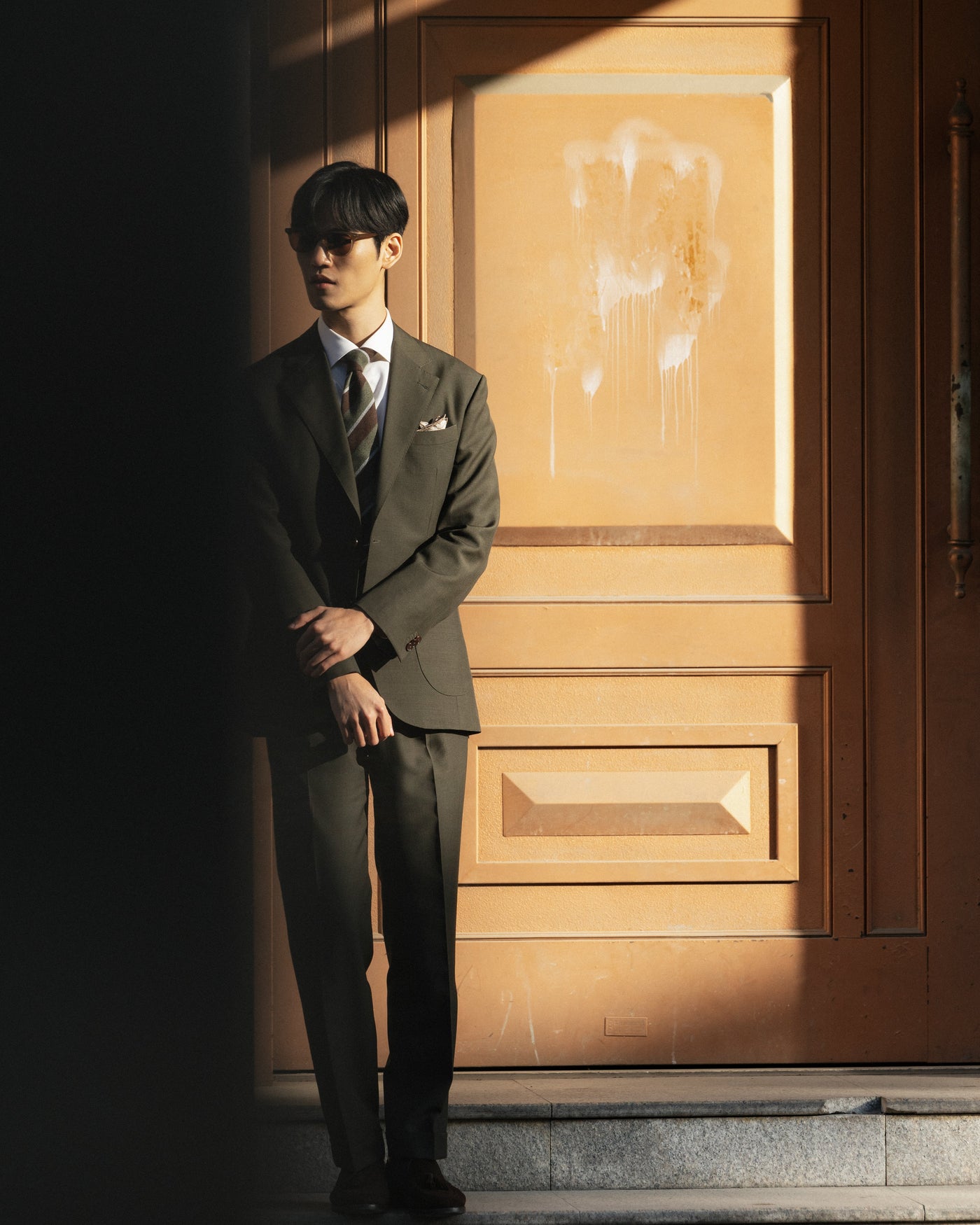
The distinction sits almost entirely inside the jacket, not on its surface. Structured jackets rely on shoulder pads and a full canvas, a layer of horsehair or fusible material stitched between the outer cloth and lining, to hold a defined shape at the chest and shoulder. An unstructured blazer strips much of that away, leaving the cloth to fall according to your own shoulder line rather than a manufactured one.
Technical guides on tailoring architecture describe this as a deliberate trade: structured jackets prioritise silhouette, unstructured jackets prioritise fluidity and comfort. You will usually spot the following on a genuine unstructured jacket:
- Little to none of the internal padding that squares off the shoulder
- Light or absent canvassing, sometimes replaced with a soft, floating chest piece
- Half lining or full unlining, exposing the inside seams
- Patch pockets rather than flapped or jetted ones
- Softer, less padded lapels that roll rather than press flat
Each of these choices trades formality for movement. A lighter chest piece means the jacket breathes more and creases less dramatically when you sit down, which is precisely why it reads as casual rather than corporate.
How to spot an unstructured blazer in the shop or wardrobe
Recognising true unstructured construction takes seconds once you know where to look. Try these checks in order:
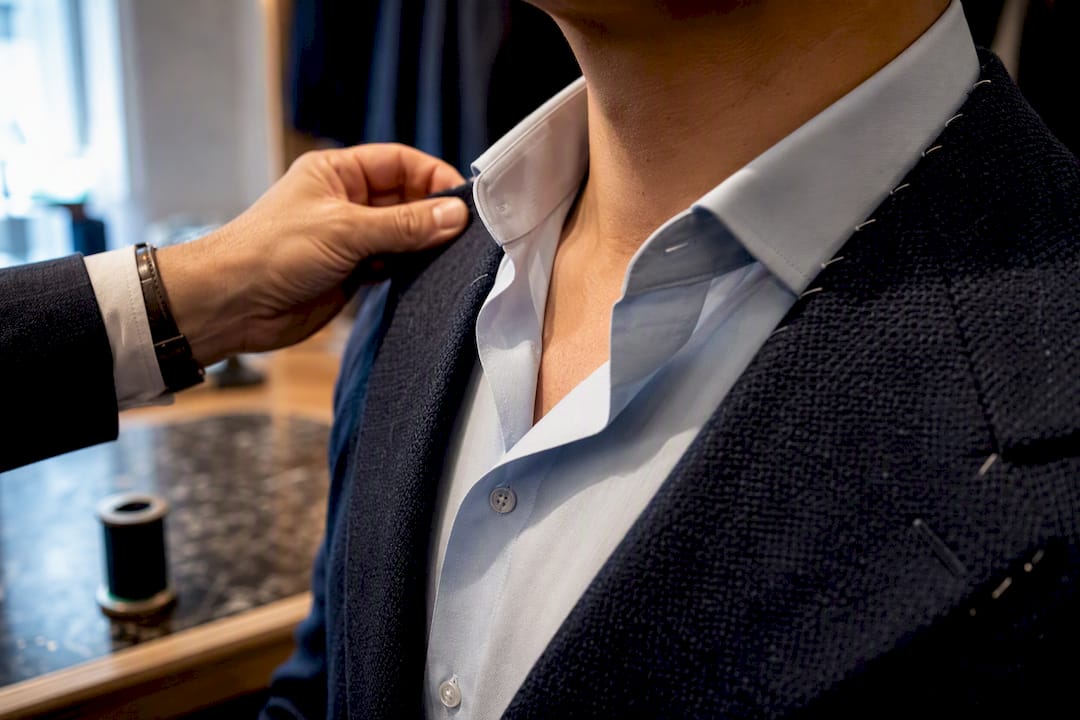
- Press the shoulder seam. A structured jacket has a firm, slightly raised ridge from the shoulder pad; an unstructured one feels soft and follows your own shoulder slope almost immediately.
- Button it and check the collar. Structured jackets sit tight against the back of the neck; unstructured jackets often show a touch more collar gap, which is normal rather than a fit fault.
- Look inside. Half or unlined construction shows exposed seam edges, often finished by hand rather than machine bound.
- Feel the sleeve head. A structured sleeve has a defined roll where it meets the shoulder; an unstructured sleeve sits flatter, with less padding underneath.
- Scan the pockets and lapel. Patch pockets and a soft-rolled lapel are casual signatures rarely found on tailored suit jackets.
Practical identification really comes down to two checks: the shoulder profile and the collar gap, which together tell you almost everything in the time it takes to try the jacket on.
Best fabrics for an unstructured blazer by season
Fabric choice does more to shape an unstructured jacket’s character than almost any other decision, because the cloth itself has to do the work that canvassing and padding usually do elsewhere.
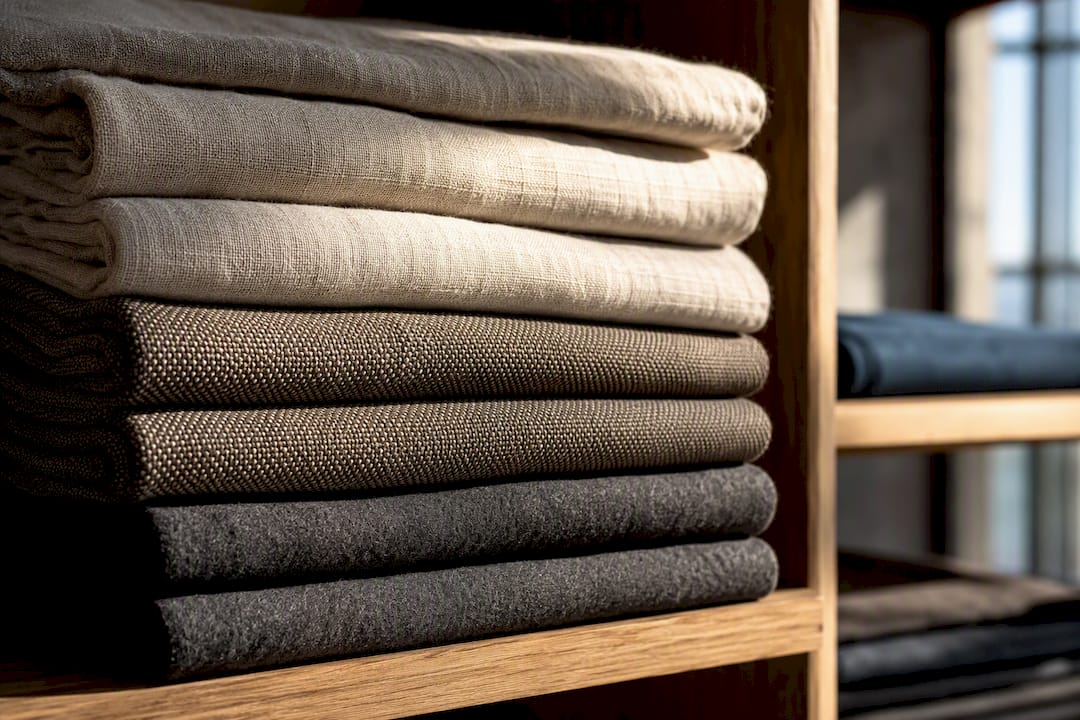
For warm weather, linen and lightweight cotton are the standard choices, prized for breathability even though both wrinkle readily. That wrinkling is part of the appeal rather than a flaw: a linen unstructured blazer is meant to look lived in, not pressed. Pro Tip: Choose a linen and wool blend if you want the breathability of linen with slightly less creasing, especially useful for humid climates where you are wearing the jacket all day.
Worsted wool remains the most versatile option for year-round wear, giving a cleaner drape than linen while still moving softly without a full canvas underneath. For cooler months, textured cloths carry the relaxed look better than smooth ones:
- Corduroy adds visible texture and warmth, well suited to autumn weekends
- Tweed brings weight and pattern for a countryside-inflected smart-casual look
- Heavier flannels and textured wools hold shape without needing internal structure to do it
Fabric weight and weave matter more here than in structured tailoring, because there is nothing else holding the silhouette together.
Outfit formulas for wearing an unstructured blazer
An unstructured blazer earns its place in your wardrobe because it works across more occasions than a suit jacket ever could. A well-chosen unstructured jacket suits smart-casual business settings, warm-weather weddings and travel, largely because it balances formality with comfort rather than choosing one over the other.
Three formulas cover most of what you will need:
- Blazer, chinos, loafers. The default polished-weekend or business-casual combination. Keep the blazer a shade darker than the chinos for definition, and pick suede loafers for texture contrast.
- Blazer, dark jeans, fitted tee, clean sneakers. The casual-evening version. A slim, unstructured blazer over a plain tee looks intentional rather than mismatched, provided the jeans are a straight or slim cut rather than baggy.
- Blazer, shirt, tailored trousers, loafers. The elevated version for dinners or client meetings where a full suit would feel excessive. This is the formula that most closely echoes smart-casual dressing done properly.
For colder months, layer a fine merino jumper underneath rather than a bulky one, and lean towards tonal contrast (navy blazer, grey trousers) over patterned clashes. If you are packing for a trip, the news is genuinely good here: lighter unstructured construction tolerates folding and repeated wear far better than a canvassed suit jacket, which is one reason this jacket has become a travel staple rather than just a style choice.
Getting the fit and alterations right
Fit forgives almost nothing on an unstructured jacket, because there is no padding to disguise a poor shoulder line. Prioritise adjustments in this order:
- Shoulder fit first, always. This is the one measurement that cannot be altered easily after the fact, since the shoulder seam sets the whole silhouette. If the shoulder seam sits even slightly off the edge of your own shoulder, no other alteration will fix the overall look.
- Chest and closure. When buttoned, the jacket should close without pulling and allow roughly a fist’s worth of ease, enough for a relaxed drape without looking oversized.
- Sleeve length. Aim for the sleeve to break just above the wrist bone, showing a touch of shirt cuff, which keeps a smart-casual balance rather than a boxy one.
- Jacket length. Should cover the seat without extending much past it. Too long reads as borrowed; too short reads as shrunk.
Minor tailoring, taking in a waist, shortening sleeves, is usually straightforward on unstructured jackets because there is less internal engineering to disturb. A reworked shoulder is a different matter entirely and often means starting again with a different jacket rather than altering the one you have.
Where to buy: ready-to-wear, made-to-measure or bespoke
Your buying route should follow your priorities, not the other way round. Each option trades cost, speed and precision differently:
- Ready-to-wear is fastest and cheapest, but shoulder fit is fixed at the size you buy, which matters more here than on a padded jacket.
- Made-to-measure adjusts an existing pattern to your measurements, improving fit at moderate extra cost and lead time.
- Bespoke builds the pattern from your measurements alone, giving full control over shoulder slope, chest ease and fabric.
Because an unstructured jacket has no padding to mask a shoulder that sits even slightly wrong, bespoke tailoring lets you control shoulder slope precisely, a genuine advantage if your shoulders slope unevenly or you have a broader back than off-the-rack sizing assumes. A typical bespoke appointment runs through measurements, fabric selection from swatches (linen, cotton, worsted wool or tweed depending on season), two or three fittings to refine the drape, and a lead time usually measured in weeks rather than days.
| Route | Cost | Shoulder precision | Typical lead time |
|---|---|---|---|
| Ready-to-wear | Lowest | Fixed to stock sizing | Immediate |
| Made-to-measure | Moderate | Adjusted from a base pattern | 2–4 weeks |
| Bespoke | Highest | Built entirely to your shoulders | 4 weeks |
Before committing anywhere, check the shoulder seam sits on your own shoulder point, confirm the lining or half-lining matches the season you need, and ask what fabric weight the sample is cut from. Fit and fabric remain the two factors buyers report most when judging satisfaction with any blazer purchase, unstructured or otherwise.
Why bespoke changes the unstructured equation
Ready-to-wear unstructured blazers work well for a standard build, and there is no shame in buying one off the rack if your shoulders are close to average. But the whole appeal of unstructured tailoring, that soft, natural shoulder line, is also its biggest risk: without padding to hide behind, any asymmetry in your shoulders shows immediately.
That is where I steer clients towards bespoke. Since founding Ron & Rich in 1979, we have cut jackets for men whose shoulders slope more than a stock pattern allows for, and the difference a properly shaped shoulder seam makes to an unstructured jacket is far greater than on a padded one. My advice is simple: if your shoulders are genuinely average and your budget is tight, ready-to-wear will serve you fine. If you have ever felt a blazer gape at the collar or pull across the back, that is your shoulder line talking, and it is worth having someone measure it properly.
Richard Fan
Book a fitting for a bespoke unstructured jacket
Ron & Rich is the alternative to buying off the rack and hoping the shoulders happen to fit. Every bespoke unstructured jacket we cut starts from your own measurements, not a stock pattern, so the shoulder line, chest ease and fabric weight are chosen for your build and the climate you will actually wear it in.
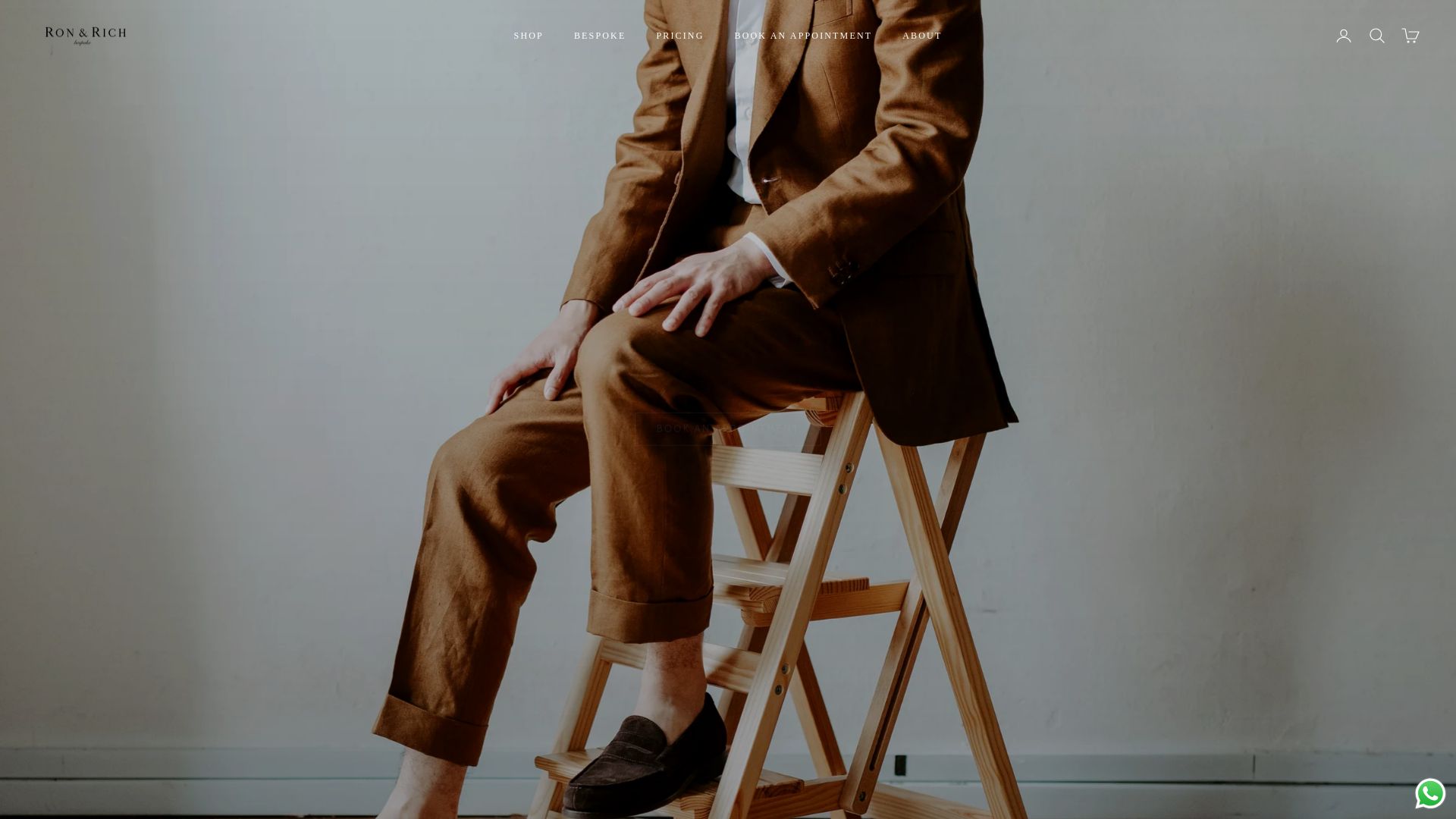
Whether you lean towards a linen jacket for warm-weather weddings or a worsted wool piece for year-round smart-casual wear, our bespoke tailoring process walks you through fabric selection and fittings until the drape sits exactly as it should. For a complete grooming finish to match, pairing a well-cut jacket with a sharp haircut from a specialist like ARQ Hair rounds out the look properly. If you would rather see the range first, browse our Suits & Jackets collection or book a consultation to discuss your first bespoke unstructured blazer.
Sources
For readers who want to go deeper on construction and styling, these sources informed the guidance above:
- The Unstructured Blazer 101: Outfits & Brands
- What is & How to Wear an Unstructured Blazer - Suits Expert
- Structured vs Unstructured Jackets: A Technical Guide | SELVANE