Tweed Sport Coat: A Guide to Choosing and Wearing One
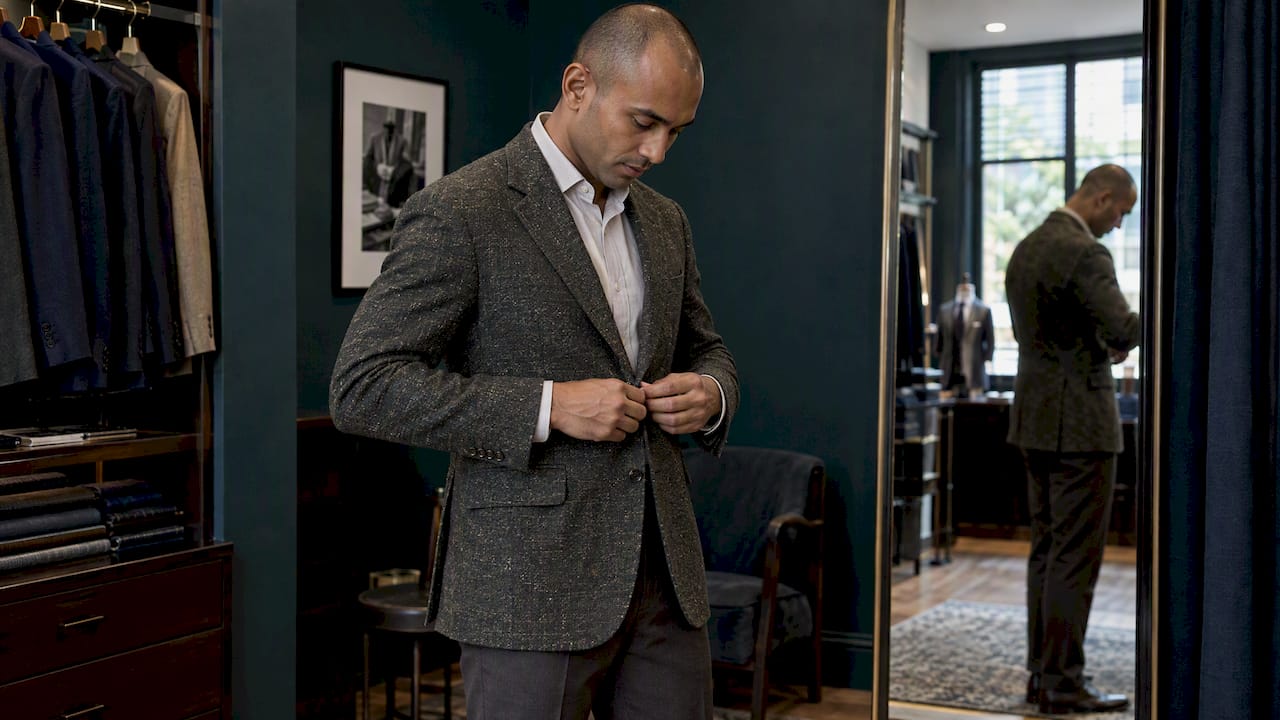
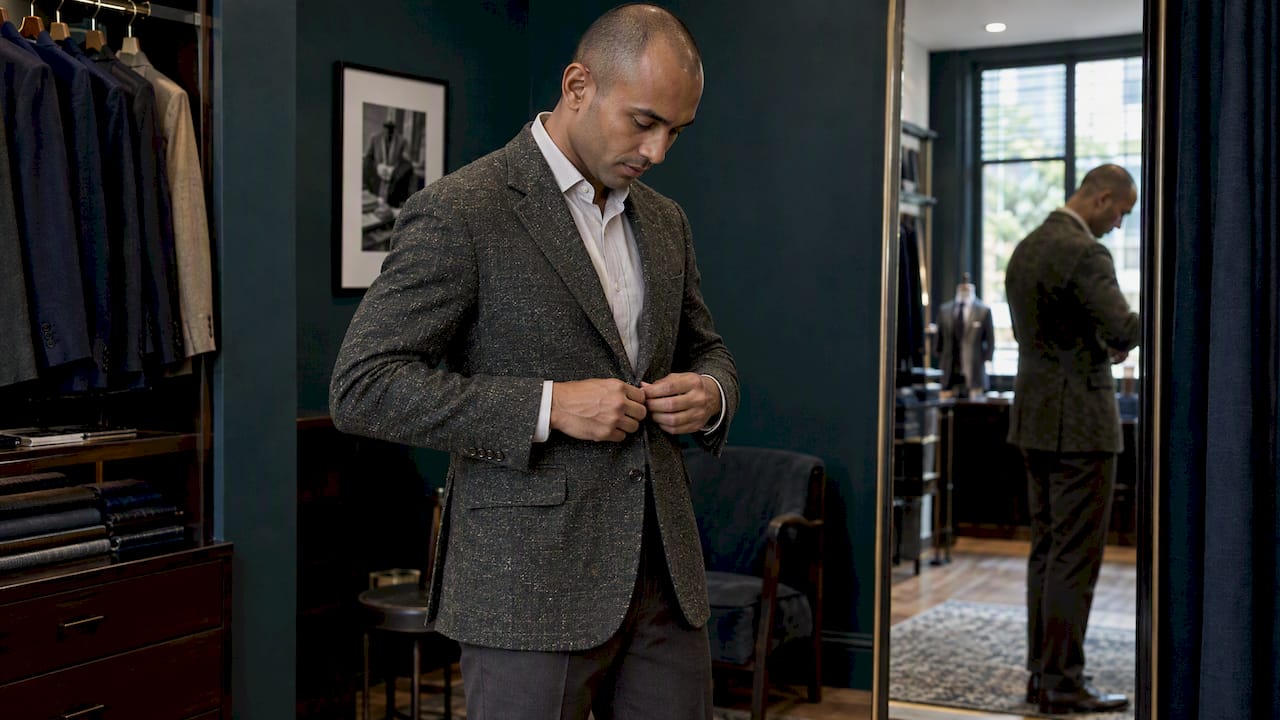
A tweed sport coat is a tailored jacket in woollen tweed, cut to be worn with trousers of a different cloth. It is the most characterful jacket a man can own, and in Singapore it is entirely wearable, provided you choose the right weight, a lighter structure and a considered fit. This guide explains what tweed is, how Harris and Donegal differ, how to dress the jacket, and what to ask for when you commission one.
TL;DR
- A sport coat is worn with odd trousers; a suit jacket belongs to a matching suit, and a blazer sits between the two.
- “Harris Tweed” and “Donegal” are specific, place-bound names, not synonyms for any tweed.
- Singapore’s heat is constant, so choose a lighter tweed, a partial lining or none, and wear the jacket in air-conditioned rooms and cooler evenings.
- Fit matters more than the cloth: shoulders, collar and sleeve length decide whether a tweed coat looks distinguished or borrowed.
- Bespoke lets you set weight, pattern and construction to your own climate and wardrobe.
Table of Contents
- What a tweed sport coat is
- What makes tweed distinctive
- Harris Tweed and Donegal: reading the labels
- Patterns, weights and constructions
- Is tweed practical in Singapore?
- How a tweed sport coat should fit
- How to wear it
- Caring for tweed
- Our perspective
- Commission your tweed sport coat
- FAQ
- Sources
What a tweed sport coat is
A sport coat is a tailored jacket worn with trousers cut from a different cloth, and it began in country and sporting dress, according to Il Sartoriale. It is often made in patterned, coloured or textured fabrics, which is precisely where tweed belongs.
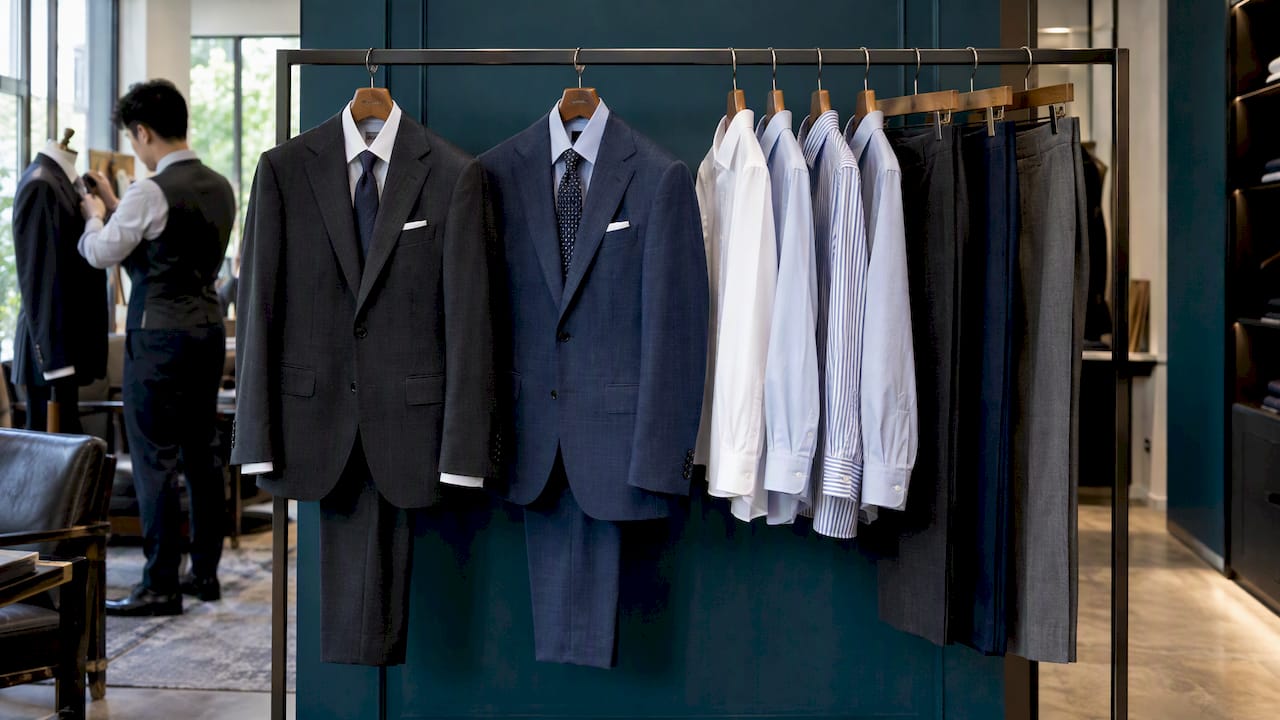
The terms are used loosely, so a little precision helps. GQ’s explainer describes a suit jacket as one half of a matching suit, a sport coat as a more versatile piece worn with varied trousers, and a blazer as something between the two, often in a neutral shade. The same piece notes that a sport coat’s construction can allow a slightly roomier fit, which makes room for knitwear beneath.
So a tweed blazer is usually a plainer, darker tweed in a smarter cut, while a tweed sport coat leans towards pattern, texture and colour. In practice the line is soft, and a well-made jacket can do both jobs.
What makes tweed distinctive
The BBC describes tweed as a tightly woven woollen fabric, traditionally in plain twill, herringbone or houndstooth, with natural insulation. A tighter weave adds durability, and a lining adds structure.
The character of tweed comes from the yarn. Wool is traditionally dyed before spinning, and the shades are blended, carded and spun together, which produces the complex, flecked colour that distinguishes the cloth. One respected writer on tailoring, Simon Crompton, suggests that traditional tweed is best seen as a reference-point archetype from which other cloths take inspiration. That is a useful way to think about it: the heritage patterns set the standard, and modern mills interpret them in many weights.
Why a tweed jacket can be expensive
Quality tweed costs more largely because of the cost of procuring and processing natural wool. Add skilled cutting, canvassing and hand finishing, and the price reflects the labour as much as the cloth.
The same source observes that tweed garments tend to last a lifetime, often needing only patches at well-worn points. Spread over decades of wear, a good tweed jacket is among the more economical things a man can commission.
Harris Tweed and Donegal: reading the labels
Two names dominate searches, and both are tied to place.
Harris Tweed is a protected category. Under the Harris Tweed Act, the cloth must be made from pure virgin wool, dyed and spun in the Outer Hebrides, handwoven by islanders in their own homes there, finished there, and certified with the Orb mark.
Donegal tweed is defined as a fabric woven in County Donegal, with a colourful fleck spun into the yarn, using 100% natural fibre in a plain or twill weave. RTÉ reports that weavers are seeking special EU protection for the name, and that a flecked fabric labelled “Donegal” is not necessarily made there. The flecks themselves, multicoloured nubs called slubs, are added during spinning.
When you choose a tweed, ask where it was woven, not only what it looks like. A reputable tailor will tell you the mill and the origin of the cloth.
Patterns, weights and constructions
This is where most buyers need guidance, and where bespoke earns its place.
Patterns
The classic patterns are herringbone, houndstooth and plain twill, the three the BBC names. Each has a different temperament:
| Pattern | Character | Best suited to |
|---|---|---|
| Herringbone | Quiet, textured, versatile | Office wear with grey trousers, a first tweed |
| Houndstooth | Bolder, more graphic | Weekend and smart-casual dressing |
| Plain twill or flecked Donegal | Soft, earthy colour | Layering over knitwear, relaxed occasions |
For a first jacket, a mid-toned herringbone or a subtly flecked weave in brown, grey-green or charcoal pairs with the widest range of trousers.
Weight
Weight is the decision that matters most in Singapore. Heavy tweed was woven for Scottish hillsides, and a thick, fully lined jacket will feel oppressive here. Weavers now offer lighter cloths: Harris Tweed’s own weight guide describes the cloth as naturally breathable and temperature-regulating, with featherweight cloth used in tailoring and superfine cloth used for lightweight garments.
That is the direction to take. Ask your tailor for the lightest tweed that still has the body and texture you want, rather than the heaviest cloth in the book.
Construction
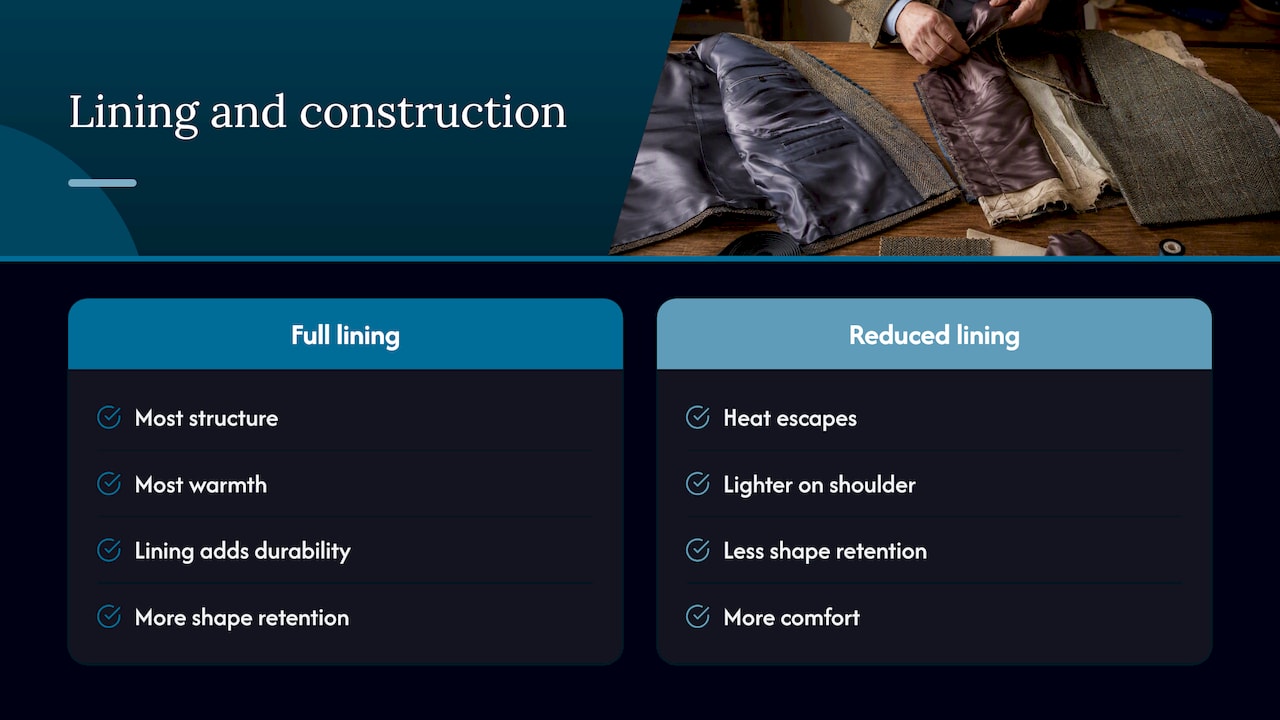
Construction changes comfort as much as cloth does. A full canvas, fully lined jacket gives the most structure and the most warmth. Reducing the lining to a half lining, or lining only the upper back and sleeves, lets heat escape and keeps the jacket lighter on the shoulder. As the BBC notes, lining adds structure and durability, so the trade-off is deliberate: you give up a little shape retention for comfort. A skilled tailor can balance the two.
Is tweed practical in Singapore?
Yes, with discipline. The Meteorological Service Singapore records a tropical climate with abundant rainfall, high humidity all year and uniform temperatures: usually 23 to 25°C at night and 31 to 33°C by day.
A tweed coat is therefore not an all-day outdoor garment here. It earns its keep in several settings:
- Air-conditioned offices, restaurants and member’s clubs, where the temperature is often cool enough for wool.
- Evenings, when the jacket is carried or worn briefly between venues.
- Travel, since the same jacket serves in London or Tokyo in autumn.
- Dinners and events with a smart-casual or country-inspired theme.
If you want a jacket for warmer working days, a lighter open-weave cloth such as hopsack is more forgiving, and we have written about an 8 to 9 oz hopsack blazer for warm climates. Many of our clients keep one of each: hopsack for the daily commute, tweed for the cooler room and the occasion.
How a tweed sport coat should fit
Tweed is less forgiving than smooth worsted, because its texture exaggerates poor proportions. These are the checks we make at every fitting:
- Shoulders. The seam should end where your shoulder ends, with no dimpling at the sleeve head.
- Collar. It should sit flat against your shirt collar without gaping when you move.
- Chest and waist. The jacket should close without pulling, and allow a fine knit beneath. A sport coat can be a touch roomier than a suit jacket, as GQ notes.
- Sleeve length. Show a little shirt cuff, around a centimetre or so.
- Length. The hem should cover the seat and balance your torso and leg length.
Men with a developed chest or shoulders often struggle most with off-the-peg jackets, and we address the issue in our guide to athletic fit suits for muscular men. The principle carries over to tweed: cut the jacket to the body, then let the cloth do its work.
How to wear it
The versatility of tweed is its great virtue. Permanent Style notes that it can be dressed up with grey worsted trousers and a button-down shirt, or worn casually with jeans and boots.
In a Singapore context, we would suggest the following:
- At work. A herringbone coat, grey flannel or lightweight wool trousers, a crisp shirt and leather shoes. Our custom tailored shirts are cut to sit cleanly beneath a textured jacket.
- Smart casual. A flecked Donegal-style coat over a fine knit and dark chinos, with loafers or suede boots.
- Weddings. A tweed sport coat suits a daytime or country-themed wedding as a guest. For the groom, we would recommend a dedicated wedding suit instead.
- Cocktail occasions. Choose a darker, finer tweed and keep the rest of the outfit restrained. Our cocktail attire guide explains how to adapt to season and venue.
Keep the pattern scale in mind. A busy houndstooth jacket wants a plain shirt and a plain tie, or no tie at all.
Caring for tweed
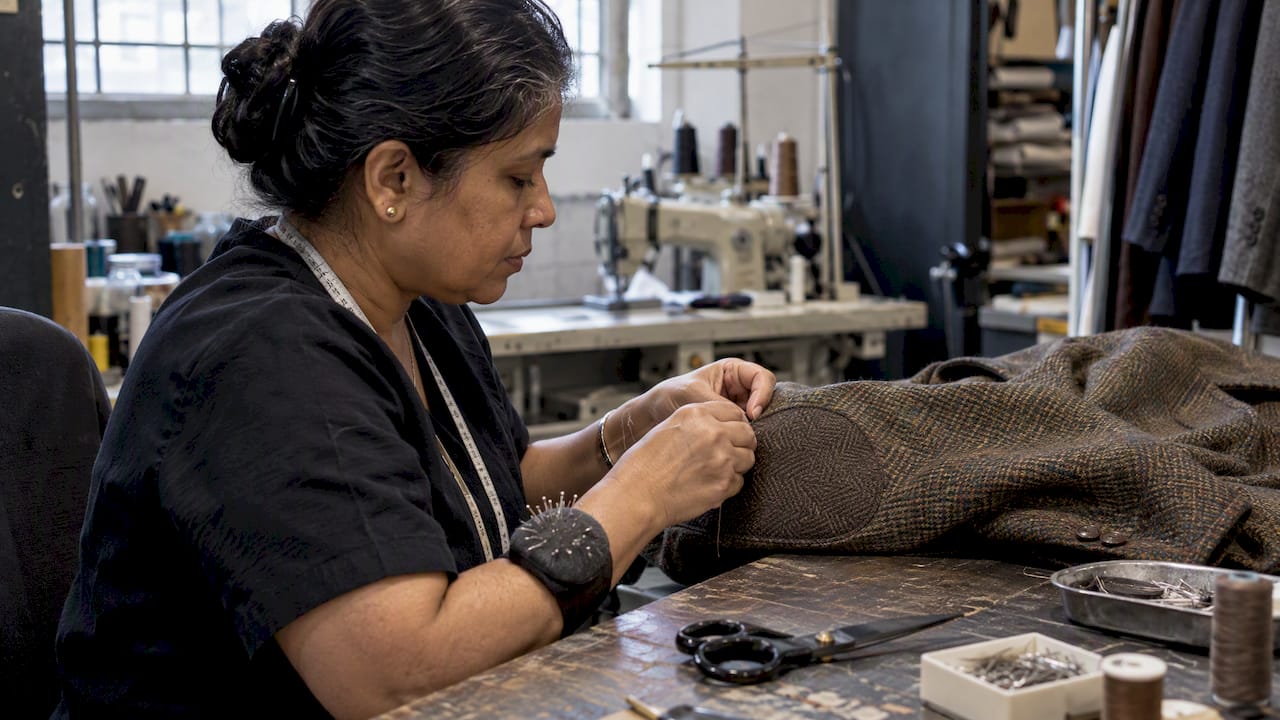
Tweed rewards restraint. Brush it after wearing, hang it on a broad wooden hanger and let it rest for a day between wears. In Singapore’s humidity, store it in a ventilated wardrobe rather than a sealed bag, and let it air before putting it away. Dry clean only when truly necessary, as frequent cleaning wears down the cloth. Minor repairs, such as a re-stitched button or an elbow patch, are exactly what a tailor is for, and they are part of why a tweed coat can last for decades.
Our perspective
Our house was founded in 1979 by master tailor Richard Fan, and in the decades since we have come to regard tweed as one of the most honest cloths in tailoring. It does not hide behind a sheen. It shows its wool, its colour and the skill of the hand that cut it.
In Singapore, the question is never whether tweed is permitted, but whether it has been made for this climate. A heavy jacket from a cold-weather catalogue will disappoint. A tweed chosen for its weight, cut with a lighter structure and fitted to your shoulders will not. That is where we believe bespoke tailoring is worth the investment: not in luxury for its own sake, but in a jacket that you will actually wear, and keep wearing, for years.
We would rather you own one tweed coat that fits you perfectly than three that almost do.
Ron
Commission your tweed sport coat
At Ron & Rich, every garment is tailored to your exact measurements and preferences through in-person consultations and fittings. Sports jackets begin from $1,790, and suits from $2,170, as published on our pricing page. You can also explore our bespoke suits and jackets, and we will gladly advise on cloth weight, pattern and construction for your climate and your wardrobe.
If you prefer a more relaxed silhouette in a warmer cloth, our safari jacket guide shows how a bespoke jacket can work in the tropics.
FAQ
What is a tweed sport coat?
It is a tailored jacket in woollen tweed, designed to be worn with trousers of a different cloth. The sport coat originated in country and sporting dress. Unlike a suit jacket, it is not part of a matching set.
Why is tweed so expensive?
Quality tweed relies on natural wool, which is costly to procure and process. Protected cloths such as Harris Tweed must also be made in the Outer Hebrides under strict rules, including handweaving. Add skilled tailoring, and the cost is understandable, especially as the jacket can last for decades.
Are tweed suits professional?
Yes, when the tweed is a restrained pattern in a smooth, mid or dark tone. A herringbone worn with grey worsted trousers and a button-down shirt looks polished. Bolder patterns and flecks suit more relaxed offices and smart-casual days.
What is a tweed blazer?
A blazer sits between a suit jacket and a sport coat and is often in a neutral shade. A tweed blazer is therefore usually plainer and darker than a tweed sport coat. The distinction is one of degree, and the terms are often used interchangeably.
Can I wear tweed in Singapore?
Yes, if you choose a lighter weight and a lighter construction, and wear it in air-conditioned settings or in the evening. Daytime temperatures usually reach 31 to 33°C, so a full-weight winter tweed is a poor choice.
Sources
- GQ: the difference between a suit jacket, a sport coat and a blazer
- BBC Culture: how ultra-traditional tweed found a new fanbase
- Il Sartoriale: the sport coat
- Harris Tweed Authority: our role
- RTÉ: weavers seek special EU protection for Donegal Tweed
- Permanent Style: the guide to tweed
- CLAN: understanding tweed, a buyer’s guide
- R. Hanauer: tweed, its timeless appeal and versatility
- Harris Tweed Hebrides: our weights
- Meteorological Service Singapore: climate of Singapore