Trouser Rise Explained: Fit, Types, and Measurements
Trouser rise is the vertical distance from the crotch seam to the top of the waistband, measured along the front panel. That single number determines where your trousers sit on your body, how long your legs appear, and whether a shirt tucks cleanly. The most reliable shopping rule: measure a pair you already love, note the front-rise inches, and match that figure when buying. Trust the inches, not the label. A 12" front rise reads as high on most waist sizes; 7" reads low. Marketing terms like “mid” and “high” shift from brand to brand, but inches do not.
- Front rise: measured from the crotch seam straight up to the top of the waistband, front panel only.
- Back rise: longer than the front because the body curves; typically 2–4" more than the front.
- Shopping rule: measure your favorite pair first, then compare that number to the product’s listed rise before ordering.
Key Takeaways
Trouser rise is a measurable number, not a marketing label, knowing your front-rise inches in inches is the single most reliable tool for buying trousers that fit.
| Point | Details |
|---|---|
| Measure front rise first | Lay trousers flat, measure crotch seam to waistband top; record to the nearest 1/8". |
| Shop by inches, not labels | Retail “mid” and “high” labels vary by brand; compare product rise to your measured benchmark. |
| Know the typical bands | Low: 7–8.5", mid: 9–10.5", high: 11–12"+; these shift slightly with waist size. |
| Tailoring limits are real | Post-construction rise changes are practical only within roughly 0.5–0.75" in either direction. |
| Ron & Rich bespoke sets rise at pattern stage | Made-to-measure resolves non-standard proportions that off-the-rack sizing cannot address. |
Table of Contents
- What trouser rise actually measures and how to check it at home
- A cheat sheet for every rise type
- How rise changes the way trousers look and feel on your body
- How to shop by rise and what to test in the fitting room
- When bespoke or made-to-measure is worth the investment
- What a tailor can and cannot change about rise
- A tailor’s note on choosing rise
- Persistent rise-fit issues deserve a bespoke solution
- Sources
What trouser rise actually measures and how to check it at home
Most brands publish the front rise only, so that is the number to track. Front and back rise differ because the body is not symmetrical: the back seam must travel further to cover the seat, which is why back rise runs longer. For fit purposes, front rise tells you where the waistband will land; back rise tells you how much seat coverage you get.
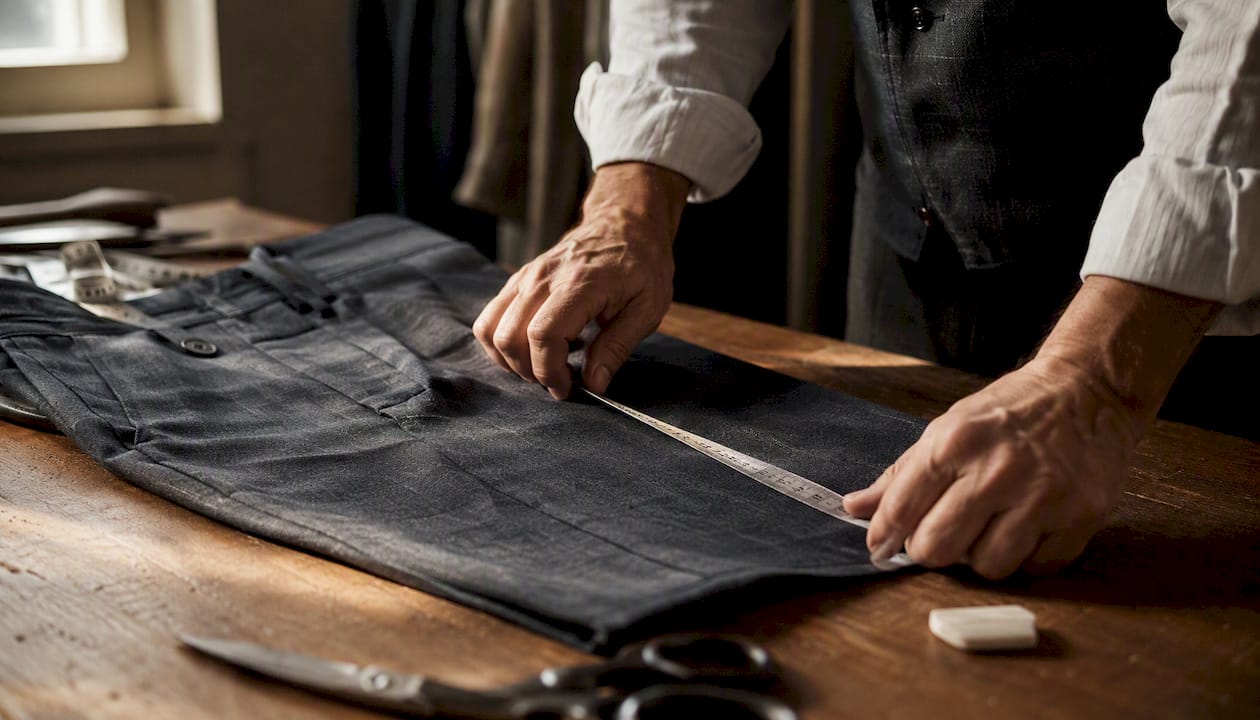
Measuring an existing pair, step by step:
- Lay the trousers flat on a hard surface, front panel facing up.
- Align the crotch seam so it lies flat, with no twisting in the inseam.
- Place a rigid tape measure at the lowest point of the crotch seam.
- Measure straight up to the top edge of the waistband.
- Record to the nearest 1/8" for precision.
- Repeat on the back panel for back rise.
One measurement session on a pair that fits you well creates a personal rise benchmark. Shopping by front-rise inches rather than brand labels eliminates most online-fit surprises, because a brand’s “mid” can land anywhere from 8.5" to 10.5" depending on the house.
Pro Tip: Measure two or three pairs you wear regularly and note the range. That personal rise window say, 10" to 11.5" becomes your filter when reading size charts online.
A cheat sheet for every rise type
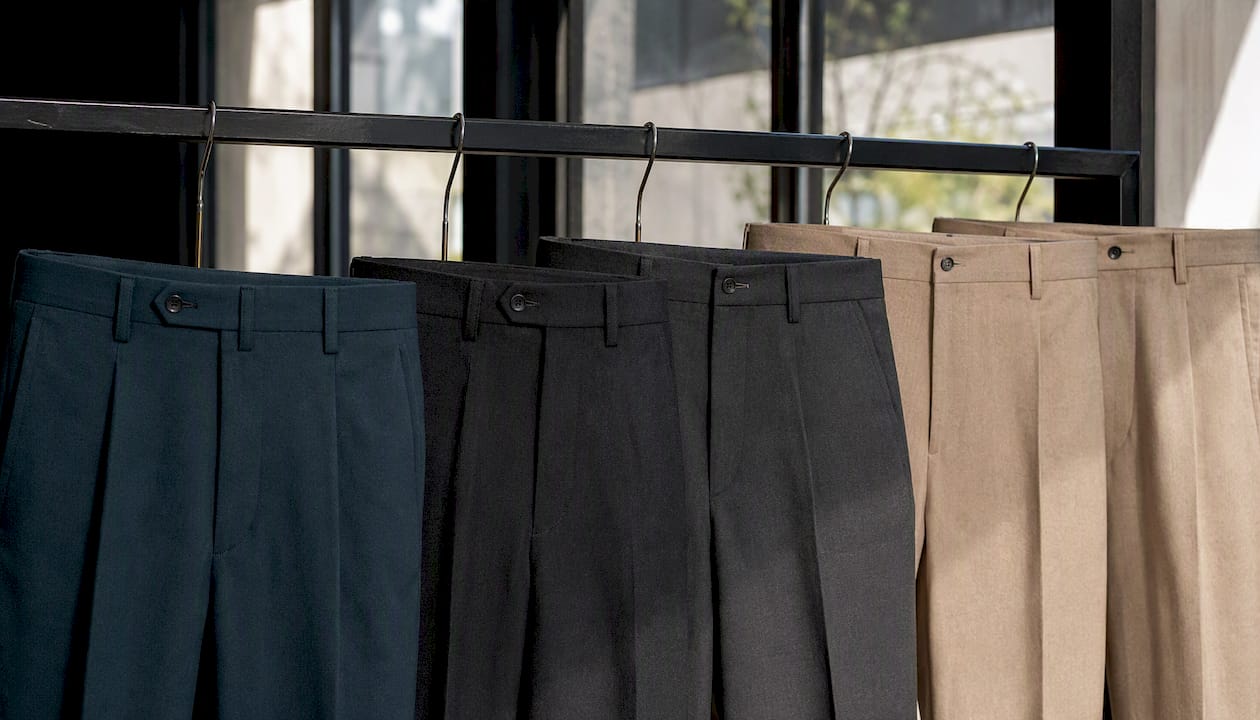
Retail rise bands follow a loose industry convention, though they shift slightly with waist size because grading adds fabric proportionally. A 32" waist and a 38" waist in the same “mid-rise” style will not share identical rise inches.
| Rise Type | Typical Front Rise | Waistband Placement |
|---|---|---|
| Low | 7–8.5" | At or below the hip bone |
| Just-below-waist (short) | 8.5–9" | Between hip and navel |
| Mid | 9–10.5" | Just below the navel |
| High | 11–12" | At or above the natural waist |
| Extra/very high | 12"+ | Well above the natural waist |
High-rise styles commonly measure 10–12" and sit at or above the navel; mid-rise typically lands around 8–9.5" and falls just below it. Low, mid, and high rises are defined in relation to the navel and hip bone across most major denim and tailoring references.
Visual effects by rise type:
- Low: exposes more hip; visually shortens the torso and lengthens the leg only when paired with a cropped top.
- Just-below-waist: a relaxed, casual placement; works well with untucked shirts and sneakers.
- Mid: the most versatile position; compatible with tucked and untucked tops and most leg cuts.
- High: raises the visual waistline, lengthening the leg; supports a clean shirt tuck and works well with wide-leg and pleated silhouettes.
- Extra/very high: a deliberate style statement; pairs with cropped or fitted tops to avoid overwhelming the frame.
How rise changes the way trousers look and feel on your body
Raising the rise does two things at once: it lengthens the apparent leg line and shortens the visible torso. High-waist silhouettes can visually lengthen legs and suit tailored looks particularly well, which is part of why the style has endured in menswear from the 1940s through today. Lowering the rise has the opposite effect more torso is visible, legs appear shorter, and the overall silhouette reads more casual.
Comfort and functional effects:
- A higher rise provides more waistband stability during movement and reduces the chance of a back gap when bending or sitting.
- Low-rise trousers can pull at the crotch seam when seated, especially in slim or tapered cuts.
- Higher rises accommodate a fuller seat and abdomen more gracefully than low-rise cuts.
- Shirt tuck behavior depends directly on rise: a 10"+ rise holds a tucked shirt through a full day; a 7–8" rise rarely does.
Style pairings by rise:
- Low rise with a cropped jacket or untucked overshirt keeps proportions balanced.
- Mid rise with a fitted button-down, tucked or untucked, works across business casual and smart-casual contexts.
- High rise with a tucked shirt and wide-leg cut creates a long, clean line; add boots to extend the leg further.
- Extra-high rise with a fitted knit or cropped blazer prevents the look from reading as costume.
For men exploring current activewear-influenced trouser styles, men’s activewear trends in 2026 show how elastic-waist and mid-rise cuts are crossing into smart-casual territory.
How to shop by rise and what to test in the fitting room
When shopping online, pull up the product’s size chart and find the listed front rise for your waist size. Compare it directly to your measured benchmark. A difference of more than 0.5" from your preferred range is worth noting before ordering.
Try-on checklist:
- The waistband should sit at the intended rise position without pulling down or rolling over.
- Check for pulling across the crotch seam, a sign the rise is too short for your proportions.
- Look for gaping at the back waistband, which signals the back rise is too long or the waist is too large.
- Sit, stand, and bend. A well-fitted rise stays in place through all three.
- For trousers with a shirt tuck, tuck a shirt in and move around. The tuck should hold without constant adjustment.
Use the Ron & Rich size chart to cross-reference your front-rise measurement against available sizes before selecting.
Pro Tip: If a trouser fits perfectly everywhere except the rise is slightly too low, try the next waist size down, the smaller waist size often carries a marginally shorter rise. Conversely, sizing up can add a touch of rise length.
When bespoke or made-to-measure is worth the investment
Rise is fixed at the pattern stage in bespoke work; altering it materially after cutting is costly and sometimes structurally impractical. That is why the measurement and fitting conversation happens before cloth is touched.
What the made-to-measure process addresses:
- Seat depth and posture are measured individually, not estimated from a size chart.
- The pattern is drafted to your natural waist position, not a standardized one.
- Multiple fittings allow the rise to be refined in small increments before the final seam is sewn.
- Non-standard proportions, a long leg with a short torso, or vice versa, are resolved at the pattern level rather than through alterations.
Bespoke is most cost-effective when you face repeated fit problems across multiple off-the-rack purchases, when your proportions fall outside standard grading, or when you need several trousers in different rise styles for different wardrobe contexts. Explore the Ron & Rich bespoke trousers range to see how rise choices are handled from the first consultation.
What a tailor can and cannot change about rise of a trouser
Small rise adjustments are within a skilled tailor’s reach. Taking in the waistband by 0.5–1" effectively raises the functional rise slightly; letting out a seam allowance at the waistband can lower it by a comparable amount. A tailor can also reshape the seat seam to improve back-rise coverage without touching the front.
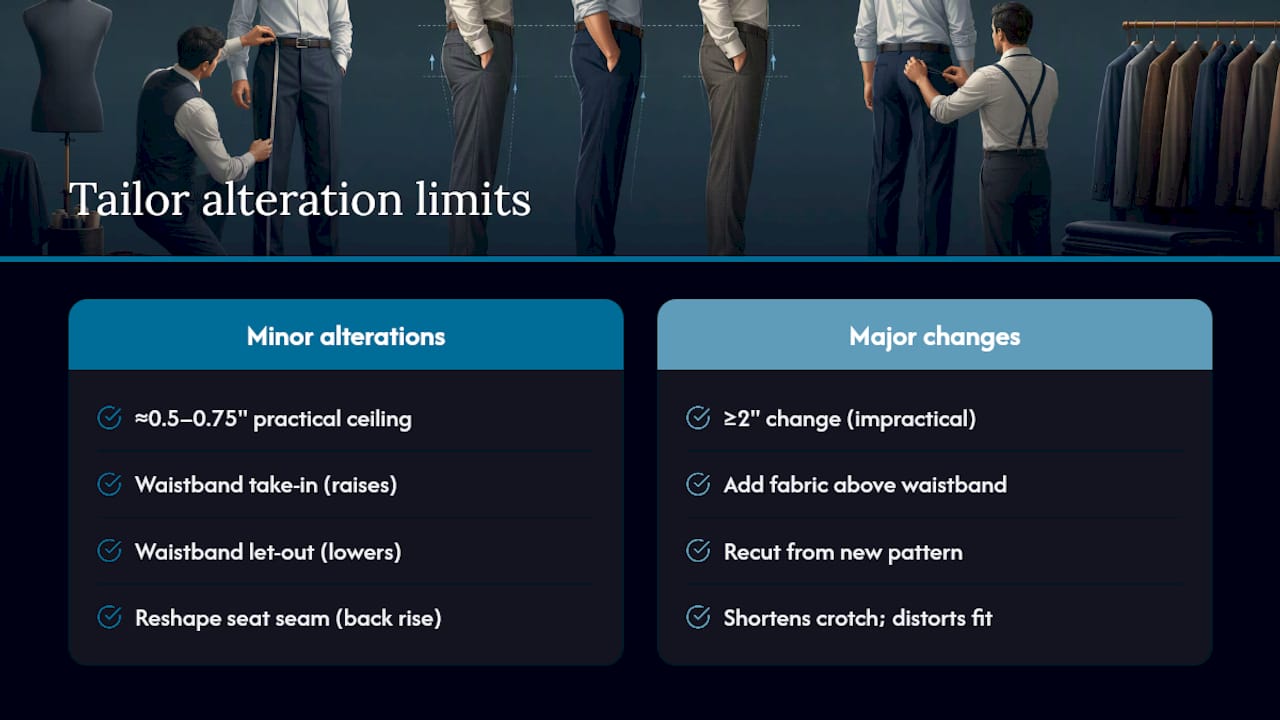
Major rise changes are a different matter. Increasing front rise by 2" or more requires adding fabric above the waistband or recutting the entire trouser from a new pattern. Neither is practical on a finished garment. Decreasing rise significantly shortens the crotch seam, which can distort the leg line and the seat shape in ways that are difficult to correct cleanly. The practical ceiling for a post-construction rise alteration is roughly 0.5–0.75" in either direction. Beyond that, made-to-measure or bespoke is the more reliable path.
A tailor’s note on choosing rise
We tell every client the same thing in the fitting room: bring a pair of trousers you already love and wear often. That pair tells us more about your preferred rise than any questionnaire. We measure it, record the front rise, and use that number as the starting point for the pattern. Small deviations from standard rise are normal and entirely fixable, either through a minor alteration or by selecting the right rise at the outset. The fit problem most people attribute to waist size or leg length is, more often than not, a rise problem. Knowing your number puts you in control.
Persistent rise-fit issues deserve a bespoke solution
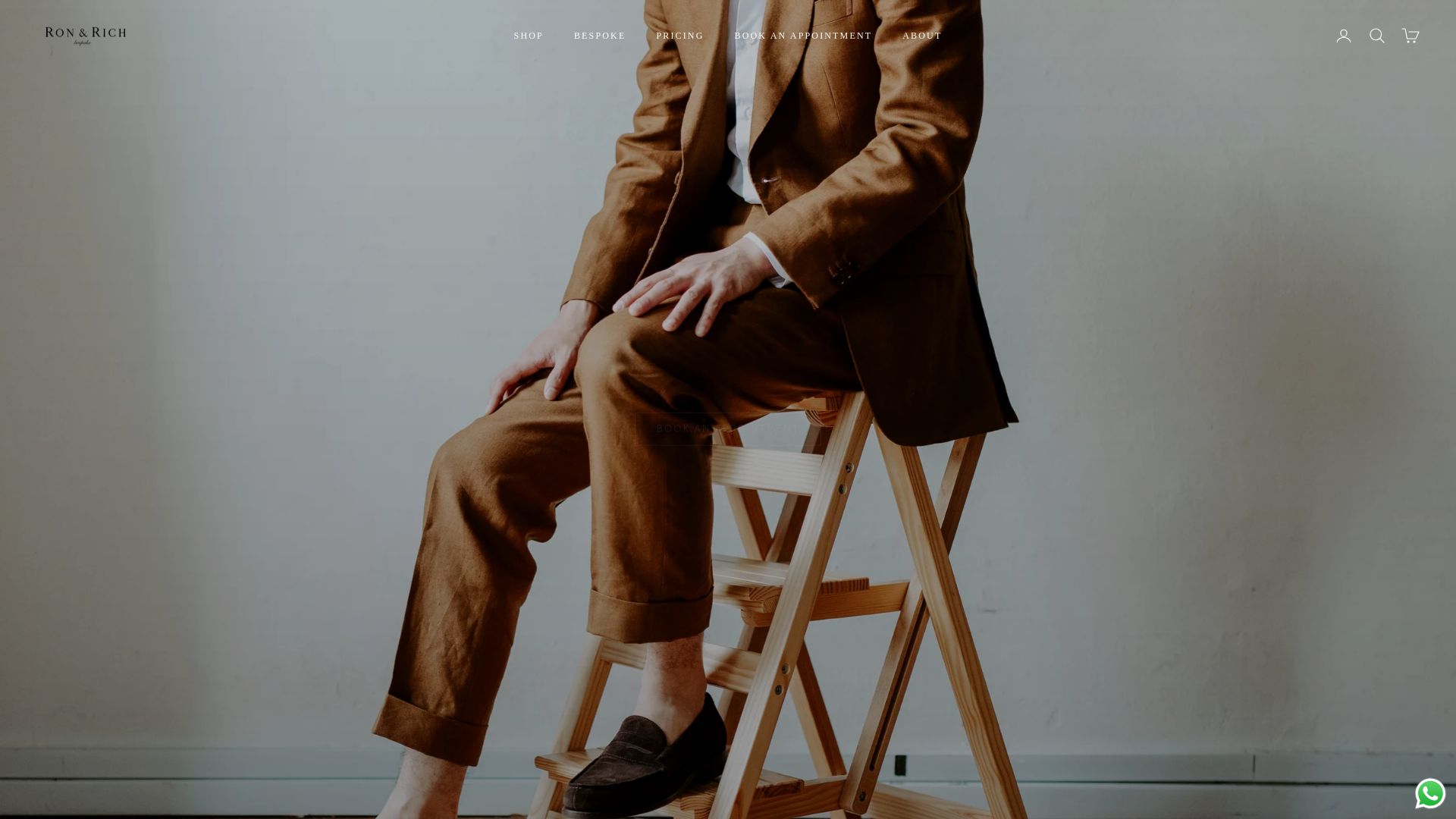
Off-the-rack trousers are graded for an average body, which means the rise is an approximation. For clients who have tried multiple sizes and still find the waistband sitting too low, the seat pulling, or the shirt tuck failing by midday, the issue is rarely the waist size it is the rise, and standard retail cannot resolve it without a pattern change.
At Ron & Rich, our bespoke tailoring process begins with a full set of body measurements, including seat depth, natural waist position, and posture. Rise is decided at the pattern stage, refined through fittings, and locked in before the final garment is completed. The result is a trouser that sits exactly where it should, holds a tuck, and moves with you.
Ready to resolve a persistent fit issue or commission trousers built to your exact proportions? Book a bespoke consultation with our team and bring that favorite pair along.
Sources
- Trouser Rise Explained and Where the Waistband Should Sit
- High Rise vs. Mid Rise Jeans: Finding Your Perfect Fit
- The Truth About Pant Rise: Numbers You Need to Know Before You Shop
- Rise descriptions (Lee editorial)
- Best high-waisted pants (GQ gallery)