How Long Does a Tailoring Timeline Really Take?
Plan for 3 to 7 business days on simple alterations, 1 to 2 weeks on a standard suit, and 6 to 12 weeks on a bespoke suit from your first consultation. The one rule that saves every timeline: add additional time beyond the quoted estimate, or build in one extra fitting window before your event date.
-
Simple repairs (hems, buttons): 3–7 business days
-
Standard suit alterations: 1–2 weeks
-
Bespoke, start to finish: 6–12 weeks
Your first move should happen today: call and book your opening consultation or fitting, and ask directly about rush fees and current shop availability. Shops close to capacity in wedding season, and the buffer only works if you start the clock early.
Key Takeaways
A tailoring timeline succeeds when the buffer is built in from day one: simple work needs days, standard suits need one to two weeks, and bespoke needs months, not weeks.
| Point | Details |
|---|---|
| Match your job to its tier | Simple repairs run 3–7 days, standard suits 7–10 days, bespoke 6–12 weeks. |
| Build in a real buffer | Add roughly 25–30% more time, or plan one extra fitting window, beyond any quote. |
| Start bespoke early for weddings | Begin fabric and style discussions 4–6 months before the event, not 4–6 weeks. |
| Bring the right items to fittings | Wear your event shoes and shirt, and test the fit by moving, not standing still. |
| Choose Ronandrich for staged bespoke fittings | Ron & Rich’s basted fitting process catches construction issues before they become permanent. |
Where to Read More on Tailoring Timelines
Table of Contents
Tailoring Timeline Ranges by Service Type
Every tailoring timeline hinges on three things: how much fabric has to move, how many hands touch the garment, and how many fittings the work demands. That’s why a button repair and a bespoke jacket sit at opposite ends of the calendar despite both being called “tailoring.”
-
Simple jobs. Hemming trousers, replacing buttons, or taking in a waist typically needs 1 to 3 business days for a basic hem, and 3 to 7 days for slightly more involved simple work. Most of these need only one fitting, sometimes none if measurements are already on file.
-
Standard suit alterations. A jacket and trouser combination, adjusting shoulders, sleeves, and break, generally runs 7 to 10 business days at most tailors, with complex combination work stretching closer to two weeks. Expect 1 to 2 fittings depending on how much the garment needs to move.
-
Complex alterations or reconstruction. Re-cutting a jacket body, replacing a lining, or resizing across multiple panels pushes into 3 to 7 days for moderate work, and 1 to 4 weeks once you’re into full restructuring. This tier usually needs multiple fittings because each seam change affects the next.
-
Bespoke versus made-to-measure. Bespoke work involves drafting a pattern from scratch and multiple fittings. It typically takes several weeks to months. Made-to-measure, adjusting an existing pattern, generally takes less time.
-
Bridal and heavily beaded garments. Gowns and richly embellished pieces run longest of all, often 8 to 12 weeks or more because of multiple fittings and delicate hand construction. If you’re outfitting a wedding party alongside a bridal gown, the groom’s suit rarely sets the pace. The gown does.
The gap between these tiers isn’t arbitrary. A hem is one seam. A bespoke jacket is dozens of hand-stitched operations, several of which can’t start until the previous one is fitted and approved.
A Groom’s Wedding Suit Calendar, Month by Month
A wedding date turns a flexible tailoring timeline into a fixed deadline, so the calendar has to work backward from the event, not forward from when you first walk into a shop.
4 to 6 months before the wedding. Start bespoke or made-to-measure conversations now, especially if you want a specific imported fabric or need matching outfits for a full wedding party. Fabric sourcing alone can take weeks, and recommended wedding schedules put early bespoke discussions several months out precisely for this reason.
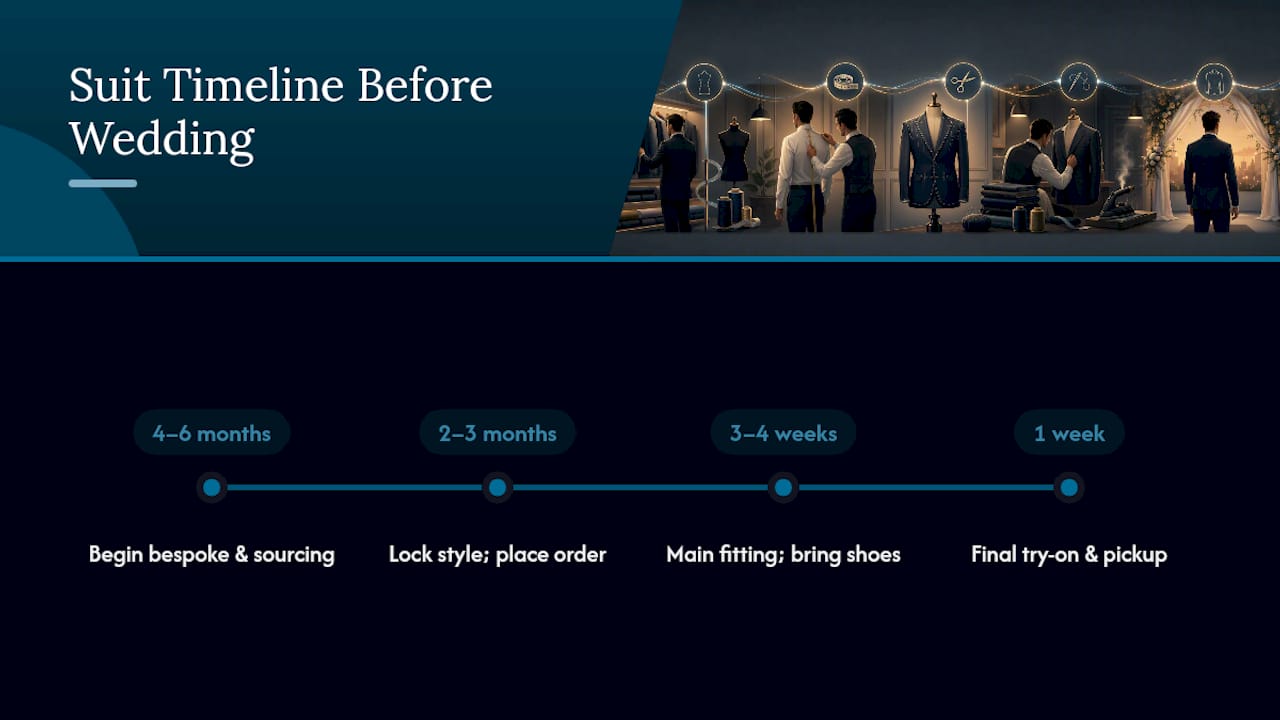
2 to 3 months before. Lock in your style choices, silhouette, lapel, cuff details, and place your order. This is also when you should finalize decisions for any rented or off-the-rack pieces in the wedding party, since availability tightens closer to peak season.
3 to 4 weeks before. This is your main fitting window. Bring the shoes and shirt you’ll actually wear on the day. If the fit needs meaningful adjustment, schedule a follow-up fitting here rather than waiting until the final week leaves no room to correct it.

1 week before. Do a final try-on, and move as you would at the event: sit, reach, walk. For standard alterations, plan your final pickup at least 5 to 7 days before the wedding, never the day before.
Pro Tip: Coordinate your suit fitting week with your other vendors, florists and musicians included, so nothing collides with your final tailoring appointment. A rehearsal timeline that overlaps your last fitting is how grooms end up picking up a suit an hour before photos.
What Slows Down a Tailoring Timeline, and How to Avoid It
A quoted timeline is an estimate, not a guarantee. Several factors push it in either direction, and most of them are visible from the very first appointment if you know what to ask.
Fabric sourcing is the biggest wildcard. Imported wools, seasonal fabrics, and specialty linings sometimes take longer to arrive than the tailoring itself. Construction complexity matters just as much: fabric weight and whether a garment needs lining or interfacing work directly affects how long alterations take. Add seasonal demand, wedding season and year-end functions both create queues, and you have three variables stacked on top of the baseline estimate.
A short checklist keeps surprises to a minimum at every fitting:
-
Bring the actual shoes you’ll wear, not a stand-in pair.
-
Bring the shirt that will go under the jacket.
-
Bring your belt or suspenders and know which undergarments you’ll wear.
-
Move through the fitting like you would at the event, sit down, raise your arms, walk a few steps, since testing garments in warm, humid conditions catches fit problems a static fitting misses.
On rush work, same-day or 24 to 48 hour turnaround is sometimes available for simple tasks at a surcharge, but complex alterations rarely tolerate rushing without a real quality trade-off. If your event date is fixed and your garment needs structural work, quality should win over speed almost every time.
Practitioner Notes on Buffers, Basted Fittings, and Realistic Timing
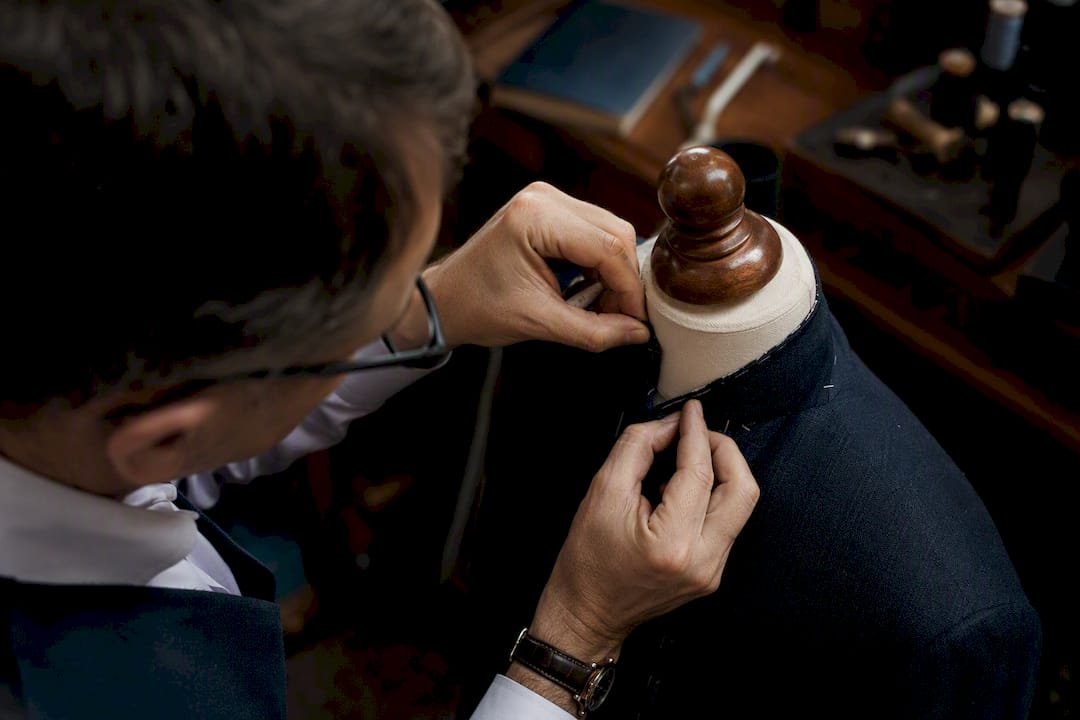
Ronandrich has built its bespoke process around staged fittings for a reason: a basted fitting, essentially the garment held together loosely so it can be reshaped before final stitching, catches problems while they’re still cheap to fix. That staging is also why a bespoke tailoring process takes longer than off-the-rack work. Each stage exists to prevent an error from becoming permanent.
Experienced tailors typically build a day or two of internal buffer into their own quotes, precisely because opening a garment sometimes reveals a lining, seam allowance, or construction issue nobody could see beforehand. If your tailor quotes 3 days, plan for 5. If they quote two weeks, plan for three.
Pro Tip: Always test fit in warm conditions or after moving around, not standing still in an air-conditioned fitting room. A jacket that feels perfect cold can pull at the shoulders the moment you’re warm and moving at your own reception.
A Groom’s Checklist for a Painless Timeline
Book your first consultation as early as your calendar allows, and get lead times confirmed in writing, not just discussed verbally. Bring your event shoes and shirt to every single fitting, no exceptions, and if you’re between sizes or working with heavier fabric, ask for an extra fitting rather than assuming one will be enough.
If your event date can’t move, protect quality over speed. A rushed collar or hastily reset sleeve shows up in every photo taken that day, long after the rush fee is forgotten.
Book Your Fitting Before the Calendar Books You
Ronandrich’s bespoke process is built around exactly the staged fitting flow this article describes: a detailed consultation, a basted fitting where the garment is shaped on your body before final construction, and adjustment stages that catch problems early instead of the week of your wedding.
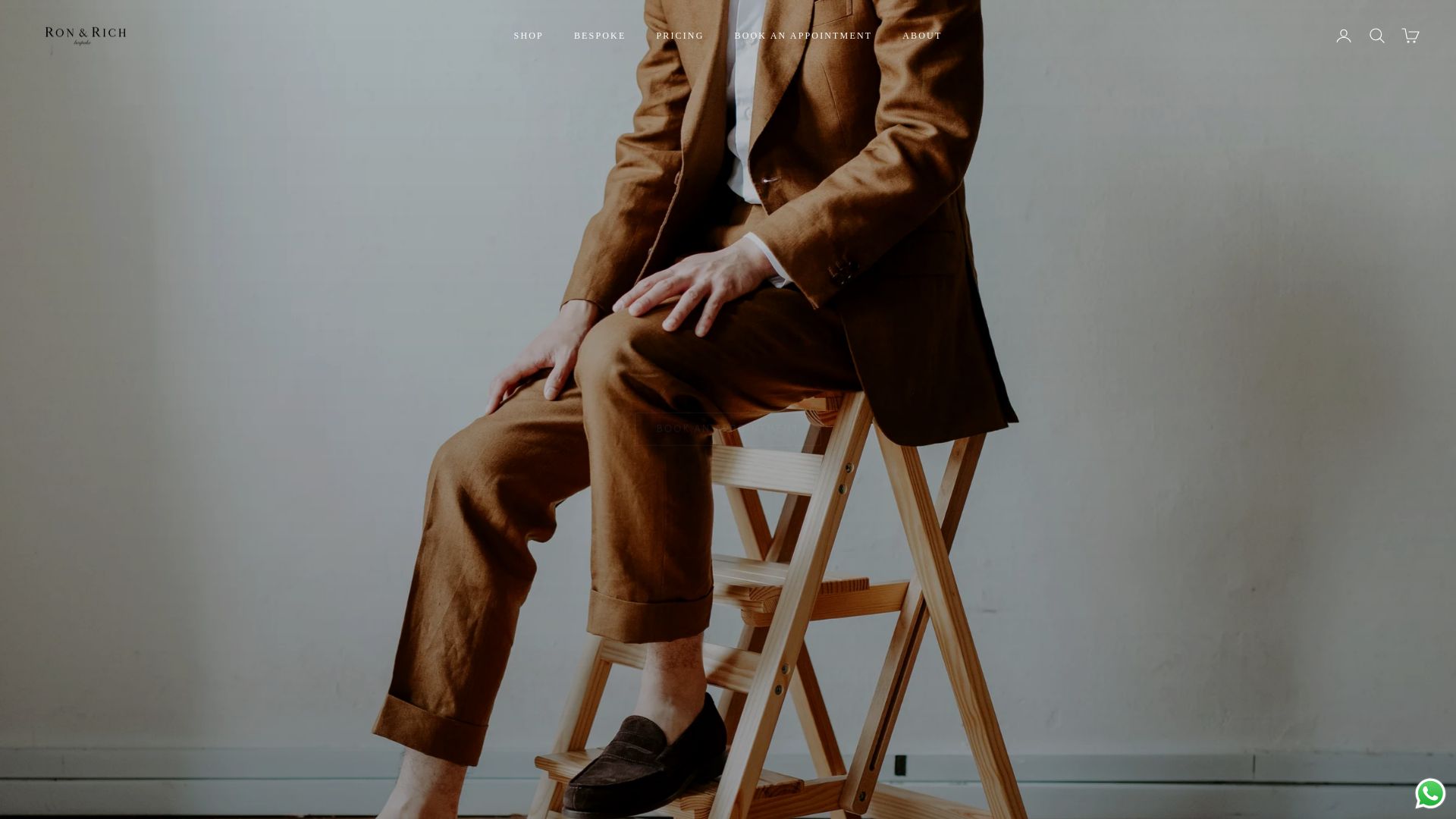
Booking early with a specialist tailor does more than avoid a scheduling scramble. It protects the construction quality that a rushed timeline puts at risk, since every basted fitting exists to correct fit before stitching becomes permanent. If your event date is set, the smartest move is starting the conversation now rather than working backward from a deadline that’s already tight. Visit the bespoke suit page to see the process in full, or head straight to Suits & Jackets to book your first consultation.
Sources
-
Men’s suit alterations: what a tailor can (and can’t) fix, Men’s Wearhouse
-
How long does tailoring take? Timeline by alteration - TextileTuts
-
How Long Do Alterations Take? Complete Timeline Guide (2026), Imperial Alterations