Smart Casual Men: Quick Outfit Formulas That Work
Smart casual for men means casual clothing lifted by one or two structured, well-fitted pieces, positioning it squarely between weekend gear and full business casual. Three common formulas cover many smart casual situations: an Oxford shirt with slim chinos and Chelsea boots, a knit polo with tailored trousers and loafers, or a fine-gauge sweater with dark jeans and clean leather sneakers.
Each formula pairs one refined element with something relaxed. That balance is the entire trick.
Three formulas to memorize:
- Classic: OCBD (Oxford cloth button-down) + slim chinos + Chelsea boots
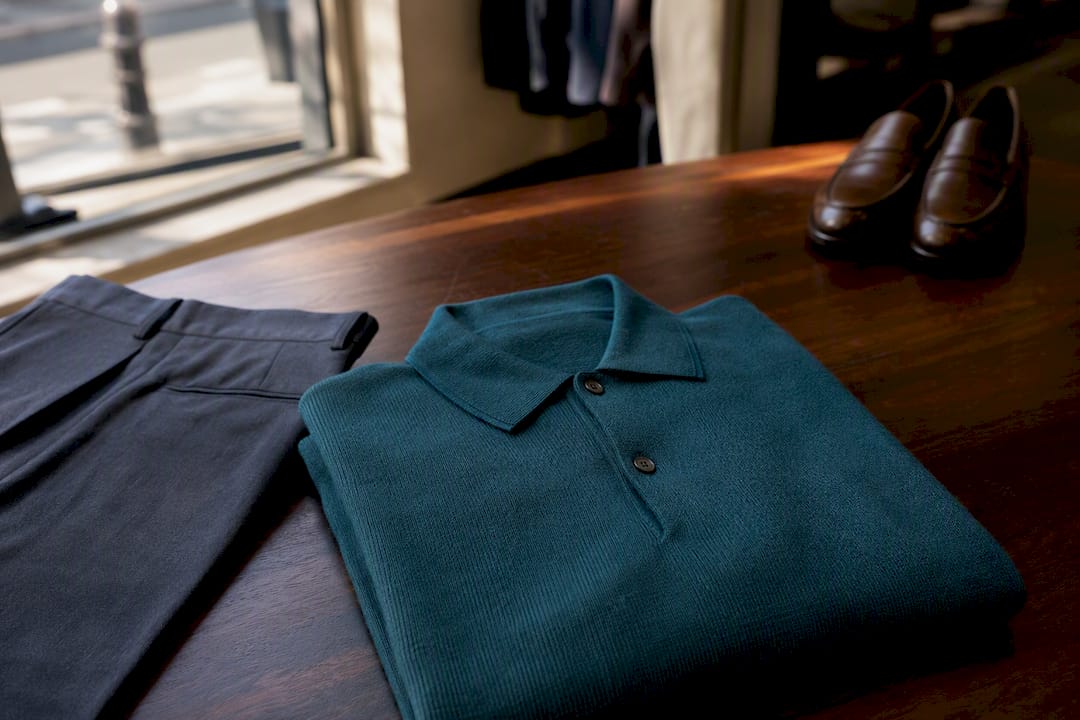
- Relaxed: knit polo + tailored trousers + suede loafers
- Cool weather: fine-gauge sweater + dark jeans + minimal leather sneakers
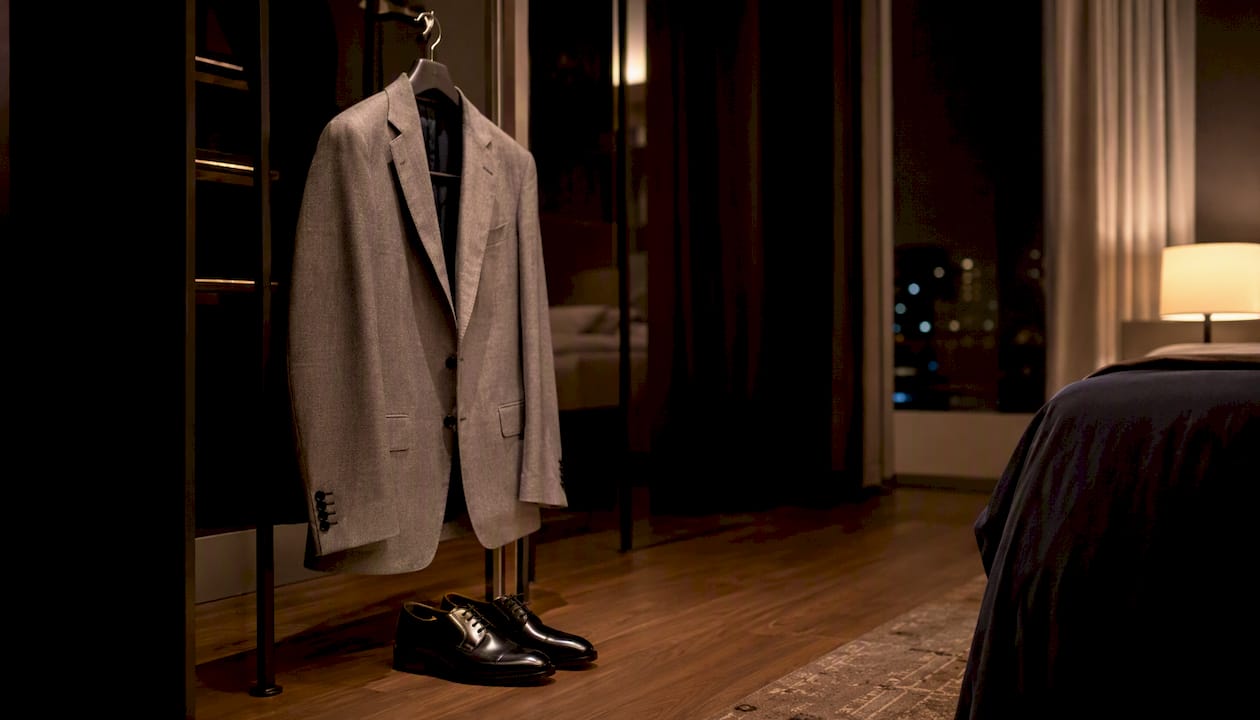
A well-tailored blazer from a house like Ron & Rich sharpens any of these instantly if the occasion calls for more polish. Heading somewhere more formal? Add the blazer. Heading somewhere more relaxed? Swap the loafers for minimal leather sneakers, and skip the jacket entirely.
Key Takeaways
Smart casual works when you anchor one structured piece to a casual base and let your shoes set the formality level for everything else.
| Point | Details |
|---|---|
| Pick a formula | Default to Oxford + chinos + Chelsea boots or knit polo + trousers + loafers for most occasions. |
| Shoes set the tone | Switching to leather or suede shoes moves an outfit up a formality level instantly. |
| Fit outranks fabric | A well-fitted inexpensive piece reads sharper than an expensive one that doesn’t fit. |
| Keep denim clean | Dark, unstressed jeans work in smart casual only with a collared shirt and leather shoes. |
| Get key pieces tailored | Ron & Rich’s fitting process adjusts shoulder, rise, and sleeve length so pieces look intentional, not just purchased. |
Table of Contents
- What Does Smart Casual Actually Mean for Men?
- The Essential Smart Casual Wardrobe Pieces
- Five Smart Casual Outfit Formulas You Can Copy
- How to Dress Smart Casual for Different Occasions
- Smart Casual Rules and Mistakes to Avoid
- Why Fit Changes Everything in Smart Casual
- What Most Style Guides Get Wrong About Smart Casual
- Ready to Upgrade Your Smart Casual Wardrobe?
- Frequently Asked Questions
- Sources
What Does Smart Casual Actually Mean for Men?
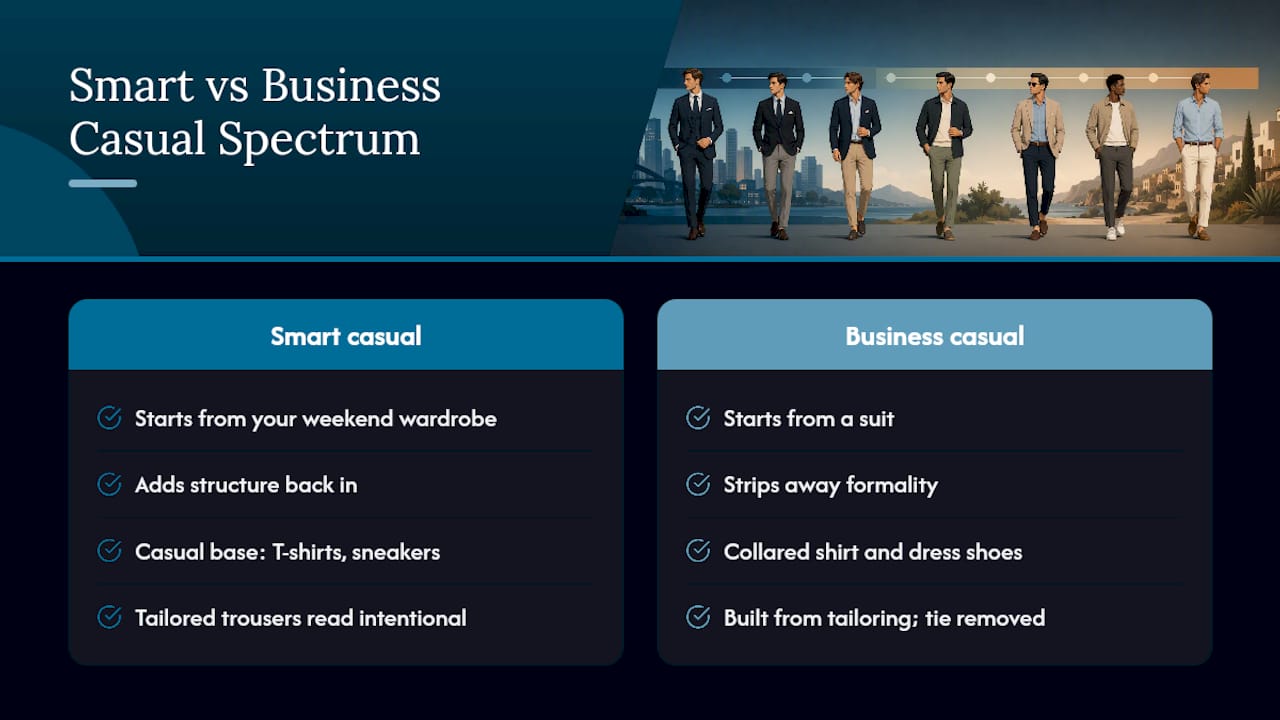
Smart casual is best understood as a spectrum, not a fixed outfit. On one end sits pure casual: T-shirts, sneakers, whatever’s comfortable. On the other end sits business casual, built from tailoring with the tie removed. Smart casual lives in the middle, and it moves in a different direction than business casual does.
Business casual typically starts from a suit and strips away formality. Smart casual starts from your weekend wardrobe and adds structure back in, a distinction laid out clearly in Klodsy’s comparison of the two dress codes. The two paths can land in a similar place, but they approach it from opposite directions, which is why “just wear business casual but relaxed” is bad advice. It skips the base layer that makes smart casual feel natural instead of stiff.
Trousers and shoes do the heaviest lifting in signaling where you land on that spectrum. A pair of joggers reads casual no matter what shirt you put on top. A pair of tailored trousers reads intentional even under a plain T-shirt.
Comparing it to business casual for men helps clarify the boundary: business casual almost always assumes a collared shirt and dress shoes as the floor. Smart casual assumes a casual base and lets you choose how much structure to add on top.
Pro Tip: When an invite just says “smart casual” with no other context, pick your shoes first. Leather shoes signal formality, everything else can follow that lead.
The Essential Smart Casual Wardrobe Pieces
Building a working smart casual wardrobe comes down to five categories. Get these right and you can mix and match without thinking too hard.
Tops:
- OCBD or poplin shirts, worn slightly untucked or tucked depending on formality
- Knit polos in a midweight jersey, since thin cotton polos tend to cling and look cheap
- A quality plain T-shirt for the most relaxed end of the spectrum, never a graphic tee
Jackets and outerwear:
- Unstructured blazers, which add polish without the stiffness of a suit jacket
- Overshirts and chore coats for a layer that reads smart without trying too hard
Bottoms:
- Chinos in a straight or slightly tapered leg, with a clean break at the shoe
- Dark, clean jeans with no distressing or fading, which FashionBeans confirms work fine when paired with a collared shirt and leather shoes
- Tailored trousers for the sharpest end of smart casual, especially in wool or wool blends
Shoes:
- Suede loafers and derbies for most occasions
- Chelsea boots for a slightly rugged but still polished look
- Minimal leather sneakers, white or neutral, for the most relaxed applications
Shoes matter more than people assume. Switching from sneakers to a leather or suede shoe often moves an entire outfit up one formality level without touching anything else, which is worth knowing before you overhaul a whole outfit for an event that just needed better footwear.
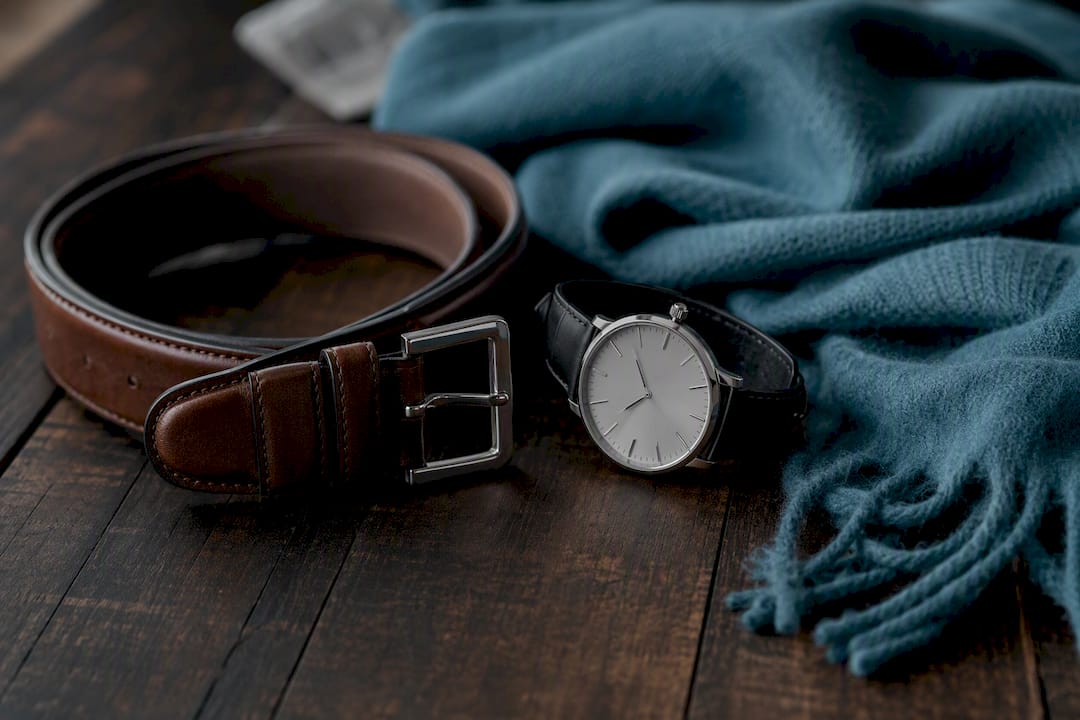
Accessories and grooming: A leather belt that matches your shoe tone, a simple watch, and a scarf in cooler months round out the look. Keep grooming clean and low maintenance: trimmed facial hair, tidy nails, and use only the best men’s styling products for a sharp office look where it serves the outfit, not where it competes with it.
Five Smart Casual Outfit Formulas You Can Copy
Owning a handful of repeatable combinations removes the guesswork on a busy morning. Five formulas reliably cover almost every smart casual situation you’ll run into.
-
Classic: OCBD, slim chinos, Chelsea boots. Stick to navy, white, or light blue on top with khaki or stone chinos below. This is your default for client meetings or a nice lunch.
-
Relaxed: Knit polo, tailored trousers, suede loafers. Works for creative offices or casual Fridays where a collared shirt feels like too much.
-
Sweater formula: Fine-gauge merino sweater, dark jeans, leather sneakers. Ideal for cool-weather weekends or a low-key dinner where you still want to look put together.
-
Elevated: Unstructured blazer over a knit polo, tailored trousers, derbies. This is the version that works for a wedding with a smart casual dress code or a networking event.
-
Date or evening: Fitted button-down (untucked), dark denim, Chelsea boots, optional overshirt. Slightly more relaxed than the Classic formula, built for a restaurant rather than an office.
Stick to a tight color palette across all five: navy, white, stone, gray, and one accent tone. Fewer colors means everything in your closet works together, which is half the reason formulas save time in the first place.
How to Dress Smart Casual for Different Occasions
The same base outfit can serve five different purposes if you know which piece to swap.
Workplace and client meetings: Lean on the Classic formula. Keep the blazer on hand even if you don’t wear it in, since offices vary week to week on how dressed up people actually show up.
Dates and dinners: The Date formula works well here, or dial the Classic formula down by untucking the shirt and losing the blazer entirely.
Networking events: Add the blazer. This is one of the few smart casual contexts where a jacket moves from optional to close to mandatory, since it signals you took the event seriously.
Casual weekend gatherings: The Sweater formula or Relaxed formula both work, and leather sneakers are a safe swap for loafers.
The general rule for moving up or down: change shoes first, add or remove a blazer second, and decide tuck versus untuck last. Chinos beat jeans anytime the setting includes senior colleagues or clients you haven’t met before, since jeans read slightly more relaxed no matter how dark or clean they are.
Smart Casual Rules and Mistakes to Avoid
A few non-negotiables keep smart casual from sliding into sloppy or accidentally too formal.
- Fit beats fabric every time. A $40 shirt that’s tailored to your frame looks sharper than a $200 shirt that swims on you.
- Keep formality consistent across every piece. Pairing a tailored blazer with beat-up sneakers undercuts the whole outfit.
- Maintain your shoes. Scuffed leather or dirty suede reads as careless no matter how good the rest of the outfit looks.
- Skip logos, slogans, and graphic prints for most smart casual settings.
Common mistakes worth flagging: distressed or light-wash jeans, blazers that pull across the shoulders, and mixing athletic wear (performance fabrics, running shoes) with tailored pieces. Any one of these signals the outfit wasn’t planned, even if the individual pieces are nice on their own. Staying slightly smarter than the invite suggests is the safer default when you’re unsure how a specific event will actually skew.
Pro Tip: If two pieces clash at the last minute, swap the shoes before you swap anything else. A cleaner shoe fixes more outfits than a new shirt does.
Adjusting Smart Casual by Season
Fabric choice shifts the same formulas across warm and cold months without changing the underlying structure.
- Warm weather: linen or linen blends, lightweight knit polos, loafers worn without socks, lighter palettes like stone and sky blue.
- Cool weather: merino or cashmere knits, wool trousers, suede Chelsea boots, richer tones like navy, olive, and charcoal.
- Layering: an overshirt or unstructured blazer bridges both seasons, since texture and softness do more to signal “intentional” than the actual weight of the fabric.
A lightweight linen shirt covers most warm-weather smart casual needs without any extra thought.
Why Fit Changes Everything in Smart Casual
Fit and proportion often matter more than fabric cost when it comes to how polished an outfit reads, a point Menwear’s guide to smart casual backs up directly. Three adjustments do most of the work.
- Shoulder fit on a jacket or blazer. Seams should sit right at the edge of your shoulder bone, no further.
- Trouser rise and length, which controls whether chinos or tailored pants look sharp or sloppy at the shoe.
- Shirt sleeve length, since sleeves that run long or short throw off the whole silhouette even when the rest of the shirt fits well.
At Ron & Rich, the tailoring process starts with an in-store consultation, moves through measurement and a test fitting, and ends with final adjustments once the garment sits exactly right. Richard Fan built the house on that same principle back in 1979: comfort and proportion come from precise measurement, not guesswork.
A collar that sits flat against the neck, a sleeve that ends at the wrist bone, a trouser break that just kisses the shoe. These are small adjustments, but they’re the difference between an outfit that fits and one that looks tailored.
The payoff is longevity as much as looks. A properly fitted piece holds its shape and stays relevant across seasons, instead of getting retired after a year because the proportions felt off from the start.
What Most Style Guides Get Wrong About Smart Casual
Most guides treat smart casual like a fixed uniform: five items, wear them, done. That misses the actual skill involved, which is reading a room and adjusting one or two pieces on the fly. The formulas in this guide matter less as rigid rules and more as starting points you’re meant to bend.
The overrated advice is buying more clothes. Most men who struggle with smart casual don’t have a wardrobe problem, they have a fit problem. A blazer that doesn’t sit right on the shoulders will undercut an otherwise perfect outfit faster than any wrong color choice.
If you take one thing from this guide, prioritize getting two or three pieces properly fitted over buying five new ones off the rack. A tailored blazer and a pair of trousers that actually match your proportions will outperform a closet full of decent-but-generic pieces, every time.
Ready to Upgrade Your Smart Casual Wardrobe?
Reading about fit is one thing. Standing in front of a mirror while someone actually adjusts your shoulder seam or pins your trouser break is another. That’s the gap Ron & Rich closes for men who want their smart casual pieces to fit the way this guide describes instead of just approximating it off a rack.
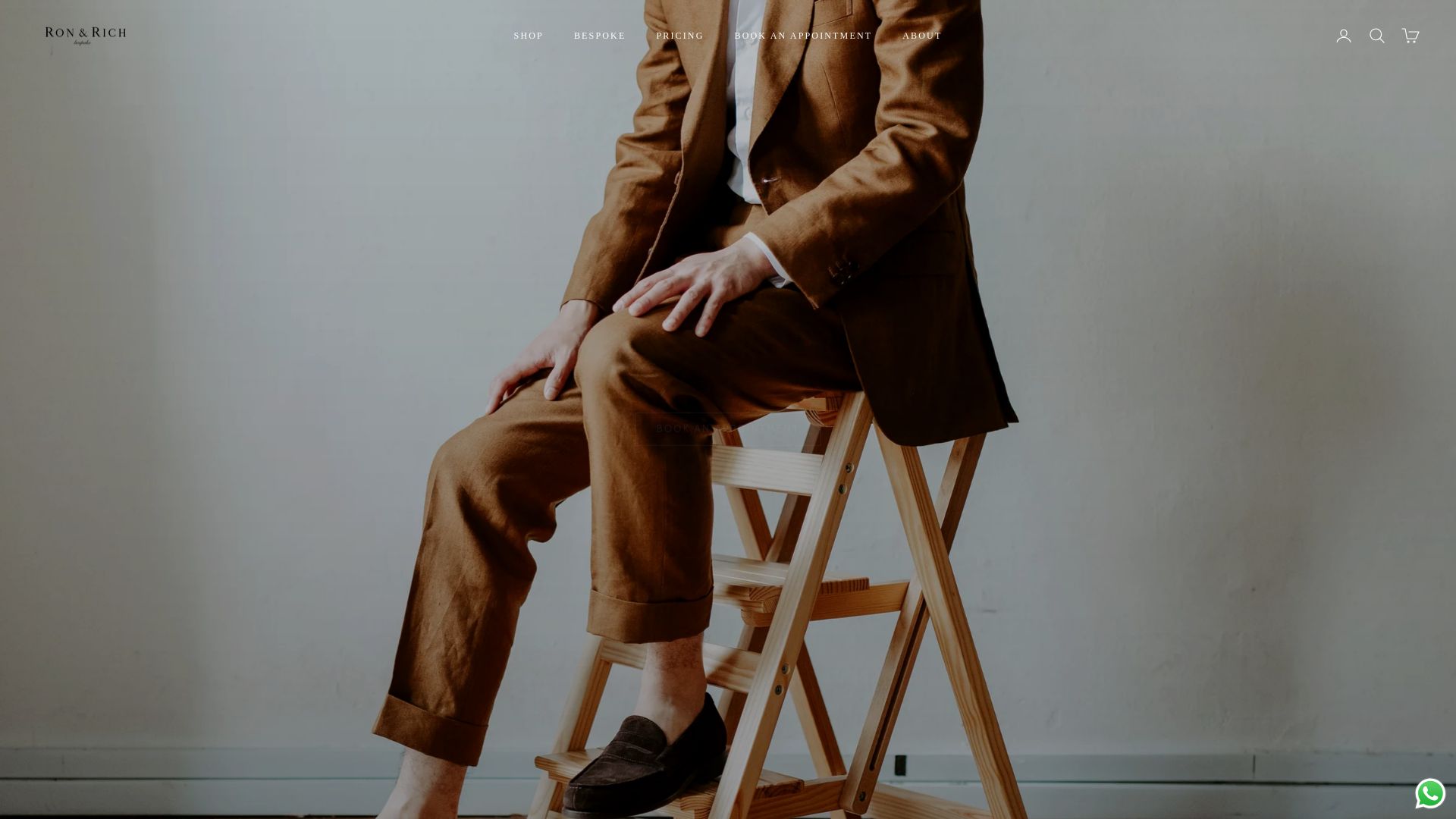
Ron & Rich builds both custom bespoke pieces and ready-to-wear smart casual essentials, so whether you want a blazer built from scratch or a fitted pair of chinos you can wear this week, there’s a path that matches your timeline. The house has spent decades since 1979 solving exactly the fit problems this article flags: shoulders that pull, trousers that break wrong, sleeves that run long. If a blazer is the one piece missing from your rotation, start by browsing suits and jackets or book a bespoke consultation to get measured properly the first time.
Frequently Asked Questions
What is the easiest way to start dressing smart casual? Start with a casual outfit you already own and swap one piece for something more structured, like trading sneakers for suede loafers or adding a collared shirt under a sweater. That single swap does most of the work.
Can jeans work for smart casual? Yes, as long as they’re dark, clean, and free of distressing, paired with a collared shirt or fine knit and leather shoes. Light-wash or ripped denim always reads too casual.
Is a blazer required for smart casual? Not always. It’s optional for most weekend and date settings but becomes close to mandatory for networking events, smart casual weddings, or client dinners.
What shoes work best for smart casual men? Suede loafers, derbies, and Chelsea boots cover most situations, with minimal leather sneakers as the most relaxed option. Avoid athletic sneakers entirely.
How often should I update my smart casual wardrobe? A seasonal check twice a year, in spring and fall, keeps your pieces relevant and lets you catch fit issues before they become a problem on the day you need the outfit most.
Sources
For deeper outfit formulas and seasonal breakdowns, these guides cover the ground well: The Modern Observer’s formula guide for repeatable combinations, FashionBeans for denim and shoe rules, The Art of Manliness for the casual-to-structured approach, and OPUMO Magazine for fabric and texture guidance.
- Casual Outfits for Men 2026: The Formula That Works Every Time | The Modern Observer
- Smart Casual Dress Guide for Men | FashionBeans
- Smart Casual vs Business Casual: The Definitive Guide | Klodsy
- Smart Casual for Men: What It Means and What to Wear