Suit Fabrics for Singapore's Climate: What to Choose
The best suit fabric for Singapore is a breathable, lightweight-to-mid-weight wool in an open or high-twist weave, cut and lined to let air move. Wool breathes, recovers from creasing and copes with a day that moves from a humid pavement to a cold boardroom. Linen, cotton and blends have their place, but wool is the sound foundation. At Ron & Rich, we cut every suit to the individual client, so the cloth is chosen for your day, your office and your wedding, not for a generic climate chart.
TL;DR
- Choose a breathable wool base: lightweight worsted, fresco, hopsack or high-twist, rather than a heavy flannel or a dense, shiny weave.
- Weight matters, but so does weave. An open weave at a moderate weight often feels cooler than a tight, ultra-light cloth.
- Singapore’s cold air-conditioning is as much a factor as the heat, so a mid-weight worsted is often the practical choice for the office.
- Linen and cotton feel cool but crease quickly in humid air; they suit weekends and relaxed events better than a full working week.
- Half-lined or unlined construction and a precise fit let a suit breathe as much as the cloth does.
Table of Contents
- What Singapore’s climate asks of a suit
- Why wool is the right foundation
- Weight, weave and fibre: how each changes the feel
- A quick comparison of suit fabrics in Singapore
- The air-conditioning factor
- Linen and cotton: how to wear them well
- Construction matters as much as cloth
- Choosing fabric for a Singapore wedding
- Care: keeping wool fresh in humid air
- Our view from the cutting table
- Begin with the cloth that suits your week
- FAQ
- Sources
What Singapore’s climate asks of a suit
Singapore’s weather barely changes through the year, which makes the brief easy to state. According to the Meteorological Service Singapore, daytime maximums usually reach 31 to 33°C, nights rarely fall below 23 to 25°C, and mean annual relative humidity is around 82%. Humidity climbs above 90% before sunrise and falls to roughly 60% on a dry afternoon.
For a suit, the humidity is the harder part. Heat alone can be handled by thin cloth. Humid air stops sweat from evaporating, so the fabric has to move moisture away from the skin and release it, then recover its shape instead of collapsing into creases.
Three demands follow:
- Breathability. The cloth must let air and vapour pass through.
- Moisture handling. It should absorb and release moisture without feeling clammy.
- Resilience. It must shake out creases and hold its drape after a commute.
A fourth demand is unique to Singapore: indoor air that is often much colder than the street. We return to this below.
Why wool is the right foundation
Wool surprises many first-time bespoke clients, who associate it with winter. The fibre is not the problem; heavy cloth is. In a Straits Times feature from April 2026, a Japanese menswear creative director recommends a breathable wool base for suits in Singapore, observing that linen and cotton wrinkle easily in the local climate and that wool does not need cleaning as often.
That last point matters to anyone who wears a suit several times a week. Less frequent cleaning means less wear on the cloth and a longer life for the garment.
Wool’s advantages for a Singapore wardrobe, in plain terms:
- It breathes. Fine, lightweight wool yarns are spun into cloth that lets air pass.
- It recovers. The natural crimp of the fibre helps creases fall out when the jacket hangs.
- It holds a line. A wool suit keeps its drape and sharp shoulders, which is what makes tailoring look like tailoring.
- It is versatile. The same fine wool can be woven open and airy for noon, or a little firmer for a conference room.
We pair it with a properly proportioned cut. A bespoke jacket that follows your shoulders and posture does not cling or bunch, and air circulates between cloth and shirt.
Weight, weave and fibre: how each changes the feel
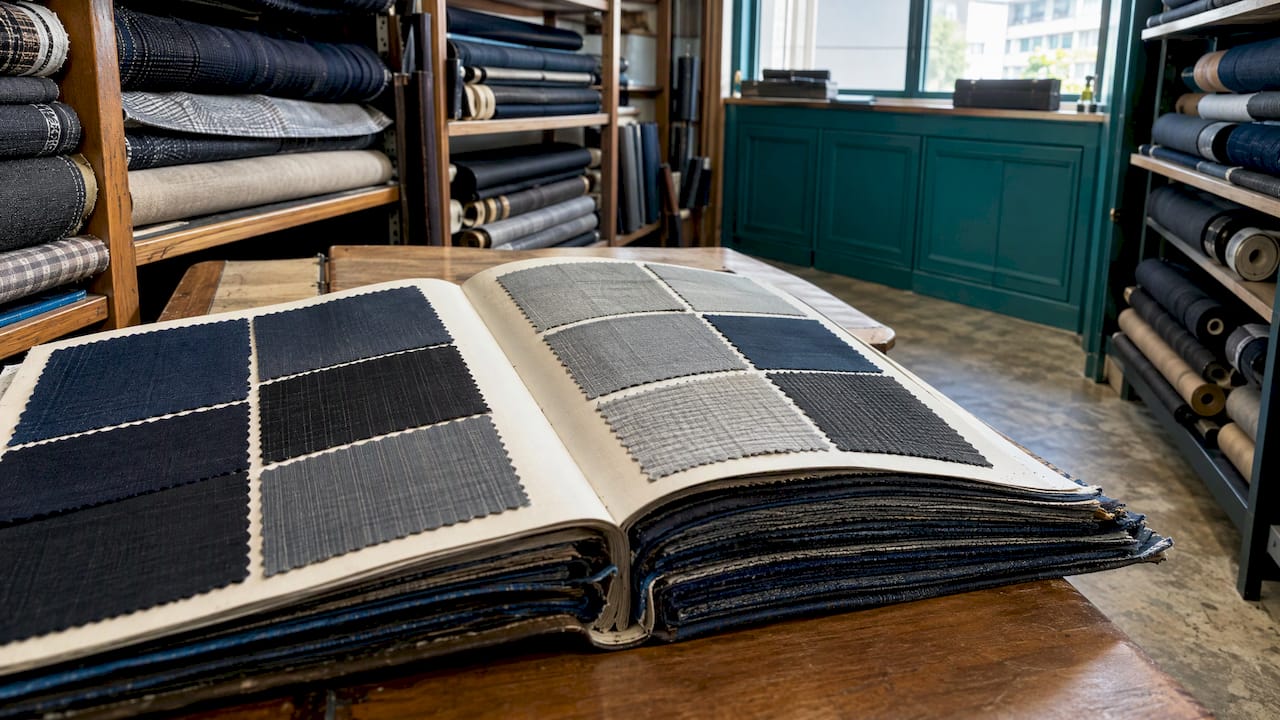
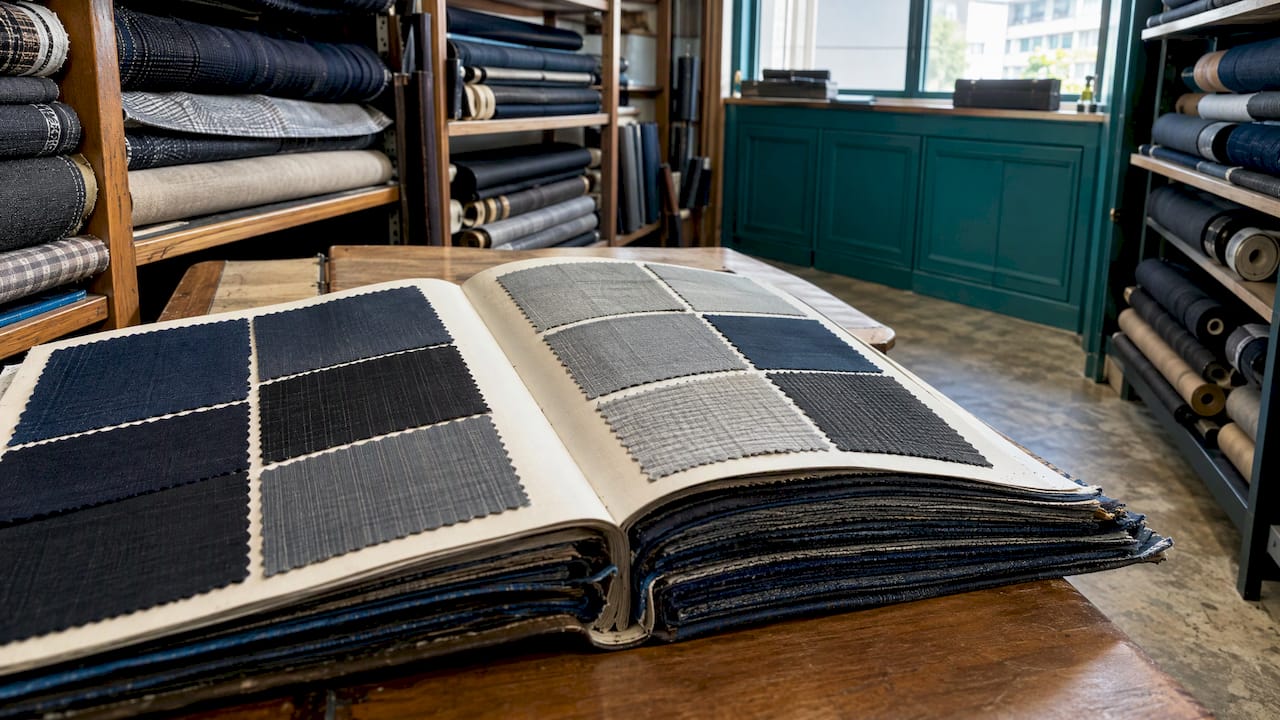
Fabric choice is three decisions made together. A swatch book lists them, but they are rarely explained.
Weight
Cloth weight is quoted in grams per metre or ounces. Lighter cloth is generally cooler, yet very light cloth can crush more easily and may lose body. Tailors working in tropical cities have long favoured weights around the lower end of the range. A Permanent Style guide to high-twist cloths notes that one high-twist wool of 10.5oz (300g) was originally created in the 1960s for the Hong Kong and Singapore market, as a wool with a linen-like feel, and lists lighter options of 7.5oz to 8oz (230g to 260g) for particularly hot, humid countries.
Treat such figures as a guide rather than a rule. A 230g cloth in a loose plain weave and a 260g cloth in a tight twill will not feel the same on the body. This is where a fitting helps: seeing and handling the cloth against your frame tells you more than a number.
Weave
The weave is how the yarns cross. It governs how much air the cloth lets through.
- Fresco (also called tropical worsted in some mills) is a hard-wearing open plain weave. The tiny gaps between yarns allow airflow, and the cloth is crisp rather than limp.
- Hopsack is a basket-like weave with a slightly textured surface. It is airy, resists creasing and suits sports jackets particularly well.
- High-twist wool uses tightly twisted yarns that spring back from creasing and give a dry, cool hand, close to linen in character but with the structure of wool.
- Plain-weave lightweight worsted is smooth and refined, an elegant choice for a formal suit when the weight is kept low.
- Twill is the diagonal weave found in most year-round suits. It drapes beautifully, though tighter, heavier twills are better kept for air-conditioned rooms.
Fibre
Pure wool is the reliable core. Fine blends add character: silk for a soft sheen and drape, linen for a dry texture and extra airiness. These blends are common in summer jacketings, and a reader writing in the Permanent Style archive notes that most Italian summer jacketings combine silk, linen and wool rather than relying on pure linen, which creases heavily with wear. We find blends most rewarding in sports jackets and safari jackets, where a relaxed, textured finish is the point.
A quick comparison of suit fabrics in Singapore
| Fabric | Feel in humidity | Creasing | Best for |
|---|---|---|---|
| Lightweight worsted wool | Cool, smooth | Low | Business suits, weddings |
| Fresco / tropical wool | Very airy, crisp | Low | Daily office wear, outdoor events |
| Hopsack | Airy, textured | Low to moderate | Suits and sports jackets |
| High-twist wool | Dry, linen-like | Low | Travel, long working days |
| Wool, silk and linen blends | Light, relaxed | Moderate | Jackets, smart casual, daytime weddings |
| Linen | Very cool initially | High | Weekend and resort dressing |
| Cotton | Breathable, can feel heavy when damp | Moderate to high | Trousers, casual jackets |
The creasing and comfort notes above reflect how these cloths generally behave, and your own tailor will advise on the specific mill and weight.
The air-conditioning factor
Ask a Singapore professional what their suit really faces and the answer is rarely just heat. The street is hot, the lift lobby is cool, and the meeting room can be colder still. A fabric guide from a tailoring supplier describes this as the air-conditioning trap: in tropical cities, the biggest threat to a suit can be the cold office rather than the heat, so a mid-weight worsted is often more sensible for a Singapore professional than the lightest cloth available.
It is a useful reminder that the lightest suit is not automatically the best one. A mid-weight, breathable worsted suit:
- keeps its structure through a day of walking, sitting and handshakes;
- feels comfortable in cold rooms without needing a heavy winter cloth;
- sheds creases better than the lightest weaves.
For a longer guide to dressing through the commute and the office, read our piece on office wear in humidity. If you have two or three suits in rotation, we usually suggest one mid-weight worsted for formal and client days, and one open-weave cloth for days of heavy movement.
The same logic of natural, breathable fibres carries into the evening: if you find hot nights as tiring as hot days, cooling cotton bedding for hot sleepers follows the same principle.
Linen and cotton: how to wear them well
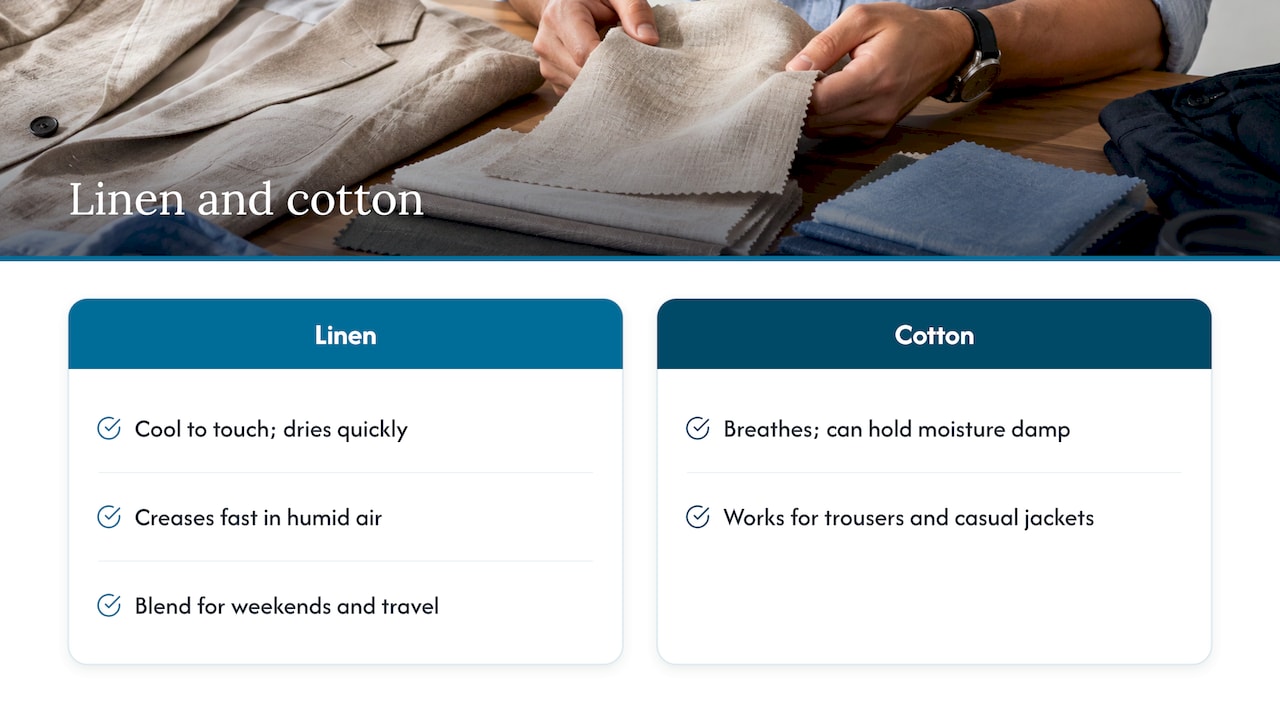
Linen is the first fabric people think of for hot weather, and it is genuinely cool to the touch. The fibre is hollow at its core and dries quickly. The catch is that it creases fast in humid air, and a crumpled linen suit sends a very different message from a crisp one.
If you love the look, wear it on purpose. Choose a linen blend rather than pure linen, accept a relaxed finish, and keep it for weekends, daytime weddings and travel. Our guide to wearing a linen suit in Singapore weather covers the details, and our article on wrinkle-resistant fabrics explains why a bespoke suit needs more than wool alone for the hardest days.
Cotton works well for trousers and casual jackets. It breathes, though it can hold moisture once damp. Our tailored trousers can be made in light wool as well as cotton, depending on how you wear them.
Construction matters as much as cloth
Two suits cut from the same cloth can feel very different. What the tailor does with it counts.
- Lining. A half-lined jacket removes a layer across the back, letting heat escape. Full lining adds structure but also warmth.
- Canvas and padding. Lighter interlining and softer shoulders keep the jacket from feeling heavy.
- Fit. A jacket that is too tight traps heat and creases across the back; one that is too loose hangs and wrinkles. A close but comfortable fit lets air move.
- Trouser rise and cut. Trousers with enough room at the seat and thigh crease less and feel cooler when you sit.
A bespoke garment is measured and fitted to the individual, and this is exactly what makes these choices possible. A ready-made jacket gives you one lining, one canvas and one cut. In our fittings we can tune the fit and construction to the cloth you have chosen.
Choosing fabric for a Singapore wedding
Grooms face the sharpest version of the problem: a long day, photographs, outdoor moments, and formal expectations. A few principles help.
- Ceremony outdoors or in a hotel ballroom? Outdoors, choose a fresco or hopsack. In a cold ballroom, a lightweight worsted gives better presence.
- Day or night? Daytime weddings suit lighter shades and textured cloths. Evening events suit smooth, darker worsteds and tuxedos.
- How long will you be standing? The longer the day, the more valuable a crease-resistant wool.
- Will you wear it again? A well-chosen mid-weight wool can return to the office after the wedding.
We make wedding suits and tuxedos in this spirit, and allow time for at least one fitting before the day.
Care: keeping wool fresh in humid air
Humidity is hard on stored garments as well as worn ones. Let a suit rest for a day between wears, hang it on a shaped hanger, and keep it in a ventilated wardrobe. For what to do when damp air gets into a wardrobe, see our guide on treating and preventing mildew on suits.
Our view from the cutting table
We have worked with fine cloth for nearly five decades, since master tailor Richard Fan founded our house in 1979. In that time the most common mistake we see in Singapore is choosing a fabric by the thermometer alone.
A suit has to live in more than one climate in a single day. It needs to breathe at the bus stop, hold its line in the lift, and feel comfortable in a cold meeting room. That is why we begin with a breathable wool and then ask how you actually live: how far you walk, how many hours you sit, how cold your office is.
Fabric is one half of the answer. The other is fit. A jacket made to your measurements, with the lining and canvas chosen for the cloth, lets the fibre do its work. That is the heart of bespoke: traditional craftsmanship, applied with modern sophistication, to one man at a time.
Ron
Begin with the cloth that suits your week
Our bespoke suits begin with a conversation about where you work, how you travel and what the occasion demands, followed by measurements and a choice of premium fabrics suited to Singapore’s climate. Prices on our pricing page start from $2,170 for suits, $1,790 for sports jackets, $2,270 for tuxedos, $290 for trousers and $199 for shirts. You can also read how our tailoring process unfolds from first fitting to finished garment.
FAQ
What is the coolest suit fabric for Singapore?
Open, lightweight wool weaves such as fresco and high-twist are among the coolest suitable choices, because air passes between the yarns and the cloth dries quickly. Pure linen feels very cool at first but creases heavily in humid air. For most working weeks, a lightweight or mid-weight wool is the more comfortable and polished answer.
Is wool too hot for Singapore?
Heavy winter wool is, but fine lightweight wool is not. A breathable wool base was recommended in a Straits Times article for Singapore suits, and its resilience means it looks better through a long day. Choose an open weave and a suitable weight, and a half-lined cut.
What weight of fabric should a Singapore suit be?
There is no single number, as weave and fibre change how a cloth feels. Lighter cloths of around 230g to 260g are used for very hot, humid countries, while a mid-weight worsted is often more practical for cold offices. We suggest handling swatches at a fitting and choosing against your own routine.
Can I wear a linen suit to the office?
Yes, for relaxed or creative workplaces and days without formal meetings, preferably in a linen blend. It will crease, which is part of its character. For client-facing days, a wool or high-twist cloth keeps a sharper line.
What fabric should a groom choose for a Singapore wedding?
For outdoor or daytime ceremonies, a fresco or hopsack wool keeps you cooler and resists creasing through photographs. For an evening in a cold ballroom, a lightweight worsted or a tuxedo cloth gives more presence. Your fitting is the time to confirm the choice against the venue and the hours of the day.
Sources
- Climate of Singapore, Meteorological Service Singapore
- Wool over linen: 5 tips on wearing suits in Singapore, The Straits Times
- A guide to high-twist bunches, Permanent Style
- Staples for a hot climate, Permanent Style
- Cooling weighted blankets for hot sleepers