
50–83 mm Collar Stays: What Tailors Choose for Every Shirt
The main shirt collar stay types are removable plastic, solid metal (stainless steel, brass or sterling silver), magnetic sets and sewn-in stays, with horn and mother-of-pearl as luxury alternatives. Stainless steel or brass suits everyday wear best, plastic is fine for low-cost replacement, and magnetic sets earn their place when you want extra hold without a visible outline. Whichever you choose, remove them before laundering or dry cleaning.
TL;DR:
- Stainless steel and brass remains the best option for daily wear due to their durability and resistance to rust, while plastic is suitable for travel and quick replacements.
- Proper measurement of collar pockets and collar points is essential to selecting the right stay length and shape, preventing distortion or looseness.
- Magnetic stays provide a strong hold with a cleaner look and are ideal for close-fitting dress shirts, but they add noticeable weight.
- Removing stays before washing or dry cleaning is crucial to prevent fabric impressions or rust stains, and storing metal stays in a case helps maintain their condition.
- Bespoke shirts can be tailored to fit specific stay materials and sizes, ensuring optimal collar shape and longevity from the first wear.
Table of Contents
- Materials and functional types of collar stays
- How to choose the right length and shape for your collar
- Magnetic stays, metal stays and traditional plastic: comparative practicalities
- Correct insertion, daily use and laundering care for collar stays
- Tailoring perspective from RON & RICH on stays and collar construction
- When premium stays earn their keep and when simple ones do
- Bespoke shirts can be built with the collar pocket and point length sized for the exact stays you prefer, plastic, metal or sewn-in, so the fit is right from the first wear.
- Primary sources and further reading
- Sources
- FAQ
Materials and functional types of collar stays
Collar stays are categorised by attachment method and material: removable stays slide into a collar pocket, while sewn-in stays are permanently enclosed within the collar itself. Each material brings its own balance of rigidity, weight and upkeep.
- Plastic is inexpensive and easy to replace, though it bends with repeated use and eventually loses its shape.
- Stainless steel holds a crisp line for years and resists rust better than most metals.
- Brass offers similar rigidity to steel with a slightly warmer weight in hand, favoured by some for dress shirts worn under tailoring.
- Sterling silver is the choice for investment shirts: heavier, often engraved, and treated as a personal accessory rather than a disposable fitting.
- Horn and mother-of-pearl trade some rigidity for a refined, natural finish that pairs with fine shirting fabric.
Removable versus sewn-in stays in a shirt come down to how the shirt is built. Sewn-in stays keep the collar point permanently anchored and suit shirts meant for one consistent look, while removable stays give you the flexibility to swap materials or leave them out entirely before a wash.
Magnetic systems and adhesive or temporary stays have also entered the market as lower-commitment options for those who want extra hold without altering the shirt’s construction.

Materials such as plastic, stainless steel, brass, sterling silver, horn and mother-of-pearl each carry different durability and care trade-offs, which is why the right choice depends on how often you wear and wash the shirt.
How to choose the right length and shape for your collar
Collar stays are not one size fits all. Standard lengths typically range from about 50 mm to 83 mm, so measuring your collar pocket before buying matters more than picking a popular size.
- Measure the depth of the collar pocket from the opening to its inner seam.
- Measure the collar point from the fold to the tip, and choose a stay that sits just short of that length.
- Check the shape of your collar (pointed, rounded or U-shaped) and match the stay’s profile to it, since a mismatched shape can stress the fabric at the tip.
A stay that runs too short leaves the collar point loose and prone to curling, while one that is too long pushes against the seam and distorts the point over time. For collar type and point length guidance before you buy shirts, our piece on which dress shirt collar to wear is a useful companion.
Pro Tip: Carry a tape measure in your wallet or phone case when shopping for stays, since collar pockets vary even within the same shirt brand.

Magnetic stays, metal stays and traditional plastic: comparative practicalities
Magnetic systems pair a slim metal stay with a small magnetic disc that sits against the underside of the collar, holding the point flat without a visible pocket seam. They offer strong hold and a cleaner line under close-fitting collars, though they add a touch of weight you will notice on lighter shirting.
Solid metal stays outlast plastic in rigidity and resist the bending that eventually retires a plastic stay, but they carry a small risk of rust marks if left in during a wash. Plastic remains the safer choice for frequent travel, since a lost or bent stay costs little to replace.
- Daily office wear: stainless steel or brass for consistent crispness through repeated wear.
- Travel: plastic, so a misplaced stay is no loss.
- Formal events: magnetic sets or sterling silver for a cleaner line and a touch of polish.
Correct insertion, daily use and laundering care for collar stays
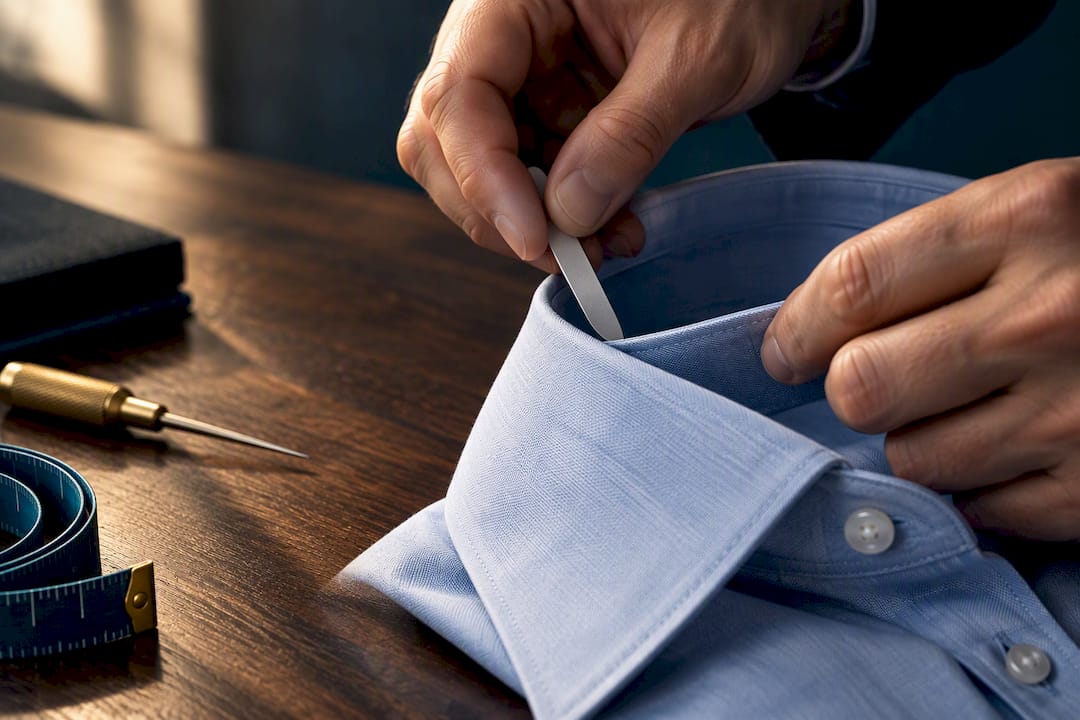
Insert stays with the rounded or blunt end first, sliding them fully into the pocket so the pointed end sits at the collar tip without pressing against the seam. Owning two or three pairs makes rotation easy when one set is drying or travelling with a different shirt.
- Remove removable stays before every wash or dry clean, since pressing with stays in place can leave a permanent impression and some metals can stain the fabric with rust.
- Wipe metal stays dry after removal and store them in a small case rather than loose in a drawer.
- Replace plastic stays once they show a visible bend, since they will not straighten back out.
Pro Tip: Keep a spare set of stays in your travel bag, since a missing pair is the fastest way to ruin an otherwise sharp collar. Our guide to fixing common shirt fit problems covers related checks worth running before you leave the house.
Tailoring perspective from RON & RICH on stays and collar construction
Collar fusing, roll and point length all interact with stay choice more than most buyers expect. A softer, less fused collar needs a firmer stay to hold its shape, while a heavily fused collar can carry a lighter plastic stay without losing its line. Construction details such as placket choice also shape how a collar sits against the body.
Bespoke shirting lets us build the collar pocket to the stay a client actually wears, rather than asking the stay to fit a standard pocket.
A bespoke shirt can be finished with sewn-in stays for a settled look, or the pocket can be sized precisely for those who prefer to rotate different types of stays.
When premium stays earn their keep and when simple ones do
For everyday shirts, stainless steel or brass gives reliable crispness without fuss. Save horn, mother-of-pearl or sterling silver for shirts you wear to matter, and keep plastic in the travel bag. Two rules stick: measure the pocket before buying, and always remove stays before a wash.
— Aaron Fan
Bespoke shirts can be built with the collar pocket and point length sized for the exact stays you prefer, plastic, metal or sewn-in, so the fit is right from the first wear.

Browse our custom tailored shirts or view pricing across our shirting and tailoring services to book a fitting.
Primary sources and further reading
Claims on materials, attachment methods and laundering care draw on the Wikipedia entry for collar stays, on collar finishing techniques, and on the Bespoke Unit collar stays guide for sizing detail.
Sources
FAQ
What are the different types of collar stays?
The main types are removable plastic, solid metal (stainless steel, brass or sterling silver), magnetic sets and sewn-in stays, with horn and mother-of-pearl as luxury options. Each varies in rigidity, weight and how it needs to be cared for.
What are the 6 types of collars for shirts?
Common shirt collar styles include the point collar, spread collar, button-down collar, club collar, cutaway collar and band collar. Our guide to choosing a dress shirt collar covers how point length affects fit and stay choice.
What are the different types of shirt collars?
Shirt collars vary mainly by point length and spread angle, ranging from narrow point collars to wide cutaway and spread styles. The construction, including fusing and roll, also shapes how a collar behaves day to day.
What shirts have collar stays?
Most tailored dress shirts with point or spread collars include a stay pocket, whether fitted with removable or sewn-in stays. Bespoke shirts can be built with the collar pocket sized to a client’s preferred stay material and length.
Are collar stays necessary?
Collar stays are not strictly necessary, but they help a collar hold its shape and resist curling through a day of wear. For shirts with softer or less fused collars, a stay makes a noticeable difference to how crisp the point stays.
,%20magnetic%20sets%20and%20sewn-in%20stays,%20with%20horn%20and%20mother-of-pearl%20as%20luxury%20alternati...)