What Is Sharkskin Suit Fabric, and Should You Wear It?
Sharkskin suit fabric is a two-tone twill suiting cloth woven from alternating light and dark yarns, most often worsted wool, that catches light in a subtle, shifting sheen. It carries no shark material of any kind. Done right, sharkskin gives you:
- A soft, low-key luster that reads as refined rather than flashy
- Strong wrinkle resistance for long days and long flights
- A clean drape that holds its shape through a full season of wear
Get the fiber content wrong, and you get the opposite of all three.
Key Takeaways
Worsted wool sharkskin outperforms synthetic-heavy versions on drape, breathability, and long-term wrinkle recovery, making fiber content the single most important factor in a bespoke purchase.
| Point | Details |
|---|---|
| Sharkskin defined | A pick-and-pick twill weave creates its signature two-tone diagonal shine, with no shark material involved. |
| Fiber content decides quality | Pure worsted wool or wool-mohair blends outperform wool-polyester mixes on breathability and long-term drape. |
| Judge the swatch by hand and light | A dry, subtle glow signals quality; a hard, metallic flash signals cheap synthetic content. |
| Match color to occasion | Medium grey works year-round, charcoal suits conservative offices, and navy leans formal evening wear. |
| Commission with Ron & Rich | Book a consultation to inspect sharkskin swatches in person and discuss canvas and finishing before cutting begins. |
Table of Contents
- Sharkskin Suit Fabric Composition and Weave
- Pure Wool Versus Blended and Synthetic Sharkskin
- How Sharkskin Looks on the Body and How to Style It
- Choosing Sharkskin for a Bespoke Suit: A Buyer’s Checklist
- Caring for a Sharkskin Suit So It Lasts
- Why Bespoke Construction Brings Out the Best in Sharkskin
- A Brief History of Sharkskin as a Suiting Cloth
- Sharkskin Compared to Other Suiting Fabrics
- Sharkskin Fabric Price Range and Value
- An Honest Take on Sharkskin’s Reputation
- Start Your Sharkskin Suit With a Fitting, Not a Guess
- Sources
Sharkskin Suit Fabric Composition and Weave
Sharkskin’s character comes from two decisions a mill makes before a single suit is cut: which fibers to spin, and how tightly to weave them. Worsted wool is the traditional backbone of the cloth, prized for its resilience and the way it takes a crisp twill line. Mills also work with silk for added sheen, mohair for a drier hand and extra bounce, and rayon or polyester when cost matters more than character. A choice not favoured by many top tailors.
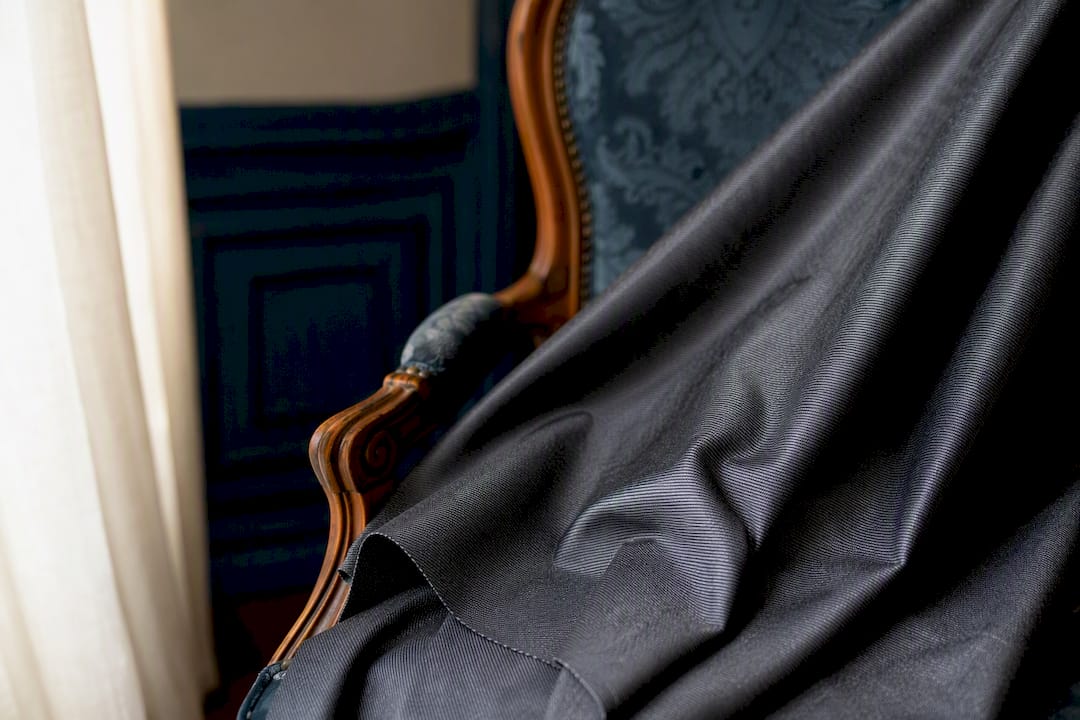
The construction technique that defines sharkskin is called pick-and-pick, a twill weave that alternates two yarn colors, typically a dark and a light shade of the same family, in a tight diagonal rib. Viewed up close, you see individual threads. Step back three feet, and those threads blend into a single color that seems to shift as you move, which is exactly the two-tone lustrous effect Wikipedia attributes to sharkskin’s origins.
Pro Tip: Tilt a fabric swatch under a window instead of overhead office lighting. Natural light reveals whether the sheen is a soft glow or a hard, synthetic flash, something fluorescent bulbs tend to flatten out.
Yarn twist matters as much as fiber choice. Highly twisted worsted yarns produce a drier, tighter hand and a subtler glow, while loosely twisted or synthetic-heavy yarns tend to throw off a shinier, almost metallic look that reads dated rather than refined. Weave density plays a supporting role too: a tighter pick count holds the two-tone pattern crisp instead of letting it blur into a flat, uniform shade.
- Worsted wool: the standard for structure, breathability, and long-term recovery
- Silk blends: add brightness without tipping into shine
- Mohair blends: contribute a dry crispness and extra durability
- Rayon or polyester blends: lower cost, but often at the expense of breathability and hand
Pure Wool Versus Blended and Synthetic Sharkskin
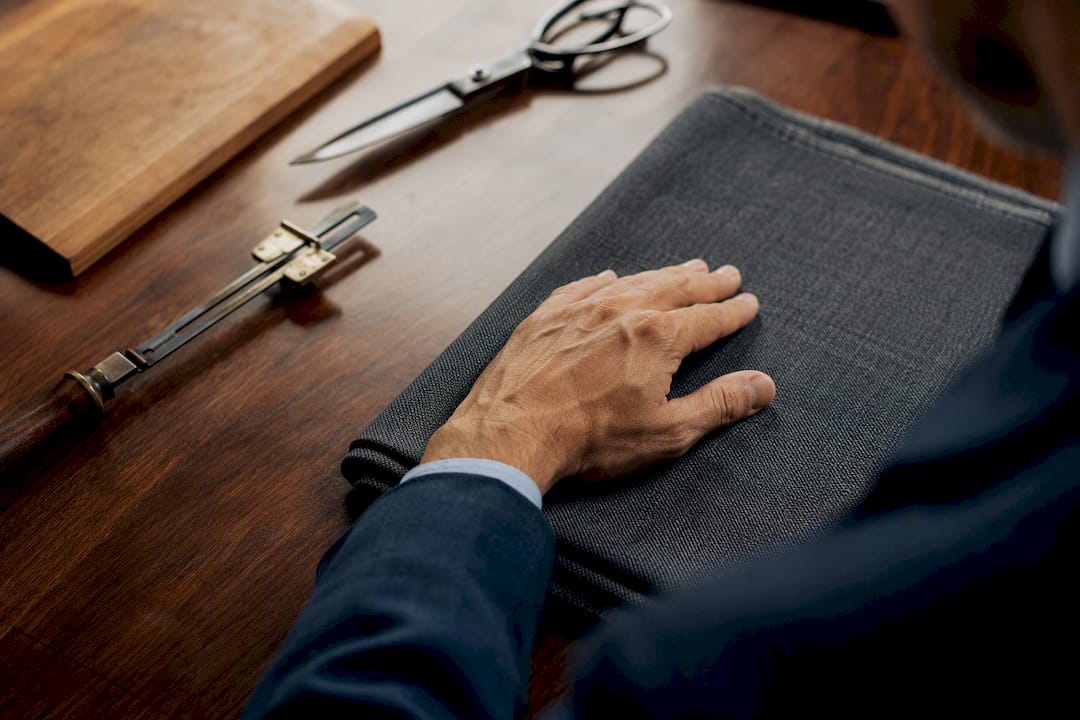
Not all sharkskin is created from the same cloth, and the differences show up the moment you run a swatch between your fingers. Pure worsted wool sharkskin, typically finished in the Super 100s to Super 130s range, delivers a dry, substantial hand with genuine wrinkle recovery and a drape that improves as the suit breaks in. This is the benchmark against which every blend gets measured.
Wool-mohair and wool-silk blends sit just below pure wool in versatility but often exceed it in specific traits. Mohair adds crunch and abrasion resistance, useful for a suit that gets worn hard. Silk adds brightness that pure wool can’t match on its own.
Where things get trickier is with wool-polyester and wool-rayon blends, sold widely in commercial suiting. These blends improve affordability and boost sheen, but they typically sacrifice breathability, and the sheen can tip into a synthetic flash that looks cheap under bright light rather than elegant.
- Choose pure worsted wool for a suit you expect to wear for a decade of business and formal occasions
- Accept a wool-mohair or wool-silk blend if you want extra texture or brightness without giving up wool’s core performance
- Consider a wool-poly blend only for a budget-conscious travel piece worn infrequently, never as your primary suit
Pro Tip: *Ask your tailor for the exact fiber percentage on the bolt label, not a verbal estimate.
How Sharkskin Looks on the Body and How to Style It
High-quality sharkskin should shift subtly as you move, never flash like a disco shirt. That distinction comes down to yarn twist and weave density rather than fiber shine, which is why two suits that look identical on a hanger can behave completely differently under office lighting. Cheaper synthetic-heavy versions often chase brightness instead of depth, and that shortcut is usually visible from across a boardroom.
- Medium grey works hardest of any sharkskin shade, moving comfortably between client meetings, weddings, and evening events across three seasons.
- Charcoal suits conservative offices and formal settings where you want authority without drawing attention to the fabric itself.
- Navy sharkskin reads more evening-appropriate and pairs naturally with black-tie-adjacent events, a category mills like Vitale Barberis Canonico have long positioned as classic day-into-evening suiting.
- Pair with solid or lightly textured shirts. Busy patterns compete with sharkskin’s own movement and muddy the two-tone effect.
- Keep ties matte or lightly textured. A shiny silk tie next to a lustrous sharkskin lapel doubles down on sheen and tips the whole look toward gaudy.
- Choose leather shoes with a low-key shine, not a patent finish, which pushes the outfit past business formal into territory sharkskin wasn’t built for.
Sharkskin can read as over-formal at casual Friday offices or outdoor daytime events. Save it for settings where a touch of polish is expected, not apologized for.
Choosing Sharkskin for a Bespoke Suit: A Buyer’s Checklist
Commissioning a sharkskin suit means judging a fabric swatch before it becomes forty hours of tailoring labor, so the questions you ask upfront matter more than they do with ready-to-wear.
Start with the swatch itself. Check the fiber content on the label, confirm the Super number if it’s worsted wool, and note the fabric weight; a midweight cloth in the Super 100s to 130s range suits three-season wear better than anything lighter or heavier for a first bespoke commission. Run the swatch between your fingers for hand feel, fold it to check recovery, and hold it against light to judge whether the sheen looks dry and subtle or hard and synthetic.
- Ask which mill wove the cloth and whether it’s a house staple or a seasonal run
- Ask what canvas construction the tailor recommends for sharkskin specifically
- Ask about pressing and finishing steps that preserve the two-tone weave over time
- Request to see the swatch under both daylight and indoor lighting before committing
Pro Tip: A swatch that feels scratchy or brittle in the store will only get worse with wear. That stiffness rarely softens the way people expect; it’s usually a sign of low-grade fiber or excessive synthetic content, not a “give it time” situation.
Red flags worth walking away from include an artificial, almost plastic shine, a papery hand that lacks any wool substance, and a weave where the two-tone pattern looks blurred rather than crisp. Our guide on choosing the right suit tailor walks through more of these evaluation questions in detail.
Caring for a Sharkskin Suit So It Lasts
Sharkskin rewards a light, consistent maintenance routine far more than aggressive cleaning.
- Brush after each wear with a natural-bristle clothes brush to lift dust from the weave before it settles into the fibers.
- Air the suit for 24 hours on a wide wooden hanger before returning it to the closet, letting the wool release moisture and odor naturally.
- Spot-treat stains immediately rather than waiting for a full dry-clean cycle, which wears down the weave faster than occasional spot cleaning.
- Limit professional pressing to two or three times per season; the wrinkle resistance that makes wool sharkskin travel-friendly also means it needs far less pressing than lesser cloths.
- Pack sharkskin suits folded along the natural seams for travel, and hang them immediately on arrival. A quick steam session, not a hot iron, restores the crease and revives the two-tone shine.
Why Bespoke Construction Brings Out the Best in Sharkskin
A well-chosen cloth still depends on the hands that cut and finish it. Canvas choice changes everything about how sharkskin drapes: a lighter, half canvas lets the fabric move naturally and shows off its two-tone shift as you walk, while a full canvas trades some of that suppleness for structure and longevity. Hand-finished lapels and armholes let the cloth sit the way it was woven to sit, rather than fighting a machine-pressed shape that flattens the weave’s texture over time.
Ron & Rich has built tailored garments since Richard Fan founded the house in 1979, and sharkskin has remained a staple recommendation for clients who want a suit with quiet presence rather than obvious shine.
- We walk clients through fiber content, Super number, and weave density on every swatch before cutting begins
- Our bespoke process includes fittings that account for how sharkskin’s drape settles over the first few wears
- Clients are welcome to inspect cloth samples in person and discuss canvas options during a consultation
A Brief History of Sharkskin as a Suiting Cloth
Sharkskin earned its name from resemblance, not material. The fabric’s faint, shifting iridescence recalled the texture of an actual shark’s skin, and the name stuck even though no shark fiber has ever been part of the cloth.
The fabric’s popularity peaked in the mid-20th century, when postwar tailoring embraced fabrics with movement and personality after years of wartime austerity in menswear. Sharkskin suits became associated with a specific kind of confident, buttoned-up professionalism, the sort worn by executives and public figures who wanted a suit that photographed well under studio lighting and office fluorescents alike. That era’s synthetic-heavy versions, chasing maximum shine for minimum cost, are largely responsible for sharkskin’s occasional reputation as flashy or dated.
The cloth never disappeared. It simply split into two paths: cheap synthetic sharkskin that chased the mid-century shine and faded from serious tailoring circles, and worsted wool sharkskin that mills continued refining for clients who wanted subtlety over spectacle. Today’s bespoke market draws almost entirely from the second path, favoring the dry, restrained luster that high-twist wool yarns produce over the harder shine of decades past. Understanding that split matters when you’re evaluating a swatch: the fabric you’re holding is either a descendant of the tasteful tradition or a throwback to the cheaper trend, and the fiber content usually tells you which.
Sharkskin Compared to Other Suiting Fabrics
Every suiting cloth trades one advantage for another, and sharkskin’s trade-offs are worth knowing before you commit a season’s suit budget to it.
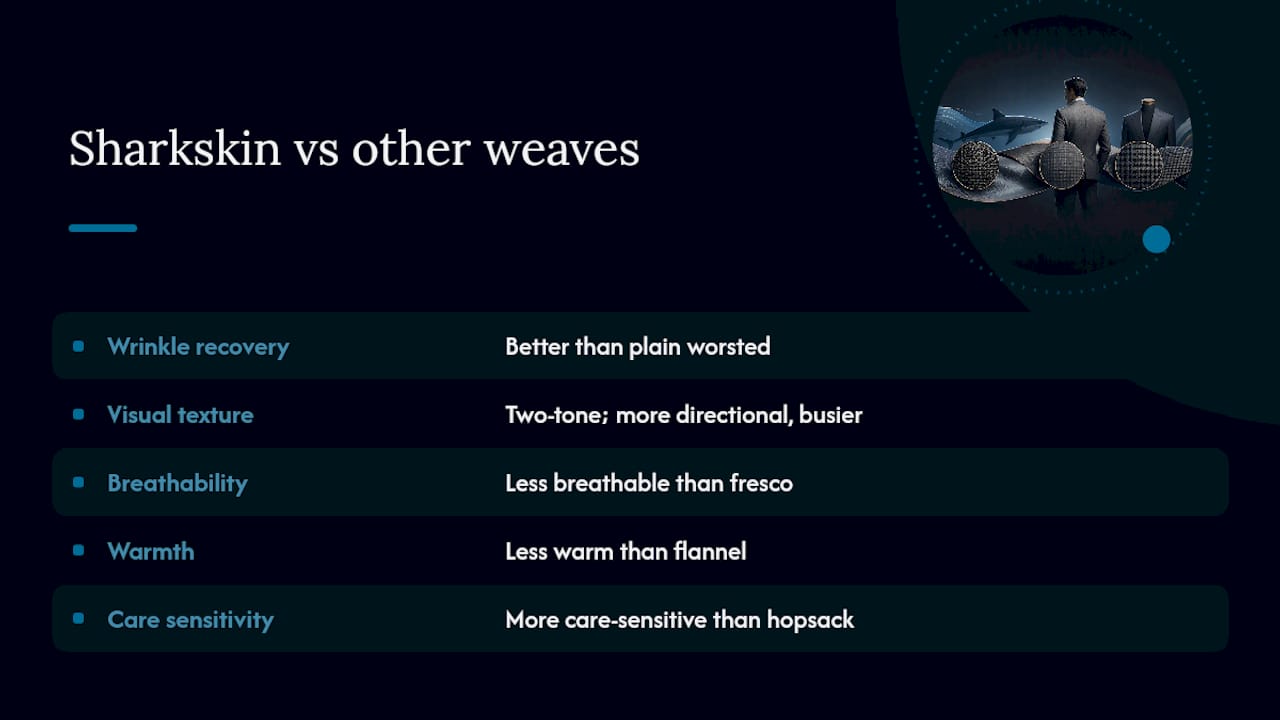
Against plain-weave worsted wool, sharkskin wins on visual interest and wrinkle recovery, thanks to its twill structure, but it can look busier under close inspection, which matters if you prefer an understated solid finish for the most conservative settings. Against flannel, sharkskin is the clear choice for warm climates and travel; flannel’s brushed nap traps heat that sharkskin’s tighter, smoother weave doesn’t. Against birdseye or nailhead weaves, which share sharkskin’s twill family, the difference comes down to pattern scale: sharkskin’s two-tone diagonal reads more directional and slightly more formal than the flatter, dot-like texture of birdseye.
Where sharkskin loses ground is against fresco and other open, high-twist tropical weaves in extreme heat and humidity. Fresco is engineered specifically to move more air, and in a climate where you’re wearing a suit for twelve hours in tropical conditions, that breathability edge is real. Sharkskin also demands more care in fiber selection than a fabric like hopsack, which is harder to get wrong because its loose, simple weave doesn’t rely on yarn twist and two-tone contrast the way sharkskin does.
The honest summary: sharkskin rewards buyers who do their homework on fiber content and punishes those who don’t, more than most other suiting cloths do.
Sharkskin Fabric Price Range and Value
Sharkskin spans a wide price band because fiber content and mill provenance vary so much. Entry-level wool-polyester and wool-rayon blends sit at the lower end of commercial suiting prices, a trade-off that generally suits an occasional-wear piece rather than a workhorse suit. Mid-range worsted wool sharkskin, often in the Super 100s, occupies mainstream bespoke pricing and represents the sweet spot for most first-time bespoke clients. Premium mill sharkskin in the Super 120s to 130s range, sometimes blended with silk or mohair, sits at the top of the bespoke price spectrum and reflects both finer yarn and more selective weaving.
Value here isn’t just about upfront cost. A pure worsted wool sharkskin suit, properly cared for, easily outlasts two or three cheaper blended suits bought at the same total spend, thanks to better recovery, better breathability, and a weave that doesn’t flatten with age. If you’re commissioning one sharkskin suit to wear for years rather than several to wear for months, the mid-to-premium wool range delivers more cost per wear than it appears to on the price tag alone.
An Honest Take on Sharkskin’s Reputation
Sharkskin has an image problem it doesn’t deserve. Most of the skepticism traces back to synthetic-heavy versions from decades past that chased shine at the expense of substance, and that reputation still shadows a fabric that, in worsted wool, is one of the more versatile choices in bespoke suiting today.
The conventional advice, “avoid shiny fabrics,” misses the actual distinction. Shine isn’t the problem. Cheap shine is the problem. High-twist worsted yarn produces a completely different visual result than a loosely spun synthetic yarn, even though both technically reflect light. Readers who dismiss sharkskin outright are usually reacting to a fabric they’ve never actually held next to a quality version.
What matters most when evaluating sharkskin isn’t the pattern name on a swatch book. It’s the fiber percentage, the Super number, and how the cloth feels between your fingers after thirty seconds, not thirty. Prioritize that over any general rule about “safe” versus “risky” suiting fabrics, and sharkskin stops being a gamble and starts being one of the more reliable choices in the room.
Ron
Start Your Sharkskin Suit With a Fitting, Not a Guess
Reading about fiber content and Super numbers only gets you so far. At some point, you need a swatch in your hand and a tailor who can tell you honestly whether a bolt of sharkskin suits your build, your climate, and how often you’ll actually wear it.

Ron & Rich has spent decades since 1979 fitting sharkskin and other worsted wools to individual clients rather than pushing off-the-rack sizing onto them. Where a retail rack forces you to choose between whatever sheen and weight happen to be in stock, a bespoke consultation lets you compare wool-mohair against pure Super 120s sharkskin side by side, under real light, before a single measurement is taken. That’s the practical advantage over guessing from a fabric swatch photo online. Browse our bespoke suit offerings and book a fitting to see sharkskin cloth samples in person before you commit.
Sources
- Sharkskin, Wikipedia
- Wool Sharkskin Fabric: The Complete Guide To This Classic Suiting Material | Clothing Digest
- Sharkskin fabric - Fabric Atlas
- Customtailors