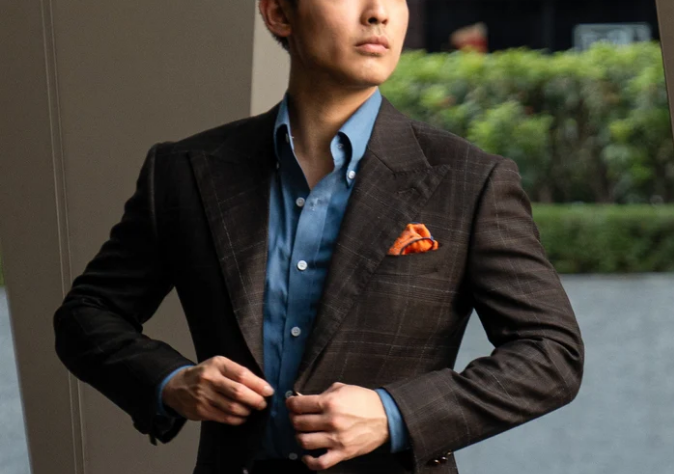
What Is a Pagoda Shoulder Suit? A Buyer's Guide
A pagoda shoulder suit is a jacket built around a concave, forward-pitched shoulder line that lifts and sculpts the top of the arm rather than padding it flat. If you want the real thing, you have three routes: bespoke, which gives a master tailor full control over the canvas and roped sleeve head and is the only reliable way to get an authentic result; made-to-measure, a reasonable compromise built on a factory pattern with adjustments; and ready-to-wear, which almost never carries a true pagoda shoulder because the shape depends on hand work no assembly line replicates well.
The rest of this guide walks through what actually creates that shape, how to tell it apart from other shoulder styles, who it flatters, and exactly what to ask a tailor before you commit.
Key Takeaways
A pagoda shoulder suit requires hand-shaped canvas, deliberate pad placement, and a roped sleeve head, which is why bespoke tailoring remains the most reliable way to get one done well.
| Point | Details |
|---|---|
| Definition | A pagoda shoulder features a concave line near the collarbone and a raised, roped sleeve head. |
| Bespoke wins on authenticity | Only a hand-drafted pattern gives a tailor full control over the forward pitch and canvas shaping. |
| RTW rarely delivers it | Ready-to-wear structured shoulders exist but almost never use true pagoda construction. |
| Ask the right questions | Confirm canvas method, pad placement, sleeve roping, and number of fittings before booking. |
| Ronandrich offers the bespoke route | Personalized fittings and traditional canvas construction support building an authentic pagoda shoulder. |
Table of Contents
- How Does the Pagoda Shoulder Compare to Other Styles?
- What Exactly Creates the Pagoda Shape?
- Where Did the Pagoda Shoulder Come From?
- Who Does the Pagoda Shoulder Actually Flatter?
- How Do Tailors Actually Build a Pagoda Shoulder?
- Bespoke, Made-to-Measure, or Ready-to-Wear?
- What Should You Ask Your Tailor Before You Commit?
- How Should You Care for This Style Over Time?
- How Does a Bespoke House Approach Building One?
- Why the Pagoda Shoulder Deserves More Respect Than It Gets
- Ready to Commission Your Own Pagoda Shoulder Suit
- Frequently Asked Questions
- Sources
How Does the Pagoda Shoulder Compare to Other Styles?
Every jacket shoulder tells you something about how it was built, and the pagoda is one of the more distinctive silhouettes you’ll encounter. Where a soft or natural shoulder follows the body’s own line with minimal padding, the pagoda shoulder does the opposite: it carves a visible hollow near the collarbone and then rises slightly at the sleeve head, giving the top of the arm a lifted, almost architectural finish.
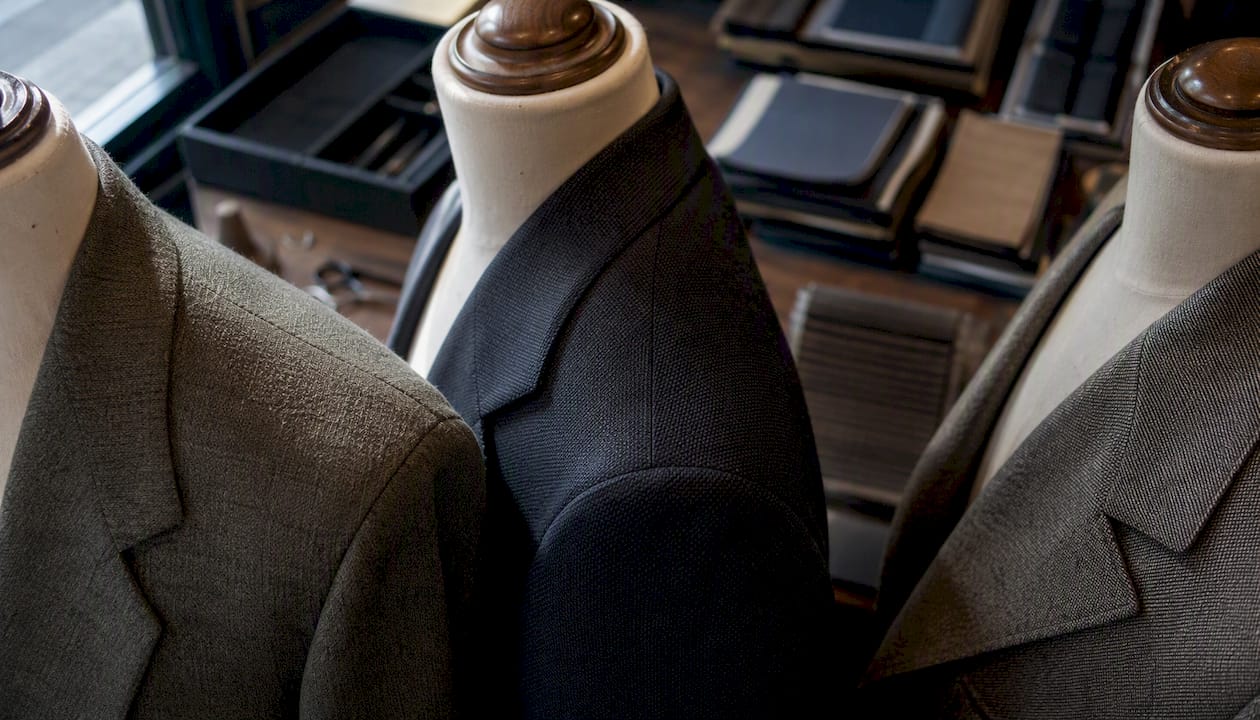
A roped shoulder, the kind associated with classic English tailoring, builds height through a firm ridge of fullness at the sleeve seam, but it stays relatively straight along the top of the shoulder itself. Neapolitan tailoring goes the other direction entirely, often skipping structure altogether for a soft, rumpled sleeve head (the spalla camicia, or shirt shoulder). The pagoda shoulder sits apart from both because the drama happens in the shoulder line itself, not just at the sleeve head. It emphasizes the concave hollow between the clavicle and the acromion, then typically finishes in a roped sleeve head, so the two techniques often appear together even though they are not the same thing.
Spotting one from across a room is easier than it sounds once you know what to look for:
- The shoulder seam dips inward near the neck before rising toward the sleeve, rather than running in a flat, straight line.
- The top of the sleeve head shows a distinct ridge or roll, similar to a roped shoulder but more pronounced.
- The overall silhouette reads taller and more angular through the upper chest, almost like the eaves of a pagoda roof, which is where the name comes from.
- The effect is most visible from a three-quarter angle, where the concave dip and the raised sleeve head create real depth.
Buyers weighing their options usually land on one of three practical categories, and it helps to see them side by side before deciding which fits your goals.
| Shoulder style | Where you’ll find it | Visual effect |
|---|---|---|
| Soft/natural shoulder | Common in most ready-to-wear jackets | Relaxed, close to the body’s own line |
| Roped/English shoulder | Popular in classic tailoring houses and better RTW | Firm, straight, with a raised ridge at the sleeve |
| Pagoda shoulder | Almost exclusively bespoke or couture | Concave dip near the neck, lifted sleeve head, sculpted look |
What Exactly Creates the Pagoda Shape?
The pagoda shoulder isn’t a fabric pattern or a design print. It’s a construction technique, and understanding the mechanics will make you a sharper client in any fitting room.
The effect starts with the shoulder’s forward pitch, meaning the angle at which the sleeve is set relative to the body. A tailor working toward a pagoda shape sets the sleeve so it curves slightly forward and rises just before the seam, creating the concave dip near the collarbone that defines the whole look. This isn’t something you can adjust much after the fact. It gets built into the pattern and the canvas from the very first cut.
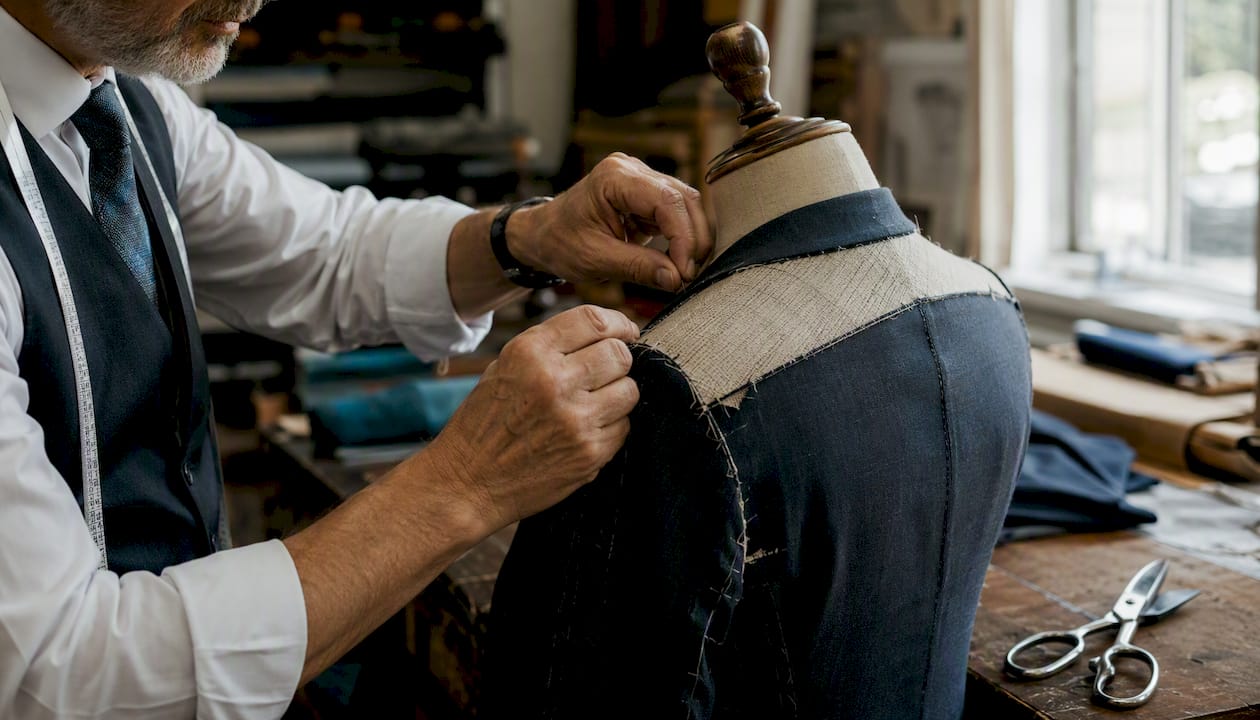
The shoulder can be shaped with a pad, without one, or with only minimal padding depending on the tailor’s method. What matters more than the pad itself is how the canvas is manipulated underneath it, since the canvas is what actually holds the concave line in place over years of wear. Pad-stitching, the small hand or machine stitches that fuse canvas layers together, controls how firmly that shape holds and how it moves with the wearer.
The shoulder reads differently depending on where you’re standing. From the front, you’ll mostly notice the neckline hollow. From the side, the forward pitch becomes obvious in how the sleeve sits ahead of the body’s natural line. From a three-quarter view, which is how most people actually perceive a jacket in real life, you get the full effect: the dip, the rise, and the sculpted ridge working together.
When you’re evaluating construction quality, whether in a fitting or just examining a garment, look for these elements:
- Canvas shaping: the hair canvas underneath should already carry a curve before any pad is attached, not rely on the pad alone.
- Pad placement: the shoulder pad, when used, should sit slightly forward, not flat across the top of the shoulder.
- Pad-stitching density: tighter, more deliberate stitching near the collarbone area signals careful hand work.
- Sleevehead shaping: look for a roped or slightly raised sleeve head rather than a flat seam.
- Ironwork: the shoulder should show evidence of shrinking and stretching with a tailor’s iron, which is how flat canvas becomes three-dimensional.
Pro Tip: During a fitting, raise your arm straight out to the side and then bring it back down slowly. A well-built pagoda shoulder will hold its shape through the movement and settle back into the same concave line. If the shoulder collapses, wrinkles badly, or loses its dip entirely, the canvas work underneath likely wasn’t shaped correctly.
Where Did the Pagoda Shoulder Come From?
The pagoda shoulder has real couture pedigree, and knowing its history gives you language to use when discussing it with a tailor or explaining the look to friends who assume every sharp shoulder is the same.
The most cited historical reference is Charles James’s 1955 “Pagoda” tunic suit, a garment that leaned into an exaggerated, sculptural shoulder line as a deliberate design statement rather than an incidental construction choice. Fashion historians point to it as an early, high-profile use of the pagoda silhouette in couture, and it remains a useful reference point because it shows the shape was never accidental. It was engineered.
A few things worth knowing as you talk about the style:
- Menswear tailoring adopted the technique more quietly than womenswear couture, largely through bespoke houses passing the method down through apprenticeships rather than publicizing it.
- Contemporary designers occasionally chase a similar visual lift through gusseted or built-up shoulder construction, though the underlying method usually differs from traditional canvas and pad shaping.
- You’ll also see the term “pagoda sleeve” used in womenswear, referring to a tiered or flared sleeve shape on dresses like the Silicone Round Neck Gown Hairdresser Cape Adjustable, which shares similar sleeve design inspiration but has no construction relationship to the pagoda shoulder on a jacket. It has no construction relationship to the pagoda shoulder on a jacket, and the naming overlap trips up a lot of first-time buyers searching online.
- Structured shoulder jackets show up periodically on runways and in higher-end ready-to-wear collections, but a true pagoda remains rare outside bespoke work because of the hand construction it demands.
Who Does the Pagoda Shoulder Actually Flatter?
Not every build benefits equally from this silhouette, and knowing where you fall will save you a disappointing fitting.
Men with naturally sloped or narrow shoulders often see the biggest visual payoff, since the concave line and raised sleeve head add width and lift exactly where a soft shoulder would leave things looking narrow. Broader-shouldered men can still wear a pagoda shoulder well, but the effect reads more subtly since there’s less room to add visual height. If your priority is a cleaner, closer line rather than added structure, a soft or roped shoulder will usually serve you better.
Styling a pagoda-shoulder jacket well comes down to a few consistent rules:
- Lapels: peak lapels tend to complement the sculpted shoulder line particularly well, since both elements share a sense of deliberate architecture; notch lapels work fine but read a touch more understated against the shoulder’s drama.
- Jacket length: keep proportions balanced with a standard-to-slightly-longer jacket length. A very cropped cut can make the shoulder look disconnected from the rest of the silhouette.
- Trouser balance: pair with trousers that have a clean, tapered line rather than heavy pleats, which can compete with the shoulder for visual attention.
- Collar and shirt choice: a spread or cutaway collar tends to sit well against the raised sleeve head and open neckline created by the shoulder’s dip.
For occasions, a pagoda shoulder suit reads naturally formal and works well for weddings, black-tie adjacent events, or any setting where you want the jacket to feel considered rather than incidental. It’s less suited to genuinely casual settings, where the structure can feel like overkill against a t-shirt or open collar.
How Do Tailors Actually Build a Pagoda Shoulder?
The construction sequence is where the real craftsmanship lives, and it’s worth understanding step by step if you’re going to commission one.
- Canvas shaping and basting. The tailor first shapes the hair canvas, often working in reverse darts or small wedge cuts near the shoulder point, then bastes it loosely to the jacket front to check the fit before permanent stitching begins.
- Pad shaping and placement. If a pad is used, it gets trimmed and positioned slightly forward, following the concave line already established in the canvas rather than sitting flat.
- Pad-stitching and ironwork. Fine hand or machine stitching fuses the canvas layers, and the tailor uses a hot iron to shrink and stretch sections of cloth, coaxing the flat canvas into a three-dimensional curve.
- Sleeve-head setting and roping. The sleeve gets set into the armhole with extra fullness concentrated at the top, which the tailor then works into a raised, roped edge by hand.
Getting from flat cloth to a finished pagoda shoulder is genuinely one of the more complex sequences in tailoring, which is part of why so few ready-to-wear brands attempt it.
Materials matter as much as method here. Hair canvas gives the shoulder its structural memory, holding a shape over years rather than collapsing after a few wears. Horsehair, often blended into the canvas or used in the sleeve head, adds firmness without excess bulk. Felt and wadding sometimes reinforce the pad itself, giving the tailor finer control over how sharply the shoulder rises.
When you’re judging the finished product, a few signs separate skilled work from a rushed attempt:
- The shoulder should feel structured but not rigid. Press your palm against it and it should give slightly, not feel like cardboard.
- The concave line should be visible even when the jacket is on a hanger, not just when worn.
- There should be no visible puckering or pulling at the point where the sleeve meets the shoulder seam.
- Movement should feel natural. Raising your arm shouldn’t drag the whole jacket front upward.
Bespoke, Made-to-Measure, or Ready-to-Wear?
Once you understand the construction, the buying decision gets a lot clearer. Each route makes sense for a different kind of buyer, and being honest about which one fits your situation will save you money and disappointment.
Bespoke starts from a pattern drafted specifically for your body, which means the tailor has full control over the forward pitch, canvas shaping, and sleeve-head roping from the very first stage. This is the only route that reliably produces an authentic pagoda shoulder, since the shape depends on decisions made at the pattern and canvas level that a pre-existing block simply can’t accommodate. Expect a timeline of several weeks to a few months depending on the tailor’s schedule and the number of fittings involved, with pricing that reflects the hand labor involved in canvas and pad work.
Made-to-measure starts from an existing pattern block that gets adjusted to your measurements. It’s faster and generally less costly than full bespoke, and a skilled tailor can sometimes push the shoulder construction closer to a true pagoda through careful canvas work, though the base pattern limits how much can change. Consider this route if budget or timeline constraints rule out bespoke but you still want meaningful input into the shoulder shape.
Ready-to-wear almost never delivers a genuine pagoda shoulder. Even high-end designer jackets that feature pronounced structured shoulders typically rely on different construction methods than the traditional canvas and pad approach the pagoda shoulder requires. If you find an RTW piece that comes close, treat it as a lucky exception rather than a dependable source.
| Route | Best for | What to expect |
|---|---|---|
| Bespoke | Buyers who want an authentic, precisely fitted pagoda shoulder | Full pattern draft, multiple fittings, longest timeline, highest cost |
| Made-to-measure | Buyers balancing budget and customization | Adjusted existing pattern, fewer fittings, moderate timeline and cost |
| Ready-to-wear | Buyers open to an approximate structured look | Fixed pattern, no fittings, lowest cost, true pagoda shoulder unlikely |
What Should You Ask Your Tailor Before You Commit?
Walking into a consultation with the right questions separates buyers who get what they wanted from buyers who end up with a generic structured shoulder and a disappointing bill.
Ask directly about the forward pitch and how the tailor plans to set it for your particular posture, since this varies from person to person and affects the whole line of the jacket. Ask what canvas they use and whether they shape it with reverse darts or wedge cuts before basting. Ask whether they use a pad at all, and if so, how it’s trimmed and positioned. Ask specifically about the sleeve head and whether they rope it by hand.
A fitting checklist will keep you focused during each stage:
- First baste: check that the shoulder line already shows the beginning of the concave dip, even in this rough stage.
- Second baste: look for the sleeve head starting to take shape and confirm the forward pitch feels correct when you move your arm.
- Final fitting: examine the finished shoulder from front, side, and three-quarter angles, and test movement by reaching forward and to the side.
Watch for a few red flags along the way. A tailor who seems unfamiliar with the term “pagoda shoulder” or describes it as identical to a standard structured shoulder likely hasn’t built one before. Rushing straight to a final fitting with only one baste in between is a sign corners are being cut. And if the shoulder pad gets attached before the canvas has been properly shaped and basted to the front, the final result usually won’t hold its line.
How Should You Care for This Style Over Time?
The canvas and pad work that gives a pagoda shoulder its shape is also what makes it more sensitive to poor care than a standard soft shoulder.
Hang the jacket on a wide, contoured wooden hanger every time you take it off, since a wire or narrow hanger will slowly distort the shoulder’s carefully built curve. Brush the wool regularly to keep dust and debris from settling into the weave, and limit pressing to occasional touch ups rather than routine ironing, since heat and pressure can flatten the shoulder’s dimension if handled carelessly.
Alterations get more complicated with this shoulder style than with a standard build. Let-outs through the body or trouser adjustments are usually straightforward, but any alteration involving the sleeve or shoulder seam risks disturbing the pitch and roping that took real skill to establish. Re-setting a sleeve on a pagoda shoulder jacket is a delicate job, one that calls for a tailor who understands the original construction rather than a general alterations shop.
When something feels off with the shoulder over time, a loose thread in the pad-stitching, a slight collapse in the concave line, take it back to a tailor who works in structured construction rather than a generic dry cleaner offering alteration services on the side. The difference in skill shows up quickly in how well the repair holds.
How Does a Bespoke House Approach Building One?
Seeing the process laid out from consultation to finished garment makes the abstract construction details feel a lot more concrete.
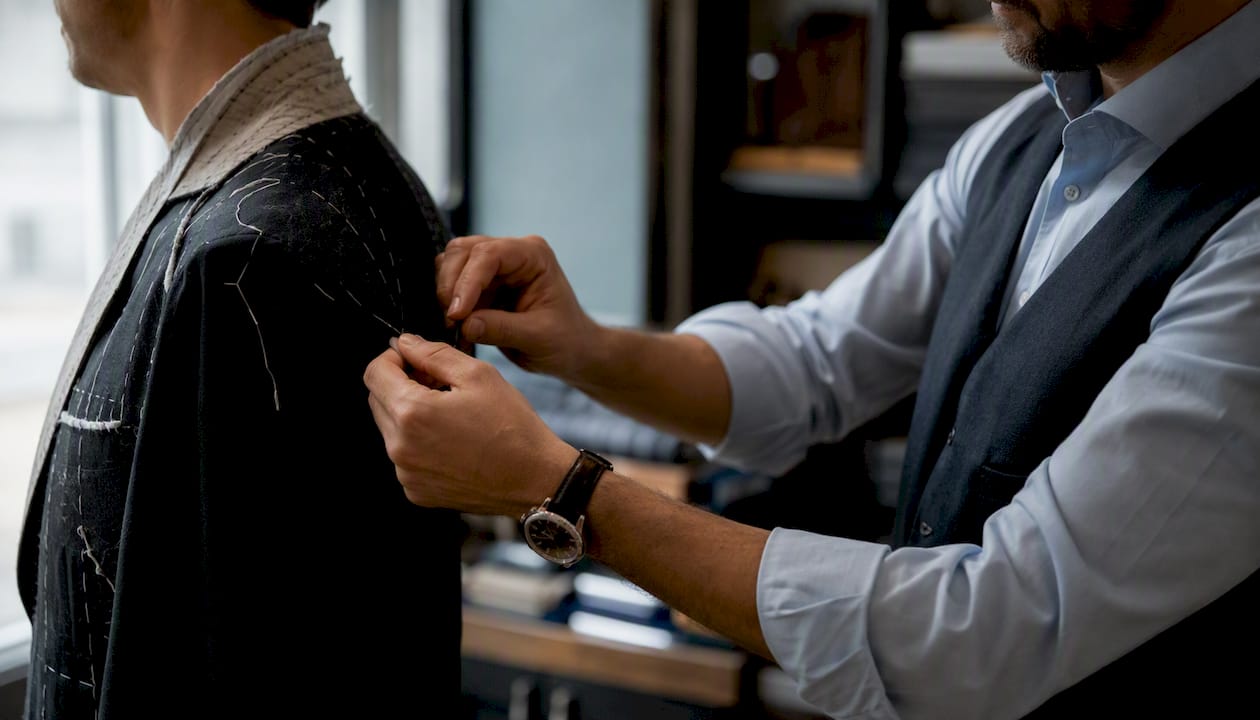
A typical bespoke workflow starts with an initial consultation, where the tailor discusses your body, posture, and the specific look you’re after, then takes detailed measurements that inform the pattern draft. From there, the tailor hand-drafts a pattern built around your proportions, incorporating the forward pitch and shoulder shaping that a pagoda silhouette requires from the outset.
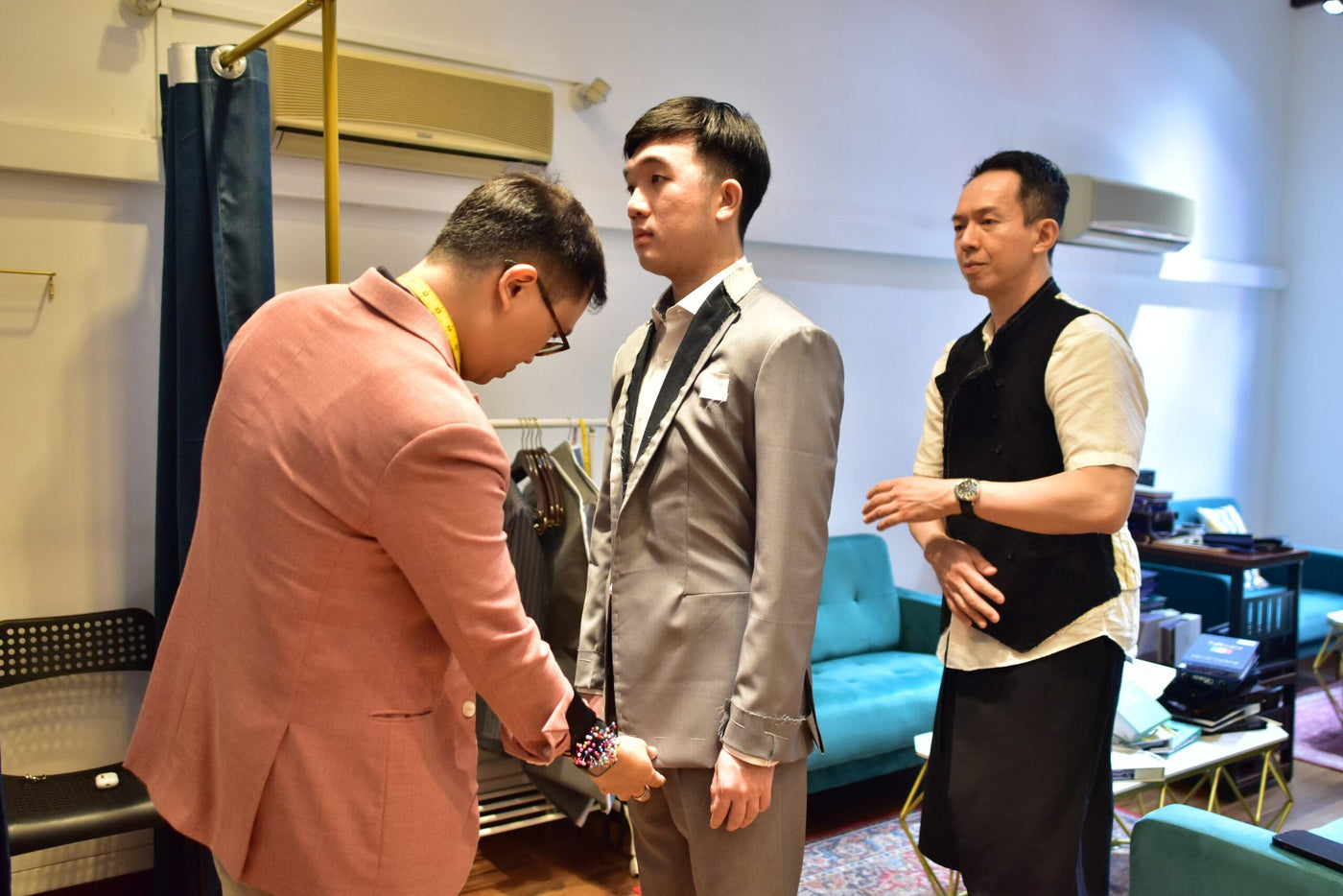
The first fitting uses a basted, unfinished version of the jacket, letting the tailor check the shoulder line, canvas shape, and overall fit before committing to permanent stitching. A second fitting typically follows once adjustments are made, focusing closely on the sleeve head and how the roping is developing. Final finishing includes the pad-stitching, pressing, and last details that lock the shape in place.
Caption: The canvas and pad layers, visible before the outer cloth is set, show how the concave shoulder line takes shape long before a client ever tries the jacket on.
Caption: A basted fitting in progress, where the tailor checks the forward pitch and sleeve position against the client’s actual posture.
Throughout this process, personalized fittings and traditional canvas construction are what make a technique this demanding achievable at all. A pattern drafted on paper only gets you partway there. The rest comes from adjustments made in person, against a real body, over multiple sessions.
Pro Tip: Comfort and shape aren’t opposing goals, even though they can feel that way in a fitting. A well-built pagoda shoulder should let you move your arm freely without the jacket front dragging upward. If a fitting leaves you feeling restricted, say so immediately. A skilled tailor can usually resolve it by adjusting the canvas shaping rather than compromising the shoulder’s line.
Why the Pagoda Shoulder Deserves More Respect Than It Gets
Most style guides treat the pagoda shoulder as a curiosity, a niche detail for tailoring obsessives rather than something a regular buyer should seriously consider. That undersells it. The shoulder is one of the few places on a jacket where construction and appearance are the same thing. You cannot fake a pagoda shoulder with a stiffer pad or a sharper cut. It either comes from real canvas work and hand-set sleeves, or it doesn’t exist at all.
What people underestimate is how much the shoulder telegraphs the quality of everything else in the garment. A tailor who can execute a forward pitch and a roped sleeve head correctly has almost certainly gotten the rest of the jacket right too, because the skill required for one carries over to the other. I’d argue the pagoda shoulder works as a useful filter when you’re evaluating a tailor for the first time. Ask about it, watch how they respond, and you’ll learn more about their actual capability than any portfolio photo will tell you. That kind of hands-on understanding of canvas and pad work is exactly what turns a good-looking jacket into one that still holds its shape after years of wear, and it’s the difference clients feel most in how a suit moves and sits on their own frame.
Ready to Commission Your Own Pagoda Shoulder Suit
If you’ve read this far, you already know why ready-to-wear rarely gets you an authentic pagoda shoulder and why made-to-measure only gets you partway there. Ronandrich builds every jacket from a hand-drafted pattern and traditional canvas construction, which means the forward pitch, pad placement, and roped sleeve head this shoulder style demands are handled the way they’re supposed to be, in person, across multiple fittings, not approximated from a factory block.
Booking an initial consultation is straightforward: you’ll sit down with a tailor to discuss your build, the look you want, and the occasions you’re dressing for, then move into measurements and a pattern draft built specifically around a pagoda shoulder if that’s the silhouette you’re after. From there, expect the basted and final fittings described earlier in this guide, each one refining the shoulder’s shape until it holds correctly on your own frame. Explore the full range of suits and jackets Ronandrich offers, or head straight to the bespoke service page to schedule your first consultation and start the process.
Frequently Asked Questions
What is a pagoda shoulder suit exactly? It’s a suit jacket built with a concave shoulder line near the collarbone that rises into a raised, often roped sleeve head, creating a lifted, sculpted look rather than a flat or padded one.
Is a pagoda shoulder the same as a pagoda sleeve? No. A pagoda sleeve refers to a tiered or flared sleeve design on dresses, while a pagoda shoulder is a jacket tailoring technique focused on the shoulder line itself. The names sound similar but describe completely different garment features.
Can I find a pagoda shoulder suit ready-to-wear? Rarely. The shape depends on hand-shaped canvas and precise pad work that mass production doesn’t replicate well, so bespoke or made-to-measure remain the more dependable routes.
How long does it take to commission a pagoda shoulder suit? Timelines vary by tailor and the number of fittings required, but bespoke work involving this level of shoulder construction typically takes a significant amount of time from initial consultation to final delivery.
Does a pagoda shoulder suit require special care? Yes. Use a wide, contoured hanger, limit ironing to occasional touch ups, and take any sleeve or shoulder alterations to a tailor experienced with structured construction rather than a general alterations shop.
Sources
- “Pagoda” tunic suit by Charles James, 1955 - All That Glitters…
- Pagoda: The Other Natural Shoulder – Bond Suits
- More on Pagoda Shoulders – Tuttofatto3D.com – Tuttofattoamano