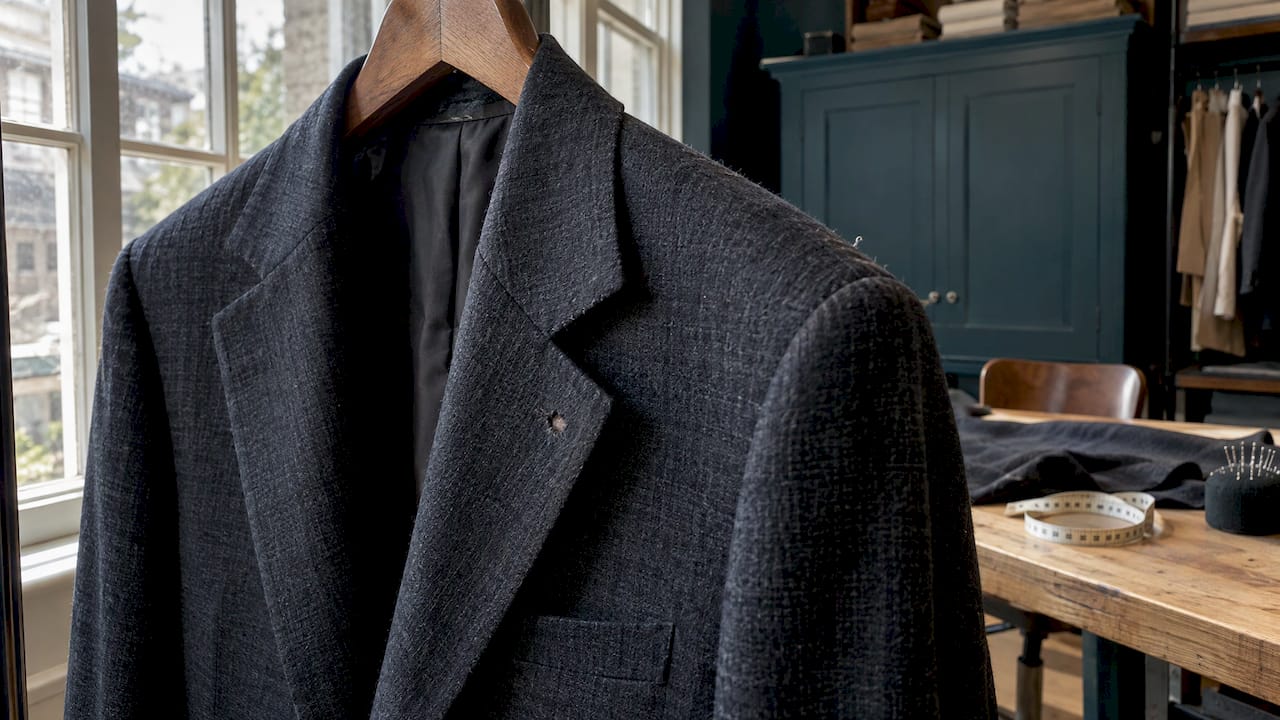
Moth Holes in Suits: Identify, Mend and Prevent Them
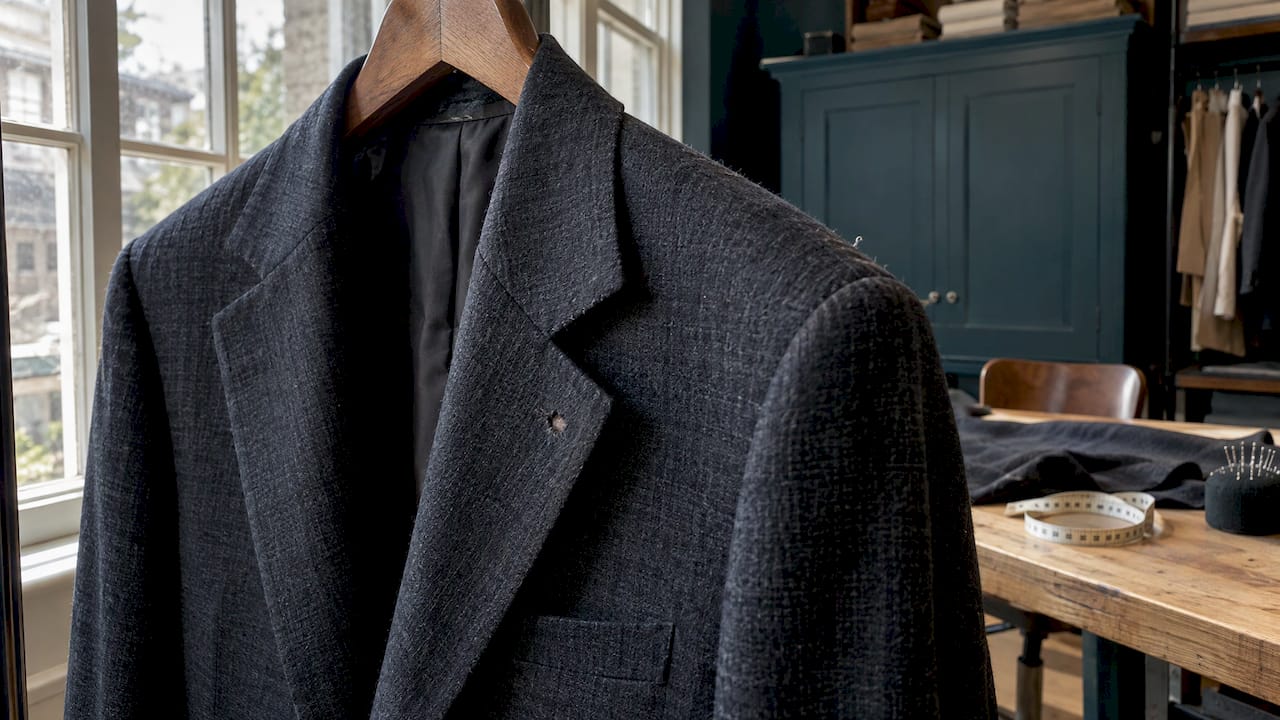
Moth holes in a suit are small, irregular holes with clean edges, and they are made by larvae, not by the adult moths you see fluttering about. The sequence that protects your suit is simple: confirm the cause, treat the garment so no eggs or larvae remain, have the damage assessed by a specialist in mending, and then store the suit so it does not happen again. Where the damage is too visible or too widespread to disguise, a new bespoke suit is a fair and lasting answer.
This guide covers each stage in the order you will need it, with the evidence behind every step.
TL;DR
- Moth holes are small, irregular and scattered, often near the collar or lapels. Friction holes appear where the cloth rubs, such as near the belt or the elbows.
- One hole usually means more are coming, so treat the suit before you mend it. Mending an untreated garment lets the problem return.
- Whether a mend is nearly invisible depends on the fabric, the size of the hole and where it sits. Textured wools hide repairs best.
- Clean, airtight storage and regular care deny the larvae the wool they feed on. See our guides on suit storage and dry cleaning.
- If the damage sits on a lapel edge or spreads across the cloth, a new suit made to your measurements is a sound investment.
Table of Contents
- How to recognise moth holes in a wool suit
- Why moths target wool suits
- Step one: treat the suit before you mend it
- Step two: can the hole be mended?
- What not to do at home
- When the suit is beyond mending
- Keep moths away for good
- A tailor’s perspective
- FAQ
- Sources
How to recognise moth holes in a wool suit
Moth damage tends to look like small, irregular holes with clean edges that cut across the weave of the cloth, often around the collar or lapels, according to a master tailor’s guide to mending wool suits. You may first notice only a thin patch or a pinprick of light when you hold the jacket up to a window.
The pattern matters as much as the hole. Clothes moths feed wherever the female happened to lay her eggs, so unlike friction damage they do not return to the same spot again and again, as Total Wardrobe Care explains. Holes scattered across a jacket, a waistcoat and a pair of trousers point to moths.
Friction wear looks different
Friction holes form where the cloth rubs repeatedly: around the belt buckle, near the navel, at the trouser crotch or on jacket elbows. The fabric first thins or pills and only then breaks. If your hole sits in one of those places and the surrounding cloth looks shiny or worn, you are most likely looking at wear and not moths.
Look for the evidence larvae leave behind
It is not the adult moth that does the harm. As entomologist Jennifer Brumfield told Consumer Reports, the worm does the damage, and a moth-related hole usually comes with gritty fecal material and cocoon material that looks like fibrous tubes or spun webbing.
A closer look helps. Insects Limited notes that webbing clothes moth frass is bound by silk fibres and forms lumpy feeding tunnels, while casemaking clothes moth frass is loose pellets that fall away when the garment is moved. A hole with no dirt or frass around it, on a garment that has not been recently cleaned, may have another cause.
A quick inspection checklist:
- Hold the jacket to bright light and look for pinpricks, especially at the collar, lapels and under the collar.
- Check pocket interiors, seams and the folds of the waistcoat, where larvae hide in the dark.
- Brush a few folds over a sheet of white paper to see whether gritty pellets fall out.
- Note whether holes are scattered or concentrated on a rubbing point.
Why moths target wool suits
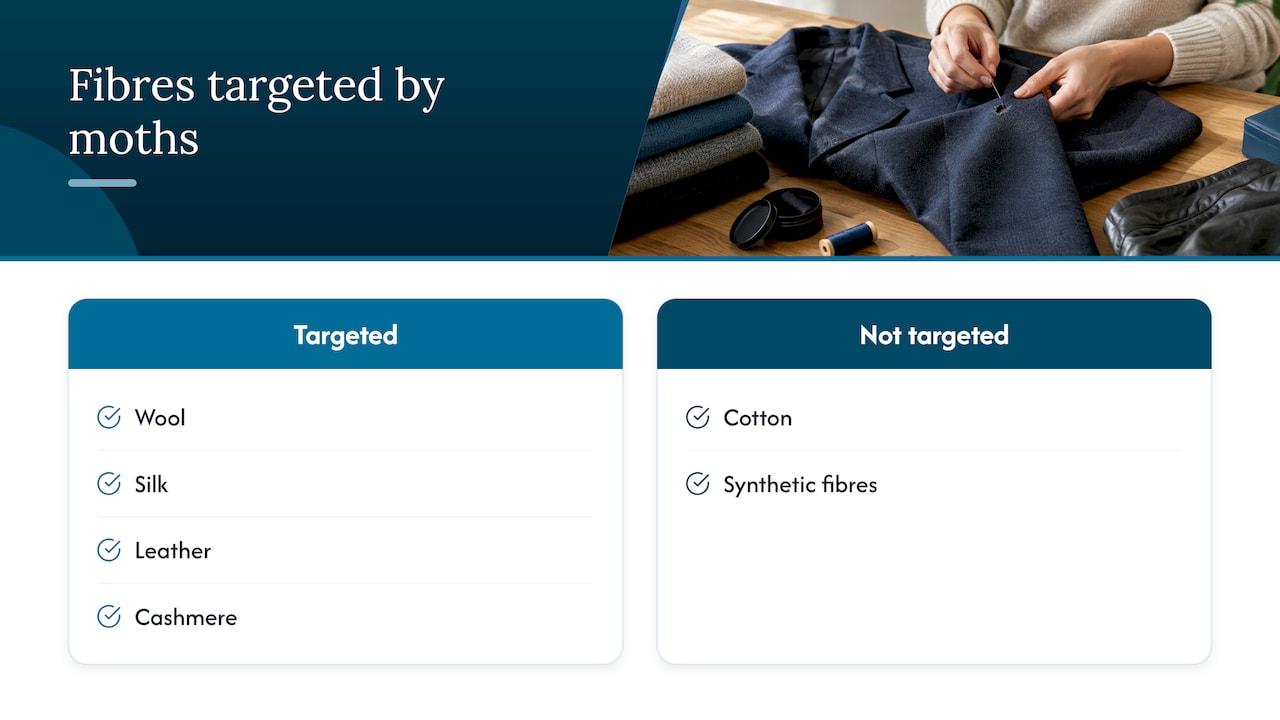
Clothes moths are drawn to animal-derived fibres such as wool, silk and leather because these contain keratin. Cotton and synthetic fibres do not, so they are not targeted, as Total Wardrobe Care notes. The same applies to cashmere and alpaca, which is why a fine wool suit or knit is a natural target.
There is a practical lesson here. A suit that has been worn, then hung away without cleaning, offers skin cells, body oils and traces of food or perspiration alongside the wool. A dark wardrobe that is rarely opened gives larvae the quiet they need.
One hole is rarely the whole story. A single female can lay up to 100 eggs in the deep pile of a suit, according to Fitting Room Alterations, so a single visible hole often signals an established colony. Where you find one hole, you will likely find others, as R. Hanauer’s guide to suit repair also observes.
Step one: treat the suit before you mend it
Mending comes second. Before any repair, the garment should be treated to eliminate eggs and larvae in the fibres, because skipping this step can let the infestation return and spread, as Alex’s Dry Cleaning explains.
Consumer Reports sets out a clear sequence for damage that is not extreme:
- Brush off eggs, larvae, frass and casings.
- Eliminate moths in every life stage. The methods it lists are dry cleaning, where heat and solvents kill remaining eggs and larvae, freezing at below 20°F (about minus 29°C) for a week, or heating above 120°F (about 49°C) for at least 30 minutes.
For a tailored suit, professional dry cleaning is the sensible route of the three. A canvassed jacket has a structure of interlinings and padding that does not take kindly to improvised oven or freezer treatment. Selvane notes that temperatures above 50°C held for at least 30 minutes are generally considered lethal to clothes moths, and that professional cleaning manages temperature and process carefully to protect the garment’s structure.
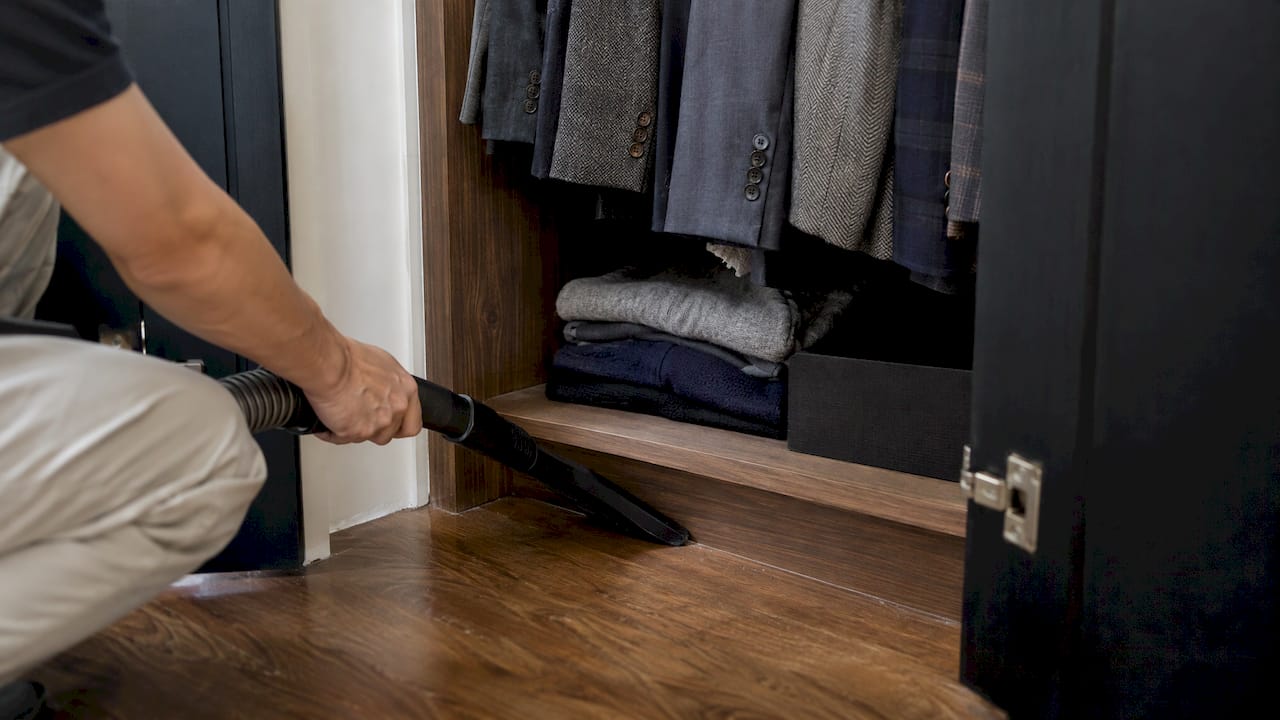
Treat everything stored beside the affected suit too: other jackets, knits, scarves and blankets in the same wardrobe. Vacuum the wardrobe floor, shelves and corners, and wipe the surfaces down.
A word on the usual folk remedies. According to Consumer Reports, cedar, lavender, cloves, vinegar and black pepper do not deter moths. Mothballs do work, but because they are highly toxic chemicals with noxious vapours, they are best kept away from children and pets and from the clothes you wear against your skin. Cleaning and sealed storage are the more dependable and gentler route for a good suit.
Step two: can the hole be mended?
In most cases, yes. Moth holes in suits can usually be repaired, as R. Hanauer notes. Tiny holes in wool can sometimes be closed by gently pulling the fabric around the hole, while medium and large holes are best left to professionals.
Specialist menders may use one of three techniques:
- Felting: a wool-felting needle blends loose fibres into the hole.
- Darning: new threads are interwoven across the gap.
- Patching: matching cloth is placed behind or over the damage.
For large holes, reweaving is the best option for a seamless result, according to the same source. Reweaving is a specialist craft, so you should look for a mender who works on tailored garments in particular.
What decides how invisible the mend will be
Three factors recur in professional advice. Tailoes explains that textured wools hide a mend more easily than smooth, flat or shiny fabrics, that small holes blend in better than large ones, and that damage on a flat, less visible area disappears more readily than damage on a lapel edge, cuff or seam.
Putting that into practice:
| Situation | Likelihood of a discreet mend |
|---|---|
| One small hole in a textured grey flannel, lower back of the jacket | High |
| A few small holes in a mid-weight worsted, spread apart | Good |
| Several holes close together | Lower, as AD Stitch observes, multiple nearby holes show more |
| A hole on a lapel edge or in a smooth, light-coloured fabric | Lower, the mend may remain faintly visible |
The honest framing is that “invisible” is a spectrum. Reputable menders assess the garment before they promise anything, and Margaret’s Cleaners adds that hole size, fabric weight, pattern (checks, stripes, textured finishes), colour and the condition of the surrounding fibres all affect the outcome.
Do not wait
Continuing to wear a suit with a hole can stress the surrounding fibres and enlarge the damage, according to Cameo by Copeland Cleaners. Hang the suit away from the rest of your wardrobe, treat it, and have the damage assessed promptly.
Costs in Singapore
Singapore has no single going rate for moth hole repair. Prices differ by technique, garment and the number of holes, and quotes are normally given after the mender has seen the cloth. Simple mending jobs at neighbourhood alteration shops can cost a few dollars, whereas reweaving of tailored cloth is skilled work and is priced accordingly. Ask for a quote per hole and for an honest view of how visible the result will be before you agree.
What not to do at home
Well-meant fixes can make professional restoration harder. AD Stitch warns that visible stitching, mismatched thread, iron-on patches and heavy fusible products can distort the fabric or leave a stiff mark around the damage. On tailored garments, surface stitching also breaks the clean line of the cloth.
- Do not sew across the hole with ordinary thread.
- Do not iron on a patch, particularly on the jacket front or lapel.
- Do not wash a tailored jacket in a machine to “kill the moths”.
- Do not put the treated suit back in the same unwashed wardrobe.
When the suit is beyond mending
Sometimes the sensible decision is to retire the suit. Holes on a lapel edge, a cuff or a seam, several holes close together, or damage in smooth fine cloth are the cases where a mend will be seen. A suit you wear to client meetings or a wedding should not carry a visible patch.
This is where we can help. At Ron & Rich, we make suits, sports jackets, tuxedos, trousers, shirts and waistcoats to your own measurements, using traditional tailoring techniques with a focus on fit and modern design. Our suits start from $2,170, sports jackets from $1,790, trousers from $290 and shirts from $199. You can see the full list on our pricing page, and the bespoke tailoring process shows what happens from first consultation to final fitting.

If you would like a replacement that fits as well as the suit you are retiring, browse our bespoke suits and jackets. We use premium fabrics suited to Singapore’s climate.
Keep moths away for good
The most effective approach to protecting wool is multi-faceted: meticulous cleaning plus hermetic, airtight storage, which denies the larvae the keratin-rich surroundings they need, according to Selvane. Singapore’s National Heritage Board also names the clothes moth as a common pest for collections in its Collections Care Guide, recommending integrated pest management: environmental control combined with monitoring by sticky traps.
Adapted for a personal wardrobe, that gives you a routine:
- Clean before storing. Spot-clean stains promptly (our guide to spot cleaning a suit explains why speed matters) and have the suit dry cleaned before it goes away for a long period. We recommend dry cleaning every three to four months for regularly worn suits, as set out in our dry cleaning guide.
- Store it properly. Use a breathable garment bag and a shaped hanger, in a closed wardrobe. Our suit storage guide covers how to keep a bespoke jacket in shape.
- Seal off-season wool. Knits and seldom-worn suits are best kept in airtight containers or bags once clean.
- Monitor. Place sticky traps in the wardrobe, as the heritage guidance suggests, and inspect the collar and pockets whenever you take a suit out.
- Rotate. Suits that are worn and aired regularly are disturbed often, which gives larvae less of the quiet they prefer.
- Pack with care when travelling. Our travel suit care guide shows how to protect shape and cloth on the road.
A tailor’s perspective
We have spent decades handling fine wool, and nothing disappoints a client more than finding a small hole in a suit they love. Our house was founded in 1979 by master tailor Richard Fan, and the craft taught us to treat cloth as something to be looked after, not merely worn.
Our view is simple. Moths are a question of routine, not of luck. A suit that is cleaned before it is stored, hung on a proper hanger and given room to breathe is far less inviting to larvae than one pushed to the back of a crowded wardrobe.
A bespoke suit is cut for one person, with the canvas, the lapel roll and the shoulder shaped to fit. That is why we want it to last, and why we are glad to see clients return for a new commission when an older suit has served its time. A new suit made to your measurements, in a fabric chosen for Singapore’s climate, will fit better than the one it replaces, and you will know how to look after it.
Ron
FAQ
Can moth holes in a suit be repaired?
In most cases, yes. Small holes in wool can sometimes be closed by gently pulling the surrounding fabric, while medium and large holes are best left to a specialist who may use felting, darning, patching or reweaving, as R. Hanauer describes. How discreet the result is depends on the fabric, the hole size and its position.
What do moth holes look like in clothing?
They are small, irregular holes with clean edges, often near the collar or lapels, and they may be accompanied by webbing, gritty frass or cocoon material. They are scattered rather than concentrated on one rubbing point, which is how you tell them from friction wear.
What kills clothes moths?
According to Consumer Reports, dry cleaning, freezing below 20°F for a week, or heating above 120°F for at least 30 minutes eliminate moths in all life stages. For a tailored suit, professional dry cleaning is the practical choice. Cedar, lavender and vinegar do not deter moths.
What causes small holes in clothes?
Two causes dominate with suits. Clothes moth larvae feed on keratin in wool, silk and cashmere, whereas friction from belts, elbows and rubbing seams wears the cloth thin until it breaks. Total Wardrobe Care sets out the difference. Cotton and synthetic fibres are not targeted by moths.
Should I clean the suit before mending it?
Yes. Treating the garment first removes eggs and larvae that would otherwise survive in the fibres and spread after the repair, as Alex’s Dry Cleaning advises. Brush the suit down, then have it professionally dry cleaned.
Sources
- How to Fix a Moth Hole in a Wool Suit: A Master Tailor’s Guide
- Friction holes or Moth holes? | Total Wardrobe Care
- Identifying Clothes Moth Damage and Frass
- How to Get Rid of Clothes Moths, Consumer Reports
- The Art of Suit Repair On the Go, R. Hanauer
- Moth Damage Restoration, Alex’s Dry Cleaning
- Moth Prevention for Wool: Evidence-Based Storage Methods
- Collections Care Guide, National Heritage Board Singapore
- Can moth holes, snags or fabric tears in menswear be invisibly mended?
- Moth Hole Repair: What Can Be Saved?, AD Stitch
- Moth Hole Repair & Invisible Reweaving, Margaret’s Cleaners
- How Suit Repair Weaving Restores Fine Fabrics