Lapel Gaping: Causes, Fixes and How a Suit Should Fit

Lapel gaping is the lapel lifting away from your chest instead of lying flat. It is almost always a question of fit or construction, not fabric quality, and the surest remedy is a jacket cut to your own chest, shoulders and posture from the beginning. A bespoke jacket is built around those three measurements, so the lapel has no reason to lift.
Below, we explain what a gape looks like, the six causes worth knowing, how far a tailor can correct it, and what to ask for when you commission a suit.
TL;DR
- A lapel gape is a lapel that bows, pops or collapses along its roll line instead of resting against the chest. It often shows on one side only.
- The usual causes are a chest that is too tight or too loose, a low or sloping shoulder, glued (fused) construction, and an uneven neck point.
- The chest is among the hardest areas to alter, because there is no spare cloth to let out. Fit the chest first, then adjust the waist.
- Posture, weight change and button position all affect the lapel, so a fit that suits you today should be measured on you, not on a standard block.
- Bespoke tailoring addresses chest, shoulder and roll line together, which is why gaping rarely appears on a well-made custom jacket.
Table of Contents
- What lapel gaping looks like
- How to tell which kind of gape you have
- Six causes of a lapel gape
- Fit, posture and pattern: the technical side
- Can a tailor fix a lapel gape?
- Prevent it: what to look for in a suit
- Why bespoke addresses lapel gaping at the source
- Our view from the cutting table
- Begin with a fitting
- FAQ
- Sources
What lapel gaping looks like
The lapel is the folded-back flap of cloth on the front of the jacket. It turns over along a line called the roll line, running from the top button down to the collar. On a well-fitted jacket, that fold follows the chest smoothly.
A gape is a break in that picture. One of the classic guides to suit lapels describes it as a fault that usually occurs on one side, where fabric collapses along the roll line. The same guide says the roll should lie flat against the body on both sides of the chest.
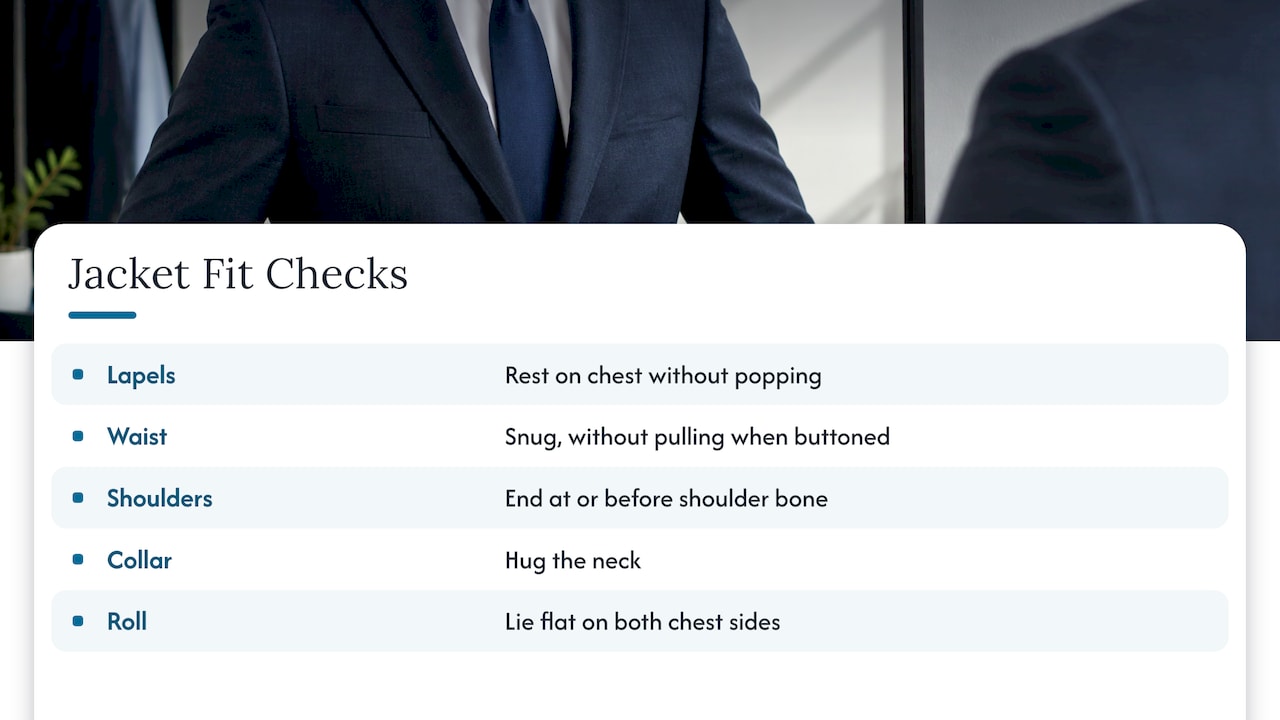
The Straits Times’ 9 April 2026 guide to wearing suits in Singapore offers the same standard in plain terms: lapels should sit cleanly on the chest without popping. It adds that the waist should feel snug without pulling when the top button is fastened, the shoulder line should end at or just before the shoulder bone, and the collar should hug the neck.
If you remember one test, make it this: button the jacket, stand naturally and look in a mirror. Both lapels should rest on the chest with no air beneath them.
How to tell which kind of gape you have
Before you look for a cause, identify the symptom. Three patterns are common.
One lapel lifts, the other lies flat. This points to something uneven: a lower shoulder on one side, a neck point sitting differently, or a button and buttonhole that no longer line up.
Both lapels bow outwards. This suggests the whole chest is wrong, either too tight, so the front is pulled open, or too full, so there is surplus cloth with nowhere to go.
The lapel is flat at the top but curls or bubbles along the edge. That is a construction question, to do with how the inner layer of the jacket was attached.
Two quick checks help:
- Fasten only the top button, then stand with your arms relaxed. Note which side lifts.
- Stand sideways to the mirror, then straighten and slouch. If the gape changes with posture, posture is part of the cause.
Then compare the jacket across different days and with different shirts. A thick knit under the jacket can open a lapel that sits perfectly over a shirt.
Six causes of a lapel gape
The Parisian Gentleman guide lists six possible causes. We take them in the order a reader is most likely to meet them.
1. A chest that is too tight
When the chest is cut too close, the front is pulled outwards at the button and the lapel opens. GQ’s master tailor video names this as a typical cause, alongside a prominent chest that lifts the jacket and opens it.
2. An oversized chest
The opposite problem produces the same result. Excess fabric across the chest has nowhere to go, and the lapel sags open. This often happens after weight loss, or on a jacket bought for its shoulders and left loose at the front.
3. A low shoulder
If one shoulder sits lower, the lapel on that side collapses. The tailor in the GQ video explains the mechanism: a low neck point on one side makes the whole panel sit lower, which throws the button and buttonhole out of line and makes one lapel bow. Most men have one shoulder slightly lower than the other, which is why one-sided gaping is so common.
4. A shoulder cut on the bias
Cloth cut on the bias, the diagonal of the weave, stretches more readily. A shoulder deliberately cut this way can gape along the roll line, according to the same Parisian Gentleman guide.
5. Too many cuts weakening the canvas
The guide also notes that excessive slashes and cuts in a handmade jacket can reduce the support given by the canvas. This is a cutting and making matter, and it is one reason the maker’s judgement counts as much as the measurements.
6. Fused rather than canvassed construction
The canvas is the hidden layer that gives the lapel its roll and the chest its structure. GQ’s tailoring explainer says fully canvassed jackets use stitched cotton, felt or horsehair, while cheaper fused suits glue the layer in place. Over time, it says, fused lapels go flat and may pucker, bubble and curl outwards. If you want the background, our guide to fused versus canvassed suits explains what each construction means for drape and lapel roll.
Fit, posture and pattern: the technical side
A pattern-engineering study published in September 2026 by Thippeswamy and Venkatesh in IJERT describes a hanging or gaping lapel as one that bows outward or buckles rather than lying flat. It connects the fault with an imbalanced forward shoulder stance. It also links lapel lift to too little ease across the front chest combined with excessive waist suppression, and to a narrow, shallow V-shaped opening caused by a high buttoning point.
In plain words, three things matter beyond the cloth:
- Your stance. If your shoulders roll forward, a jacket cut for an upright figure will pull and lift at the front.
- The balance between chest and waist. Taking in the waist too sharply without enough room at the chest pulls the front apart.
- Button position. A high button stance changes the shape of the opening and can push the lapel outwards.
The study’s remedy for the shoulder issue is a change to the pattern: less slope at the front shoulder ridge and more at the back. That is the kind of correction made on a pattern drawn for one person, which is the point of a made-to-measure approach.
Can a tailor fix a lapel gape?
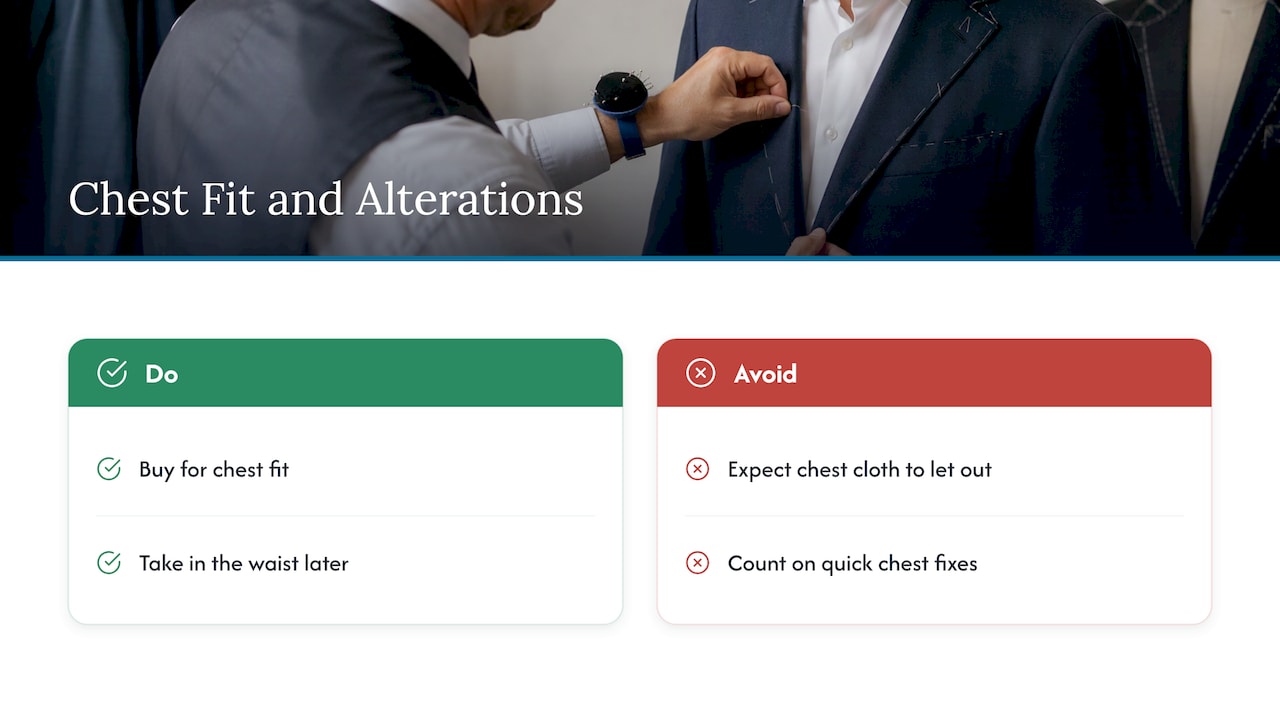
Sometimes, but the chest is the difficult part. The GQ master tailor states that the chest area has no inlay, meaning no spare cloth, to let out, which makes it one of the hardest places to alter. His advice is to buy a jacket on chest fit and have the waist taken in afterwards.
That guidance has a practical consequence for off-the-rack buyers. A jacket that fits the shoulders but not the chest cannot easily be rescued, and a jacket bought with room to spare at the chest will need more than a quick adjustment. If you have lost or gained weight since buying a suit, expect the chest to be the first area to show it.
What can be addressed in the making of a jacket, rather than after the fact, is considerable: the shoulder line, the position of the neck point, the balance of the front and the way the roll line is controlled. In bespoke work, such as the handwork on the lapel that Permanent Style describes, a strip of lining cut on the straight is drawn in and shrunk with the iron to hold the break line, so the lapel does not stretch.
Prevent it: what to look for in a suit
Whether you commission a suit or assess one, these checks save most gaping before it starts.
- Chest first. Choose the jacket for how it fits across the chest, not the waist. The waist can be shaped later.
- Check both shoulders. Look for symmetry in the mirror, and mention if one shoulder sits lower.
- Button the jacket as you would wear it. The lapel should rest on the chest with the top button done.
- Test it with the shirt you will wear. A heavier layer changes the fit.
- Look at the construction. Read how the lapel is built and what holds its roll. Our guide to lapel styles shows how notch, peak and shawl lapels each sit on the chest.
- Think about climate. For Singapore, the Straits Times piece recommends a breathable wool base over linen. A breathable cloth is easier to wear buttoned all day, and so easier to judge honestly in a fitting.
A neighbouring fit issue is the collar lifting from the neck. Our six tailor checks for a collar gap cover it, and the two faults often share a cause in the shoulder and neck point.
Why bespoke addresses lapel gaping at the source
Every cause above comes down to a mismatch between a garment’s pattern and a particular body: a chest that is bigger or smaller than the block, a shoulder that is lower, a posture that rolls forward, a figure that has changed. A standard pattern assumes none of these. A bespoke pattern is built around them.
At Ron & Rich, each garment is tailored to your exact measurements and preferences, with personalised fittings that address individual fit challenges. That is where gaping is settled: at the fitting, with the jacket on you, before the garment is finished.
Prices on our pricing page start from $2,170 for suits, $1,790 for sports jackets, $2,270 for tuxedos, $380 for waistcoats and $290 for trousers. Shirts start from $199. Our suit and jacket page shows the range.
Our view from the cutting table
Lapel gaping is the quiet reason many men feel their suit is almost right but never quite. The cloth is good, the colour is correct, yet something at the chest will not settle.
Our house was founded in 1979 by master tailor Richard Fan, and the principle we inherited is simple: a jacket is made to the person, never the person to the jacket. The chest, the shoulders and the way you stand are measured and fitted as one question, because the lapel answers to all three.
We favour traditional tailoring techniques with a modern line, and we choose premium fabrics suited to Singapore’s climate, so that a jacket can be worn buttoned and comfortable, and judged honestly in the mirror.
If your lapel has ever lifted, it was not your fault. It was a pattern drawn for someone else.
Ron
Begin with a fitting
If you are planning a business suit, a wedding suit or a tuxedo, the lapel is a good test of the whole garment. We invite you to explore our bespoke suits and arrange a consultation, where measurements, shoulders and posture are considered together.

Grooms may also wish to see our tuxedos, cut with the same attention to the chest and roll line.
FAQ
Why does only one of my lapels gape?
One-sided gaping usually points to an asymmetry, most often a lower shoulder on that side. A low shoulder or neck point pulls the panel down and misaligns the button and buttonhole, as the GQ master tailor explains. A bespoke jacket is cut to allow for this difference.
Is lapel gaping a sign of a poor-quality suit?
It signals poor fit or construction rather than the quality of the cloth. A fine fabric on a pattern that does not suit your chest will still gape. Construction matters too: glued inner layers can lose their roll over time.
Can lapel gaping be fixed after weight loss?
It depends on where the change sits. The chest has no spare cloth to let out, so a jacket that is too loose or too tight there is hard to correct. The waist is easier to adjust, which is why the chest is the area to get right first.
Does the way I stand affect my lapel?
Yes. A forward shoulder stance is linked to lapel buckling in the IJERT pattern study, and a high button position can narrow the opening and push the lapel out. Fittings should be done standing as you naturally stand, not at attention.
What should I ask for to avoid a gaping lapel?
Ask that the chest and shoulders be fitted before the waist, that both shoulders be assessed, and that the jacket be tried buttoned. Bring the shirt you intend to wear with it.
Sources
- Suit Lapels: The Very Good and the Very Bad, Parisian Gentleman
- Wool over linen: 5 tips on wearing suits in Singapore, The Straits Times
- Pattern Engineering Assessment of Styling and Fitting Issues in Men’s Blazer Making, IJERT
- Watch Why Your Suit Doesn’t Fit, Master Tailor, GQ
- The Biggest Difference Between Cheap and Expensive Suits, GQ
- The work in a bespoke jacket: Part 2 (lapels), Permanent Style