8–9 oz Hopsack Blazer for Men in Warm Climates, with Tailoring Tips
A hopsack blazer is an open basket-weave jacket that gives lightweight breathability and textured polish, making it one of the better choices for warm-weather smart-casual wear. Its main caveat is durability at the surface: the raised weave snags more readily than a tight worsted, so it suits jackets far better than trousers. For most men building a versatile, travel-friendly wardrobe, a well-chosen hopsack blazer earns its place. This is one of the cloths tailors often recommend for exactly that key reason.
TL;DR:
- Lighter hopsack blazers around 8 ounces are ideal for hot climates, while heavier options up to 9 ounces suit transitional weather; weight influences drape and structure.
- Navy is the most versatile color choice, with a matte finish preferred for a relaxed but polished look, and a tighter weave offering more formality.
- Snags are common due to the open weave; they should be gently eased back with a needle rather than pulled to prevent damage.
- Packing should focus on hanging or folding along natural seams, with dry brushing after wears and limiting dry cleaning to maintain fabric health.
- Custom tailoring improves fit and balance, especially for specific uses like travel or office wear, due to wide variations in cloth weight and finish.
Table of Contents
- What is hopsack? Weave, fibre and origin explained
- Why hopsack works so well for blazers
- How to choose hopsack for a blazer: a buyer’s checklist
- Hopsack versus mesh, mock-leno, basket weave and fresco
- How to wear a hopsack blazer: outfit formulas that work
- Construction and fit for a hopsack jacket
- Caring for a hopsack blazer: snags, packing and cleaning
- Who should choose a hopsack blazer, and what to prioritise
- Bring your hopsack blazer to life with bespoke tailoring
- Sources
- FAQ
What is hopsack? Weave, fibre and origin explained
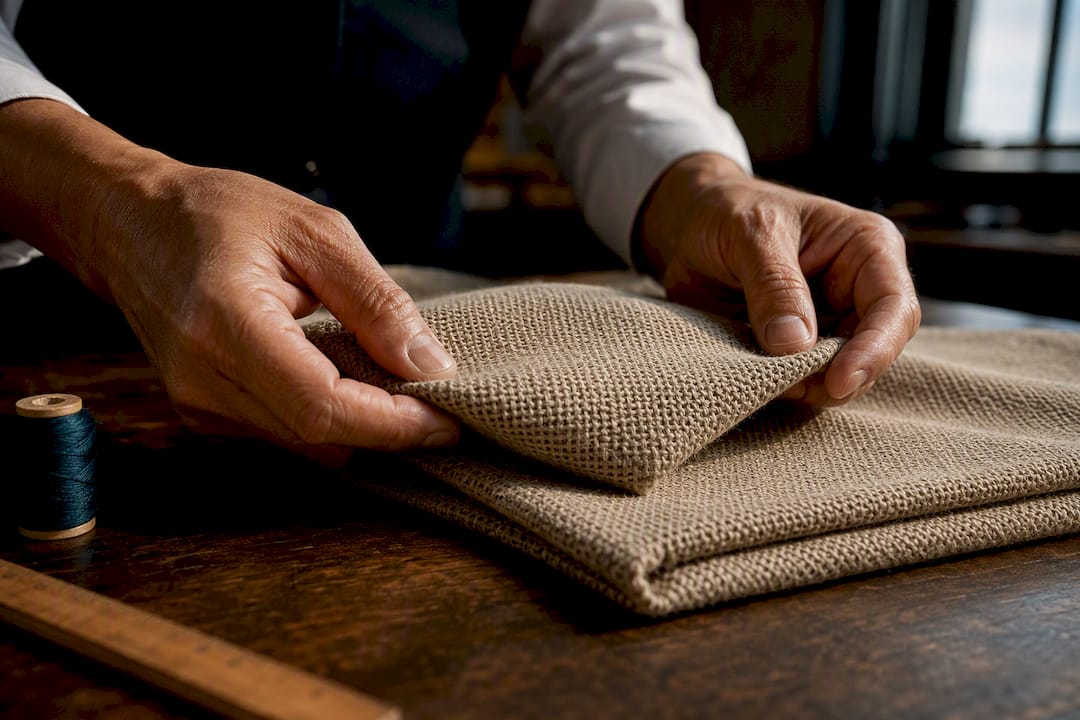
Hopsack describes a weave, not a fibre. Threads interlace in a two-and-two (or wider) basket pattern, which is what gives the cloth its characteristic texture and open structure, rather than any single material used to make it. That distinction matters when you are comparing swatches, because two hopsack jackets can feel entirely different depending on what has been woven into that structure.
Fibre choice changes the cloth considerably:
- Worsted wool gives the classic dry, structured hopsack most tailors default to for jackets.
- Wool/silk/linen blends add sheen or crispness, with silk lifting formality and linen adding coolness.
- Cotton produces a softer, more casual hopsack suited to relaxed unlined jackets.
The name itself is a leftover from coarse sackcloth once used to carry hops for brewing. Tailoring adapted the weave to fine worsted yarns long after its rougher origins, keeping the name but refining the execution almost beyond recognition.
Why hopsack works so well for blazers
The open weave lets air pass through the cloth rather than trapping it, which is the entire reason hopsack reads as a summer fabric rather than a suiting staple. That same structure also resists the sharp, deep creases you get in tighter worsteds, since the raised threads spring back rather than holding a crushed line.
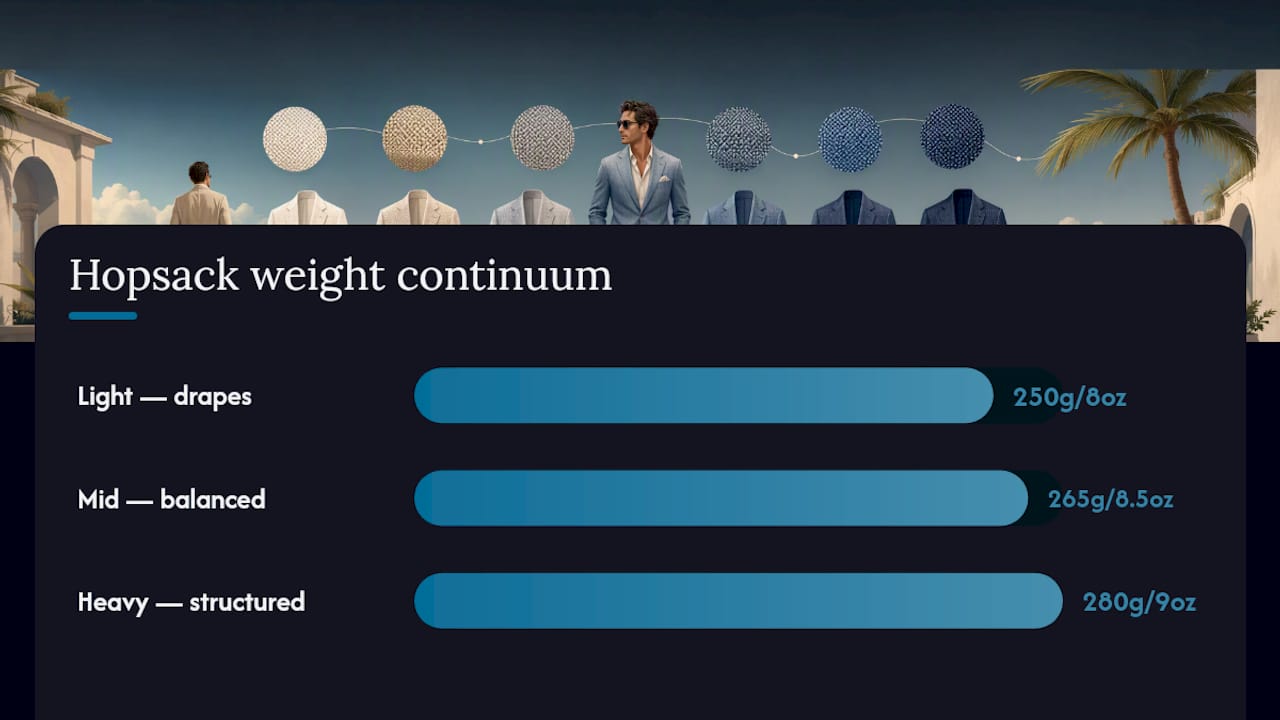
Weight is where the real decisions happen. Blazer-weight hopsack typically runs 250 to 280 grams, or roughly 8 to 9 ounces, and where you land in that band determines how the jacket behaves. Anything at the lighter end drapes softly and suits hot, humid climates or air-conditioned offices; heavier hopsack within that range holds more structure and extends comfortably into a three-season jacket.
The trade-off is textural rather than seasonal. That same raised weave which gives hopsack its character and its cooling properties is also more prone to snagging than a flat worsted, which is one reason it rarely appears in trousers.
How to choose hopsack for a blazer: a buyer’s checklist to look out for.
Selection order matters more than most buyers assume. Get weight and colour right first; finish and density are refinements on top of a sound base.
- Weight – choose the lighter end of the 8 to 9 ounce range for genuinely hot climates, and the heavier end if you want the jacket to earn its keep into autumn.
- Colour – start with a dark navy. Cloth houses and tailors consistently point to navy hopsack as the most versatile starting point for a jacket you will wear constantly.
- Finish – favour a dry, matte hand over anything with visible sheen, since a shinier hopsack reads dressier and undercuts the relaxed character most men are buying it for.
- Density or set – a tighter set gives a cleaner, more formal look; a more open set leans casual but shows texture more strongly.
- Two-tone effects – attractive on a swatch, but they narrow what the jacket pairs with. Skip them if you want one blazer that does most of the work in your wardrobe.
Pro Tip: Ask any tailor or mill for the weight in grams or ounces, the fibre composition, the set, and their recommended lining, rather than asking for “hopsack” alone. The name alone tells you almost nothing about how the finished jacket will actually behave.
Hopsack versus mesh, mock-leno, basket weave and fresco
Several open weaves get lumped together under “summer cloth,” and confusing them leads to disappointing purchases. A quick way to separate them:
- Mesh is often a looser, more overtly textured cousin of hopsack, sometimes woven in two contrasting yarn colours for a flecked look.
- Mock-leno mimics an even more open, gauze-like structure using a plain weave, giving extra breathability at the cost of some durability.
- Basket weave is the broader family hopsack belongs to; not every basket weave is fine enough for tailoring.
- Fresco is a specific high-twist worsted engineered for suiting, holding its shape in heat better than hopsack but with less visible texture.
- Linen is a different fibre entirely rather than a weave, prized for extreme coolness but far more prone to creasing than any of the above.
If you want one jacket that also functions as a business suit component, fresco is the stronger choice. If you are dressing for punishing heat above all else, linen still outperforms hopsack on pure breathability, though it wrinkles more visibly through the day.
How to wear a hopsack blazer: outfit formulas that work
A hopsack blazer earns its keep by moving between registers without changing character. Some combinations to build around:
- Navy hopsack, white knit polo, and washed chinos for an easy weekend look.
- The same jacket over a chambray shirt and dark denim for a slightly dressed-up casual outfit.
- Hopsack blazer, open-collar Oxford shirt, and tailored trousers with no tie for smart-casual office wear.
- A lighter grey hopsack with a linen shirt and loafers, no socks, for warm-weather evenings.
- Layered under a knit tie and pocket square for the rare occasion that calls for slightly more formality without a full suit.
Pocket style shapes the read as much as the outfit does. Patch pockets push the jacket towards casual, unstructured territory, while flap pockets keep options open for the more polished formulas above. If you are building outfits around the smart-casual end of this spectrum, our smart-casual outfit guide and business-casual dressing guide go deeper on specific pairings.
Construction and fit for a hopsack jacket
Hopsack rewards a lighter hand in the workshop than heavier suiting cloths do. A half-lined build with light chest canvas keeps shape without trapping heat against the body, which matters more with hopsack than with almost any other jacket cloth because breathability is the entire point of choosing it.
Shoulder construction should follow the same logic: minimal padding and a lightly canvassed chest preserve the relaxed, slightly textured line that makes hopsack distinctive. Heavy structure fights the cloth rather than complementing it, and it undoes much of the comfort you are paying for. Our notes on unstructured blazer fit cover this in more depth for readers weighing construction options.
Pro Tip: When briefing a tailor, hand over a target weight in grams or ounces, a photo showing the finish you want, and a note on intended use, rather than simply saying “hopsack.” Mills and bunches vary so widely under that one name that specifying “hopsack” alone is a genuine gamble.
Caring for a hopsack blazer: snags, packing and cleaning
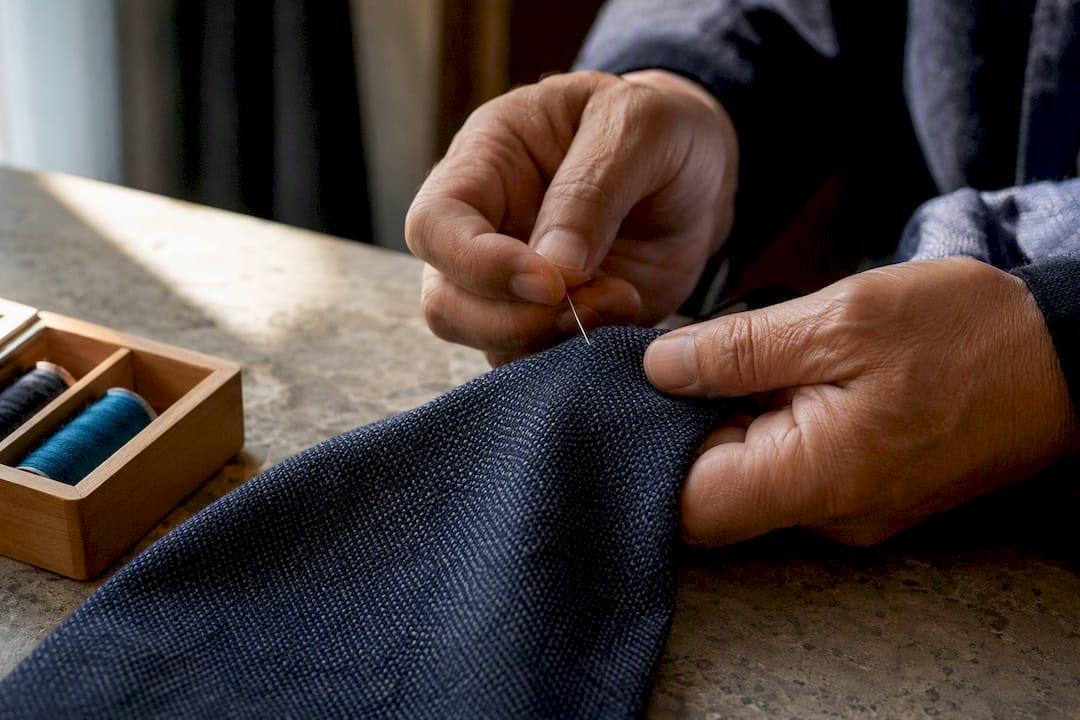
Snags are the price of admission with hopsack, but most are manageable if you act early. Never pull a snagged thread; instead, use a needle to gently ease the loop back through to the reverse side, and leave genuinely stubborn pulls to a tailor rather than making the hole worse.
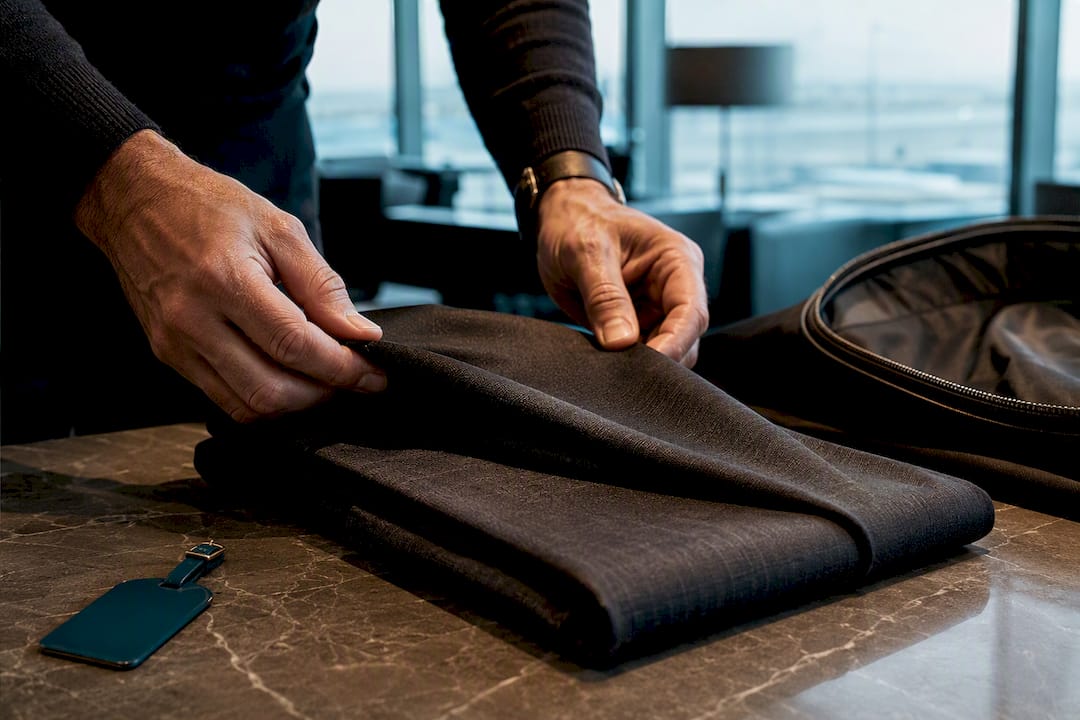
For packing, hang the jacket where you can and use a breathable garment bag rather than a plastic cover, which traps moisture against the fibres. Where hanging is not possible, fold clothing along natural seams rather than at random points, since hopsack’s open weave already resists deep creasing better than most smooth worsteds and rewards being folded thoughtfully.
Brush the jacket after each wear, spot-clean marks rather than reaching for dry cleaning at the first sign of dirt, and limit full dry-cleaning to two or three times a season to avoid drying out the fibres.
Who should choose a hopsack blazer, and what to prioritise
Hopsack suits a specific reader best: the warm-climate commuter, the frequent flyer, and any man who wants one jacket to carry him from a casual Friday to a client dinner without changing. If that describes your wardrobe gaps, this is a genuinely sound investment rather than a passing trend.
Start with a dark navy, a dry matte finish, and a weight around 8 to 9 ounces. That combination gives you the widest range of outfits and the fewest regrets. Some bespoke tailors with long experience have found hopsack to be a top recommendation for this kind of practical, wear-everywhere jacket brief.
— Aaron Fan
Bring your hopsack blazer to life with bespoke tailoring
Choosing the right weight, finish and set on a swatch card is only half the job. Fit does the rest, and that is where a bespoke house earns its keep over buying off a rail and hoping the shoulders sit right.

Some bespoke tailoring houses offer sports jackets and full suits starting from certain price points, with cloth selection, fittings and construction choices tailored to how the wearer plans to use the jacket, whether for daily office wear or long-haul travel. Browse the full pricing for suits, sports jackets and more, or look through our suits and jackets collection for examples of finished work before booking a fitting.
Sources
- Hopsack Fabric: Properties, Uses, Features, and Sustainability
- Hopsack — Fabric Almanac
- What Is Hopsack? (Should You Be Wearing It?)
FAQ
What does hopsack blazer mean?
A hopsack blazer is a jacket cut from cloth woven in a basket pattern, typically from worsted wool or a wool blend, prized for breathability and texture rather than a specific fibre.
Is a hopsack suit good?
A hopsack suit works well for warm-weather or travel wear thanks to its breathability and wrinkle resistance, though the same open weave makes trousers more prone to snagging than a tighter worsted.
Can you wear a hopsack blazer in winter?
A lighter 8-ounce hopsack is best kept to warmer months, but a heavier hopsack near 9 ounces, especially in a wool blend, can extend comfortably into autumn and mild winter days.
What is a hopsack suit?
A hopsack suit is tailored from the same open basket weave used in hopsack blazers, though jackets remain the more common and more forgiving application because trousers see far more abrasion.
How do I stop my hopsack blazer from looking too casual for the office?
Choose a dark navy, dry matte finish with flap pockets rather than patch pockets, and pair it with tailored trousers and an open-collar shirt, as covered in our business-casual guide.