Move Freely, Look Sharp: Why Men Choose Bespoke High Armholes
A high armhole lets the sleeve move independently of the jacket body, so your chest and lapels stay in place when you lift an arm or gesture. This matters most for actors, executives who present, and anyone who values a fitted silhouette over slouch room. Ready-to-wear can only partially recreate the effect. Bespoke tailoring remains the reliable route to a true high armhole.
TL;DR:
- A high armhole keeps the sleeve close to the armpit, reducing fabric tension and preventing the jacket from riding up during arm movement.
- It allows the jacket’s lapels and collar to stay flat and secure, especially for those who gesture frequently or perform on stage.
- High armholes require more skilled patterning, added hand finishing, and are typically a feature of bespoke tailoring, not ready-to-wear.
- The optimal armhole height depends on shoulder shape and daily activity; broad shoulders and long desk hours may favor medium or lower cuts.
- Testing fit by raising arms in a fitting room helps determine if the armhole allows free movement without pulling or gaping.
Table of Contents
- What does a high armhole actually mean on a jacket?
- What benefits come from a higher armhole cut?
- What are the downsides of a high armhole suit?
- Can ready-to-wear be altered to mimic a high armhole?
- How do tailors actually construct a high armhole?
- How can you test whether the armhole actually fits?
- Is a high armhole right for your build and lifestyle?
- Why bespoke high armholes matter more than most buyers realise
- Book a bespoke fitting built around real movement
- Sources
What does a high armhole actually mean on a jacket?
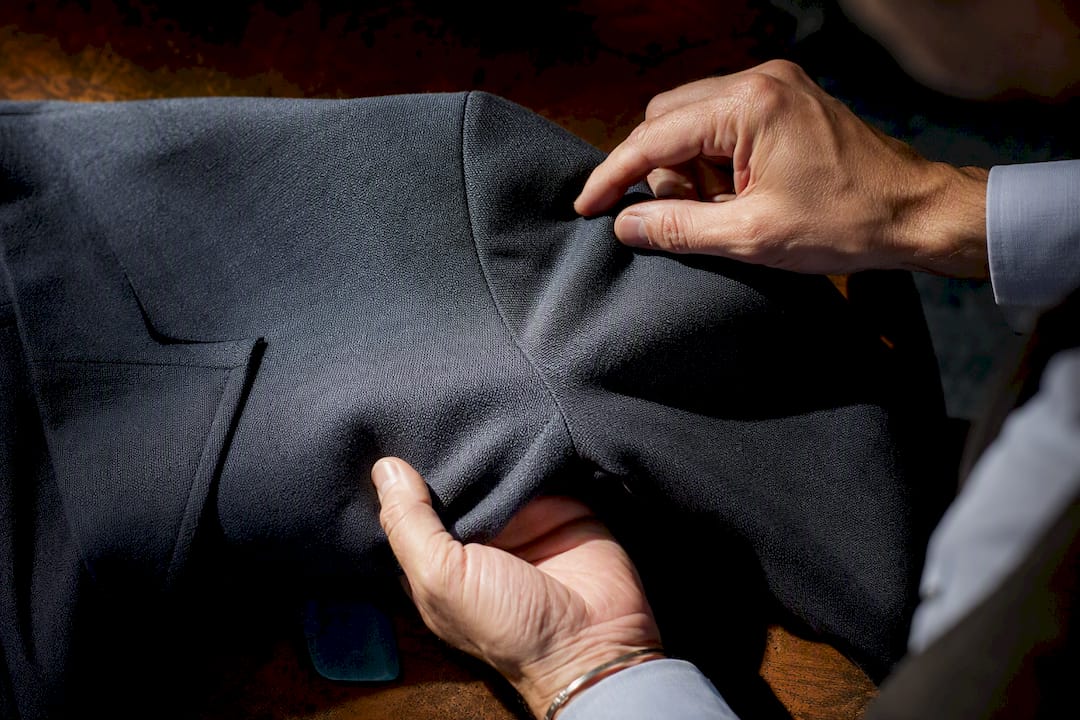
The armhole, known in tailoring as the armscye, is the curved opening in the jacket body where the sleeve attaches. Its position is measured against the natural armpit crease, the anatomical reference point every pattern maker works from. A “high” armhole sits close to that crease; a “low” one drops well below it, giving a deeper, roomier cut under the arm.
You can spot a high armhole without a measuring tape. The sleeve seam sits noticeably near the armpit rather than several centimetres beneath it. Raise your arm and the jacket’s side body barely lifts, because there is little slack fabric for the arm to drag upward. The collar stays hugging the back of your neck instead of gaping or riding up.
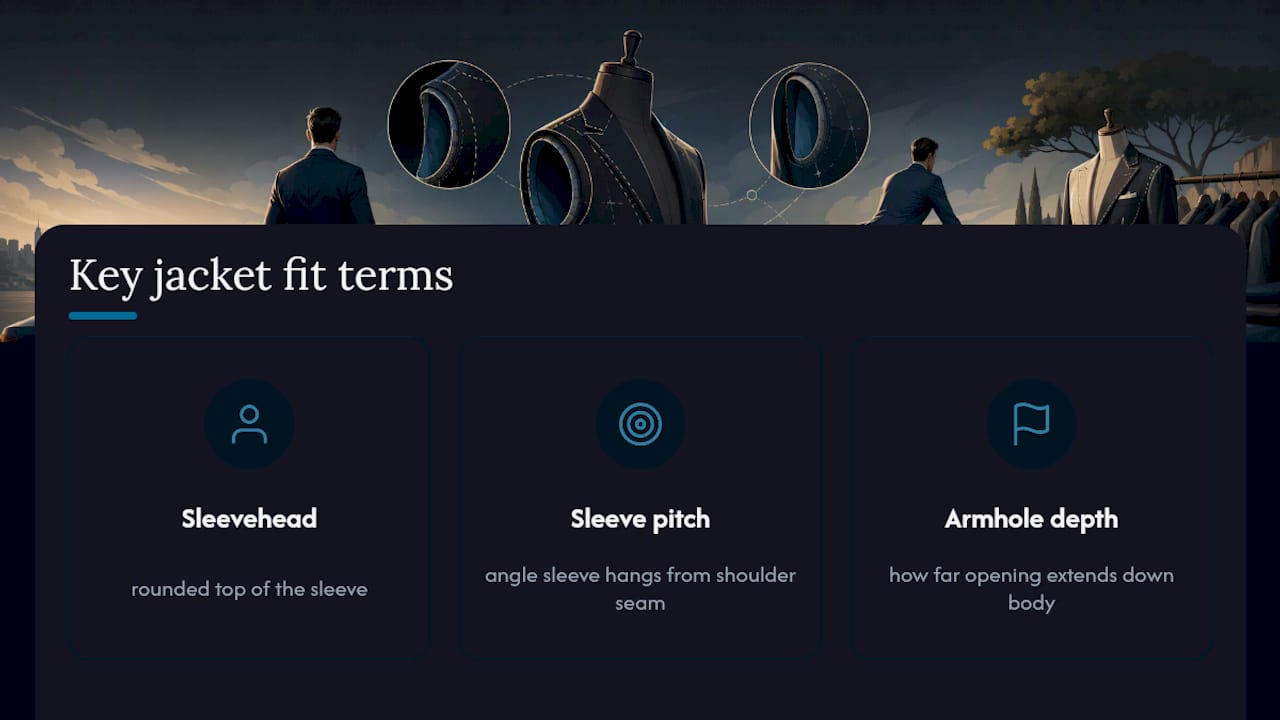
Three terms come up constantly in fitting rooms. Sleevehead is the rounded top of the sleeve that sits into the armhole. Sleeve pitch is the angle at which the sleeve hangs forward or back from the shoulder seam, which affects how naturally your arm falls at rest. Armhole depth simply measures how far down the body the opening extends. Lower, wider armholes fit a broader range of shoulder shapes, which is exactly why ready-to-wear brands favour them, even though the trade-off is a jacket that tends to pull upward with the arm.
What benefits come from a higher armhole cut?
Bespoke houses cut smaller, higher armholes deliberately, because the sleeve then pivots from a point close to the body’s own axis of movement rather than dragging the whole jacket with it. The practical result: raise your arm to shake a hand or gesture mid sentence, and the jacket body stays anchored instead of riding up towards your collar.
That stability shows up most clearly around the top of the garment. Because the shoulder and chest panels aren’t being tugged by sleeve movement, the lapels sit flat and the collar keeps its grip on the back of the neck through a full range of motion, rather than gaping open the moment you reach for a door handle.
The effect isn’t a modern styling trick. Traditional English cutters developed the high armhole, soft shoulder combination for actors and performers, who needed a jacket that would hold its shape through a stage’s worth of movement without looking stiff. That same logic now serves anyone whose day involves more than standing still in a boardroom.
Wearers who notice the difference most:
- Public speakers and presenters who gesture through a talk
- Actors, musicians, and performers who need freedom without a baggy cut
- Grooms and executives photographed mid handshake or mid stride
- Anyone who has felt a jacket “climb” up the back when reaching overhead
Pro Tip: Test this in any fitting room before you commit: raise both arms to shoulder height and watch the hem. If it lifts more than an inch or two, the armhole is working against you, not with you.
What are the downsides of a high armhole suit?
Nothing in tailoring is free, and a high armhole comes with real trade-offs worth weighing before you book a bespoke commission.
- More labour, more cost. Fitting a full sleeve into a tighter opening demands closer patterning and more hand finishing, which shows up in the price of bespoke work.
- Shoulder shape shifts. A higher, tighter armhole often reads as a more structured, slightly built-up shoulder line, which won’t suit every taste.
- Comfort ceiling for some builds. Men with square or heavily muscled shoulders can find a very high armhole restrictive under the arm, especially through a full day of driving or desk work.
- Less forgiving of weight change. A close-cut armhole has little spare room, so a few kilograms gained or lost shows up in the fit faster than it would in a looser cut.
For a lot of daily wardrobes, a medium armhole is simply the wiser call. If your work involves long stretches at a desk rather than gesturing on a stage or in front of a room, the marginal mobility gain of a very high armhole may not justify the tighter fit or the extra tailoring cost. Bespoke tailoring exists precisely to calibrate that trade-off to the individual, rather than force one armhole height on every body.
Can ready-to-wear be altered to mimic a high armhole?
Not really, and the reason is structural rather than a matter of a tailor’s skill. Raising an armhole means reducing its circumference, and that typically requires extra fabric through both the sleevehead and the body panels that most factory-made jackets simply never had cut into them. There’s no spare cloth hiding in the seams to release.
What a good tailor can offer instead:
- A shoulder pad insertion. Adding a thin pad lifts the sleeve slightly and can reduce back folding, improving drape without touching armhole circumference.
- Sleeve pitch correction. Reangling how the sleeve hangs can smooth out some of the pulling you feel on reach, even without lifting the armhole itself.
- A full bespoke recut. For a genuinely higher armhole, the only dependable path is a jacket patterned from scratch around your own measurements.
Pro Tip: If a tailor suggests a shoulder pad as the fix for a low armhole, ask to see it pinned in place before you commit. It changes shoulder width as well as drape, and that shift in shoulder aesthetics deserves a proper look before you pay for the alteration.
Accept the partial fix when the jacket is otherwise excellent and the pulling is mild. Pursue bespoke when mobility and silhouette stability actually matter to how you work or perform.
How do tailors actually construct a high armhole?
Two Neapolitan techniques do most of the heavy lifting here. Spalla camicia, literally “shirt shoulder,” sets the sleeve with a slight gather at the shoulder seam, the way a shirtsleeve is set rather than a rigid jacket sleeve. Grinze, the small rippling folds this creates, allow a sleevehead considerably larger than the armhole itself to be eased in without straining the seam.
That mismatch between sleeve and armhole size is intentional, not a fitting error. A fuller sleeve cap gives the arm somewhere to expand into when it lifts, while the tighter armhole keeps the body of the jacket anchored. Getting the two to work together depends on a handful of specific skills:
- Careful control of sleeve pitch, so the arm hangs naturally at rest rather than twisting the sleeve
- Precise sleevehead shaping, easing fullness in rather than simply cramming extra fabric into a small hole
- Hand setting the sleeve, using easing stitches to distribute fullness exactly where movement demands it
- Close, individual patterning, since a machine-cut standard armhole has no tolerance for this kind of deliberate mismatch
Historic pattern innovations such as gussets, pivot sleeves, and action backs tackled the same mobility problem from a different angle, engineering extra range of motion into the sleeve itself rather than relying purely on armhole height. The visible ripple of grinze along a sleevehead has become something of a signal in its own right: a shorthand buyers use to spot genuine hand-finished construction at a glance.
How can you test whether the armhole actually fits?
Fit-checking a high armhole suit doesn’t require special equipment, just a few deliberate movements in the fitting room and the right questions for your tailor.
- Raise both arms overhead. The jacket hem should lift only slightly. Significant rise means the armhole is dragging the whole body with the sleeve.
- Reach forward as if shaking a hand. Watch the collar and back panel; they should stay settled against your neck and shoulders rather than pulling taut.
- Check underarm room while your arms hang naturally. You should feel close contact without the fabric pinching or restricting circulation.
- Ask your tailor for the armhole depth and sleeve cap height in centimetres, so you have a concrete number to compare across fittings rather than a vague impression.
Red flags worth raising with your tailor: visible pulling across the back when you reach forward, a collar that gapes the moment you move, or a sleeve seam that sits noticeably lower than your natural armpit crease. Our suit fit guide covers the broader fit checks worth running alongside these armhole-specific tests.
Is a high armhole right for your build and lifestyle?
Shoulder shape decides much of this. Men with naturally sloping shoulders tend to carry a high, close armhole with real ease, since the sleeve pitch already matches the arm’s natural hang. Square or heavily built shoulders can find the same cut restrictive, particularly through the back and underarm during long stretches of driving or desk work.
A few styling notes worth knowing before you commission one:
- Pair a high armhole with a soft, lightly padded shoulder rather than a structured one, to avoid an overly stiff silhouette
- Narrower lapels tend to complement the trimmer sleeve and armhole line better than very wide ones
- Layering gets tighter under a high armhole, so plan shirt and jumper thickness with your tailor in advance
- If your daily routine involves heavy desk work rather than movement or presenting, a medium armhole is the more practical everyday choice
Our guide to soft shoulder suit fit and notes on suits for broader shoulders both go deeper into matching shoulder shape to armhole height.
Why bespoke high armholes matter more than most buyers realise
The technical explanation only tells half the story. What sticks with clients isn’t the sleeve pitch or the grinze itself, it’s the moment they raise an arm in a fitting and the collar simply doesn’t move. That’s when a high armhole stops being jargon and starts being confidence.
Achieving it consistently takes close patterning and enough fittings to catch how an individual body actually moves, not just how it stands still. That’s the discipline behind every commission we take on, built from decades of hands-on tailoring passed down since our founding in 1979.
Ron
Book a bespoke fitting built around real movement
A bespoke tailor is the practical alternative to accepting a ready-to-wear armhole that fights your movement instead of following it. Where alteration can only lift a shoulder pad or nudge a sleeve pitch, a bespoke commission is patterned from your own measurements from the first cut, giving you the close, high armhole a factory jacket was never built to allow.

A booking starts with a consultation to discuss how you actually use a jacket, followed by individual patterning and a series of fittings to refine sleeve pitch, armhole depth, and shoulder line until the garment moves the way you do. Bring a jacket you already like the fit of, and a sense of how much structure or softness you prefer in the shoulder. Our bespoke tailoring process walks through each fitting stage in detail, and you can explore our suits and jackets to see the range of cuts we work from before booking your first appointment.
Sources
- A step further in suit alterations – Permanent Style
- The English Drape Suit – FLUX MAGAZINE
- The Guide to Neapolitan Suiting: The Art of Effortless Elegance – Zalmira
- What Is an Armhole in Clothing: Types, Fit, and Meaning, MioLook