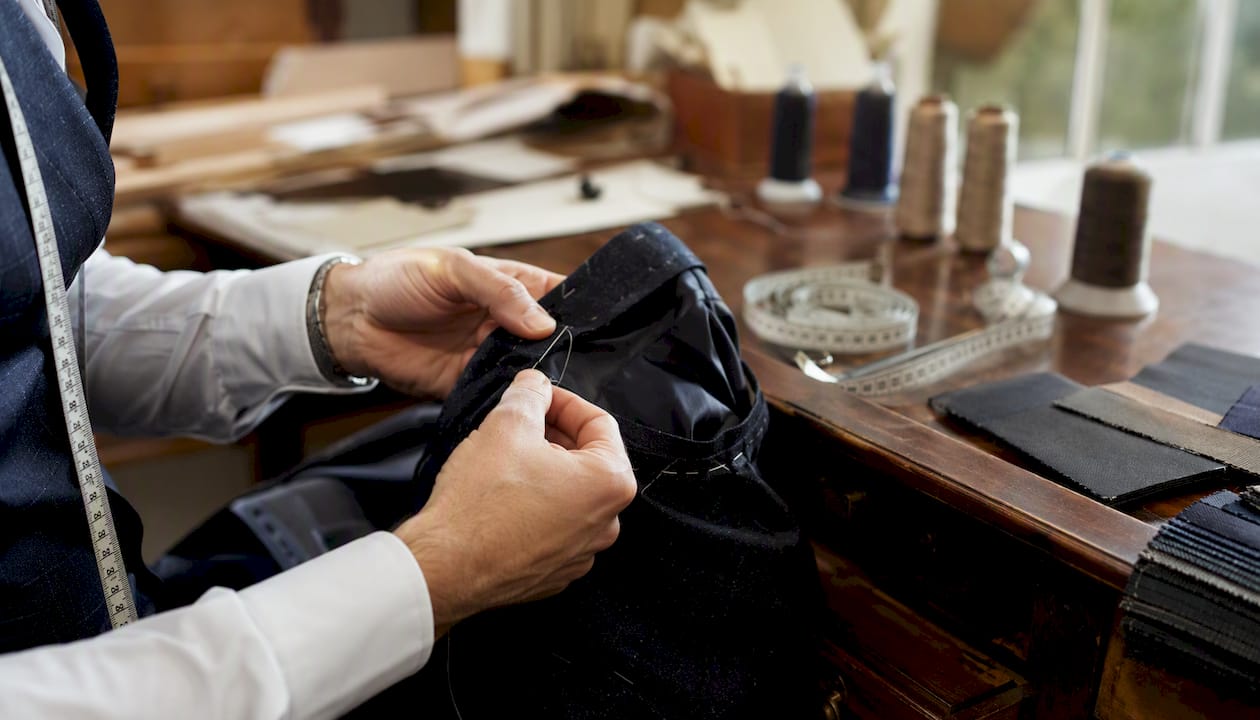
Half Canvas vs Full Canvas: What Buyers Need to Know
Full canvas gives you the best drape, longevity, and body-molding of any jacket construction. Half canvas delivers most of those benefits at a meaningfully lower price. The choice between them comes down to how often you wear suits and how long you intend to keep them.
Quick recommendations by buyer type:
- Frequent professional wearer (3+ days per week): Full canvas. The investment pays back through superior fit over time and a jacket that genuinely improves with wear.
- Groom or one-time investment suit: Half canvas is a strong choice for most; full canvas if the budget allows and you plan to wear the suit again.
- Occasional wearer or first tailored suit: Half canvas gives you the lapel roll and drape of a canvassed jacket without the full-canvas price.
- Business travel: Half canvas, for its lighter weight and lower risk if the jacket takes rough handling.
Before you buy or commission a suit, run through these four steps in the store or at your tailor:
- Look at the lapel from the side. A soft, three-dimensional curve signals canvassed construction.
- Turn the lapel over and look for tiny diagonal hand-stitches (pad-stitching) on the reverse.
- Pinch the chest fabric between two fingers and gently pull the layers apart. A floating canvas will move independently of the outer cloth.
- Ask the tailor directly: “Is the chest fully canvassed, and can I see the pad-stitching?”
Table of Contents
- What is canvas in a suit jacket, and why does it matter?
- Half canvas vs full canvas: how each jacket is actually built
- Fused construction: what it is and why bubbling happens
- How to tell half canvas from full canvas in a store
- Typical U.S. price bands, expected lifespan, and care
- Decision checklist: questions to ask before you choose
- Key Takeaways
- The construction choice no one talks about honestly
- Ronandrich bespoke suits: canvas options built into every commission
- Further reading and sources
What is canvas in a suit jacket, and why does it matter?
Canvas, in tailoring terms, is the interlining stitched inside the front of a jacket to give it shape. Traditionally made from horsehair, wool, or cotton, it sits between the outer cloth and the lining, floating free rather than being glued down. Think of it as the skeleton of the jacket’s chest: the fabric you see is the skin, but the canvas underneath determines how the jacket holds its shape, how the lapel curves, and how the whole front drapes across your torso.
Three things depend on the canvas more than anything else. First, lapel roll: a stitched, floating canvas creates that soft, three-dimensional curve along the lapel that no iron can replicate in a fused jacket. Second, chest shape and drape: the canvas distributes tension across the chest so the jacket falls cleanly rather than pulling or buckling. Third, long-term molding: canvas molds to the wearer’s body over time, meaning a well-made canvassed jacket fits better in year three than it did on day one.
A fused jacket replaces the stitched canvas with an interlining bonded to the outer cloth using heat and adhesive. The result is faster to produce and cheaper to make, but the jacket behaves as a single stiff layer rather than a living, breathing structure. That distinction shapes everything from breathability to how the jacket ages.
Half canvas vs full canvas: how each jacket is actually built
Half-canvas construction
In a half-canvas jacket, the canvas runs through the chest and lapels, typically from the shoulder down to roughly the waist or slightly below. Some makers extend it to about two-thirds of the front panel. The lower portion of the jacket front, from the waist to the hem, is usually fused.
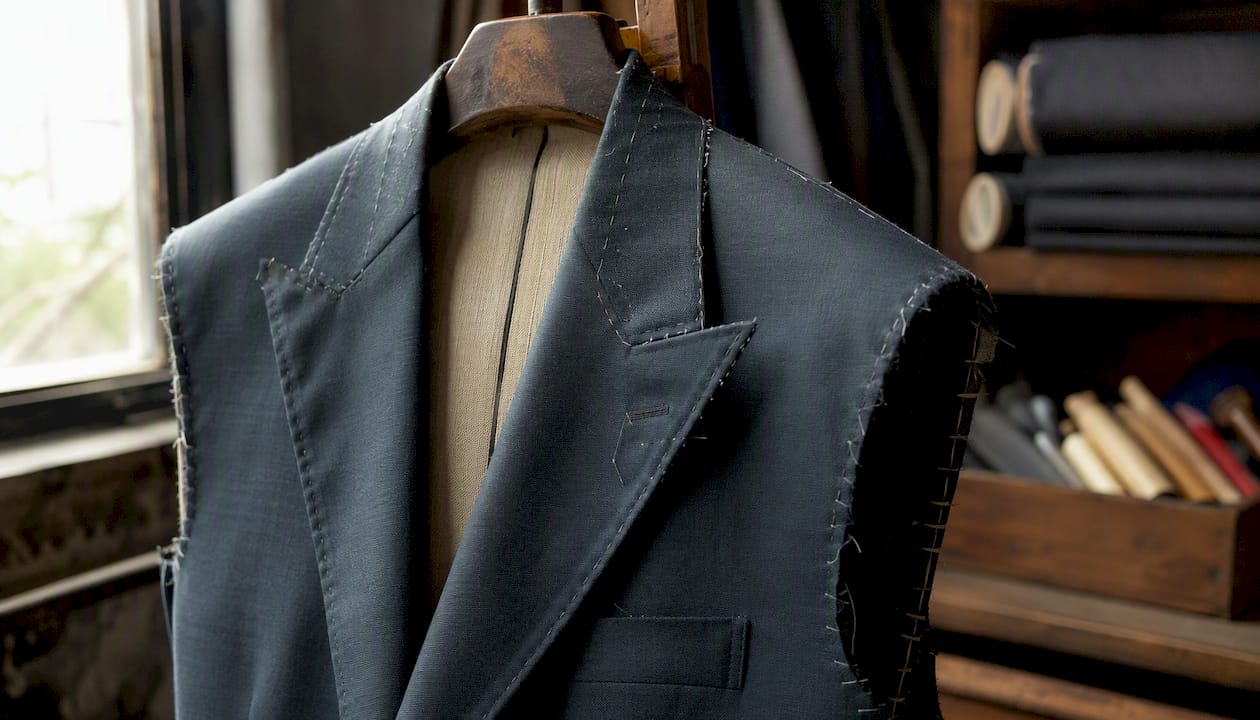
That means you get the most important benefits of canvassing where they matter most. The lapel rolls naturally, the chest drapes cleanly, and the jacket will begin to mold to your body over time. The lower front, being fused, is stiffer and slightly less breathable, but on a well-cut jacket, most wearers never notice.
Half canvas gives most of the benefits of full canvassing while using less handwork and material, which is why it sits at a lower price point than full canvas without feeling like a compromise. For a first tailored suit, a business suit worn two or three times a week, or a wedding suit that will see occasional use afterward, half canvas is a genuinely strong choice.
Pros:
- Natural lapel roll and chest drape, close to full canvas in appearance
- Significantly less expensive than full canvas
- Lighter weight than some full-canvas builds, which suits warmer climates
- Better breathability and movement than a fully fused jacket
Cons:
- The fused lower front can delaminate over years of heavy wear or improper cleaning
- Less body-molding than full canvas over a long lifespan
- The term “half canvas” is used loosely by some makers; canvas coverage varies
Pro Tip: Ask the tailor or sales associate exactly where the canvas ends. “Half canvas” can mean anything from chest-only to two-thirds coverage. The more canvas, the better the drape and longevity.
Full-canvas construction
A full-canvas jacket carries a single canvas panel running from the shoulder all the way to the hem, stitched and floating throughout. Nothing is glued. The canvas is attached to the outer cloth through hand-stitching, including the pad-stitching on the lapels that creates their characteristic roll.
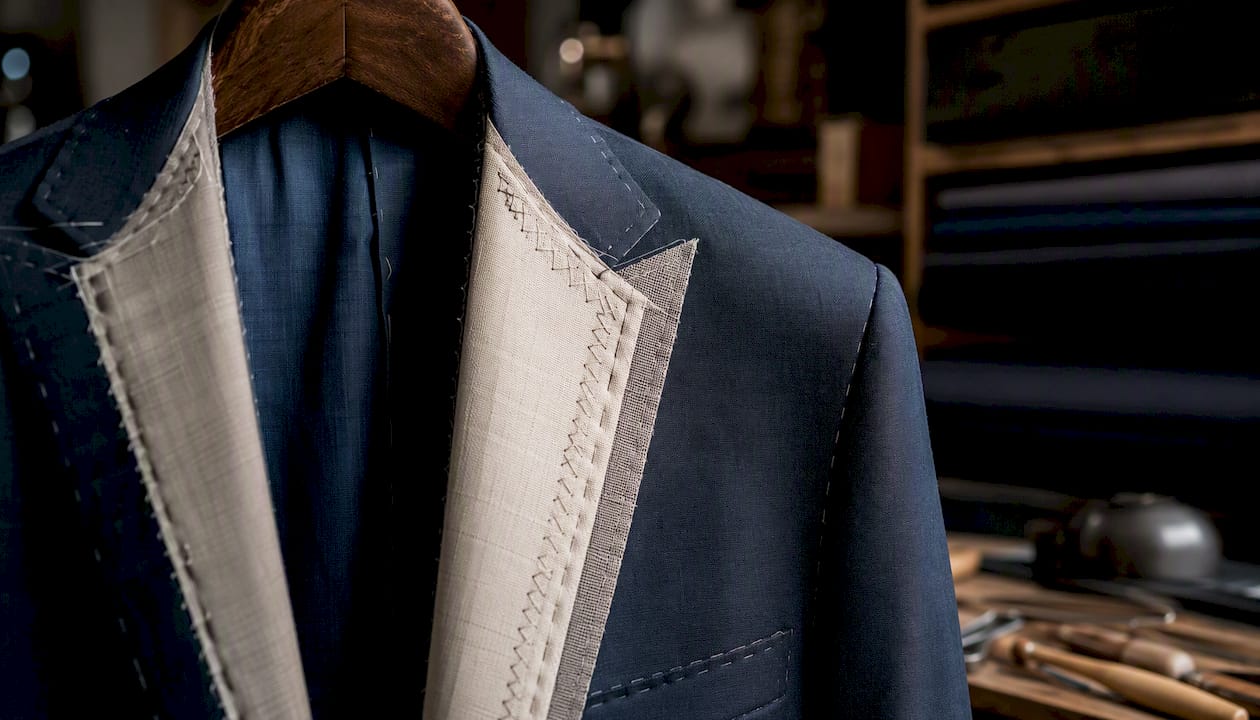
Full-canvas construction delivers superior drape and breathability compared with any fused alternative, and the jacket’s ability to mold to the wearer’s body is unmatched by a half-canvas build. Because the entire front floats freely, the jacket moves with you rather than against you. Over years of wear, it conforms to your posture, your shoulder set, and the particular way you carry yourself.
The higher price reflects real labor. Full-canvas construction requires more handwork, longer sewing times, and the kind of skilled craft that cannot be replicated on a production line. A bespoke or made-to-measure full-canvas jacket is also more repairable: alterations are cleaner, the canvas can be re-stitched, and the jacket can be let out or taken in without the risk of disturbing a glued interlining.
For a man who wears suits most working days, or who wants a single jacket to last a decade or more, full canvas is the construction that justifies the investment.
Fused construction: what it is and why bubbling happens
Fused interlining is bonded to the outer cloth with heat-activated adhesive. The process is fast, consistent, and inexpensive, which is why most mass-market suits use it. On a well-made fused jacket fresh from the factory, the chest can look clean and the lapels presentable.
The problem emerges over time. Fused interlining bonds with heat and is cheaper to produce, but is prone to blistering or separation as the adhesive breaks down through wear, perspiration, and cleaning. When the glue fails, the interlining separates from the outer cloth in patches, creating the visible bubbling or puckering that cannot be repaired. The jacket is, at that point, finished.
Beyond delamination, fused construction is stiffer and less breathable than canvassed alternatives. The bonded layers restrict the fabric’s natural movement and trap heat more readily.
Signs you may be looking at a fused jacket:
- Lapels lie flat rather than rolling softly away from the chest
- The chest feels stiff and uniform, like a single bonded layer
- No visible hand-stitching on the lapel reverse
- Price is well below what canvassed construction typically costs
Pro Tip: If you own a fused jacket, tell your dry cleaner to avoid high-heat pressing on the chest and lapel area. Heat accelerates delamination. Steam is safer than a hot iron on fused fabric.
How to tell half canvas from full canvas in a store
Knowing the construction before you buy is entirely possible with a short inspection. Hand-stitching and lapel roll are reliable indicators of canvassed construction; the pinch test is useful but not definitive, since some modern fused suits feel spongy in a way that mimics a floating canvas.
Work through these steps in order:
1. Observe the lapel roll. Stand the jacket on a hanger and look at the lapel from the side. A canvassed lapel curves softly and three-dimensionally away from the chest. A fused lapel tends to lie flat or fold sharply at the break line.
2. Check the lapel reverse for pad-stitching. Turn the lapel over. On a canvassed jacket, you will see rows of tiny diagonal hand-stitches running across the underside. These are the pad-stitches that shape the roll. Their presence is one of the strongest signals of genuine canvassing. Luxury garment finishing details like pad-stitching are a reliable marker of handwork that fused production simply does not include.
3. Perform the pinch test with caveats. Pinch the chest fabric between your thumb and forefinger and gently pull the outer layer away from the lining. On a canvassed jacket, you should feel a third layer moving independently between the outer cloth and the lining. On a fused jacket, the layers feel bonded together. Detailed inspection steps confirm that canvassed jackets show soft roll and independent layer movement, while fused jackets feel flat and bonded. Use this as a supporting signal, not a verdict on its own.
4. Ask to see the unlined interior or request a basted fitting. A reputable tailor will show you the inside of the jacket. In a basted fitting, the canvas is often visible and you can confirm its coverage directly. A basted fitting is the most reliable way to verify construction before the jacket is finished.
Quick inspection checklist:
- Lapel rolls softly in three dimensions (not flat)
- Tiny diagonal hand-stitches visible on lapel reverse
- Pinch test reveals an independent middle layer
- Tailor can show canvas coverage or unlined interior
- No visible bubbling or stiffness in the chest
Pro Tip: Labels that say “canvassed” or “half canvas” are not regulated. Always verify with the pinch test and pad-stitch check, or ask the tailor to confirm coverage in writing.
Typical Singapore price bands, expected lifespan, and care
Entry-level fused suits from mass-market retailers typically run in an affordable price range. Half-canvas suits from quality ready-to-wear or made-to-measure brands generally start at mid-range prices. Full-canvas bespoke and made-to-measure jackets typically begin at higher prices depending on cloth quality, handwork, and the tailor’s reputation. These are guidance ranges, not guarantees; cloth choice, lining, and finishing all affect the final price.
Lifespan depends heavily on frequency of wear. A fused suit worn twice a week may show delamination within three to five years. A half-canvas jacket at the same frequency can last seven to ten years with proper care. A full-canvas jacket, well maintained and worn regularly, can last twenty years or more. How fabric and craft choices extend garment life is well documented in luxury apparel: construction quality is the single largest factor in longevity.
Care checklist for canvassed jackets:
- Rotate between at least two jackets to allow the canvas to recover between wears
- Hang on a shaped wooden hanger after each wear; never fold a tailored jacket
- Brush the cloth with a soft garment brush after wearing to lift surface debris
- Spot-clean minor marks rather than sending the jacket to the cleaner unnecessarily
- Dry-clean no more than once or twice per year; over-cleaning weakens the canvas stitching
- For fused areas (including the lower front of a half-canvas jacket), instruct the cleaner to use steam rather than high-heat pressing
Pro Tip: Cedar blocks in your wardrobe protect wool cloth from moths without the chemical residue of mothballs, which can damage delicate fibers over time.
Decision checklist: questions to ask before you choose
The right construction depends on your honest answers to a few practical questions.
Ask yourself:
- How many days per week do I wear a suit? Three or more points toward full canvas.
- Is this a jacket I intend to keep for ten or more years? Full canvas ages better.
- Am I buying a first tailored suit or a wedding suit I’ll wear occasionally? Half canvas is the pragmatic choice.
- What is my total budget, including cloth? Prioritize cloth quality first; construction second.
Ask the tailor or sales associate:
- Where exactly does the canvas end? Can you show me?
- Is there pad-stitching on the lapel? Can I see it?
- Can I have a basted fitting to confirm construction before the jacket is finished?
- What is your alteration and repair policy if the canvas needs attention later?
Red flags to walk away from:
- Vague answers about canvas coverage (“it’s semi-canvassed” with no specifics)
- No visible hand-stitching on the lapel reverse
- A price that seems too low for the claimed construction
- Reluctance to show the inside of the jacket or discuss construction at all
A simple if-then guide:
- Wear suits 3+ days per week → consider full canvas as a long-term investment
- Want one or two quality suits for business and occasions → half canvas is the right balance
- Budget is the primary constraint → half canvas over fused, every time
- Buying a double-breasted jacket, where lapel roll is especially visible → full canvas rewards the investment
Key Takeaways
Full canvas is the superior construction for longevity and drape; half canvas is the right choice for most buyers who want genuine canvassing at a more accessible price point.
| Point | Details |
|---|---|
| Canvas determines drape and longevity | The interlining construction, not the cloth alone, shapes how a jacket fits and ages over years of wear. |
| Half canvas covers what matters most | Canvas in the chest and lapel delivers the key benefits; the fused lower front is the only meaningful compromise. |
| Full canvas is worth it for frequent wearers | Men who wear suits most days will see full canvas pay back its premium through superior fit and a longer lifespan. |
| Inspect before you buy | Lapel roll and pad-stitching are the strongest signals; the pinch test supports but does not confirm construction. |
| Ron & Rich builds with full and half canvas | Bespoke and made-to-measure commissions at Ron & Rich include canvas options confirmed at the basted fitting stage. |
The construction choice no one talks about honestly
There is a conversation that rarely happens in suit retail, and it is the one that would save most buyers from a poor decision. The industry has allowed “half canvas” to become a marketing phrase rather than a technical specification. Walk into almost any mid-market suit retailer and you will hear the term used to describe jackets with wildly different canvas coverage, some barely reaching past the chest pocket, others running nearly to the hem. The label is not regulated, and the difference in quality between those two extremes is substantial.
The honest guidance is this: construction type matters, but canvas coverage within a construction type matters just as much. A half-canvas jacket with generous chest and lapel canvassing, made from quality wool, will outlast and outperform a nominally “full canvas” jacket built with inferior materials and minimal handwork. Ask for specifics. Ask to see the pad-stitching. Ask for a basted fitting. A tailor who cannot or will not answer those questions is telling you something important about the jacket.
Full canvas is not always the right answer. For a man buying his first tailored suit, or a groom who wants a jacket that looks exceptional on one significant day and a handful of occasions afterward, the premium for full canvas may not be the best use of his budget. Cloth quality, fit, and the tailor’s skill will affect how that jacket looks and feels far more than the last few inches of canvas below the waist. Spend wisely on the cloth first, then on construction, then on details.
Ron & Rich bespoke suits: canvas options built into every commission
At Ron & Rich, every bespoke and made-to-measure commission begins with a conversation about construction, not just cloth. Founded in 1979 by master tailor Richard Fan, our house has spent decades preserving the handwork traditions that make a canvassed jacket worth owning: pad-stitched lapels, floating canvas, and basted fittings that let you see and confirm the construction before the jacket is finished.

Whether you are commissioning a full-canvas suit for daily professional wear or a half-canvas jacket for a wedding or a first investment piece, our tailors will walk you through canvas coverage, cloth selection, and fit at every stage of the process. You will never leave a fitting uncertain about what is inside your jacket. View our tailored suits and jackets or book a bespoke consultation to begin.
Further reading and sources
The following sources informed this article and are recommended for readers who want to go deeper on suit construction:
- The Biggest Difference Between Cheap and Expensive Suits, According to Expert Tailors | GQ
- Glued / Fused Suit Vs. Half Canvas Vs. Full Canvas Construction
- Men’s Suit Basics: Fussed vs. Canvassed Suits | The Art of Manliness
- Half Canvas vs Full Canvas: Custom Suit Interlining Options
- Half Canvas vs Full Canvas Suit Construction Differences
- Fused suit vs canvassed suit
Annotated images showing lapel pad-stitching close-ups and a basted fitting in progress are recommended additions to this article. Visual examples of the pinch test and lapel roll comparison would significantly aid readers inspecting jackets in person.