Gurkha Trousers for Men: How to Buy and Style
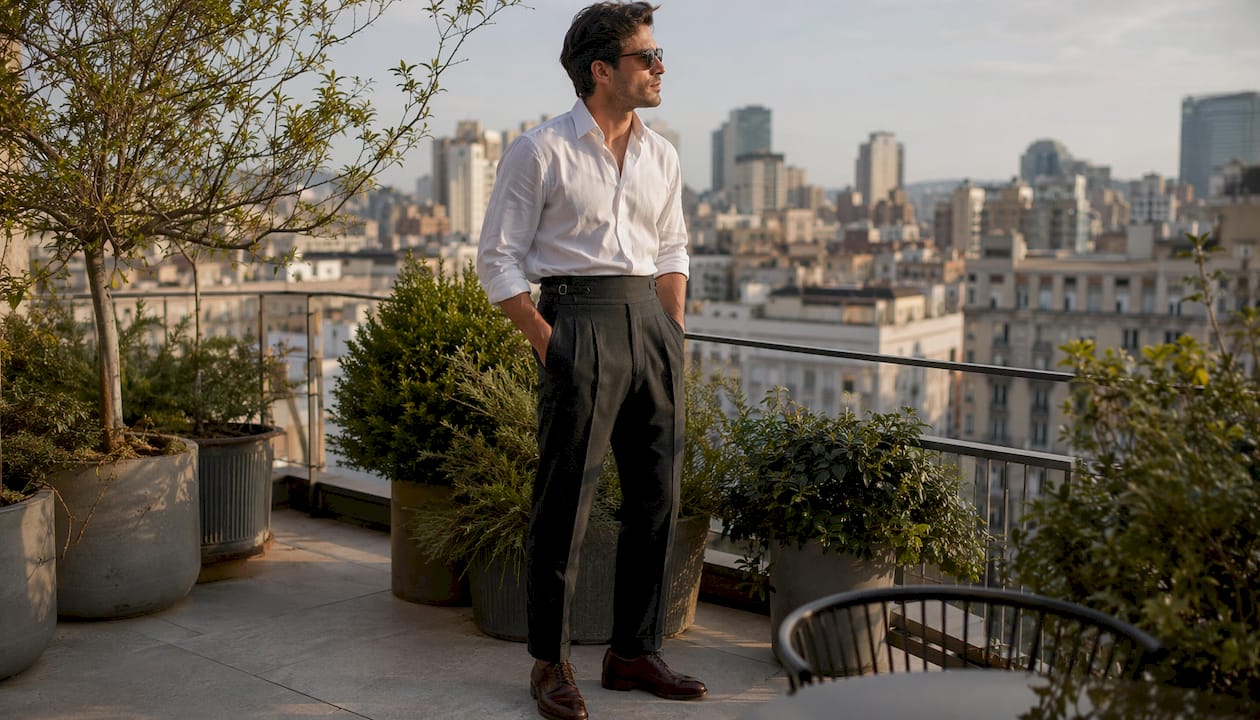
Gurkha trousers are high-rise, double-pleated trousers with a cummerbund-style wrap waistband and adjustable side tabs — a belt-free silhouette that moves with equal ease from a summer garden party to a boardroom. If you want to try the style quickly, a ready-to-wear pair from Todd Snyder, Bonobos, or Marini is a sound starting point. If you need a true high-rise fit that sits precisely at your natural waist, bespoke is the only route that delivers it reliably. Ronandrich has offered that level of craftsmanship since master tailor Richard Fan founded the house in 1979, and the Gurkha trouser is among the most rewarding garments to commission at that level.
Table of Contents
- What are Gurkha trousers and where do they come from?
- What construction details define authentic Gurkha trousers?
- How do Gurkha rise, waist, and leg fit differ from regular trousers?
- Which fabrics and construction details should you prioritize?
- How do you style Gurkha trousers for different occasions?
- Where can you buy Gurkha trousers, and what should you expect to pay?
- Why choose bespoke from Ronandrich for Gurkha trousers?
- Ready-to-wear versus bespoke: which is right for you?
- Key Takeaways
- The Gurkha trouser deserves more credit than it gets
- Ronandrich bespoke Gurkha trousers: what’s included and how to start
- Useful sources and further reading
What are Gurkha trousers and where do they come from?
The Gurkha trouser is defined by three construction details that appear nowhere else in tailored menswear together: a wide, high-rise waistband that wraps and fastens like a cummerbund, a pair of adjustable side tabs or buckles that replace the belt entirely, and double forward pleats that release fullness across the thigh when you sit or stride.
The origin is military. Gurkha regiments serving in the British Indian Army wore a tropical uniform known as Khaki Drill, and the adjustable cummerbund waistband was a practical field solution: it allowed a single pair of trousers to accommodate soldiers whose weight shifted during long campaigns. That utilitarian logic is still the design’s greatest virtue. After the Second World War, the silhouette migrated into civilian menswear, carried first by British tailoring houses and later by American and European designers who recognized its combination of structure and comfort.
Key defining features at a glance:
- High, cummerbund-style waistband that sits at or above the natural waist
- Adjustable side tabs or buckles that replace a belt and allow fine-tuning of the fit
- Double forward pleats that provide thigh room without sacrificing a clean front line
- No belt loops — the waistband is the closure system
What construction details define authentic Gurkha trousers?
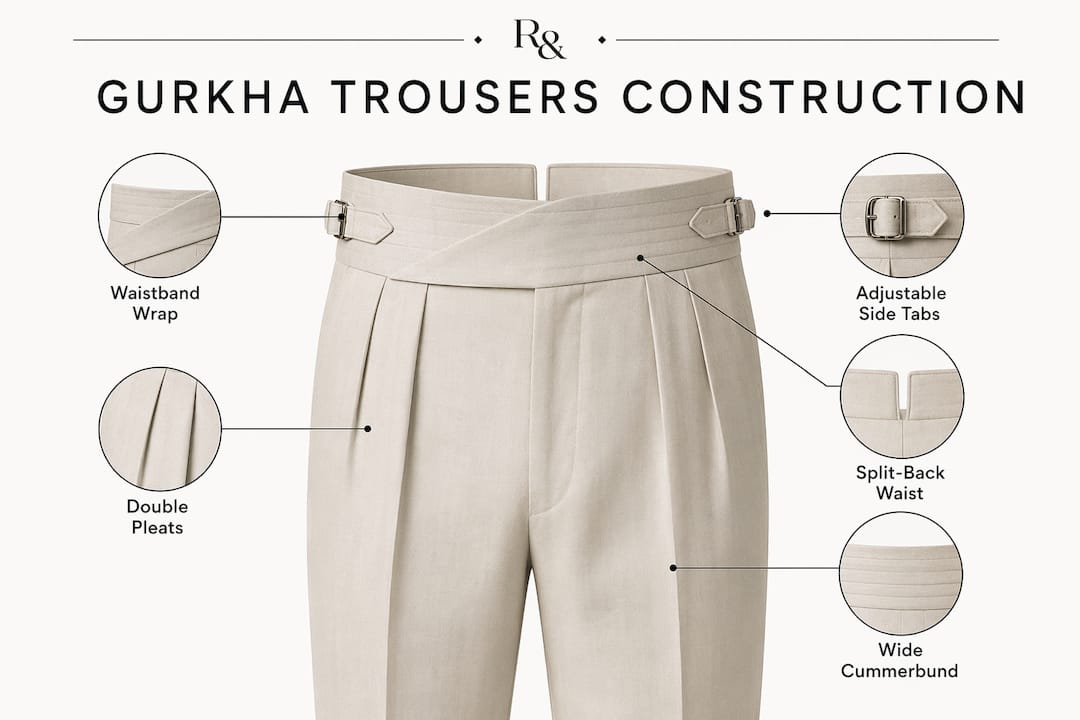
The waistband is where authentic Gurkha construction either succeeds or falls short. A properly built example wraps across the front of the body and fastens with a crossover tab system secured by side buckles, creating a smooth, uninterrupted front panel. The interior should be lined in self-fabric or a complementary material so the wideband lies flat against the torso without rolling or buckling.
Behind the waistband, look for a split-back construction. This detail allows a tailor to alter the rear waistline independently of the front buckle positioning, which is critical for high-rise trousers where even a centimeter of variance changes how the garment sits on the hip. The fly is typically concealed — a button fly is traditional — and internal hook-and-bar closures add security at the waistband’s overlap. Buckle hardware matters more than it might seem: polished metal or mother-of-pearl side adjusters signal quality, while lightweight melamine buckles are common in RTW construction and perfectly serviceable for everyday wear.
Pro Tip: The wide waistband functions as a visual framing device. When it sits correctly at your natural waist, it lengthens the appearance of the leg and creates a slimming vertical line that a belt-worn trouser simply cannot replicate. If the band rides down to your hip, the entire effect collapses — fit the waist first, everything else second.
How do Gurkha rise, waist, and leg fit differ from regular trousers?
Rise is the measurement from the crotch seam to the top of the waistband, and in a Gurkha trouser that number runs notably higher than in a contemporary flat-front pant. The waistband is designed to sit at or just above your natural waist, which is typically one to two inches above your navel. That placement is what creates the elongated leg line the style is known for.
To measure correctly before buying or booking a fitting:
- Natural waist — measure at the narrowest point of your torso, not where you normally wear trousers.
- Hip — measure at the fullest point, roughly eight inches below the natural waist.
- Thigh — measure the fullest part of one thigh with the tape relaxed.
- Rise — sit on a flat chair and measure from the chair seat to your natural waist.
- Inseam — measure from the crotch seam to your preferred hem point.
In the fitting room, sit down, walk a few steps, and check that the pleats lie flat when you stand. Retail product pages often list the model’s height and the size worn — compare those notes to the size chart before ordering online. A split-back waistband is the single most important alteration-friendly detail to request; it lets a tailor take in or let out the rear waist without disturbing the front buckle system.
Pro Tip: Wear the shoes and jacket you plan to pair with these trousers to your fitting or try-on. The high rise changes how jacket length reads on your body, and the shoe heel height affects where the hem should break.
Which fabrics and construction details should you prioritize?
Fabric choice determines whether a Gurkha trouser reads as a summer staple or a cool-weather workhorse.
- Linen and linen blends — lightweight and breathable; ideal for warm months and resort wear. Expect natural wrinkle and a relaxed drape.
- Cotton twill and brushed cotton — the most versatile choice. A mid-weight cotton twill (around 200–280 gsm) works from spring through early fall and holds a crease well. RTW options like Todd Snyder’s brushed cotton version use 98% cotton, 2% elastane for added comfort.
- Wool flannel and wool twill — the choice for fall and winter. Dunhill’s wool twill Gurkha trouser, cut from British-milled fabric, demonstrates how a heavier wool adds structure and a sharper silhouette in cooler temperatures.
- Supima or Pima cotton drill — a premium option for summer. Hemingsworth’s Kulbir Gurkha uses 100% Supima cotton in a lightweight smooth twill, producing a silky handle that wears cool against the skin.
For internal construction, a fully canvassed or structured waistband holds its shape through the day far better than a fused one. Cupro or sateen lining in the seat and thigh reduces friction and improves drape. If a product listing does not specify lining, the trouser is almost certainly unlined — fine for casual wear, less so for a formal occasion.
How do you style Gurkha trousers for different occasions?
Style experts consistently note that the Gurkha’s structured silhouette is what makes it so adaptable — it carries a blazer as naturally as it accepts a linen shirt worn open.
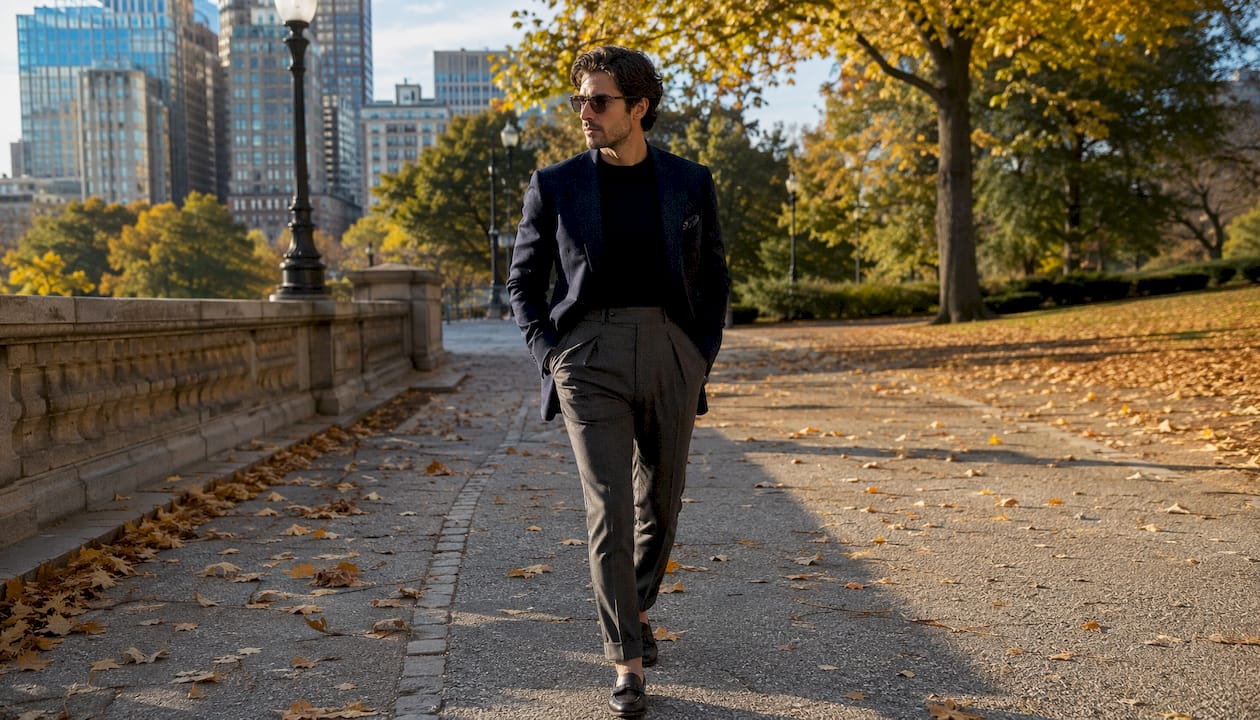
- Casual: Pair with a relaxed crew neck or open-collar linen shirt, left untucked at the front and tucked at the back (the “French tuck”). Finish with white leather sneakers or suede loafers. The high waist keeps the look intentional rather than sloppy.
- Smart-casual: A slim merino roll neck tucked in, a tailored unstructured blazer, and leather Chelsea boots. The pleats provide enough thigh room for comfort while the waistband reads as dressed-up.
- Cocktail or dress: A crisp bespoke dress shirt tucked cleanly into the high waistband, a single-breasted dinner jacket or a well-cut suit jacket, and Oxford shoes or monk straps. The belt-free front gives a cleaner line under a jacket than any belt-worn trouser.
Pro Tip: Jacket length is critical with a high-rise trouser. A jacket that hits at or just below the hip bone works well; one that falls to mid-thigh visually shortens the leg and undermines the silhouette the Gurkha waistband creates. When in doubt, go shorter.
Where can you buy Gurkha trousers, and what should you expect to pay?
The buying landscape divides into three clear tiers, each with different tradeoffs on fit, price, and lead time.
- Ready-to-wear retail: Todd Snyder, Bonobos, and Marini all carry Gurkha-style pants accessible to U.S. shoppers. Prices generally range from around $150 to $350 for quality RTW options. Check the returns policy before ordering online — the high rise fits differently from any trouser you own, and an exchange is likely on the first attempt.
- Heritage and designer RTW: Brands like J. Peterman offer historically inspired Gurkha styles at accessible price points. At the designer end, dunhill’s wool twill Gurkha trousers are priced at £875 (approximately $1,100 USD at current exchange), reflecting British-milled fabric and refined finishing.
- Bespoke: A fully bespoke pair from a house like Ronandrich represents the top of the range in both fit precision and craftsmanship. Lead times typically run six to ten weeks from consultation to delivery, accounting for pattern drafting, a toile fitting, and final finishing.
Buying note: When evaluating an online listing, look for three specifics — fabric weight or composition, whether the waistband is lined or unlined, and buckle material. Those three details tell you most of what you need to know about construction quality before the garment arrives.
Why choose bespoke from Ronandrich for Gurkha trousers?
The Gurkha trouser is one of the few garments where bespoke is not a luxury preference but a practical necessity for many men. The high-rise waistband must sit at a precise anatomical point — and that point varies considerably from one body to the next. RTW sizing addresses waist circumference; it cannot address the relationship between your natural waist, your hip, and your rise simultaneously.
Ronandrich’s bespoke process, refined over more than four decades since Richard Fan established the house in 1979, addresses exactly that:
- Consultation — discuss fabric, construction details, and intended use.
- Measurement — full body measurement including natural waist, hip, thigh, rise, and inseam.
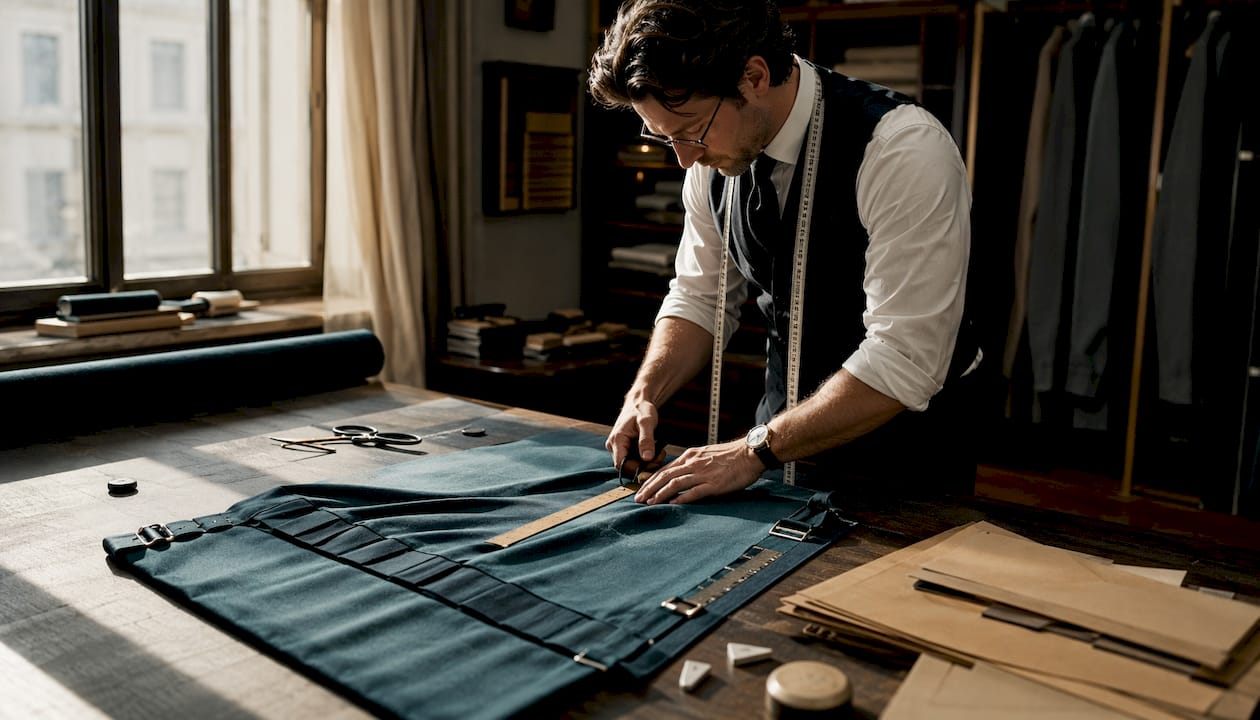
- Pattern drafting — a unique pattern cut to your measurements, not adapted from a block.
- Toile fitting — a test garment in an inexpensive fabric to confirm rise placement and pleat positioning before cutting the final cloth.
- Final fitting and finish — adjustments made, lining and hardware confirmed, hem set with your shoes present.
The bespoke advantages specific to Gurkha trousers include:
- A split-back waistband built in as standard, allowing future alterations without disturbing the front closure
- Fully constructed waistband with internal hook-and-bar and concealed button fly
- Choice of lining (cupro, sateen, or self-fabric) and buckle hardware
- Rise set precisely at your natural waist, not approximated from a size chart
Explore Ronandrich’s bespoke tailoring process to understand the full timeline and what each fitting stage involves.
Ready-to-wear versus bespoke: which is right for you?
Both routes have genuine merit. The decision comes down to how you weigh speed, price, and fit precision.
Ready-to-wear advantages:
- Available immediately, with no lead time
- Lower price point ($150–$350 for quality RTW)
- Easy to return or exchange if the fit is off
- Good for testing whether the Gurkha silhouette suits your wardrobe before committing
Ready-to-wear limitations:
- Rise placement is fixed and rarely matches a high natural waist
- Waistband construction is often unlined or lightly fused
- Alterations to the front buckle system are complex and sometimes impossible
- Fabric and lining choices are predetermined
Bespoke advantages:
- Every measurement is yours alone — rise, waist, hip, thigh, and inseam set precisely
- Construction details (split back, lining, hardware) chosen to your specification
- A garment built to last years, not seasons
- The Gurkha’s defining silhouette is only fully realized when the waistband sits correctly
Bespoke limitations:
- Six to ten weeks lead time from consultation to delivery
- Higher investment than RTW
- Requires in-person fittings
For a man who has tried RTW Gurkha pants and found the rise too low or the waistband uncomfortable, bespoke is not an indulgence — it is the solution.
Key Takeaways
Gurkha trousers deliver their defining silhouette only when the high-rise waistband sits at the natural waist; bespoke is the most reliable way to achieve that placement, while quality RTW offers an accessible entry point for style testing.
| Point | Details |
|---|---|
| Signature construction | High-rise cummerbund waistband, adjustable side buckles, and double forward pleats define an authentic Gurkha trouser. |
| Fit rule of thumb | Measure your natural waist, not your hip; the waistband must sit at or above the navel for the silhouette to work. |
| Fabric by season | Cotton twill for spring through fall; wool flannel or twill for cooler months; linen for summer and resort wear. |
| When to choose bespoke | If RTW rise placement feels low or the waistband sits uncomfortably, bespoke with a split-back waist is the correct solution. |
| Ronandrich bespoke | Ronandrich offers fully bespoke Gurkha trousers with split-back waistband, choice lining, and precise rise placement from consultation to delivery. |
The Gurkha trouser deserves more credit than it gets
Most men who try Gurkha trousers for the first time are surprised by how wearable they are day to day. The assumption is that a high-rise, pleated trouser belongs only to a formal wardrobe or a period drama. The reality is almost the opposite: the adjustable waistband makes these among the most comfortable trousers to wear for long hours, and the structured front reads as dressed-up without requiring a jacket.
What I find underappreciated is how the Gurkha silhouette rewards investment in the right hem length. A trouser that breaks cleanly over a leather loafer or a Chelsea boot looks modern and intentional. The same trouser hemmed too long reads as dated. If you buy RTW, have the hem set by a tailor with your actual shoes present — it costs very little and makes a significant difference to how the garment reads. For care, a light steam after wearing keeps the pleats crisp; most cotton and wool Gurkha trousers respond well to professional pressing rather than home ironing, which tends to flatten the pleat structure.
Ronandrich bespoke Gurkha trousers: what’s included and how to start
For men who want the Gurkha silhouette done properly, Ronandrich offers a fully bespoke service that addresses every fit variable the style demands. The process covers consultation, full measurement, pattern drafting, toile fitting, and final finishing — with fabric, lining, and hardware chosen at the outset. Typical turnaround runs six to ten weeks. The result is a trouser where the waistband sits exactly where it should, the pleats fall correctly, and the rise is yours alone. If you have struggled with RTW high-rise trousers that never quite sit right, that persistent fit issue has a direct solution here. Browse the bespoke collection or review the full tailoring process to book your consultation and begin.
Useful sources and further reading
- Style 101: The Gurkha Trouser — The Rake: The most thorough editorial overview of Gurkha trouser history, from Khaki Drill origins to modern styling. Useful for understanding the military-to-civilian transition and the design’s enduring logic.
- Todd Snyder Gurkha Pants & Trousers: A strong RTW reference for U.S. shoppers, with detailed product pages listing fabric composition, construction notes, and model sizing examples.
- Bonobos Italian Gurkha Trouser: An accessible U.S. RTW option with fit guides and a generous returns policy — useful for first-time buyers testing the silhouette.
- Hemingsworth Navy Kulbir Gurkha Trouser: A heritage-focused product page with detailed construction notes (Supima cotton, mother-of-pearl buttons, polished metal buckles) that illustrate what quality RTW finishing looks like.
- Ronandrich Bespoke Process: Step-by-step explanation of the bespoke tailoring timeline, from initial consultation through final delivery — the reference for anyone considering a commissioned pair.
- Ronandrich Trousers Collection: Overview of ready-to-wear and bespoke trouser options from Ronandrich, with construction details and fabric notes for comparison.