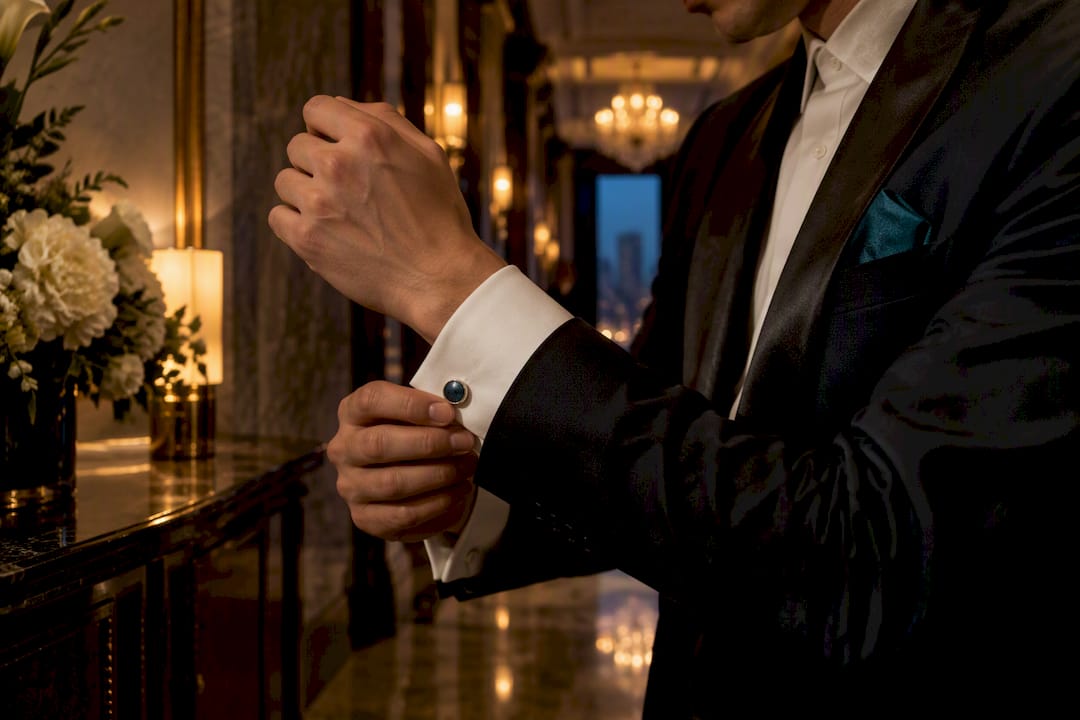
3 Questions to Decide a Shirt's Gauntlet Button (Ron & Rich)
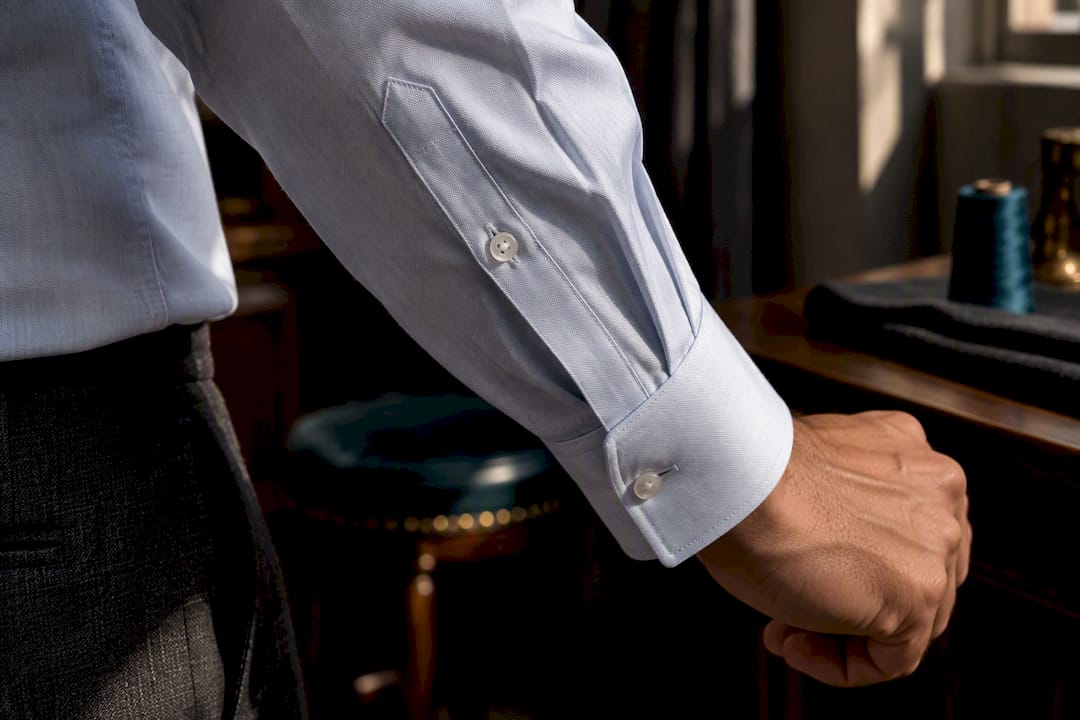
A gauntlet button is the small button set into the sleeve placket, just above the cuff, on a dress shirt. Fasten it for tailored, professional wear, since a closed placket keeps the sleeve neat under a jacket cuff. Some shirtmakers omit it by design, engineering a shorter placket instead, so its absence is a choice rather than a flaw.
TL;DR:
- The presence of a gauntlet button indicates a longer sleeve placket designed for easier sleeve rolling and ironing, especially useful for daily wear.
- A shirt with a gauntlet button is typically tailored for formal settings, such as under jackets or in office environments, where a tidy sleeve line matters.
- Many mass-market shirts omit the gauntlet button to reduce manufacturing complexity, with its inclusion often signaling higher construction standards.
- The decision to include or omit the gauntlet button should consider how often you roll your sleeves and your overall style preferences.
- Tailors can customize placket length and button placement during fitting to optimize comfort and appearance based on individual sleeve rolling habits.
Table of Contents
- What is a gauntlet shirt detail and where did it come from?
- Why the gauntlet button matters on a dress shirt
- When should you button the gauntlet, and what does it signal?
- How tailors and manufacturers handle the gauntlet button
- Ron & Rich’s approach to specifying the gauntlet button
- The gauntlet button deserves more thought than it gets
- Want a shirt built around how you actually wear it
- Sources
- FAQ
What is a gauntlet shirt detail and where did it come from?
The name traces back to the gauntlet itself, the armoured glove worn by medieval knights, which needed a snug fastening at the wrist to stay secure beneath plate armour. That fastening point on the forearm carried the name into tailoring, where the button on a shirt’s sleeve placket inherited the same job in miniature: closing a gap at the wrist so nothing flares open. Liberty Shirt Co. traces this lineage from protective armour to a sartorial detail that now serves appearance more than protection.
The shift from battlefield necessity to shirt hardware happened gradually as tailoring absorbed terms and techniques from military and equestrian dress. A rough timeline shows how the detail settled into its modern form:
- Bespoke tailoring adopted the sleeve placket button as a practical fix for shirts cut with a vertical opening at the cuff.
- Ready-to-wear manufacturing picked up the feature in the twentieth century, though not universally, since it adds a manufacturing step.
- Different tailoring schools developed their own placket lengths and button placements, which is why gauntlet treatment still varies between an Italian, English, and American cut today.
The detail never disappeared. It simply became optional, which is where most of the confusion around it starts.
Why the gauntlet button matters on a dress shirt
Its primary job is straightforward: it closes the sleeve placket so the fabric doesn’t gape open at the wrist when you move your arm or reach forward. Without it, that vertical slit sits loose, and a shirt with a gaping placket looks unfinished no matter how sharp the rest of the cut is.
The button also plays a role that has nothing to do with buttoning it at all. Permanent Style’s cuff guide notes that a longer placket, the kind built to carry a gauntlet button, gives you room to roll your sleeves properly without the fabric bunching or twisting at the forearm. That same length makes ironing easier, since a longer opening lets the iron reach further up the sleeve without you fighting the fabric.
Three everyday scenarios show where this becomes practical rather than academic:
- Wearing a jacket over the shirt. Keep the gauntlet buttoned. A closed placket sits flat under a jacket sleeve, and a gaping one shows through as a small but noticeable flaw.
- Rolling your sleeves for work or a casual setting. Unbutton it deliberately. The extra placket length is what allows a clean, even roll instead of a lopsided one.
- Wearing a watch or cufflinks with the sleeve down. Keep it fastened. It stops the placket catching on a watch strap and holds the cuff in a consistent line around the wrist.
Pro Tip: If you roll your sleeves often, ask your tailor for a slightly longer placket with the gauntlet button positioned a touch higher. It gives you a cleaner roll and still closes neatly when you put the sleeve back down.
When should you button the gauntlet, and what does it signal?
The general rule is simple: button it whenever you want a tidy, formal sleeve line, and leave it open only when you’re rolling up or deliberately going casual. In an office, at a meeting, or under a jacket, a fastened gauntlet reads as considered dress. Left open in that context, it just reads as an oversight.
There are two legitimate reasons to leave it undone, and neither has anything to do with sloppiness:
- You’re rolling your sleeves for manual work or a relaxed setting, where the button stays open by necessity.
- Your shirt has no gauntlet button at all, because the maker engineered a shorter placket that doesn’t gape without one, as some bespoke shirtmakers do intentionally.
The button also functions as a quiet signal of how the shirt was made. Sartorial commentary from Thought Works points out that mass-market shirt manufacturers frequently skip the gauntlet button to save a step in production, so its presence, and whether it actually gets used, often lines up with a higher standard of construction. Preferences vary by wearer too. Discussions on Ask Andy About Clothes show plenty of men value it for neatness and rolling flexibility, while others prefer shirts without it purely for simplicity or ease of care. Neither camp is wrong. It comes down to whether you roll your sleeves often enough to need the option.
How tailors and manufacturers handle the gauntlet button
Bespoke makers treat the gauntlet button as a design decision, not a default. Some shorten the placket during construction specifically so it sits flat without needing a button at all, engineering the gap out of the problem rather than closing it after the fact. Others keep a longer placket and rely on the button to do the work, which gives the wearer the choice to roll sleeves later without altering the shirt.
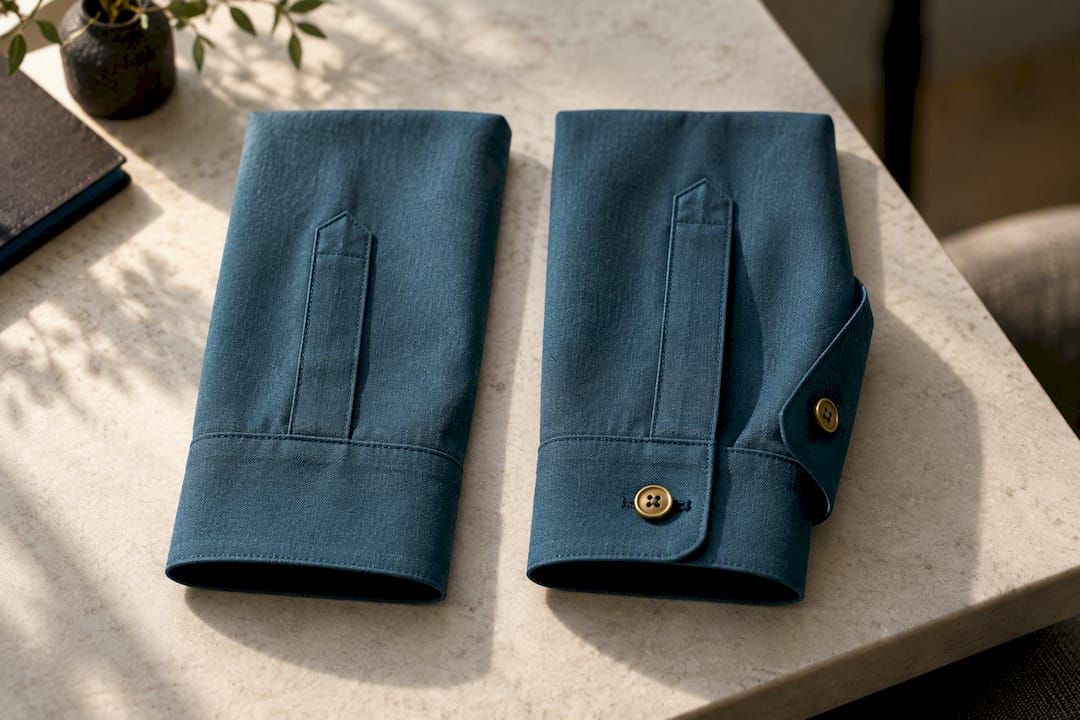
Ready-to-wear brands make the same decision at scale, but cost usually drives it rather than design philosophy. Adding a buttonhole and button at the placket means an extra step on every unit, so many mass-market shirts leave it out even where a longer placket would benefit from one.
Cuff style also decides whether the button belongs at all:
- Barrel cuffs, the standard single-button or two-button cuff, pair naturally with a gauntlet button, since the placket length and the wrist opening both benefit from that extra closure.
- French cuffs, folded back and fastened with cufflinks, rarely need one. Tailoring discussion confirms the doubled fabric at a French cuff already closes the placket gap on its own.
There’s a practical consequence worth knowing before you shorten a sleeve. A fixed gauntlet button can constrain how much a tailor can take off the cuff without disturbing the placket’s balance, so a good tailor either relocates the button or shortens the placket itself to keep the proportions right. This is also where placket style choices and cuff type start to interact, which is exactly why it’s worth raising at a fitting rather than after the shirt is finished.
Ron & Rich’s approach to specifying the gauntlet button
At some bespoke tailors, the gauntlet button is treated as a fitting conversation, not an afterthought stitched on at the end. Placket length, cuff style, and how often you roll your sleeves all feed into whether we recommend including the button, adjusting its position, or shortening the placket so it isn’t needed. Our own construction notes on shirt gussets and sleeve fit reflect the same principle: small structural choices near the cuff and underarm change how a shirt behaves in daily wear, not just how it looks on the rail.
Three questions worth raising at your own fitting, whether with us or another tailor:
- How long should the placket be, given how often I intend to roll my sleeves?
- Do I want a gauntlet button included, or would a shorter engineered placket suit me better?
- Which cuff style am I choosing, and does that change whether the button is even necessary?
The gauntlet button deserves more thought than it gets
Most menswear advice treats the gauntlet button as trivia, a fact to know rather than a decision to make. That undersells it. The research here points to something more useful: the button’s presence or absence tells you something real about how a shirt was constructed, and whether you use it tells you something about how you actually wear your clothes.
The conventional advice, button it when in doubt, isn’t wrong, but it skips the more interesting question. Do you roll your sleeves often enough that a longer placket serves you better than a fixed closure? Do you wear a jacket most days, where a closed gauntlet quietly does its job? Answer that before you worry about the button itself.
Prioritise the placket length first, the button choice second. A well-engineered placket with no button can outperform a poorly proportioned one with a button stitched on as an afterthought.
— Ron
Want a shirt built around how you actually wear it
Some bespoke tailoring services offer an alternative to buying off a rail by cutting every shirt to a customer’s measurements, deciding the placket length, cuff style, and gauntlet button at the fitting rather than by factory patterns.

If you roll your sleeves most days, we’ll likely suggest a longer placket built for that. If you wear a jacket most days, a shorter, cleaner placket with the button in the right spot might serve you better. You can browse the shirting collection to see the range of cuff and placket options available, or check current pricing for custom shirts, which start from $199 one off. Bring the question to a fitting and we’ll work through it with you, rather than leaving it to guesswork on a hanger.
Sources
- The guide to shirt cuffs – Permanent Style
- Gauntlet Buttons – Thought Works
- The gauntlet button: a small detail with a rich history – Liberty Shirt Co.
FAQ
What are those buttoned shirts with a wrist detail called?
Shirts with a gauntlet button are simply called dress shirts or button-up shirts; the gauntlet button itself is a specific placket detail, not a shirt category. It sits on the sleeve placket just above the cuff and closes the small vertical opening there.
What is the button on a shirt cuff called?
The cuff-closing button, the one you fasten to close the cuff around your wrist, is just called the cuff button. The gauntlet button is a separate, smaller button set higher up on the placket, above the cuff itself.
Are button-down shirts still fashionable?
Yes, button-down and button-up dress shirts remain a wardrobe staple for professional and smart-casual dressing. Construction details like the gauntlet button, placket length, and cuff style are what separate a well-made shirt from a basic one, which is exactly why they’re worth understanding before you buy.
What do you call a shirt with hidden buttons?
A shirt with buttons concealed behind a fabric fly is called a French placket or fly-front shirt, distinct from the standard placket most shirts use. You can read more about how French plackets compare to standard plackets and how that choice affects the overall look of the front of the shirt.