
French Placket vs. Standard Placket: Choose the Right Shirt
A standard (plain) placket is a stitched, visible front strip that adds structure; a French placket front is a folded, seamless finish favored for the cleanest formal look. The difference between plackets is not merely cosmetic. It shapes how a shirt behaves, how it irons, and how it reads across the room.
Choose a standard placket when:
- You wear shirts untied, in business-casual settings, or with a chest pocket
- You want a shirt that holds its shape through a long day without a tie
Choose a French placket when:
- You are dressing for a formal occasion, a black-tie event, or a wedding
- You want the cleanest possible front, ideally paired with a tie or French cuffs
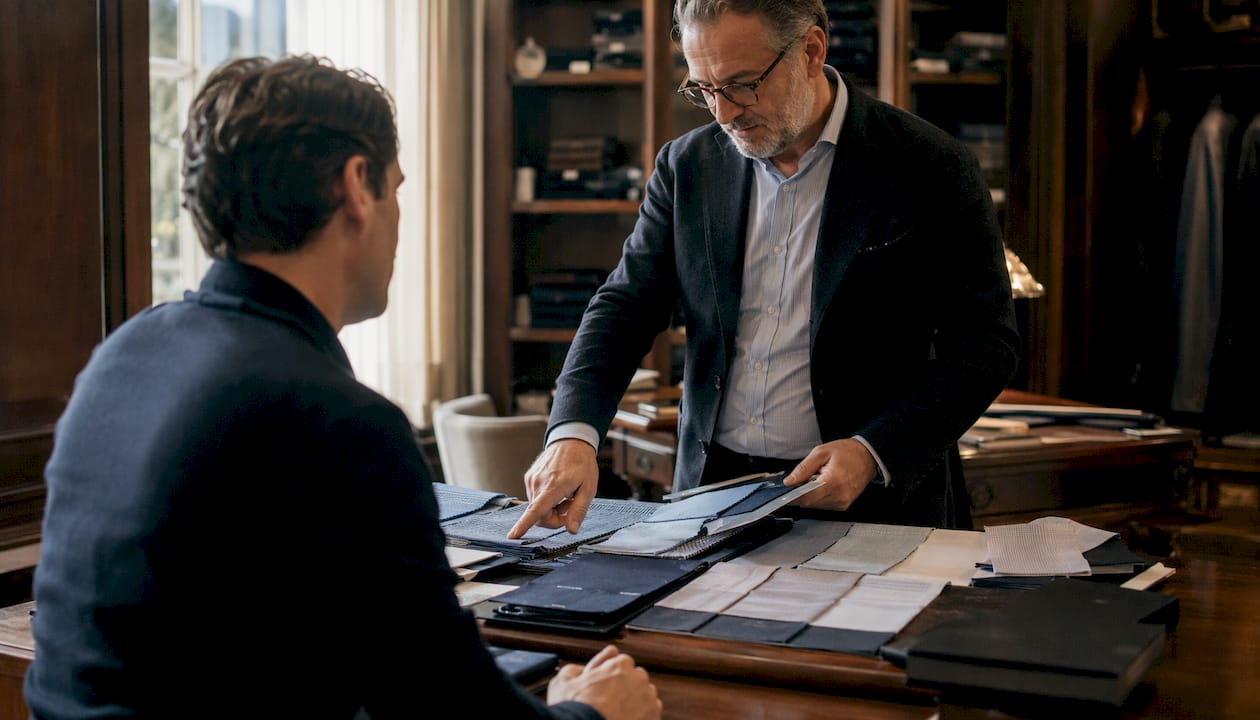
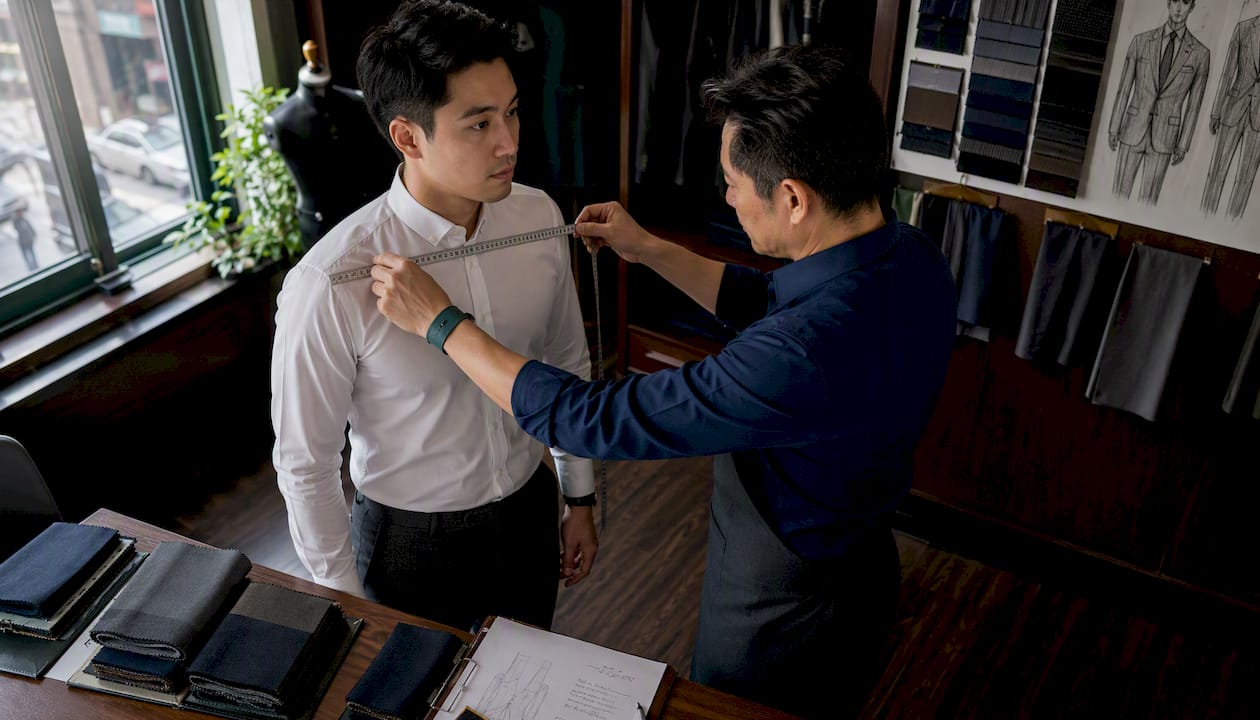
In bespoke work, placket choice is decided early in the consultation because it affects patterning, interfacing weight, and buttonhole placement. If you are commissioning a shirt, bring this decision to your first fitting.
Table of Contents
- What is a standard placket, and how is it made?
- What is a French placket, and what makes it different?
- How do they compare side by side?
- How do you choose between them?
- Other placket styles worth knowing
- What tailors look for in placket construction
- Key Takeaways
- The placket detail most men overlook
- Bespoke shirts, made to your exact specification
- Further reading
What is a standard placket, and how is it made?
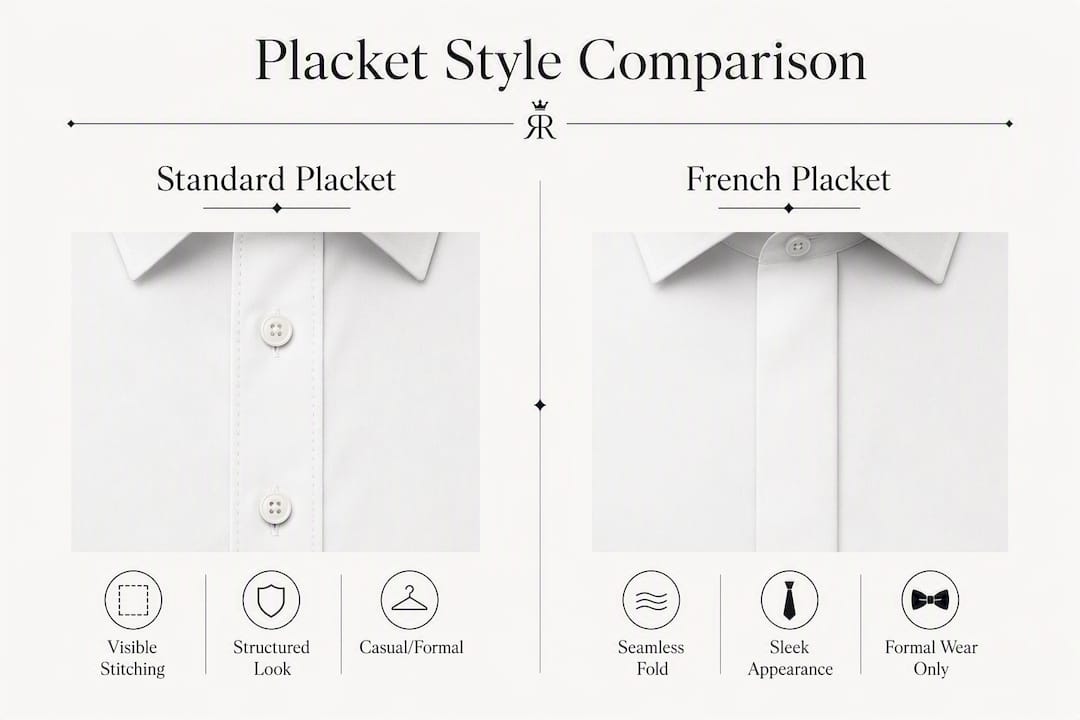
A standard placket is a separate or folded strip of fabric stitched to the shirt’s front, creating a visible vertical line along both edges. You can identify it immediately: two parallel rows of topstitching run down the center front, the strip sits slightly raised, and the buttons are set into this reinforced band. It is the most common construction you will find on business shirts, Oxford cloth button-downs, and most off-the-rack dress shirts.
The practical advantages are real. The visible strip gives the iron a stable surface to press against, making care straightforward. The vertical seam lines create a subtle slimming effect across the torso, which is worth considering for larger body types. Structurally, the reinforced band keeps the shirt from pulling open between buttons under a jacket.
Standard placket: pros and cons at a glance
- Pros: More structural support, easier to iron, works with or without a tie, compatible with chest pockets, widely available
- Cons: Visible stitching reads as less formal in black-tie contexts, slightly heavier front panel
Standard plackets are the dominant choice for business and smart-casual shirts precisely because they perform reliably across a wide range of occasions.
What is a French placket, and what makes it different?
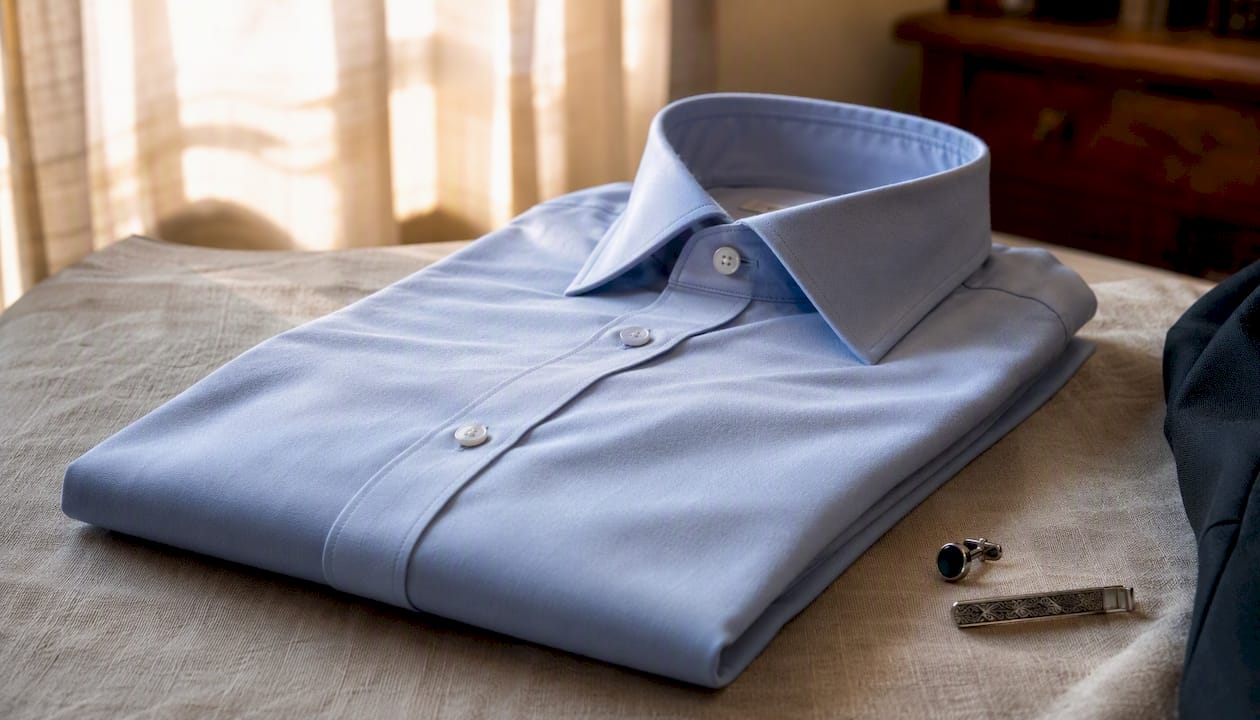
A French placket, sometimes called a no-placket front, is made by folding the fabric back toward the underside and stitching it from behind, leaving no visible topstitching and a seamless front face. From the outside, you see only the buttons set into a plain, unbroken expanse of fabric. No raised strip, no parallel seam lines.
French placket: pros and cons
- Pros: Cleaner, more formal aesthetic; minimal texture reads as refined under a tie or with French cuffs; preferred for tuxedo shirts and high-end dress shirts
- Cons: Less structural support when worn without a tie; requires more careful pressing; demands greater tailoring precision to execute well
The sleekness comes with a tradeoff. French plackets can look limp or less structured when worn without a tie because they lack the reinforced strip that helps a shirt stand at the center front. On a lightweight poplin or fine broadcloth, this is rarely a problem under a jacket. On a heavier fabric worn open-collar, it can look soft in a way that reads as unintentional.
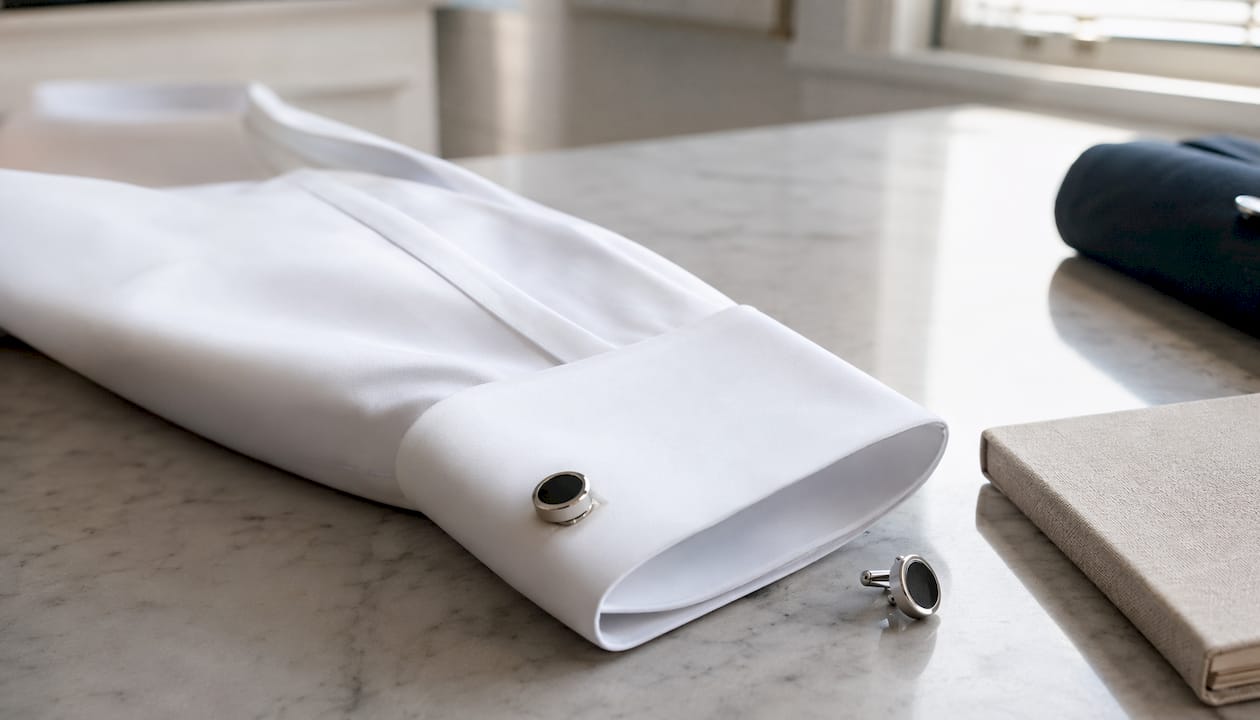
French plackets pair naturally with French cuffs, tuxedo fronts, and finer dress shirts. Note that French cuffs and French plackets are distinct details: French cuffs are a cuff style folded back for cufflinks, while a French placket is the front closure construction. The two are simply often paired for a cohesive formal look.
Pro Tip: When pressing a French placket shirt, work from the inside out using a pressing cloth. Pressing directly on the exterior can create a ghost crease along the folded interior edge that is difficult to remove.
How do they compare side by side?
| Dimension | Standard Placket | French Placket |
|---|---|---|
| Appearance / finish | Visible raised strip with topstitching | Seamless, plain front with no visible stitching |
| Visible stitching | Yes, two parallel rows | None from the front |
| Formality / best occasions | Business, smart-casual, office | Formal, black-tie, weddings |
| Tie compatibility | Works with or without a tie | Best with a tie; can look soft without one |
| Chest pocket | Compatible | Rarely used; disrupts the clean front |
| Structural support | Higher, holds shape well | Lower without a tie |
| Ease of ironing | Easier; stable strip to press | Requires more care and skill |
| Manufacturing complexity | Lower; standard construction | Higher; demands precision and careful interfacing |
Quick buyer profiles:
- The executive who rotates shirts through a five-day week will find the standard placket more forgiving in care and more versatile across meetings and after-work settings.
- A groom or black-tie guest who wants the sharpest possible front under a tuxedo jacket should reach for the French placket without hesitation.
- A casual shirt buyer who wears collars open most of the time is better served by the structure a standard placket provides.
How do you choose between them?
Decision rules:
- Define the occasion. Black-tie, wedding, or formal dinner: French placket. Office, travel, or smart-casual: standard placket.
- Consider the tie. If you plan to wear the shirt without a tie regularly, the standard placket’s structure keeps the front from looking slack.
- Check fabric weight. Lightweight fine weaves (poplin, voile) suit a French placket well. Heavier Oxford cloth or twill benefits from the added body a standard placket provides.
- Decide on a chest pocket. A chest pocket and a French placket rarely coexist gracefully. If you want a pocket, choose the standard.
- Confirm with your tailor or retailer. Ask to see the shirt laid flat and inspect the center front before committing.
In-store or consultation checklist:
- Run your finger along the center front. A raised strip means standard; a flat, seamless face means French.
- Check for topstitching. Two visible rows indicate a standard placket.
- Ask whether the shirt is intended to be worn with or without a tie. The answer should guide the placket choice.
- For bespoke orders, request the placket type early in the consultation, as it affects patterning and interfacing decisions.
Standard plackets are recommended when you expect to wear shirts untied or in casual settings; French plackets belong to occasions where you want the cleanest possible front.
Other placket styles worth knowing
Beyond the French and standard options, a few other shirt placket types appear regularly in tailored menswear:
- Concealed (fly-front) placket: The buttons are hidden behind a folded flap of fabric, creating an even cleaner front than a French placket. Used for formal dress shirts and some contemporary business shirts where a minimalist look is the priority.
- Plain tuxedo front: Constructed similarly to a French placket but reserved exclusively for tuxedo shirts. The key distinction is that a plain tuxedo front typically allows the top buttons to be removed for a bib or stud closure.
- Popover / buttonless: A shirt with no full-length button placket at all, pulled on over the head. Strictly casual, and unrelated to formal placket considerations.
The concealed placket overlaps with French placket territory in formality but adds another layer of visual restraint. For most men, the choice between French and standard covers the vast majority of dress-shirt decisions.
What tailors look for in placket construction
Placket quality is one of the clearest signals of a shirt’s overall craftsmanship. When inspecting a shirt, whether off the rack or bespoke, these are the details that matter.
Inspection points:
- Buttonhole alignment: Buttonholes should sit perfectly centered on the placket strip, evenly spaced from collar to hem.
- Stitch quality under the fold: On a French placket, the interior stitching should be tight and even. Loose or uneven stitches here will cause the front to pucker after laundering.
- Placket symmetry: Hold the shirt up and check that both sides of a standard placket are equal in width. Asymmetry indicates rushed construction.
- Interfacing choice: The interfacing behind the placket determines how stiff or soft the front sits. Too heavy and the shirt feels board-like; too light and it collapses.
- Seam finishing: Clean, finished seam allowances inside the placket indicate a shirt built to last through repeated washing.
Standard plackets provide more structure and are easier for manufacturers to construct; French plackets require greater tailoring precision and more careful pressing. A well-executed French front, with no creasing and a perfectly flat fall, is a reliable indicator of higher tailoring attention.
Pro Tip: Ask your tailor to specify the interfacing weight for your placket. A medium-weight woven interfacing on a French placket keeps the front flat without stiffness, and it survives laundering far better than a fusible alternative.
Key Takeaways
The standard placket suits most men most of the time; the French placket earns its place when formality and a clean front matter most.
| Point | Details |
|---|---|
| Standard placket identity | A raised, stitched strip with visible topstitching; adds structure and is easier to iron. |
| French placket identity | A seamless, folded front with no visible stitching; cleaner but requires careful pressing. |
| Picking rule | Wear a tie or attending a formal event: choose French. Casual or open-collar: choose standard. |
| Care note | French plackets need inside-out pressing with a cloth to avoid creasing the folded interior. |
| Ronandrich bespoke shirts | Placket type is specified early in the consultation, affecting interfacing, patterning, and buttonhole placement. |
The placket detail most men overlook
There is a tendency in menswear to treat the French placket as the automatically superior choice, a mark of refinement that separates a serious shirt from an ordinary one. My view is more measured. The French placket is the right choice for a specific set of circumstances: a formal occasion, a tie, a fine fabric, and a wearer who is prepared to care for the shirt properly. Outside those conditions, it can actually work against you.
A standard placket on a well-cut shirt in a quality fabric is not a compromise. It is the correct construction for the way most men actually wear shirts. The vertical structure it provides, the ease of pressing, the compatibility with a chest pocket and an open collar: these are not lesser qualities. They are the right qualities for the right context.
What I find most telling is how a shirt behaves at the end of the day. A French placket on a lightweight poplin, worn under a jacket with a tie, looks impeccable at noon and still impeccable at six. The same shirt worn open-collar at a Friday lunch can look unfinished by mid-afternoon. The standard placket holds its composure. Choose the construction that matches the life the shirt will actually live.
Bespoke shirts, made to your exact specification
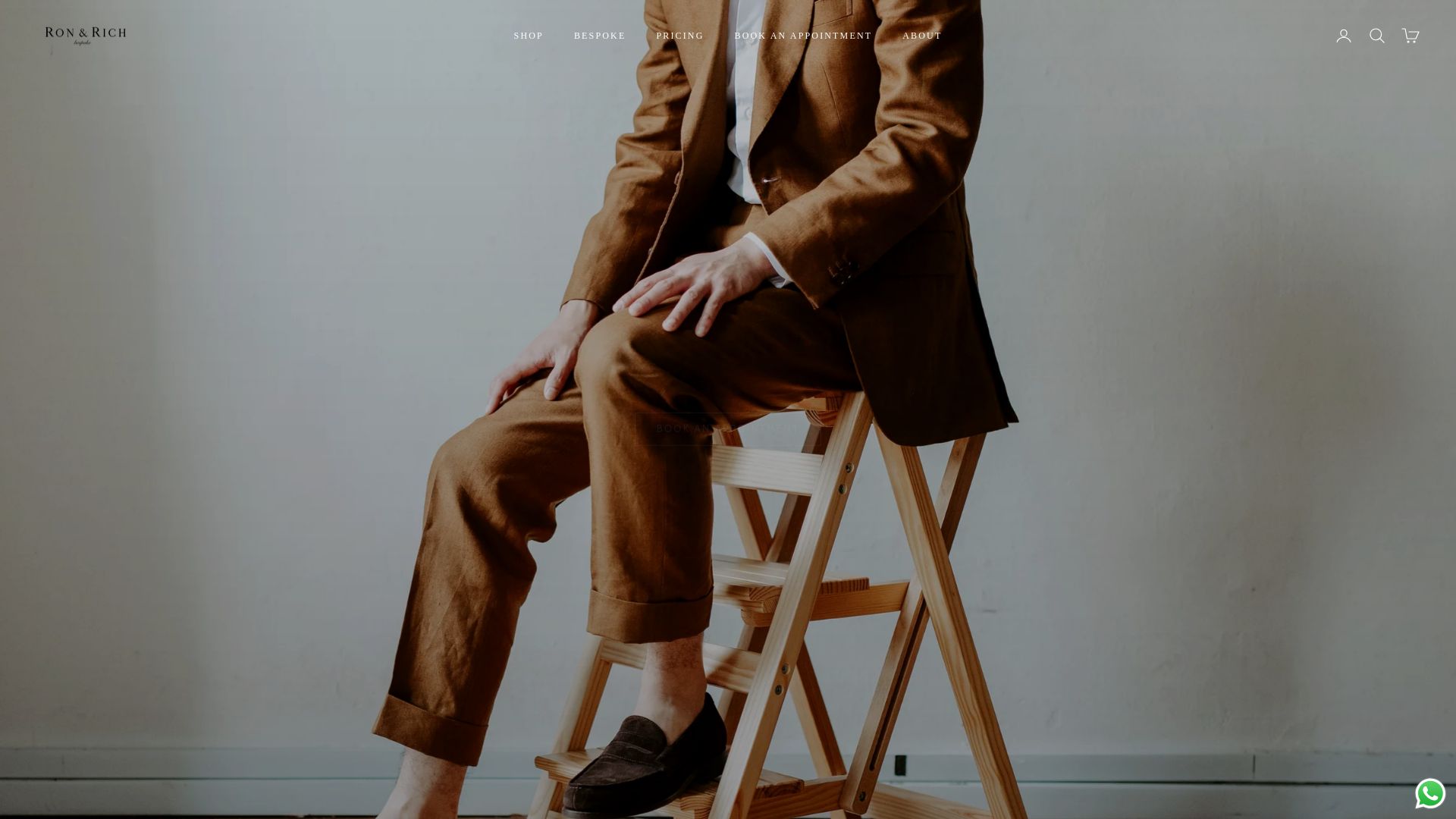
At Ron & Rich, every shirt begins with a conversation about how you intend to wear it. Placket choice, interfacing weight, cuff style, and collar construction are decided together, before a single cut is made. That is what separates a shirt built for your wardrobe from one that simply fits your measurements. Our custom-tailored shirts are made to your exact specification, whether you want the clean formality of a French front for a wedding or the reliable structure of a standard placket for daily office wear. For those ready to commission something lasting, our bespoke tailoring service walks you through every construction decision from fabric to finish. Book a consultation and bring your placket preference with you.
Further reading
- Dress Shirt Placket: What It Is and Types — Nimble Made: Clear definitions and construction notes for French, standard, and concealed plackets.
- Shirt Placket or No Shirt Placket? — George Hahn: Sartorial perspective on when each placket type earns its place, with practical care notes.
- Shirt Placket vs. No Placket — Ready Sleek: Detailed comparison of structural and ironing differences, including body-type considerations.
- Different Tuxedo and Dress Shirt Front Placket Types — Suits Expert: Covers tuxedo fronts, plain fronts, and how they relate to French placket construction.
- Placket — Wikipedia: Historical usage and terminology reference for all placket types.
%20placket%20is%20a%20stitched,%20visible%20front%20strip%20that%20adds%20structure;%20a%20French%20placket%20front%20is%20a%20folded,%20seamless%20finish%20favored%20for%20the%20cleanest%20formal%20look.%20The%20difference%20between...)