1–5% Shrinkage: Stop Dress Shirts Shrinking and When to Buy Bespoke
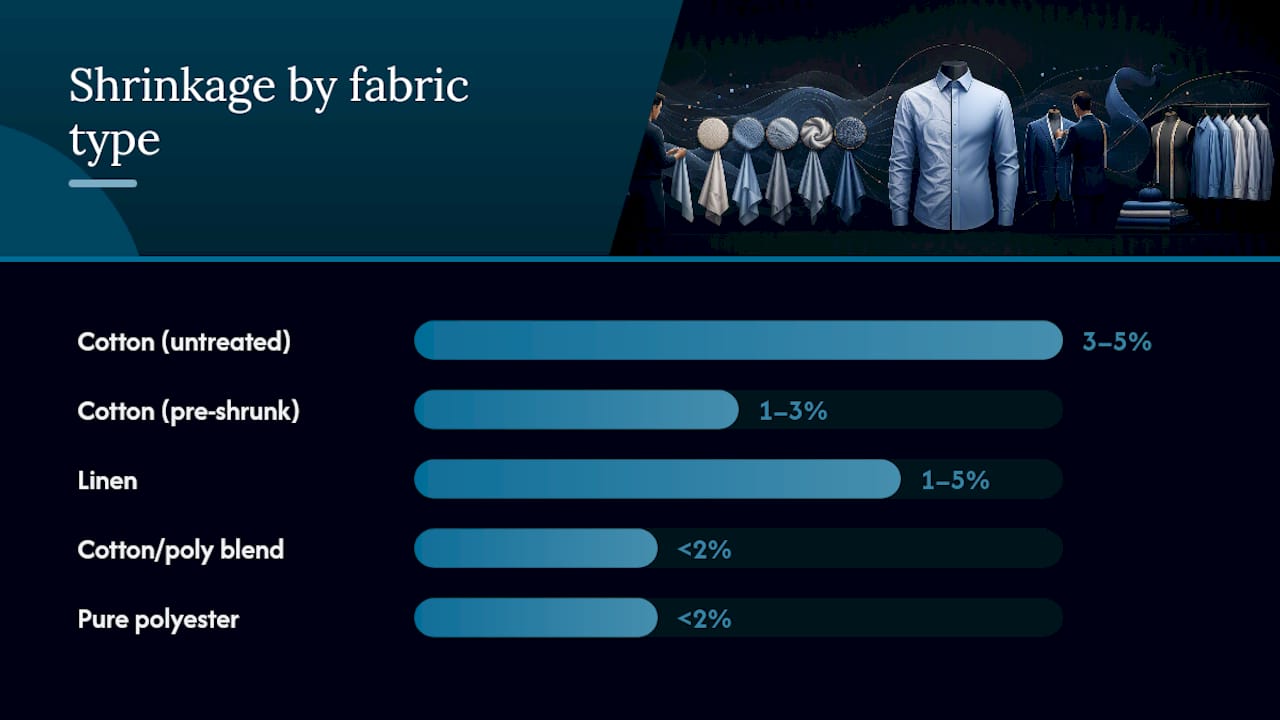
Most cotton dress shirts shrink between 1% and 5% on their first few washes, linen behaves similarly, and blends or polyester typically move less than 2%. Wool varies widely and can shrink dramatically if felted. If a shirt already looks tight after a wash, stop tumble drying it on high heat immediately, rewet the fabric, and reshape it while damp. A “pre-shrunk” label usually means residual shrinkage under standard tests stays at 3% or less.
TL;DR:
- Untreated cotton shirts can shrink up to 5%, while pre-shrunk cotton typically shrinks between 1% and 3%, making the difference notable for fit.
- Shrinkage mainly occurs during the first wash due to relaxation tension release, with wool potentially felting and causing irreversible size changes.
- Washing in cold water, low spin speed, and air-drying or low-heat tumble drying significantly reduce the risk of unwanted fabric dimensional change.
- Partial reversal of shrinkage is possible for relaxation and mild consolidation types through soaking with conditioner and gentle stretching; felted wool cannot be unshrunk.
- Custom tailoring with fabrics already pre-shrunk and incorporating allowances for shrinkage helps maintain fit better than off-the-rack shirts.
Table of Contents
- What percentage do dress shirts shrink after washing?
- Why do shirts shrink in the first place?
- How do you wash and dry a dress shirt to prevent shrinkage?
- Can you reverse dress shirt shrinkage?
- Buying and tailoring choices that prevent shrinkage problems
- What counts as acceptable shrinkage, and when do you act?
- Why bespoke shirts hold their fit better
- Sources
What percentage do dress shirts shrink after washing?
The numbers depend almost entirely on fibre and finish. A shirt made from untreated, loosely woven cotton behaves nothing like one cut from a pre-shrunk, tightly finished poplin, even though both feel similar on the hanger.
Here’s what to expect by fabric type:
- Cotton (untreated): 3% to 5% shrinkage, mostly in the first wash
- Cotton (pre-shrunk retail shirts): roughly 1% to 3% residual shrinkage under standard care conditions
- Linen: 1% to 5%, with looser weaves shrinking more than tight ones
- Cotton or cotton blends with polyester: typically under 2%, since synthetic fibres resist the moisture absorption that drives most shrinkage
- Pure polyester: under 2%, and often closer to negligible unless washed at high heat
- Wool (dress shirt weights, rare but present in flannel-style shirts): highly variable, from barely noticeable to severe if felted
A 2% to 3% change sounds trivial until you translate it into fit. A 16-inch collar losing 3% comes in just under half an inch smaller, enough to feel genuinely tight by the third wear. Sleeve length can drop a similar amount, pulling cuffs up the wrist in a way that reads as “ill-fitting” rather than “slightly laundered.”
Weave density, yarn twist, and fibre hydrophilicity (how readily the fibre absorbs water) all shift these ranges. A tightly woven poplin resists shrinkage better than an open-weave chambray of the same fibre content, because there’s less structural slack for the fabric to release.
The industry threshold for calling something “pre-shrunk” isn’t arbitrary. Test methods including AATCC 135 and ISO 6330 measure dimensional change under controlled washing and drying cycles, and manufacturers aim to keep residual shrinkage below roughly 3% to earn that label. It’s a meaningful benchmark, but it’s not a guarantee your exact shirt will land inside it.
Why do shirts shrink in the first place?
Three distinct mechanisms cause most of the dimensional change you’ll see in a dress shirt, and knowing which one you’re dealing with tells you whether a shirt can be rescued or not.
Relaxation shrinkage happens because woven and knitted fabric holds tension from the manufacturing process. Fibres get stretched during spinning, weaving, and finishing, and that tension sits latent in the cloth until water and heat let it go. The first wash typically releases most of it, which is why most shrinkage happens early rather than accumulating evenly over a shirt’s life.
Felting is specific to wool and other animal fibres with a scaled surface structure. Heat, moisture, and agitation cause those scales to interlock permanently, pulling the fabric tighter and denser. This process is often irreversible once it progresses past a mild stage, which is why a wool sweater or flannel shirt washed on the wrong cycle can shrink two sizes in a single go.
Consolidation shrinkage affects knits more than woven dress shirts, though it still shows up in knit-collar polos and some casual shirtings. Tumble drying’s heat and tumbling action pack the loops of a knit closer together, shrinking the garment further than washing alone would.
Several construction factors tip the risk higher or lower:
- Loose or open weaves shrink more than tight, dense ones
- High-twist yarns tend to resist shrinkage better than low-twist, softer yarns
- Highly hydrophilic fibres like cotton and linen absorb more water and swell more, driving greater relaxation shrinkage than hydrophobic fibres like polyester
Temperature plays an outsized role here. Cold water minimises fibre swelling, while water above 60°C dramatically accelerates both relaxation and felting in fibres prone to it. That single variable, water temperature, probably explains more shrinkage complaints than any other single factor.
How do you wash and dry a dress shirt to prevent shrinkage?
Prevention comes down to controlling three variables: temperature, mechanical action, and drying heat. Get those right and most cotton and linen shirts will hold their shape within a percent or two indefinitely.
- Wash cold or warm, never hot. Keep the machine below 40°C, and use a gentle or permanent-press cycle rather than a standard or heavy-duty one. Lower temperatures and gentler agitation both reduce the fibre swelling that drives relaxation shrinkage.
- Choose a low spin speed. High spin speeds add mechanical stress on top of the heat and moisture already at play, particularly on knit collars and cuffs.
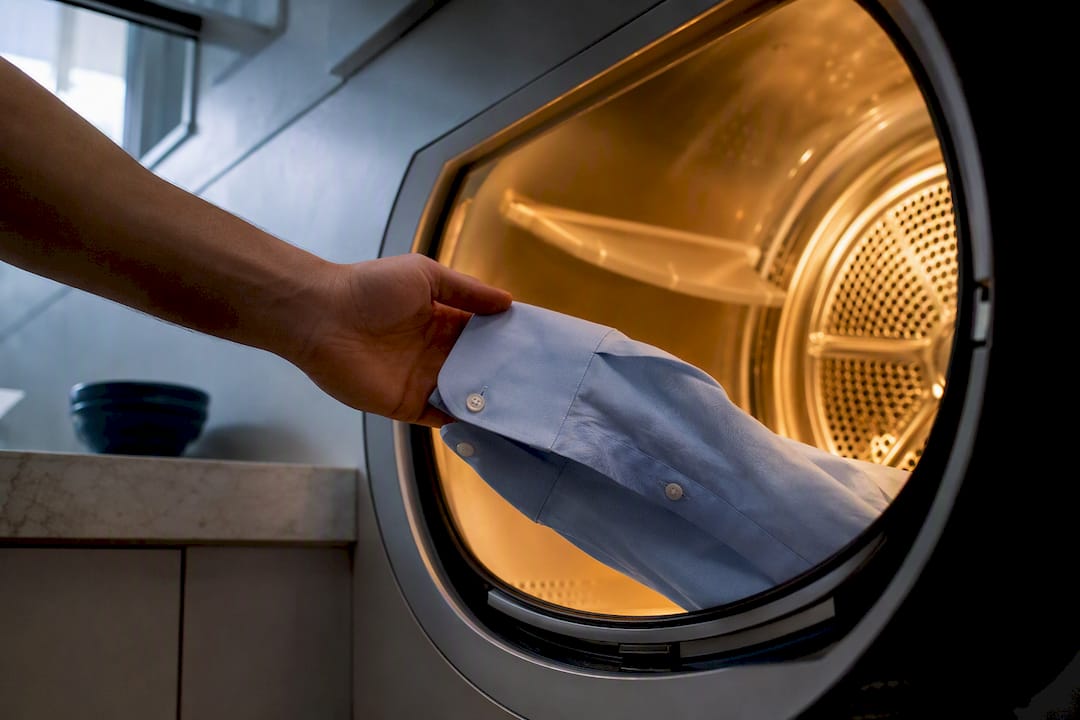
- Air-dry where possible, or tumble on low. If you must use a dryer, select the lowest heat setting and remove the shirt while it’s still slightly damp rather than bone dry.
- Reshape immediately on a shaped hanger. Smooth the collar, button the top button, and let the shirt finish drying on the hanger rather than in a pile. This single habit does more for long-term fit retention than almost anything else on this list.
- Pre-wash new shirts before any tailoring adjustments. Wash a brand-new shirt once, on cold or warm, before you have it altered. This reveals whatever residual shrinkage the fabric still holds, so a tailor isn’t working from measurements that shift after the first laundering.
- Switch to hand washing or dry cleaning for delicate fabrics. Silk, wool, and finely woven linen all respond poorly to machine agitation. A gentle hand wash in cool water, or professional dry cleaning, avoids the mechanical stress that triggers felting and consolidation.
- Read the care label before guessing. GINETEX care symbols) tell you the manufacturer’s tested tolerance for washing temperature, drying method, and ironing heat. When a label seems ambiguous or the symbols are worn away, default to the lower-risk setting: cold water, low heat, gentle cycle.
Pro Tip: Removing a shirt from the dryer while it’s still slightly damp, rather than running the full cycle, reduces fibre stress and cuts down on both shrinkage and wrinkling in one move.
Tumble drying deserves particular suspicion. It’s usually the single biggest contributor to dimensional loss in a cotton shirt, because it stacks heat, mechanical tumbling, and moisture all at once rather than applying them separately the way a wash cycle does.
Can you reverse dress shirt shrinkage?
Shrinkage can sometimes be partially reversed for certain types such as relaxation and mild consolidation shrinkage, but not for felted wool. A recommended method involves soaking the garment in lukewarm water with hair conditioner or baby shampoo to relax fibres, then gently stretching the shirt back toward original size while wet, and air-drying flat without disturbance.
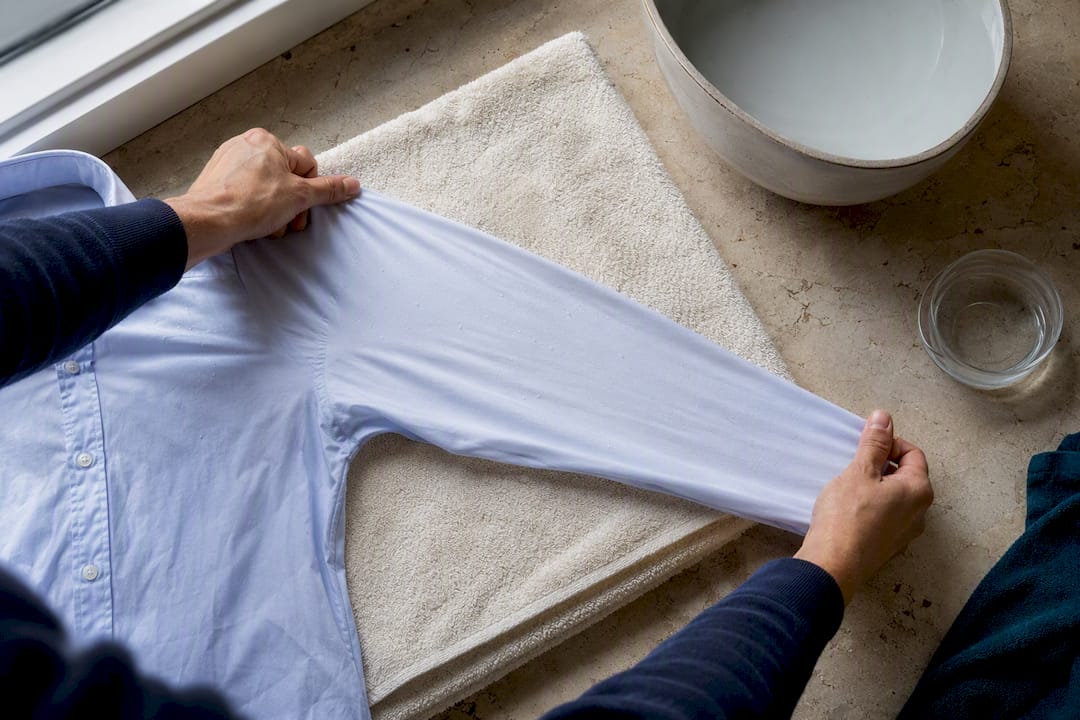
This combination of conditioner soaking and gentle stretching works because it re-lubricates fibres that dried out and locked into a smaller shape, giving you a window to coax them back. It won’t fully restore a shirt that’s shrunk severely, and it does nothing for felted wool.
Pro Tip: Blocking, meaning reshaping the damp garment by hand and letting it dry flat under gentle tension, is the lowest-risk technique to try first. Attempt it before reaching for heat, steam, or aggressive stretching, which can distort the weave further.
If a shirt has shrunk more than a size, if the collar has visibly puckered, or if you’re dealing with a wool or wool-blend garment that’s felted, soaking at home won’t fix it. That’s the point to consult a tailor rather than keep experimenting.
Buying and tailoring choices that prevent shrinkage problems
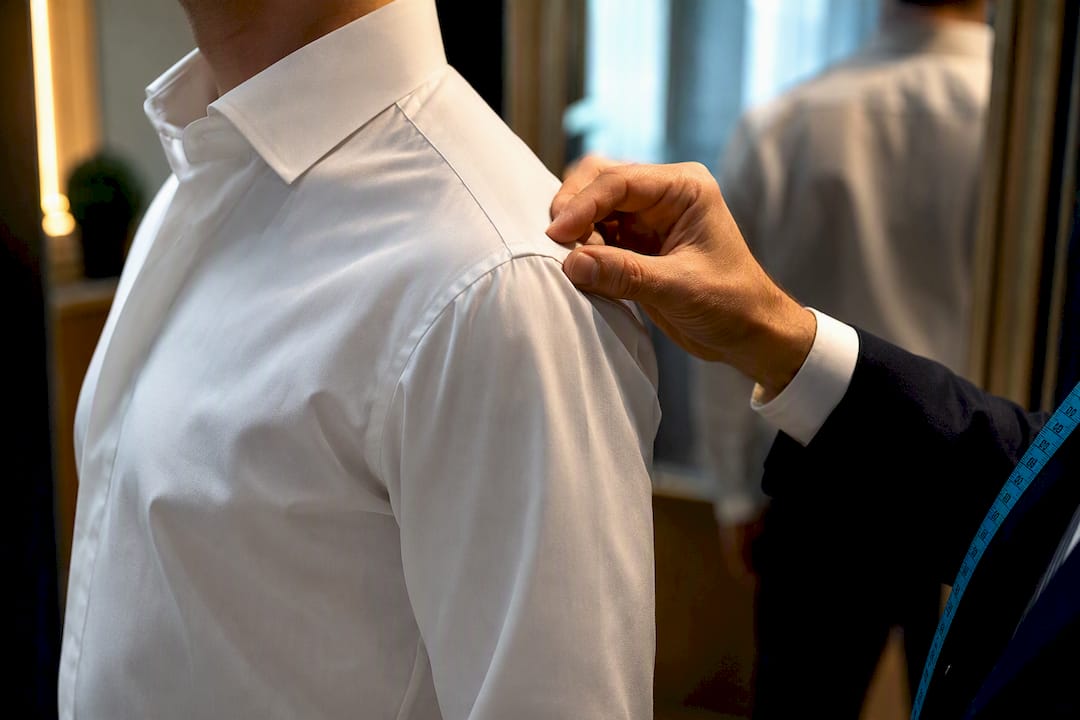
Bespoke construction gives you control that off-the-rack sizing simply can’t. When a shirt is cut and finished to your exact measurements, a tailor can specify preshrunk fabric and account for the small residual change most cotton retains, rather than leaving you to discover it after the third wash.
A few adjustments worth requesting when you’re having a close-fitting shirt made:
- Ask for a small amount of additional length in the body and sleeve, giving you a margin against the residual shrinkage many cotton shirts still show even after preshrinking
- Request slightly more collar ease if you know you’ll be laundering frequently or drying on higher heat
- Confirm the fabric has already been through a relaxation or compaction finish, which reduces shrinkage variability across the bolt
Details like shirt gussets and overall shirt length matter more than most buyers realise, because they’re exactly the points where a percent or two of shrinkage shows up first.
What counts as acceptable shrinkage, and when do you act?
A casual shirt losing a percent or two rarely matters. A dress shirt built for a tailored fit is a different matter entirely: half an inch off the collar or sleeve is the difference between sharp and simply wrong. My rule of thumb is straightforward. Formal shirts get the cautious wash settings every time; casual ones can take slightly more risk.
Build a habit around three checks: wash temperature, drying heat, and reshaping while damp. Skip any one of them repeatedly and shrinkage compounds faster than people expect.
If a shirt you rely on for formal wear has shrunk noticeably and a soak-and-stretch hasn’t restored it, that’s the moment to book a tailoring consultation rather than keep laundering around the problem.
Ron
Why bespoke shirts hold their fit better
Ready-to-wear shirts are cut to averages, which means the fabric’s inevitable 1% to 3% shrinkage lands on a fit that had no margin to spare. Ron & Rich builds that margin in from the start: fabric is selected and finished with shrinkage behaviour in mind, and measurements account for what the cloth will actually do after laundering, not just how it drapes on the day of fitting.

That’s the real advantage of a tailored shirt over an off-the-rack one for anyone who’s tired of guessing whether a shirt will still fit after the fifth wash. Rather than buying a size and hoping, you specify the fit, and the fabric choice accounts for its own dimensional change before the shears ever touch the cloth. If you’re weighing linen for a warmer climate, the fabric’s looser weave and higher shrinkage range make bespoke sizing particularly worthwhile, and pieces like the Weekend Linen Shirt show how that plays out in ready-to-wear form.
For anyone building a working wardrobe of dress shirts, the practical next step is to book a bespoke consultation with Ron & Rich, where fabric, ease, and finishing get decided together rather than left to chance. If you’d rather start with ready-to-wear, the ready-to-wear collection is worth a look before your next order.
Sources
- Dress shirt care guide: wash, dry, iron & stain removal | FabricTips
- Why some clothes shrink in the wash, and how to ‘unshrink’ them | Swinburne University