The Right Daytime Wedding Attire for Men, Decoded: The Ron & Rich Journal
The safest daytime wedding outfit for a guest is a well-fitted navy or light-gray suit in a breathable fabric, paired with a white or light-blue shirt and leather shoes in brown or black. When the dress code reads unclear, err slightly overdressed rather than under. That single move solves more wardrobe anxiety than any amount of second-guessing.
A few things to keep straight before you get dressed:
- Never wear white, ivory, or cream. That palette belongs to the groom.
- Check the venue and time of day. A garden ceremony at noon calls for lighter cloth than a hotel ballroom reception at 4 PM.
- Carry a tie even if you plan to leave it in your pocket. It’s easier to remove one than to invent one.
Key Takeaways
A well-fitted navy or light-gray suit in a breathable fabric, paired with leather shoes and a tie kept in reserve, covers nearly every daytime wedding dress code a guest will encounter.
| Point | Details |
|---|---|
| Default to navy | A navy or light-gray suit in tropical wool or linen blend works across formal, semi-formal, and smart casual invitations. |
| Read venue over clock | A country club ceremony outranks a backyard one in formality, regardless of what time either starts. |
| Never wear white or ivory | That palette is reserved for the groom at every daytime wedding, no exceptions worth risking. |
| Carry a tie regardless | Removing a tie later is simple; showing up without one when needed is not. |
| Fit tailoring closes the gap | Ronandrich adjusts shoulder, lining, and trouser break so a single suit performs through a full day outdoors. |
Sources consulted for dress-code definitions, fabric guidance, and etiquette standards:
- Wedding dress code for guysThe Knot
- How should men dress as wedding guests?The Modern Gentle
- Wedding dress code explainedBrides
- Men’s summer wedding attire style guideMizzen+Main
- Summer wedding outfitsEsquire
- Men’s summer wedding attireVogue
Table of Contents
- What Does “Day Wedding Attire” for Men Actually Mean?
- Outfit Templates You Can Copy for Any Daytime Dress Code
- Which Fabrics Actually Perform in Daytime Heat?
- Shoes and Accessories That Finish the Look
- What Ron & Rich Has Learned About Fitting Men for Daytime Weddings
- Build One Suit That Works for Every Dress Code
- Sunglasses, Ties, and Boutonnières: Daytime Wedding Etiquette
- Sources
What Does “Day Wedding Attire” for Men Actually Mean?
Every wedding invitation is a coded message, and the code is easier to break than most guests assume. The dress code line tells you the formality tier; the venue and time of day tell you how to translate that tier into fabric, color, and cut for daytime wear.
Here’s how the standard tiers break down, from most to least formal:
- White tietailcoat and formal trousers. Vanishingly rare for daytime weddings.
- Black tiea tuxedo is required, though black-tie daytime events are unusual outside major cities.
- Black-tie optionala dark suit is acceptable if you don’t own a tuxedo.
- Formal/cocktaila suit and tie is the baseline expectation.
- Semi-formala suit works, tie is often optional.
- Smart casualblazer or suit jacket, no tie required, open collar acceptable.
- Casual/beach/gardenstill expects a collared shirt and tailored trousers. Jeans and flip-flops are generally out of bounds unless the couple says otherwise.
Daytime shifts everything one notch lighter. The same “formal” dress code that calls for heavy worsted wool at a 7 PM reception translates to tropical wool or a linen blend at 1 PM. Sunlight and heat are doing real work on your comfort, so treat the clock as a fabric instruction, not just a formality cue.
When wording still leaves you guessing, run this checklist in order: read the invitation language first, then check the venue (a country club skews formal regardless of hour), then note the start time, then ask one person, ideally someone in the wedding party, if you’re still unsure. Venue often overrides time of day entirely. A backyard ceremony at noon is more relaxed than a downtown hotel luncheon at the same hour.
Outfit Templates You Can Copy for Any Daytime Dress Code
Four templates cover nearly every daytime wedding you’ll attend this year. Pick the one that matches your invitation, then adjust the details below.
Formal daytime. A lightweight or tropical wool suit in navy or charcoal, dress shirt, silk tie, and polished leather oxfords or derbies in a color that matches your belt. A pocket square is optional but adds polish without effort.
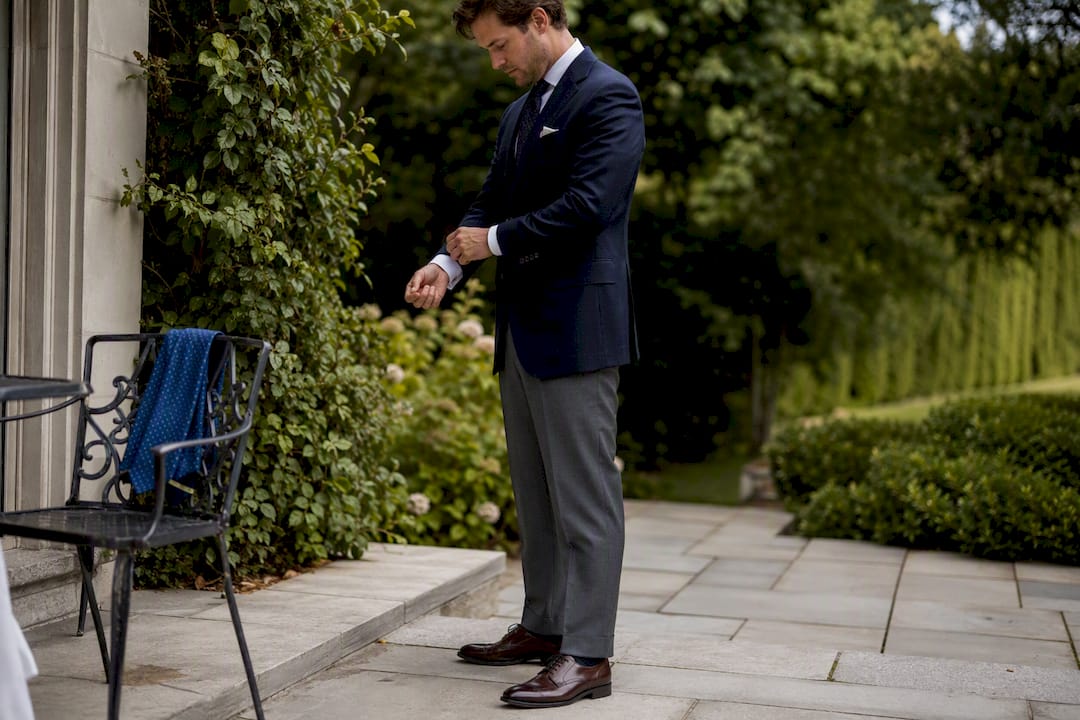
Cocktail or semi-formal. The same navy or light-gray suit works here. Skip the tie if the couple’s invitation suggests a relaxed tone, and swap oxfords for leather loafers or derbies with a slightly softer finish.
Smart casual. A blazer with chinos, or a lightweight suit worn without the jacket buttoned, paired with a knit polo or an open-collar shirt. Loafers, no socks required in warm weather.
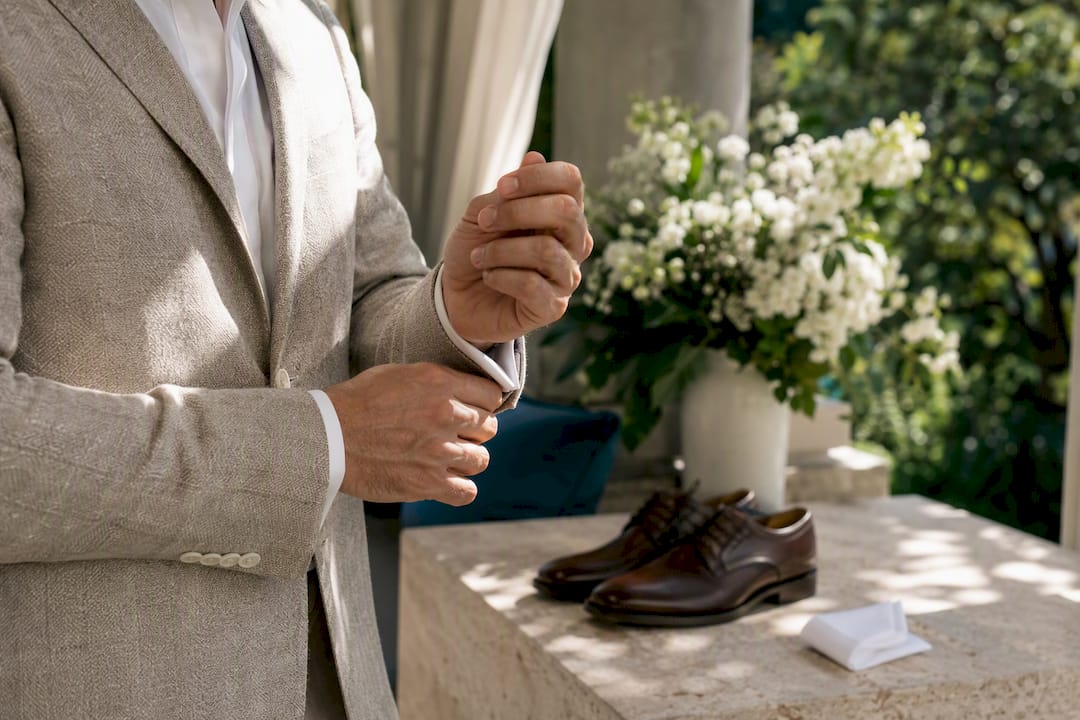
Beach or garden. An unstructured, unlined linen or linen-blend suit in a light tone, tan, sage, or pale blue, works better than dark wool, which absorbs heat and shows sweat. Slip-on loafers are the default; dress sandals only belong in the mix if the invitation explicitly says so.
Color rules stay consistent across every template. Navy, charcoal, light gray, and tan are always safe. Patterns are fine in small doses, a subtle check or textured weave reads as stylish rather than distracting, but avoid anything loud enough to compete with the couple’s own color scheme.
Which Fabrics Actually Perform in Daytime Heat?
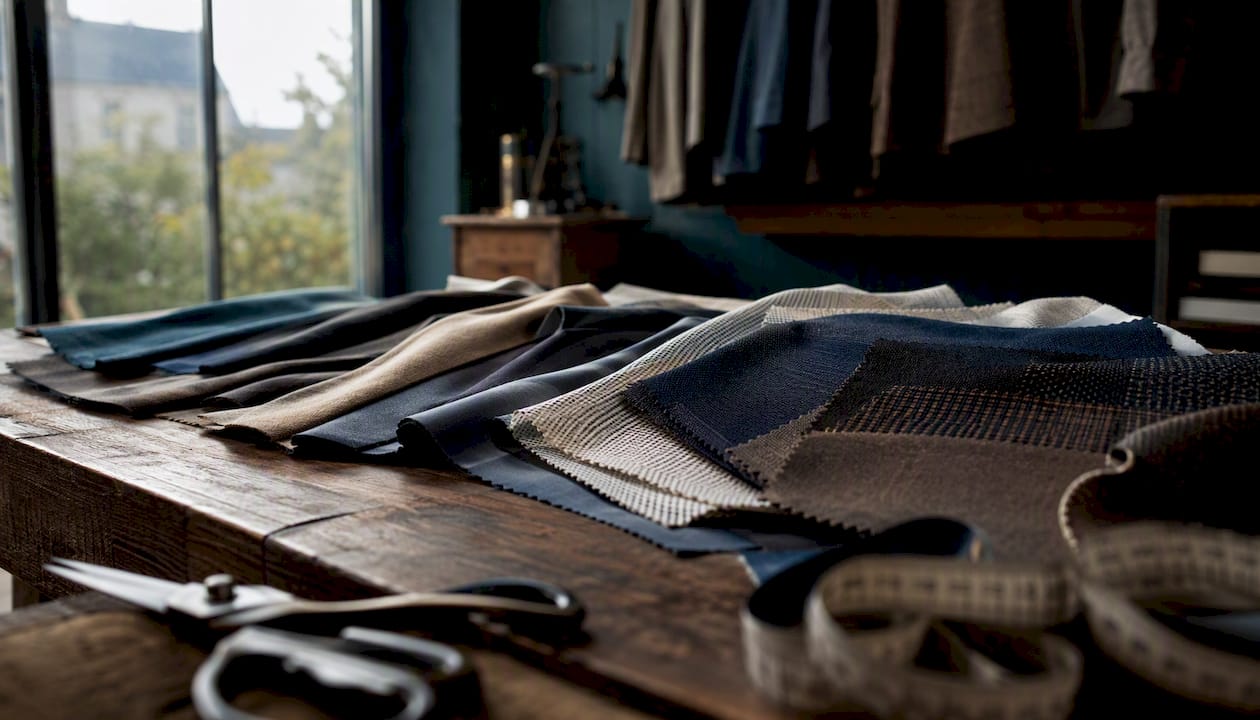
Fit matters more than fabric name, but fabric decides how comfortable you’ll be by the time photos start. Linen breathes best but wrinkles fast, which some guests treat as a flaw and others treat as the point of wearing it outdoors. Cotton splits the difference: breathable, more resistant to creasing, less crisp than wool. Tropical or lightweight wool holds its shape through a full afternoon and resists wrinkling in ways linen simply can’t match, making it the better choice if you’re standing for photos in direct sun. Performance blends split the difference again, trading a bit of natural drape for stretch and stain resistance.
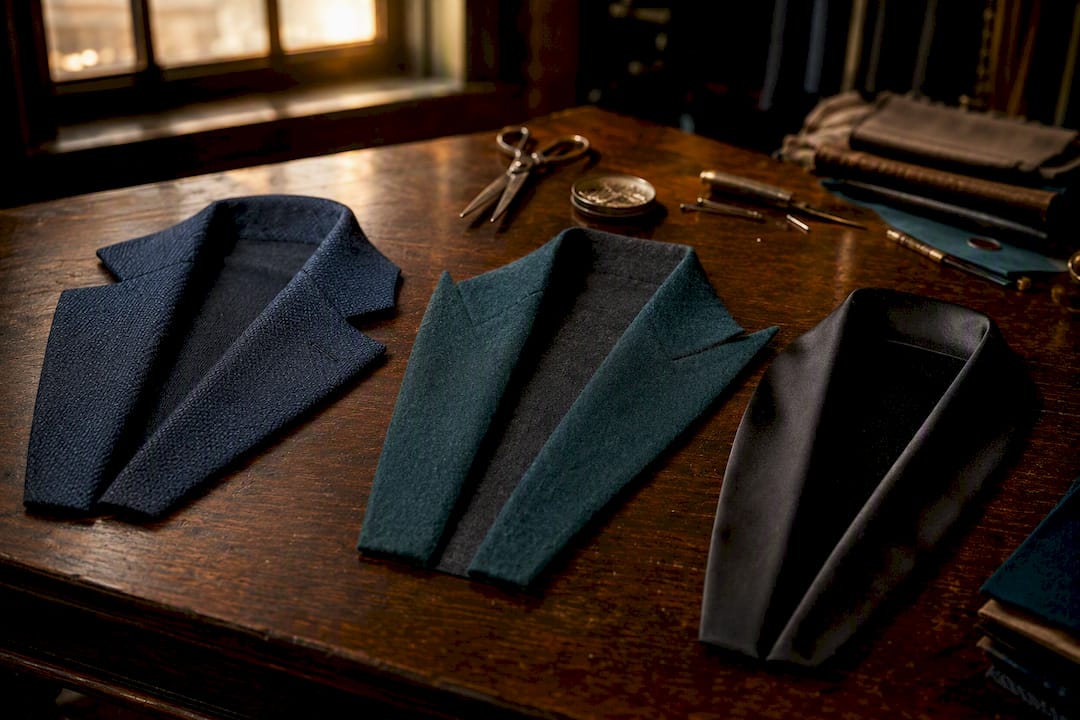
Construction matters as much as cloth. An unstructured or half-lined jacket sheds heat and moves with your body instead of against it, and minimal lining means less bulk showing through in photos.
Fit fixes that make the biggest visible difference:
- Shoulders should end exactly where your arm meets your shoulder, no divots, no overhang.
- Jacket length should cover your seat without swallowing your hips.
- Trouser break should sit at a slight crease at the shoe, not pooling at the ankle.
- Hemming, tapering the leg, and adjusting the waist are the three cheapest tailoring fixes that solve most off-the-rack problems.
Pro Tip: Bring the shoes you’re actually wearing to your final fitting. Trouser break changes by half an inch depending on heel height, and that’s the difference between a sharp line and a puddle of fabric.
Shoes and Accessories That Finish the Look
Shoes signal formality almost as loudly as the suit itself. Oxfords and derbies in polished leather belong with formal and semi-formal outfits. Leather or suede loafers slide comfortably into smart casual and relaxed cocktail settings. Skip athletic sneakers and flip-flops entirely unless the couple has explicitly said the dress code allows them.
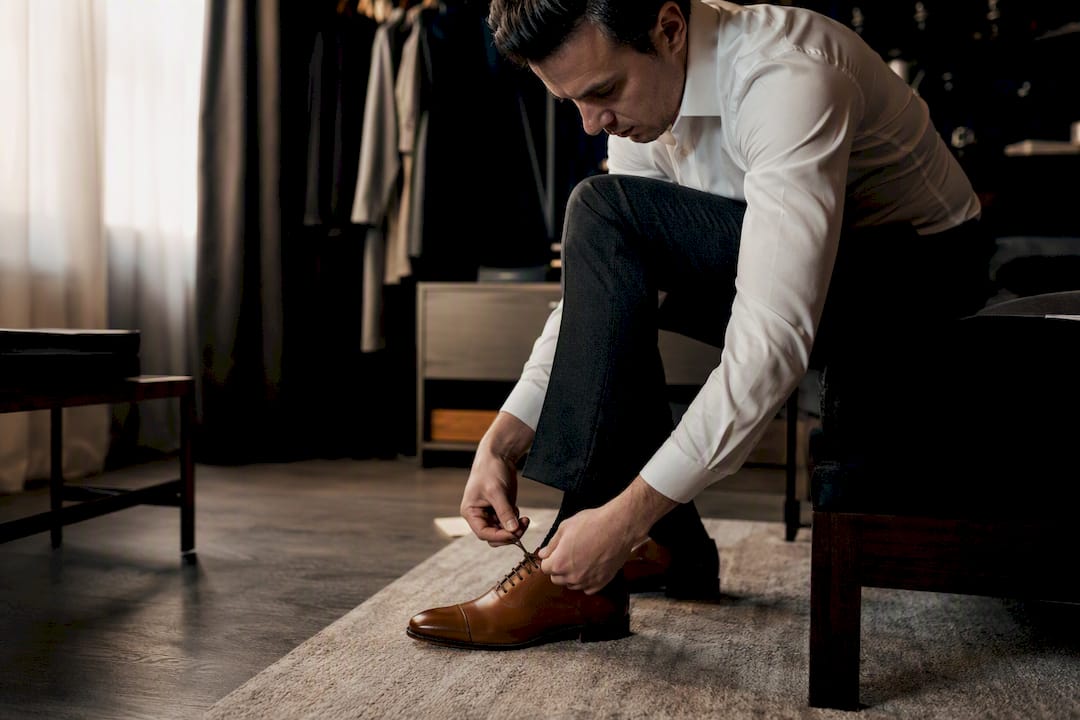
Accessories are where restraint pays off. A silk tie reads more formal than a knit tie, which works better for smart casual or when you want texture without stiffness. Pocket squares are a nice touch but never mandatory. Match your belt to your shoes, not to your suit. Keep the watch simple. If the couple has asked guests to wear a boutonnière, treat it as a small honor rather than a chore and pin it without overthinking the placement.
Outdoor venues add a layer of practical thinking most guests skip. Grass and sand are brutal on thin dress soles, so a slightly thicker leather sole holds up better than a delicate formal shoe. In genuine heat, going sockless with loafers is acceptable in smart casual and beach settings, though it’s out of place with a formal oxford and tailored trouser combination.
What Ron & Rich Has Learned About Fitting Men for Daytime Weddings
Custom tailoring solves problems that off-the-rack sizing can’t touch, and daytime weddings expose those problems fastest. Heat shows sweat marks at the underarm when a jacket’s shoulder is cut too tight. Photos catch baggy fabric pooling at the shoulder blade when the cut doesn’t follow a man’s actual posture. Trousers that were “close enough” in a fitting room read as sloppy the moment a guest is standing for an hour-long ceremony in direct sun.
A jacket built with a wider armhole and a lighter interior lining doesn’t just look better in photos. It changes how a man carries himself through a five-hour outdoor event, because he’s not adjusting his collar or tugging his sleeves the entire time.
Common fixes we see requested most often for daytime wedding guests and grooms alike:
- Recutting the shoulder line to remove excess fabric that bunches under the arm.
- Swapping heavy interlining for a breathable half-canvas construction.
- Shortening trouser length to eliminate the break that collects dust and grass stains outdoors.
Readers who want the deeper mechanics behind fit and cloth selection can walk through our full wedding suit tailoring guide, and anyone dressing for an outdoor ceremony specifically will find more detail in our seaside wedding suit guide.
Build One Suit That Works for Every Dress Code
You don’t need five outfits. You need one suit and a short list of swaps.
- Choose your base suit. Navy or light gray, in tropical wool or a linen blend, unstructured cut for maximum flexibility across formality levels.
- Build your swap kit. A silk tie and pocket square push it toward formal; dropping the tie and switching to loafers pulls it toward smart casual; a waistcoat adds a step up for black-tie-optional invitations.
- Pack a day-of kit. A spare tie, a sll stain-removal pen, and a lint roller live in your car or bag, not your imagination.
Pro Tip: Keep a knit tie folded flat in your jacket’s inner pocket even at “no tie needed” weddings. It survives a car ride better than silk, and having it beats improvising with a borrowed one from the best man.
Sunglasses, Ties, and Boutonnières: Daytime Wedding Etiquette
Daytime weddings carry their own small etiquette rules that indoor evening events don’t. Sunglasses are fine for outdoor cocktail hour and walking to your seat, but remove them the moment the ceremony begins. Nobody wants to exchange vows while guests hide behind mirrored lenses.
Ties follow a simple logic: when in doubt, wear one to the ceremony and decide about the reception later. Removing a tie after photos is easy and reads as relaxed. Showing up without one when everyone else is wearing one is much harder to fix.
If the couple hands out or requests boutonnières for certain guests, usually family or the wedding party, wear it exactly as given rather than customizing the pin or trimming the stem. It’s a small gesture that signals you understand the day isn’t about your personal style statement.
One broader rule worth internalizing: the groom should remain the best-dressed man in the room. That doesn’t mean dressing down. It means skipping the trendy accessory or the statement pattern that pulls attention away from him. A classic navy suit with clean, understated accessories always reads better in wedding photos than anything trying too hard to stand out. Save the bold choices for a night out. Save the sunglasses-off, tie-on, boutonnière-respected version of yourself for the ceremony itself.
A Tailor’s Take on Daytime Wedding Nerves
Most fit complaints we hear at fittings trace back to one thing: a suit bought for a mirror, not for five hours standing in the sun. A groomsman once brought in a suit that looked sharp in the store and gapped at the collar the moment he lifted his arm for photos. A quarter-inch adjustment at the shoulder fixed it. Off-the-rack works fine if your proportions match the mannequin. Bespoke earns its cost when they don’t. If a guaranteed fit matters more to you than convenience, get measured before the invitations start arriving.
Ready When You Are: Bespoke Suits Built for the Day
A rental or a rushed department-store suit gets you through one wedding. A properly tailored suit, built with breathable linings and a cut that accounts for how you actually move, gets you through every wedding on your calendar for years, without the collar gapping or the sweat marks showing up in someone’s photos.
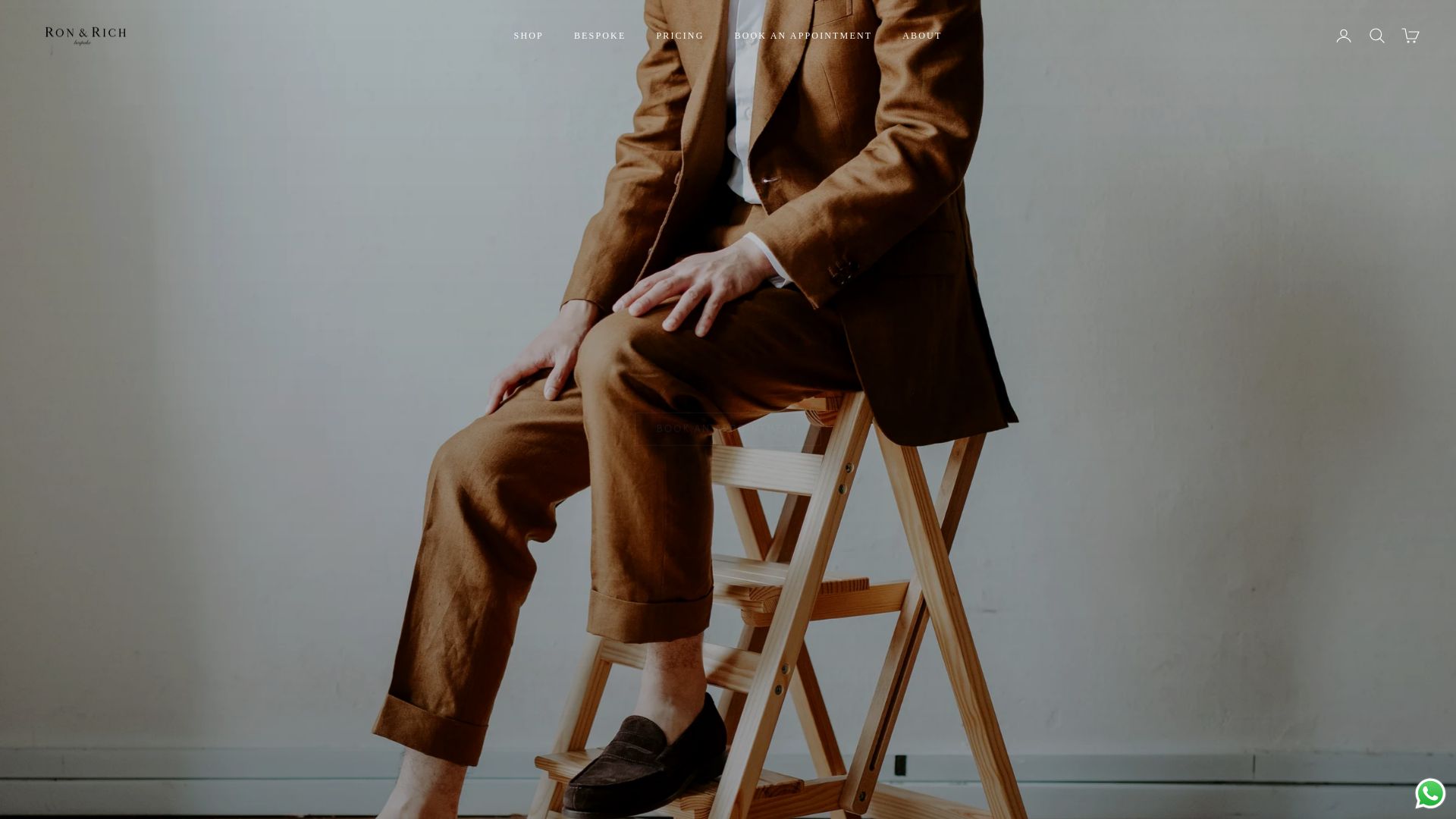
At Ron & Rich, a consultation starts with fabric selection, tropical wool, linen blends, and lightweight cottons are all on the table depending on your climate and formality needs, followed by fit adjustments across the shoulder, chest, and trouser break, with timelines discussed upfront so there are no surprises before the big day. Browse our suits and jackets to see current cuts and fabrics, or go straight to booking a bespoke consultation if you already know a made-to-measure suit is what this wedding calls for. Prefer to start lighter? Our ready-to-wear linen shirts pair cleanly with an existing suit for a quick warm-weather upgrade.
Sources
- Wedding dress code for guys | The Knot
- How should men dress as wedding guests? | The Modern Gentle
- Wedding dress code explained | Brides
- A style guide for men’s summer wedding attire | Mizzen+Main