Crotch Blowout in Trousers: Causes and Prevention
A crotch blowout is almost never bad luck. It is the predictable result of a cut that is too tight (or, less often, too loose), a cloth that cannot take the strain and a seam built without enough thought for where the stress lands. Trousers made to your own measurements, in a cloth chosen for how you live, address all three at once. That is why we cut each pair of bespoke trousers around the wearer and not around a size chart.
Below, we explain what actually happens at the crotch, which factors matter most, and what to look for in a pair you intend to wear for years.
TL;DR
- A blowout is the inner-thigh seam giving way after months of friction and strain, not a single sudden accident.
- Fit is the first cause: trousers that are too tight keep the seam under tension, while excess fabric that rubs against itself can wear just as quickly.
- Cloth and construction decide how long the seam holds: open, loose weaves wear through, and the seat seam can tear open.
- Small holes on a seam grow quickly, so early repair is worthwhile, but extensive failure is rarely worth mending.
- Bespoke trousers start at $290 with us, cut to your measurements, which removes the most common cause of early failure.
Table of Contents
- What a crotch blowout actually is
- Why trousers split at the crotch
- How cloth affects the seam
- How construction decides whether the seam holds
- Habits that make trousers last
- Repair or replace?
- Our perspective
- Trousers made for your body
- FAQ
- Sources
What a crotch blowout actually is
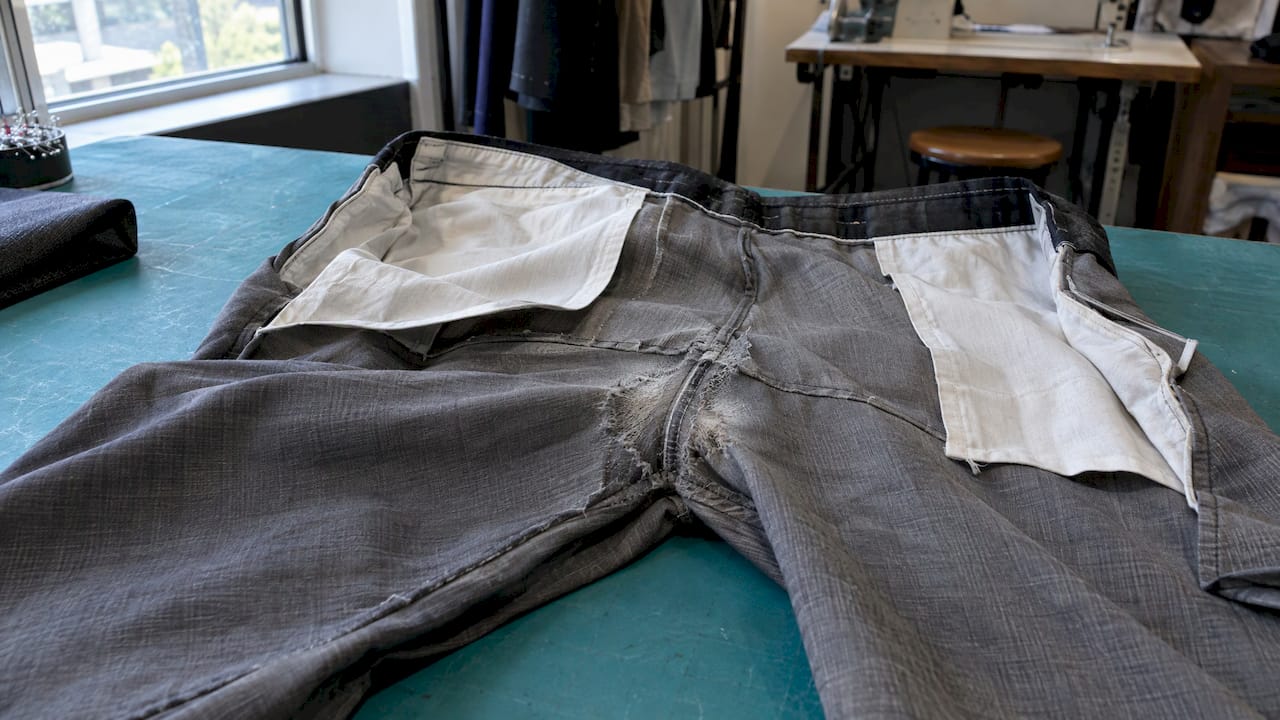
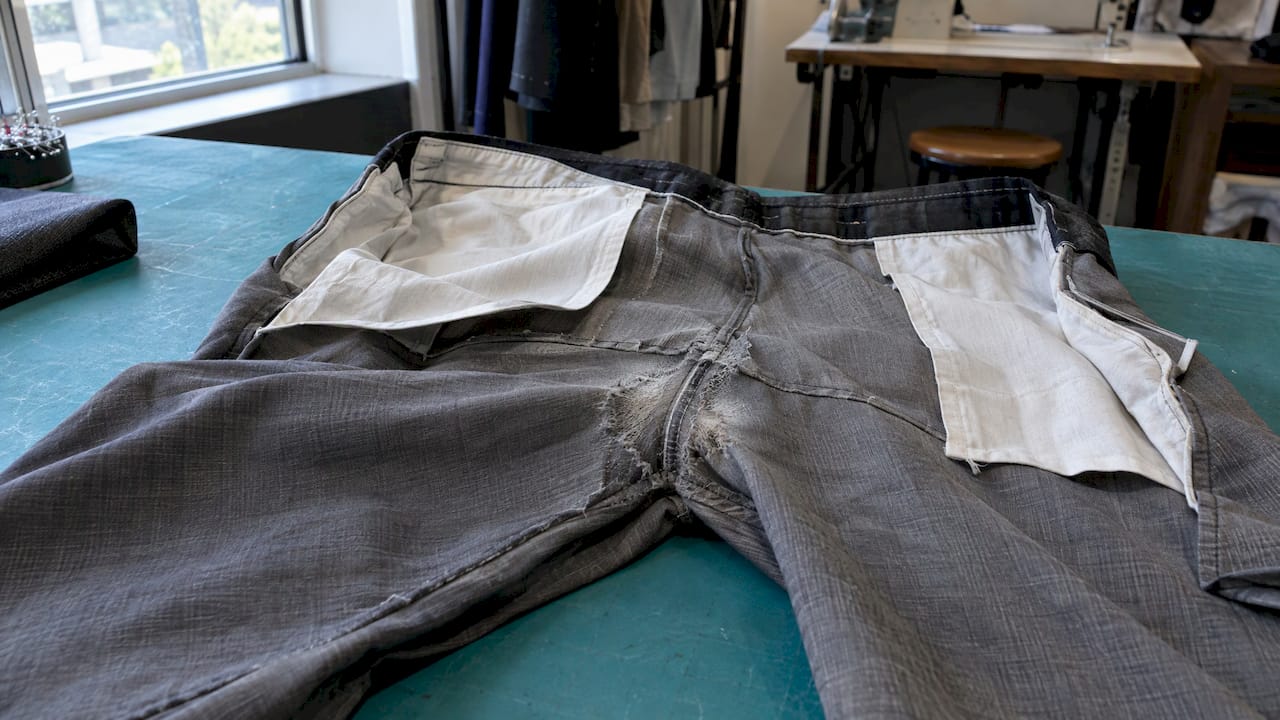
The crotch is where four seams meet: the two inseams, the front rise and the back rise. Every step rubs your thighs together, and every time you sit, the cloth stretches across that junction. Over months, this is hard work for a few centimetres of stitching.
A London tailor quoted in The Guardian describes how this part of a garment is under constant strain in everyday wear, and a denim repairer in the same piece describes a blowout as the inner thigh getting bust along the seam. The wording is plain, but it is accurate: the damage is at the seam and the cloth beside it, where the thigh does most of the rubbing.
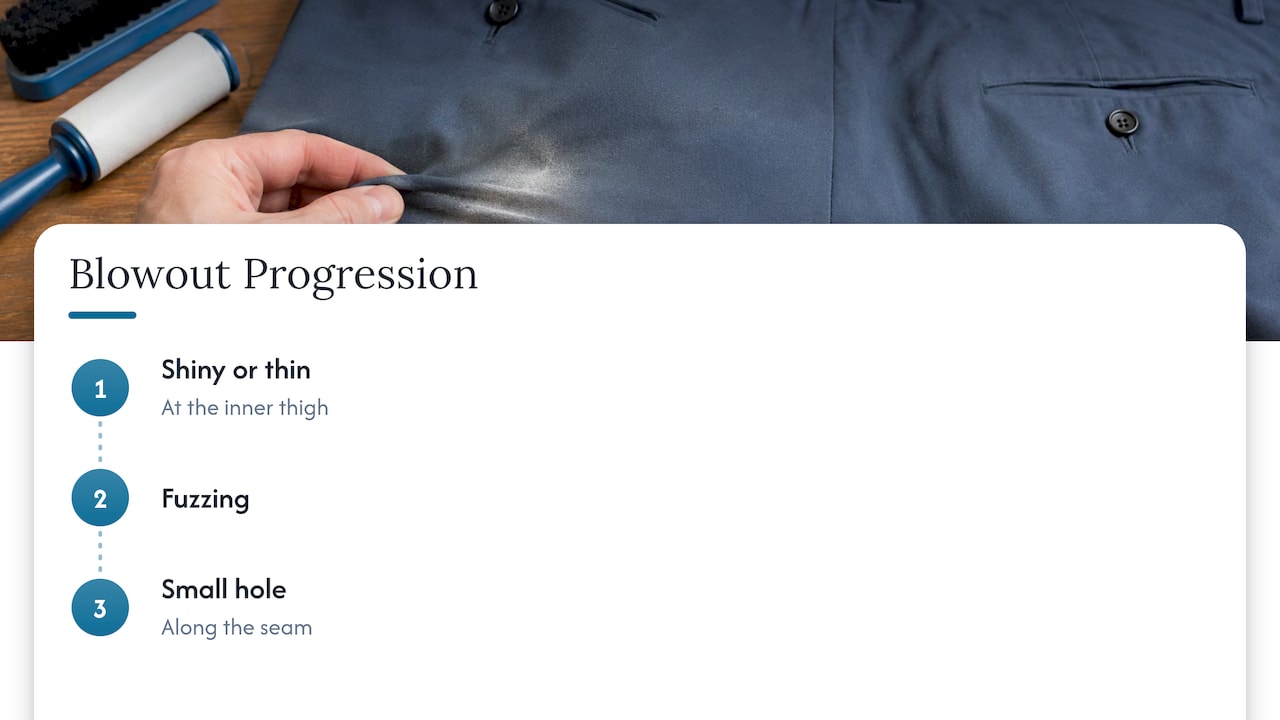
Most blowouts are gradual. The cloth first turns shiny or thin at the inner thigh, then fuzzes, then a small hole appears along the seam. A sudden movement, such as a deep squat, a wide step or a quick lunge for a train door, is simply the last load the weakened cloth could not take.
Why trousers split at the crotch
Several causes usually work together. Understanding them tells you what to change on the next pair.
Fit that is too tight
Tight thighs and a tight seat keep the cloth under tension even when you are standing still. When you sit, walk or climb stairs, the seam has nowhere to go. A close fit is a perfectly good look for a suit, but it must be a close fit that still leaves room to move. There is a difference between trousers that follow the line of the leg and trousers that are stretched over it.
This is also the reason that off-the-rack trousers fail men who are not average. GQ’s tailoring guide notes that men with large thighs, a fuller seat and a narrower waist often struggle to find ready-made trousers that fit and benefit from a tailored pair. Buy to the waist and the seat pulls; buy to the thigh and the waist needs taking in. Either way, something is under strain.
Fit that is too loose
It is tempting to think that more room is always safer. It is not entirely so. Surplus cloth in the crotch folds and rubs against itself, and that friction wears the fabric as surely as tension does. The aim is balance: ease where you need it, and a clean line where you do not.
A rise that is too short
The rise is the distance from the crotch seam to the waistband. If it is cut too low for your body, the fork of the trousers is pulled upward when you sit or step, which is uncomfortable and puts the seam under strain. GQ makes the same point: a trouser can have the right waist, seat and thigh and still feel wrong if the rise is too low. Our guide to how trouser rise is measured and how to check it at home explains the measurement, and our cheat sheet for every rise type shows how each sits on the body.
Activity and elastane
Cycling in jeans, even good ones, is a major cause of crotch wear, according to the London tailor in The Guardian. The same article reports that men’s jeans typically carry 1 to 2% elastane and women’s 2 to 3%, and that the less elastane a pair has, the less likely the crotch is to go. The point for tailored trousers is that the cloth itself has to be chosen for the movement it will face.
How cloth affects the seam
Cloth is the second half of the story. Two pairs cut identically can age very differently.
Permanent Style’s guide to trouser cloths is direct about this. Open, loose cloths in wool, silk or linen lose their shape over a day and can wear through over a year, or the seam in the seat tears open. A good trouser cloth needs crease resistance, shape resistance and some natural stretch to survive being bent and stretched as the wearer walks, stretches and sits.
In practice, that means:
- Weave. A smooth, tightly woven cloth holds up better to inner-thigh friction than a loose or brushed one.
- Weight. A very light cloth is cooler, but there must still be enough substance in the yarn to resist abrasion.
- Recovery. Cloth that springs back after being stretched does not sag at the seat and does not thin at the knee and fork.
- Seasonal sense. In a humid climate like ours, you want a cloth that breathes without being flimsy. We select premium fabrics for Singapore’s climate for exactly this reason.
The choice is not between comfort and durability. A well-chosen cloth gives you both, and a tailor who knows how a cloth behaves can tell you which one suits the way you work, commute and travel.
How construction decides whether the seam holds
A seam is a line of holes punched through cloth. Where the load is highest, that is the weakest point. This is why construction deserves as much attention as fit.
ABC Seams, a specialist in seam production, notes that crotch durability is largely settled at the design stage: fabric quality and weight, a smooth crotch curve and correct inseam shape in the pattern, and a seam type matched to the cloth. Excess seam thickness at the fork also increases abrasion. In other words, the quality of a pair of trousers is decided before the first stitch is sewn, at the pattern.
Three details are worth knowing when you assess any pair:
- The crotch curve. It should follow your body smoothly, with no pulling or bunching when you sit.
- Seam allowance. Enough cloth inside the seam gives it something to hold on to and, importantly, leaves room for later adjustment.
- Reinforcement. A lining or a reinforced fork, added to the seat and crotch, helps the area withstand repeated movement.
With a made-to-measure pattern, the curve is cut to your body and not to an average. That single fact removes much of the strain that wears out ready-made trousers.
Habits that make trousers last
Good cloth and fit give you a long start; care keeps it going.
- Rotate your pairs. Wearing the same trousers every day does not let the fibres recover or the cloth dry fully. Alternating between several pairs lets the cloth rest and the seam relax between wears.
- Dry properly. Damp cloth rubs harder and its fibres are more vulnerable. Allow every pair to dry fully, and avoid high heat, which can weaken the cloth and any stretch yarn in it.
- Do not over-clean. Frequent harsh washing speeds up fibre breakdown. Brush and air your suit trousers between wears, and clean them only when they need it.
- Notice the early signs. A shiny, thin or fuzzy patch at the inner thigh is the warning. Attend to it then, and the trousers can often be saved.
- Mind your activities. If you cycle to work or spend long days on your feet, choose cloth and cut accordingly, and tell your tailor so.
Repair or replace?
If you catch a small hole early, a patch applied from inside the garment is the usual remedy. The denim repairer in The Guardian recommends bonding a matching patch inside and then oversewing or darning it, and warns that small holes on a seam do not take much to become big ones.
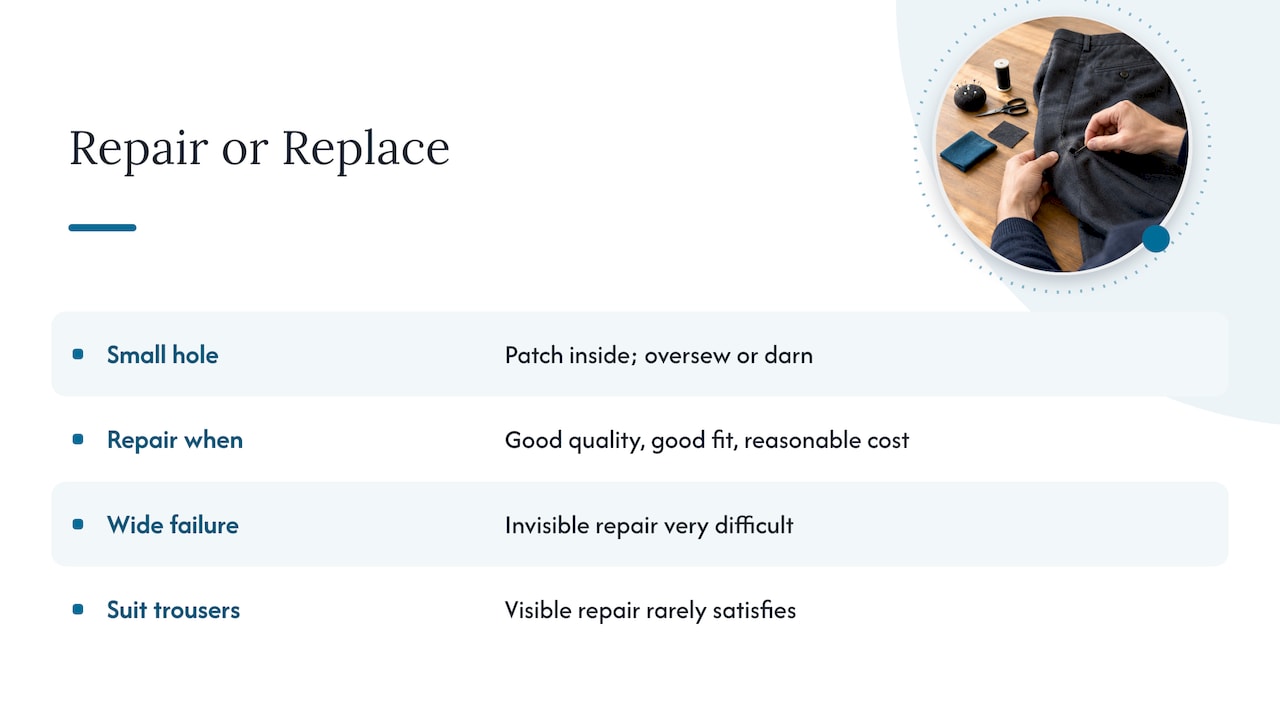
The decision is one of proportion. A repair is worthwhile when the trousers are of good quality, still fit you well and the cost of mending is reasonable against replacing them. When the cloth has failed over a wide area, an invisible repair is very difficult, and a visible one on suit trousers rarely satisfies. At that point, the more useful question is what made the first pair fail, and the answer is nearly always fit, cloth or construction. Fix those, and the replacement lasts.
Our perspective
Our house was founded in 1979 by master tailor Richard Fan, and in all the years since, we have found that a trouser rarely fails because the wearer was careless. It fails because it was never made for the wearer.
Off-the-rack trousers are cut for an average that very few men match. If your thighs are fuller, your seat more generous or your waist narrower than the pattern assumes, the cloth is pulled somewhere every time you move. The crotch is the place where it shows first.
This is why we begin with your measurements and your preferences, and why we fit each garment to you. A trouser that has the right rise, the right ease through the thigh and a curve that follows your body asks far less of the seam. Add a cloth chosen for Singapore’s climate and for how you actually spend your day, and you have a garment that ages with dignity and not in a single season.
We would rather you wore one well-made pair for years than three ill-fitting ones for a few months. That is the quiet advantage of craftsmanship.
Ron
Trousers made for your body
If a pair of trousers has already failed you, or if you want to be sure the next one does not, our bespoke trousers are made with traditional tailoring techniques and fitted to your own measurements. They start from $290, and you can see the full range, including suits from $2,170 and shirts from $199, on our pricing page. To see how we approach them, visit our bespoke trousers page.
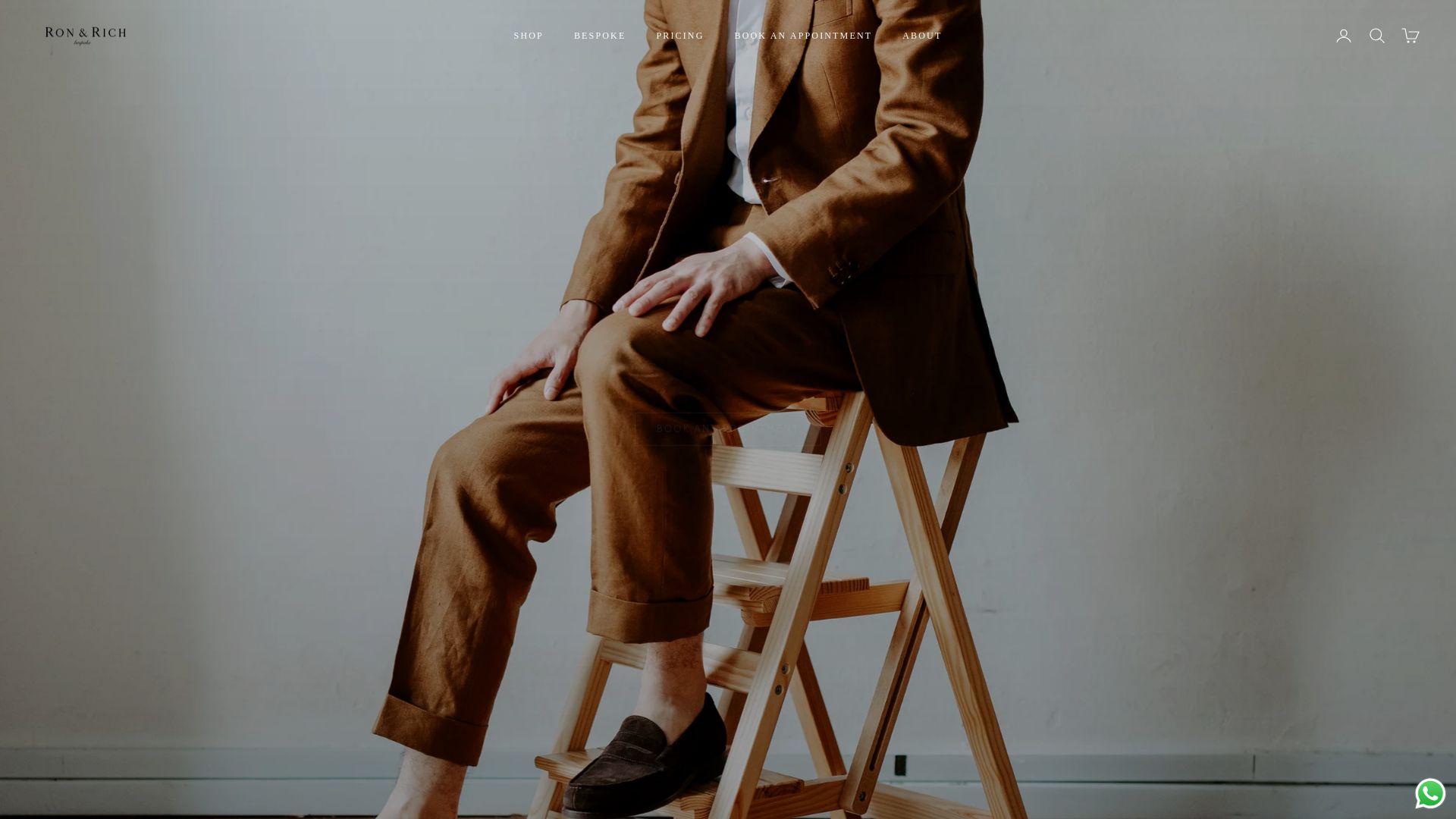
Wearing trousers every day to the office, to meetings and to dinner is where fit shows. A personal fitting is the simplest way to settle the rise, the thigh and the seat before a single yard of cloth is cut. For executives and grooms who need one pair to perform through a long day, that fitting is where durability begins. If your wardrobe also needs a suit to match, our bespoke suits are tailored in the same way.
FAQ
Why do my trousers wear out in the crotch?
The inner thighs rub together with every step, and the seam junction takes the strain each time you sit. A cut that is too tight, a loosely woven cloth or a low rise makes it worse. In most cases it is a fit and cloth problem more than a wear problem.
Can too-loose trousers also blow out?
Yes. Surplus cloth in the crotch rubs against itself, and that friction wears the fabric. The aim is a fit with enough ease to move, but not so much that the cloth folds and chafes.
Does a lower elastane content help?
According to a London tailor quoted in The Guardian, the less elastane a pair has, the less likely the crotch is to go. Tailored trousers rely instead on a well-chosen cloth with natural stretch and a cut that suits your movement.
Is a crotch blowout worth repairing?
A small hole caught early can usually be patched from the inside. Where the cloth has failed over a wide area, the repair is hard to make invisible and may cost more than it is worth. Quality trousers that still fit you well are the ones worth saving.
How can I stop it happening to my next pair?
Choose a fit with room in the seat and thighs, a rise that suits your body and a smooth, tightly woven cloth. Rotate between pairs and let each one dry fully. A pair made to your measurements deals with the first of these from the start.
Sources
- Crotch blowouts and bobbly knits: how to save secondhand clothes, The Guardian
- The Guide to Trouser Cloths, Permanent Style
- This Is Why Your Pants Don’t Fit Quite Right, GQ
- Crotch Seam Blowouts, ABC Seams