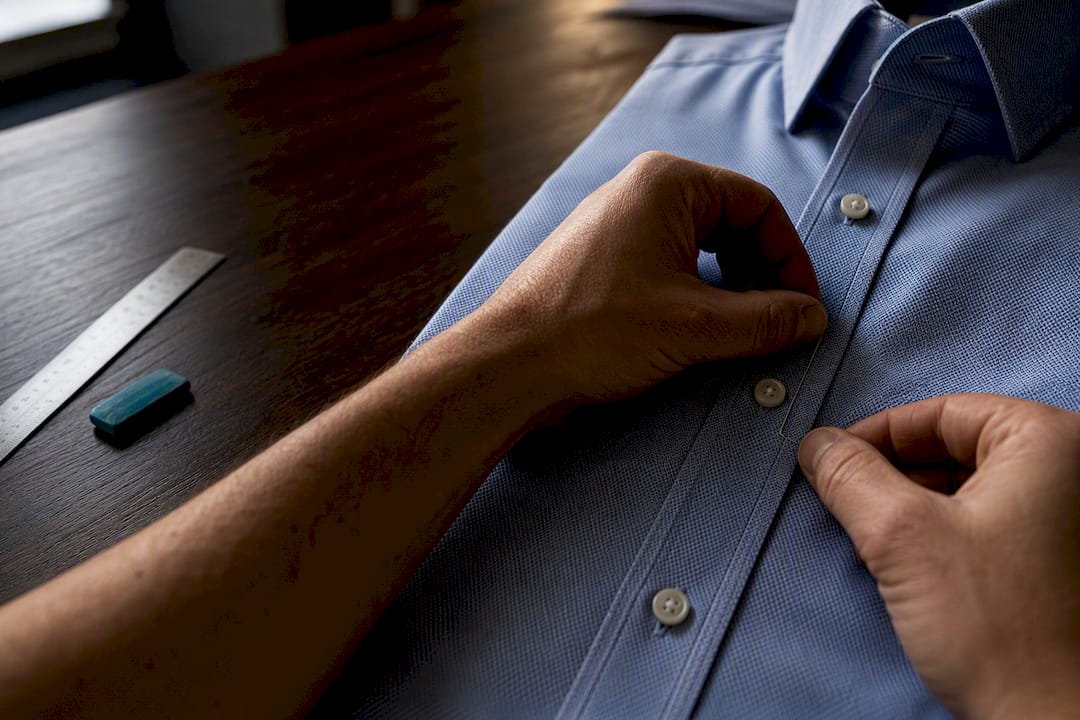
Six Creative Black Tie Looks Tailored to Fit
Creative black tie means a traditional dinner jacket foundation with exactly one considered flourish, whether that’s a jewel-toned velvet jacket, a merino rollneck, or a single striking accessory. The rule to remember: silhouette and formality stay fixed, creativity stays singular. Add colour, texture, or an unexpected accent, but never all three at once.
TL;DR:
- Creative black tie allows for a single creative element, such as a jewel-tone fabric, a color accent, or a refined accessory, without compromising formal structure.
- The dinner jacket must maintain a sharp silhouette with subtle variations in fabric texture or color, and accessories should complement, not compete with, the overall look.
- Fit is crucial; poorly tailored outfits, especially velvet or structured jackets, can undermine even the most confident creative choices.
- Business suits, casual fabrics, sports details, or multiple loud colors are common errors that cross into inappropriate or costume-like territory.
- Tailoring with a long lead time and precise adjustments ensures that creative elements enhance rather than detract from the formalwear’s elegance.
Table of Contents
- What creative black tie actually means
- Creative black tie for men: jackets, shirts, and the details that matter
- Creative black tie for women: gowns, separates, and modern alternatives
- Do’s and don’ts that separate creative black tie from fancy dress
- Six outfit ideas to borrow for your next creative black tie event
- How Ron & Rich approaches fit for creative black tie
- What crosses the line into inappropriate for creative black tie
- Ron’s perspective on balancing tradition and creativity in formalwear
- Bring your creative black tie vision to a fitting room
- Sources
- FAQ
What creative black tie actually means
Creative black tie isn’t a licence to reinvent formalwear. It’s a shift from strict black and white towards deeper jewel tones and richer textures, applied within a structure that must still read as evening dress the moment you walk into a room.
Certain elements are non-negotiable. The dinner jacket silhouette stays sharp: peaked or shawl lapels, a clean shoulder line, no casual detailing creeping in. Tuxedo trousers keep their satin or grosgrain outseam. Footwear stays formal, whatever else you’re doing with colour.
Creativity has three legitimate entry points:
- Fabric texture — velvet, faille, or a subtly patterned jacquard instead of flat worsted wool
- One colour accent — burgundy, bottle green, tobacco, or royal blue rather than classic black
- Refined accessories — a distinctive bow tie, cufflinks, or pocket square that carries the personality
Colour and fabric should evoke eveningwear, never costume. Deep, saturated jewel tones and midnight navy work because they still photograph as formal under low light. Bright primary colours, novelty prints, or anything with a daytime association undermine the code instantly.
Creative black tie for men: jackets, shirts, and the details that matter
The dinner jacket is where most of your creative allowance should go. A velvet jacket in burgundy or bottle green reads as considered rather than costume-like, and midnight navy with satin facings is arguably the most versatile modern alternative to classic black, since it photographs richer under evening light. For warmer climates or daytime galas, a white dinner jacket keeps things formal without the heaviness.
Shirts have more room than most men assume, but the choice depends on the event’s formality level.
- A fine merino rollneck works when the invitation signals a genuinely creative brief and the jacket itself is already doing the formal heavy lifting.
- A traditional tux shirt with a marcella or pleated front is the safer choice for weddings, galas, or any event where the host’s interpretation of “creative” is unclear.
- Accessories carry your one accent — a bow tie in your chosen colour, cufflinks that echo it subtly, and a pocket square that complements rather than competes with the jacket.
Formal footwear stays essential throughout. Velvet slippers, polished patent Oxfords, or a sharp Chelsea boot all work; trainers, brogues, or anything sports-adjacent do not.
Pro Tip: If your jacket carries the colour statement, keep the rollneck or shirt neutral. Two loud choices fighting for attention is the fastest route from creative black tie to fancy dress.
Fit determines whether any of this works. A rollneck under a boxy jacket looks unfinished; a velvet jacket cut too full loses the sharpness that makes the fabric choice feel intentional rather than accidental.
Creative black tie for women: gowns, separates, and modern alternatives
The women’s version of creative black tie rewards the same instinct: pick your moment of expression and let the silhouette do the formal work. A floor-length gown remains the most reliable choice, and creative black tie simply widens the acceptable colour and embellishment palette beyond classic black or navy.
Several silhouettes read as properly formal without defaulting to a traditional gown:
- A luxe cocktail dress in a heavier fabric such as velvet or duchess satin, floor length not required but formality non-negotiable
- A tailored jumpsuit cut from an evening fabric, which can feel every bit as considered as a gown when paired with the right accessories
- Tuxedo-inspired trousers with a fitted evening top, satin lapel detailing, or a structured blazer
Embellishment should be deliberate rather than layered. Sequins used sparingly, along one seam or across a bodice, read as elevated. Sequins covering an entire garment can tip into costume territory. Velvet and silk both carry the weight and drape that evening occasions demand, and either works better than anything with a matte, everyday finish.
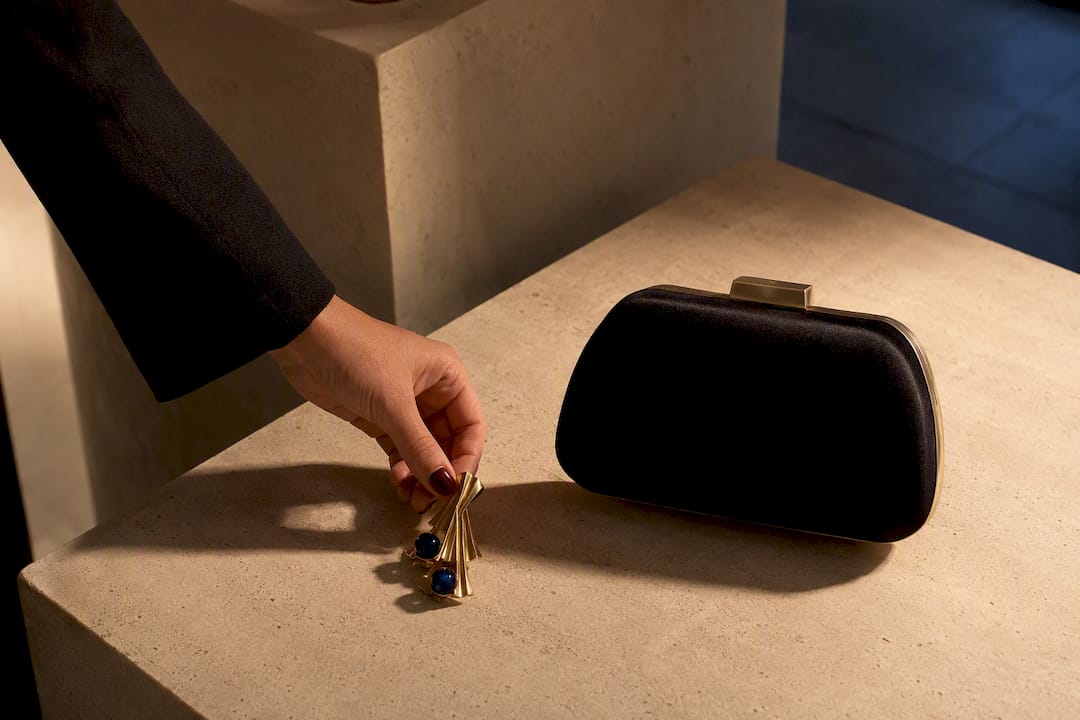
Accessories should complement the outfit’s single statement rather than add a second one. If the dress carries colour or texture, keep jewellery classic. If the dress is a quieter tailored piece, a striking pair of earrings or an evening clutch can be the creative element instead. Heels stay formal throughout, whatever the silhouette.
Do’s and don’ts that separate creative black tie from fancy dress
Most creative black tie mistakes come from misjudging restraint, not effort. The people who get it wrong usually try too hard rather than not hard enough.
- Do keep the silhouette formal. Don’t introduce sporty tailoring details such as notched lapels on a dinner jacket, patch pockets with flaps, or a centre vent, since all three read as business suit rather than eveningwear.
- Do choose one concentrated creative element. Don’t combine a burgundy jacket with a patterned bow tie and coloured trousers. A single accent applied with confidence beats three competing ideas applied nervously.
- Do prioritise fit above everything else. Don’t wear a tuxedo that bags at the shoulders or a gown that pulls at the seams, because poor fit undermines even the best colour choice and makes any creative flourish look accidental rather than intentional.
The through-line across all three: creative black tie is a discipline, not an invitation to improvise. The more confident the creative choice, the more disciplined everything around it needs to be.
Six outfit ideas to borrow for your next creative black tie event
Three looks for men, three for women, each built around a single creative decision rather than several competing ones.
- Midnight navy dinner jacket, white shirt, black satin bow tie — the safest creative entry point, ideal for weddings or corporate galas where the brief is ambiguous.
- Bottle green velvet jacket, black tux trousers, black bow tie — a strong seasonal choice for winter events, where the fabric itself carries the personality.
- Classic black tuxedo, fine merino rollneck, no bow tie — a pared-back, modern take suited to smaller, design-led evening events.
- Floor-length burgundy velvet gown, minimal jewellery, black satin heels — evening formality with one confident colour statement.
- Black tailored jumpsuit, statement earrings, satin evening clutch — a tuxedo-adjacent alternative for award nights or gallery galas.
- Tuxedo trousers, fitted silk blouse with satin lapel detail, structured evening jacket — a menswear-inspired option that still reads unmistakably formal.
To dial creativity up or down, swap the accent rather than the whole outfit: change a bow tie colour, add or remove embellishment, or shift from black to a jewel tone while keeping everything else exactly as it is.
How Ron & Rich approaches fit for creative black tie
Colour and texture only work when the tailoring underneath is right. A velvet jacket or jewel-toned dinner suit needs precise shoulder structure and correct lining weight, otherwise it drapes like daywear rather than eveningwear, a distinction Ron & Rich pays close attention to across its tailored suit and jacket work.
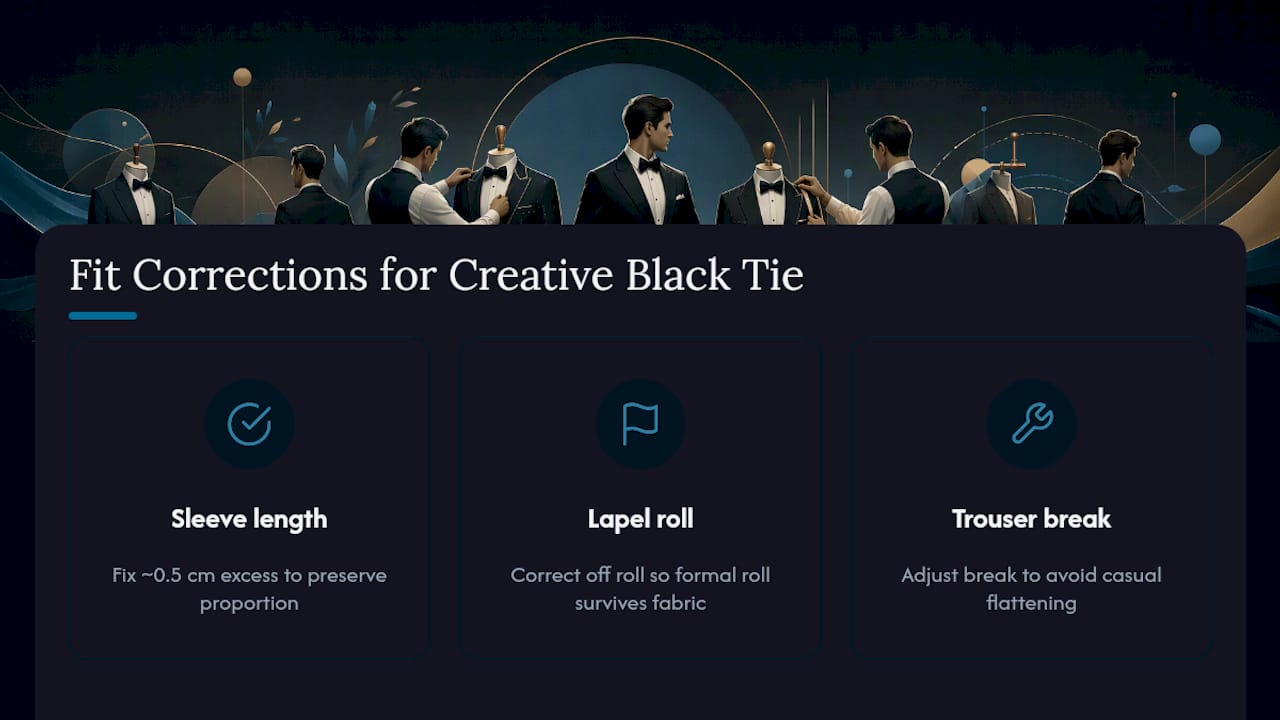
Small adjustments carry disproportionate weight here. Sleeve length that finishes half a centimetre too long, a lapel roll that sits slightly off, or a trouser break that’s too casual can all flatten an otherwise strong creative choice. This is where made-to-measure or bespoke tailoring earns its keep, correcting drape and proportion so the jacket’s formal roll survives whatever colour or fabric you’ve chosen.
Pro Tip: Book your fitting at least three weeks before the event. Velvet and heavier jacquards behave differently from standard worsted wool, and a tailor needs time to adjust for that.
What crosses the line into inappropriate for creative black tie
Creative black tie has a lower ceiling for experimentation than most guests assume, and the mistakes tend to repeat themselves. Business suits, however sharp, don’t qualify. A notched lapel, standard trouser without a satin stripe, or a suit in a daytime fabric like tweed or flannel reads as boardroom, not ballroom, regardless of how well it fits.
Novelty items are the second common trap: printed bow ties, seasonal motifs, or anything that reads as a costume shop purchase rather than a considered wardrobe choice. The same applies to sporting details on formalwear. Centre vents, patch pockets, and notched lapels on a dinner jacket are technically business-suit features and instantly signal the wearer either misunderstood the brief or borrowed the wrong jacket.
For women, daywear fabrics and cuts present the same problem. A cocktail dress in a casual cotton blend, or separates that could pass for office wear, don’t carry enough formality even with a bold colour choice layered on top. Trainers, sports sandals, or any casual footwear are inappropriate for either gender, no matter how the rest of the outfit performs.
The final, most common error is quantity rather than category. Wearing multiple loud colours, several statement accessories, or heavy embellishment across an entire garment turns “creative” into “excessive.” One deliberate departure from tradition reads as confident. Three or four reads as confused, and it’s the single fastest way to undercut an otherwise well-chosen outfit.
Ron’s perspective on balancing tradition and creativity in formalwear
The best creative black tie outfits I’ve seen never look like they’re trying. That’s the tell. One good colour, cut properly, says more than five ideas fighting for space. If you remember nothing else: spend your creative budget once, and spend it on quality tailoring first.
— Ron
Bring your creative black tie vision to a fitting room
Choosing the right colour or fabric is only half the job. The fit is what separates a considered creative black tie look from one that reads as slightly off, and that’s where a tailoring house built around individual measurements has the advantage over anything bought straight off a rail.
This tailoring house has extensive experience building formalwear around individual proportion, and that experience shows most clearly in the details creative black tie depends on: a lapel roll that holds its shape in velvet, a shoulder line that stays clean under a jewel-toned fabric, a trouser break that finishes the look rather than distracting from it. Whether you’re after a midnight navy dinner suit or a fully bespoke piece built from a first consultation through to final fitting, the process is designed around getting those small details right. Browse the current suits and jackets collection, or book a consultation to start building a creative black tie outfit that fits exactly as intended.
Sources
- Style Guide: Understanding Creative Black Tie — MasterClass
- What is creative black tie? — Bespoke Unit
- Black tie dress codes explained — The Noble Dandy
- Black tie dress code: Emily Post
FAQ
What does creative black tie mean?
It means a traditional black tie foundation, dinner jacket, formal trousers, and formal shoes, with room for one considered creative element such as a jewel-toned fabric, a colour accent, or a striking accessory.
What is creative black tie attire for men?
Men can wear a velvet or midnight navy dinner jacket, a fine merino rollneck or traditional tux shirt, and one accent colour through a bow tie or pocket square, always paired with formal footwear like patent Oxfords or velvet slippers.
What is creative black tie attire for a woman?
Women can choose a floor-length gown, a luxe cocktail dress, or a tailored jumpsuit in an evening fabric such as velvet or silk, with embellishment used sparingly and accessories that support rather than compete with the outfit.
What is not appropriate for a black tie?
Business suits, daytime fabrics, sporty tailoring details like notched lapels or centre vents, casual footwear, and novelty items such as printed bow ties are all inappropriate, along with any outfit stacking multiple loud colours at once.