Bespoke Corduroy Suit: 3 Outfit Formulas, Tailoring Rules
A corduroy suit is a smart-casual, cool-season staple, not formal wear, and it earns its place in a rotation by working equally well as a matched set or broken into separates. At Ronandrich, we treat it as a texture-first garment: pair it with knitwear and leather rather than silk, and lean on tonal color choices like navy or chestnut to keep it looking refined.
TL;DR:
- Wale count is crucial; finer 15-wale corduroy appears more formal, while lower 7-8-wale designs lean heavily casual and textured.
- Heavier, midweight corduroy with full or half canvasing provides better structure and warmth, especially suitable for winter suits.
- Proper tailoring is especially important, with reinforced knees and extra shoulder ease necessary to accommodate the fabric’s pile and bulk.
- Spot cleaning and regular brushing uphold the fabric’s texture, while avoiding over-cleaning prevents flattening the pile over time.
- Custom tailoring allows choice of mill, weight, and build specifics to match intended wear, unlike ready-made options suited for standard measurements.
Table of Contents
- Why a Corduroy Suit Belongs in Your Wardrobe
- Corduroy Fabric Explained: Wale, Weight, and Mill Quality
- How to Style a Corduroy Suit: Three Outfit Formulas
- Choosing and Fitting Your Suit: Bespoke vs. Ready-to-Wear
- Caring for Corduroy: Cleaning, Storage, and Quick Fixes
- Ron on Commissioning Corduroy: What Tailoring Actually Changes
- Commission a Corduroy Suit With Ronandrich
- Sources
Why a Corduroy Suit Belongs in Your Wardrobe
Corduroy is built for autumn and winter, when its raised pile and visible ridges (called wales) add warmth and depth that lightweight wool simply can’t match. Style commentary consistently frames it as informal or smart-casual, which is exactly why it thrives in settings where a full worsted suit would feel stiff.
Think of it as sitting in the middle ground: dressier than raw denim, more relaxed than sharp city wool. That middle ground is where the fabric does its best work.
- Smart-casual office days where a tie is optional, but polish still matters
- Dinners and social events that call for texture over shine
- Weekend gatherings where the jacket can come off and go straight over a denim shirt
The real advantage shows up when you split the suit into separates like corduroy trousers. A corduroy jacket layers over jeans or chinos for a weekend look, while the trousers pair cleanly with boots and a chunky sweater on their own. That flexibility is something a matched wool suit rarely offers.
Corduroy Fabric Explained: Wale, Weight, and Mill Quality
The single most useful spec to understand before buying is wale count, the number of ridges per inch across the fabric. Higher wale counts, around 15-wale, produce a finer, tighter cord that reads dressier and closer to a traditional suiting cloth, which is exactly the range Sunspel uses for its refined blazers. Drop down to 7 or 8-wale and you get a chunkier, more textured cord that leans casual by design, better suited to a weekend jacket than a boardroom.
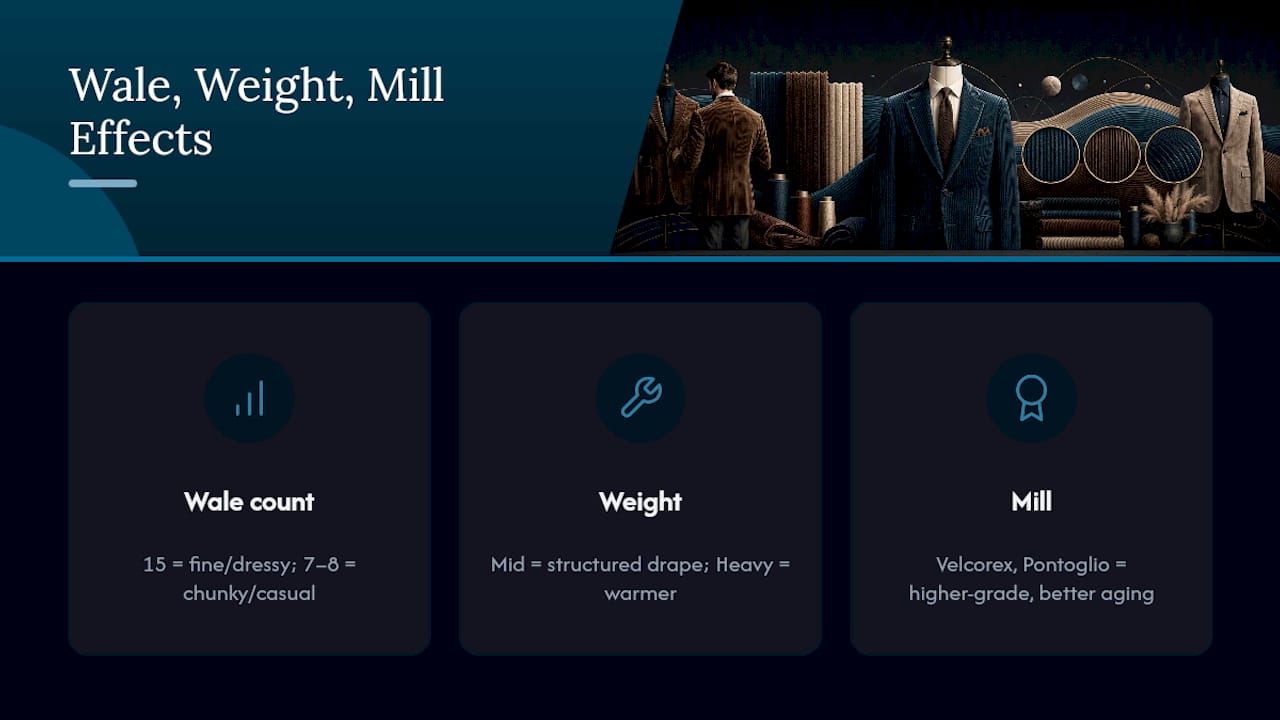
Weight matters just as much as wale. A midweight cloth with a half-canvas or full canvas construction drapes with more structure and holds a shoulder line properly, while an unlined or half-lined jacket trades some structure for breathability and a softer hand. Heavier corduroy also holds body heat better, which is worth considering if you’re building this suit specifically for winter wear rather than year-round use.
Mill provenance is a shorthand worth learning. Names like Velcorex and Pontoglio show up repeatedly in higher-grade corduroy because they weave denser, more consistent pile with better colorfastness than mass-market cloth. When a swatch card lists the mill, that’s usually a signal the fabric was chosen for how it ages, not just how it photographs on day one.
How to Style a Corduroy Suit: Three Outfit Formulas
Corduroy has visual weight. That pile either needs to be echoed with other textures or deliberately contrasted with something matte and clean, never paired against high-sheen silk or glossy leather, which fights the fabric instead of complementing it. Three formulas cover most situations you’ll actually face.
- Business-casual office look: corduroy suit, a fine merino crewneck or turtleneck instead of a shirt and tie, and a pair of suede derbies. This reads polished without ever tipping into boardroom formality.
- Weekend layered look: break the suit apart. Wear the jacket over a chambray shirt or sturdy overshirt with raw denim, and save the trousers for another day with boots and a flannel shirt.
- Semi-formal evening look: a crisp white or pale blue shirt, no tie, and suede loafers. Keep accessories minimal so the fabric’s texture stays the focal point instead of competing with a patterned tie or pocket square.
If you do want to add a tie, choose a knitted wool or grenadine weave over anything with sheen, and skip pocket squares in silk for the same reason. Structured leather shoes with a matte finish work better here than a high-shine oxford.
Pro Tip: Stick to a tonal palette, navy, olive, or chestnut, rather than treating corduroy as a novelty fabric that needs bold color to stand out. The texture is already doing the work; let the color stay quiet.

Choosing and Fitting Your Suit: Bespoke vs. Ready-to-Wear
Fit priorities shift slightly with corduroy compared to smooth wool. The pile adds bulk, so the chest and shoulder need a touch more ease than you’d build into a worsted jacket to avoid a stretched, shiny look across the pile where it’s under strain. Trouser knees deserve reinforcement too, since corduroy shows wear at stress points faster than a tighter weave.
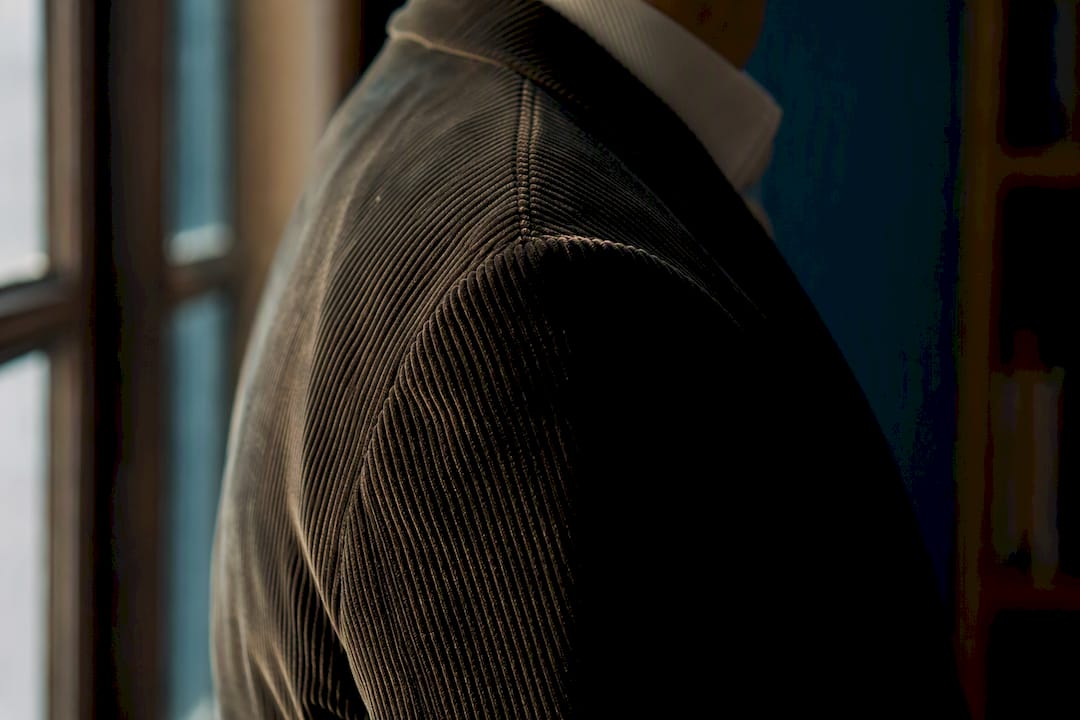
Ready-to-wear works fine if your proportions are standard and you’re comfortable with a fixed wale and weight. Bespoke earns its cost when you have less common measurements, want a say in which mill’s cloth goes into the jacket, or need construction that actually supports how corduroy behaves over years of wear rather than months. Ron & Rich’s bespoke process starts with exactly these fabric and build decisions before a single measurement is taken.
Before committing to a jacket or a full commission, ask:
- What mill does this cloth come from, and what’s the wale count?
- Is the jacket canvassed, and how much ease is built into the chest for the pile?
- What lining options are available, and how do they affect warmth?
- Can the trousers be finished with a turn-up, and is the knee reinforced?
- What finishing details (buttons, stitching) come standard versus custom?
Caring for Corduroy: Cleaning, Storage, and Quick Fixes
Corduroy doesn’t need constant dry cleaning, and over-cleaning actually flattens the pile faster than normal wear does. Spot-clean stains as they happen and save the dry cleaner for once or twice a season at most.
Brush the fabric with a soft clothes brush after each wear to lift dust out of the ridges, and let the suit air out on a wide wooden hanger before it goes back in the closet. Avoid tight garment bags that crush the pile over time.
Small snags can usually be worked back into place with a blunt needle rather than cut, and light fading is best prevented by keeping the suit out of direct sun on the hanger. A worn knee or elbow is a simple reinforcement job for a tailor rather than a reason to replace the garment.
Aaron Fan on Commissioning Corduroy: What Tailoring Actually Changes
Corduroy punishes bad tailoring decisions more visibly than plain wool does. When I select cloth for a client, wale and weight come first, because those two choices decide whether the finished jacket reads as a refined blazer or a heavier weekend piece, and that decision has to match what the client actually plans to wear it for.
Shoulder shaping needs extra attention with corduroy since the pile can bunch or flatten unevenly if the canvas is too light for the cloth’s weight. Trouser reinforcement at the knee is another detail I build in as standard, not an upgrade, because corduroy shows stress there faster than a tighter weave. Small tailoring decisions like these matter more with corduroy than with a plain worsted wool suit, because the fabric’s texture magnifies every construction shortcut.
Aaron Fan
Commission a Corduroy Suit With Ron & Rich
Ron & Rich gives you direct access to the fabric and construction decisions that make or break a corduroy suit, rather than a fixed rack of wale counts and linings decided by someone else. You choose the mill, the weight, and the build, and we shape it around your measurements from the first consultation.
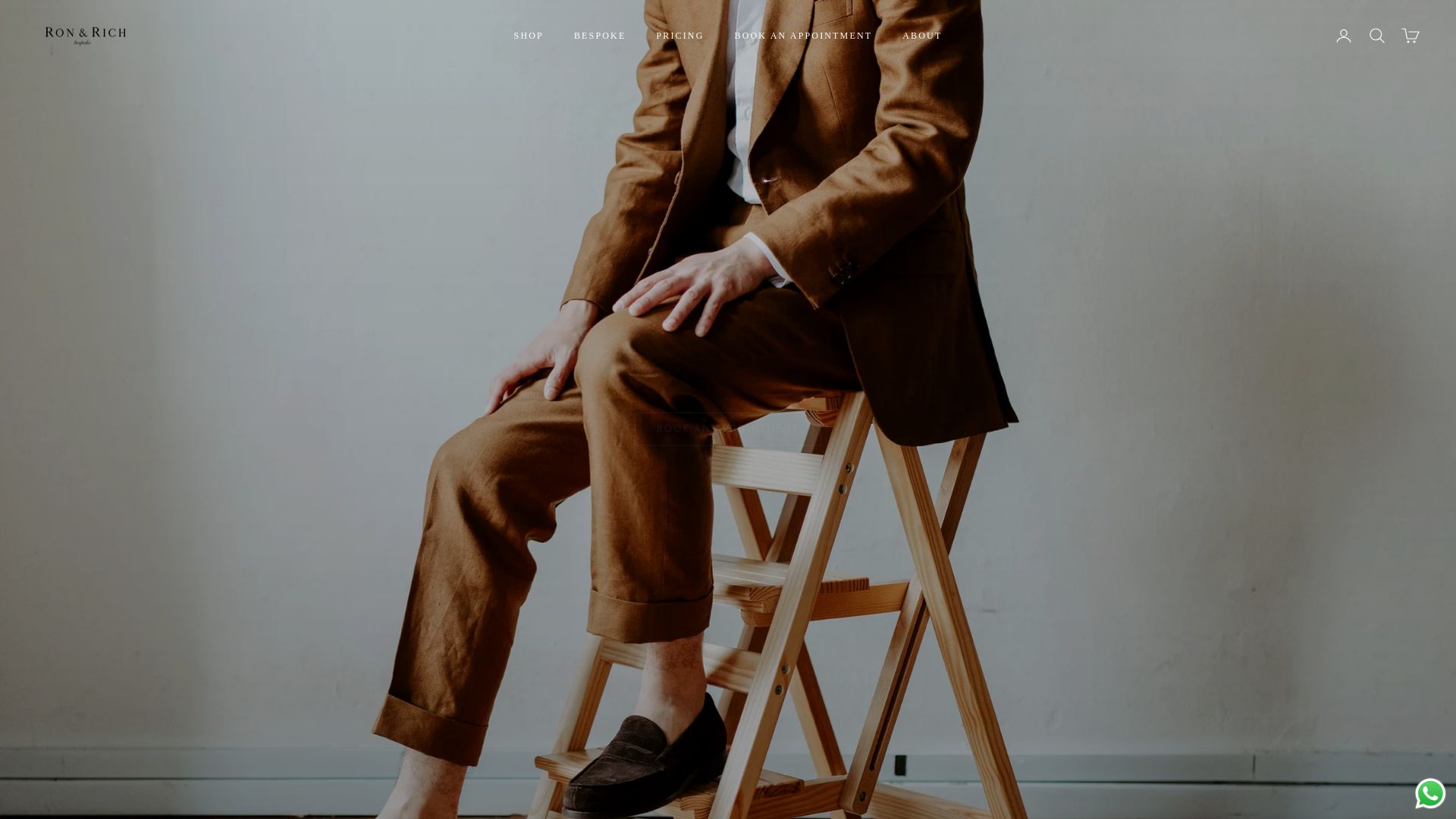
Booking starts with a consultation where we review cloth swatches by wale and mill, discuss lining and canvas options, and take full measurements. Bring any reference photos or existing pieces you like the fit of, and be ready to talk through where the suit will actually get worn, since that shapes which weight we recommend. A first commission typically moves from initial fitting to finished garment over several weeks, with a fitting checkpoint along the way to adjust shoulder and trouser details before final construction.
Browse our suits and jackets to see current fabric options, or start the bespoke tailoring process directly if you already know the wale and silhouette you’re after. If you’d rather see a finished piece before committing to a custom order, our ready-to-wear selection is a practical starting point.
Sources
- Corduroy matching & style guide, The Peak Magazine
- The corduroy suit, Permanent Style
- The Corduroy Suit Is for Vintage Hunters, Italian Dandies …, GQ