Big and Tall Suits: Where Fit Meets Real Craftsmanship
For most men who fall outside standard sizing, made-to-measure or bespoke tailoring, built around suit separates rather than a matched off-the-rack set, delivers the best fit for big and tall suits. Standard suit sets assume your chest, waist, and inseam scale together in fixed proportions, and larger frames rarely do. That mismatch is why so many big and tall shoppers end up with a jacket that fits the shoulders but chokes the belly, or trousers that fit the waist but pool at the ankle.
The fastest path forward: book a fitting appointment and get measured properly before you buy anything else. A qualified tailor can tell you within minutes whether your body needs separates, a made-to-measure order, or a full bespoke build.
-
Extended big and tall ranges commonly run past standard chest sizes, with some custom-order brands sizing up to 72.
-
Retailers focused on this category typically offer three length options, short, regular, and long, because height and torso length don’t move together in lockstep, as Dobell’s big and tall category shows.
Bigger and taller bodies genuinely need different construction, not just a bigger version of a standard pattern, since scaled-up sizing tends to leave excess fabric in the wrong places and pull tight in others.
Key Takeaways
Made-to-measure or bespoke tailoring built around suit separates consistently outperforms standard ready-to-wear sets for larger and taller frames because it addresses proportion mismatches directly.
| Point | Details |
|---|---|
| Start with separates | Buying jacket and trouser sizes independently solves the most common big and tall fit problem. |
| Measure before you buy | Shoulder width, sleeve length, and trouser rise matter more than chest size alone. |
| Match construction to comfort | Half-canvas or full-canvas builds drape better than fused construction on larger chests. |
| Budget for lead time | Bespoke typically takes 8 to 12 weeks; made-to-measure runs 2 to 6 weeks. |
| Book with Ron & Rich | Ron & Rich offers bespoke fittings built around individual measurements at every stage. |
Table of Contents
-
Which Fabrics and Construction Methods Fit Bigger Frames Best?
-
How Much Do Big and Tall Suits Cost, and How Long Do They Take?
-
Book Your Fit With Ron & Rich
What Is the Best Way to Buy Big and Tall Suits?
Four routes exist, and each one trades speed for fit precision in a different way.
Ready-to-wear (RTW) big and tall suits come pre-cut in extended sizes and are ready the day you buy them. Suit separates let you buy the jacket and trousers as independent pieces, sized to your actual proportions instead of a fixed set ratio. Made-to-measure (MTM) starts from a base pattern that a tailor adjusts to your measurements, splitting the difference between speed and precision. Bespoke builds a suit from scratch around your body, with a pattern created solely for you.
The trade-offs come down to four factors: how well the suit fits without alteration, what it costs, how long you wait, and how much you can customize.
-
RTW is the fastest and cheapest but offers the least customization, and larger frames often still need alterations afterward.
-
Suit separates cost a bit more than a matched set but solve the classic big and tall problem: a jacket that fits your shoulders paired with trousers that fit your waist.
-
Made-to-measure takes a few weeks and produces a noticeably better fit, since the base pattern gets shaped around your real measurements.
-
Bespoke takes the longest and costs the most but gives you full control over cut, fabric, and construction, according to guidance from StudioSuits on choosing big and tall suits.
Pro Tip: Before committing to a full bespoke order, book a single tailoring appointment to try suit separates first. It’s the cheapest way to find out whether your jacket and trouser sizes actually differ, and that one fitting tells you more than any size chart ever will.
How Does the Measurement and Fitting Process Work?
Getting a great fit is a sequence, not a single event. Skip a step and the whole suit suffers.
-
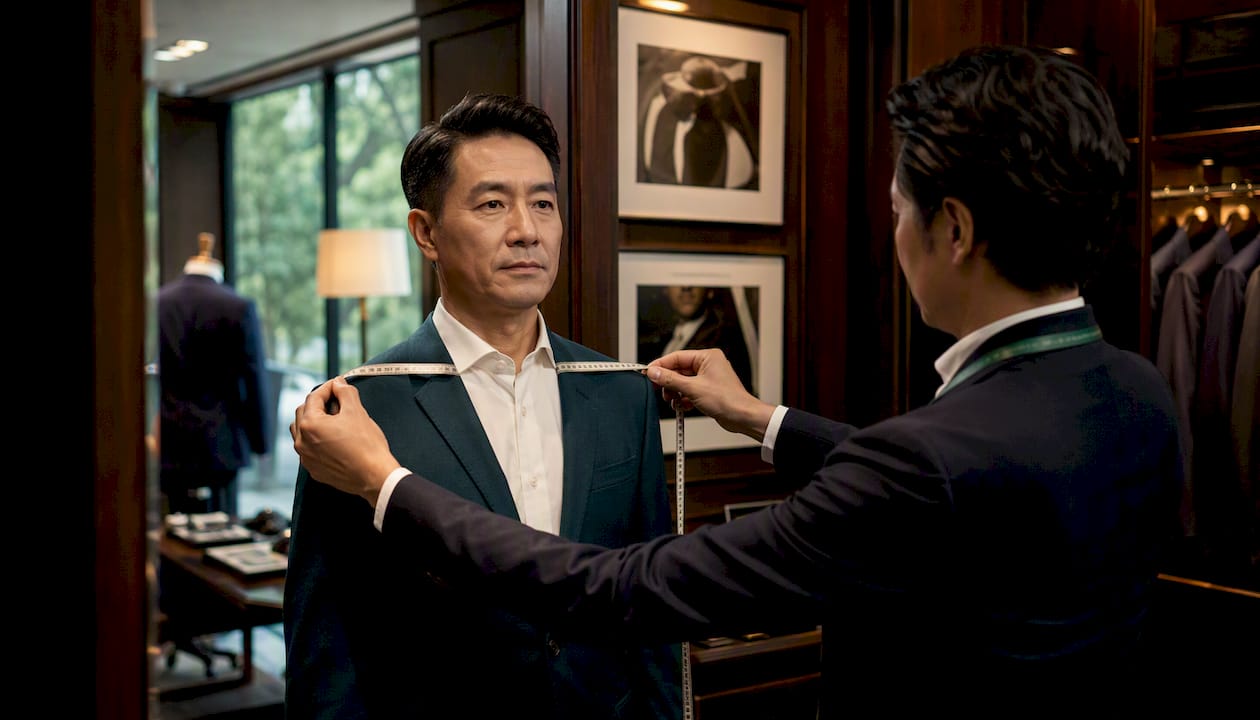
Initial measurement. A tailor records chest, waist, shoulder width, sleeve length, jacket length, and trouser rise and inseam. For larger frames, the gap between chest and waist measurements often matters more than either number alone.
-
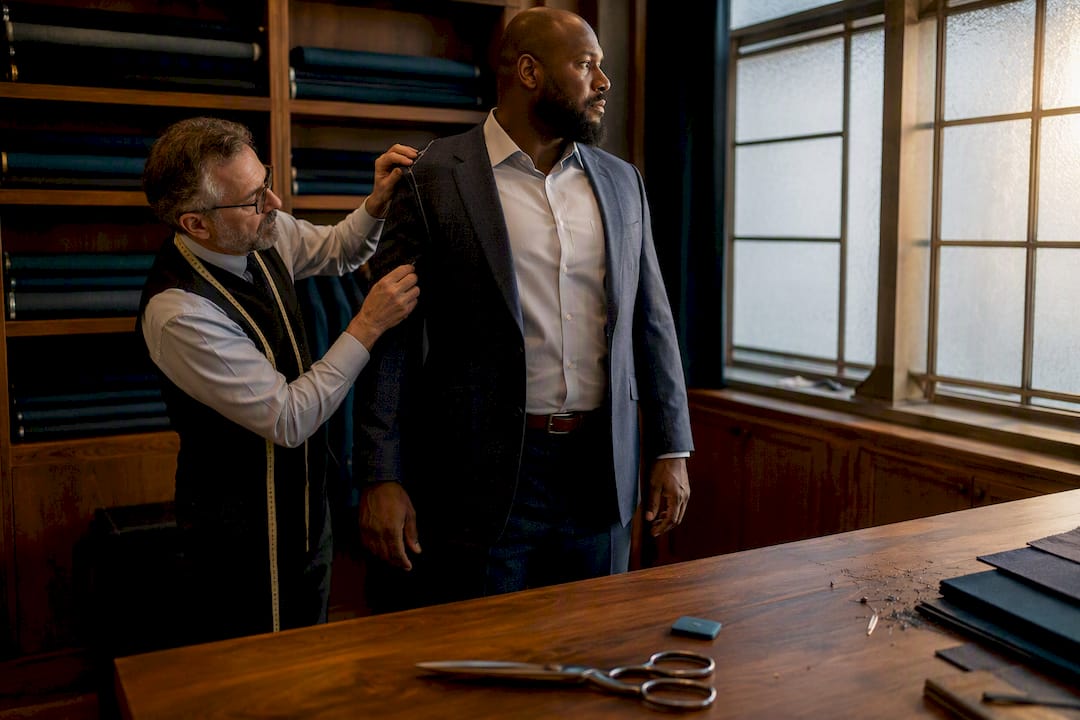
First fitting. You try on a baste or partially constructed garment so the tailor can check how the fabric hangs on your actual body, not just the tape measure numbers.
-
Adjustment and second fitting. The tailor corrects shoulder seams, hem length, and rise based on what the first fitting revealed. This is where a suit goes from “technically your size” to “actually fits.”
-
Final delivery. You collect the finished garment and do a last check in it, ideally wearing the shoes and shirt you’ll actually pair with it.
For big and tall customers specifically, shoulder width deserves the most attention, since an oversized shoulder seam is the hardest flaw to fix after the fact. Sleeve length and jacket length come next, followed by trouser rise and the waist-to-chest ratio, which is often the actual reason a standard suit set never fit right in the first place.
Bring the shoes, dress shirt, and belt you plan to wear with the suit to every fitting. Fabric drapes differently over dress shoes than sneakers, and a belt changes how trousers sit at the waist. Made-to-measure orders usually need one to two fittings; bespoke can run three or more, particularly for a first order where the tailor is building your pattern from nothing.
When booking, ask what the bespoke tailoring process actually involves and how many fittings are included, so you know what to expect before you arrive.
What Fit Rules Actually Work for Bigger, Taller Frames?
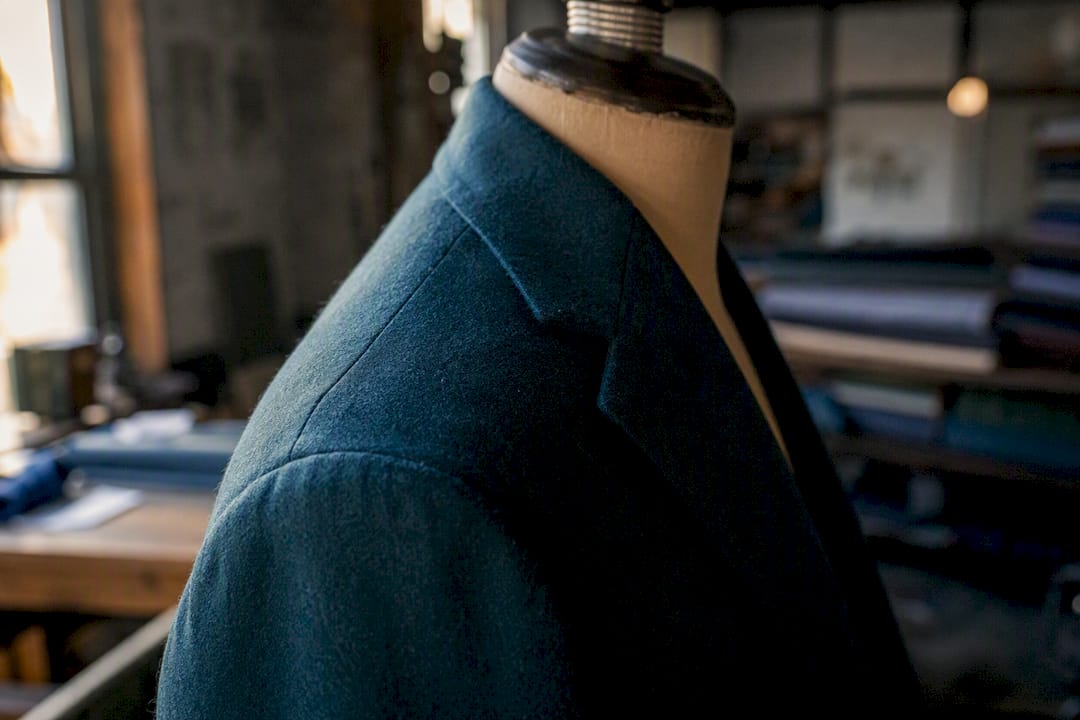
Shoulder fit comes first, always. The shoulder seam should sit right at the edge of your shoulder bone, no further. A jacket seam that extends past that point creates a boxy silhouette no amount of tailoring elsewhere can rescue.
Jacket length should cover the seat without ending mid-thigh. A common mistake on bigger frames is a jacket cut too short, which draws the eye to the waist and makes the wearer look wider than he is. The correct length balances the torso against the legs.
Lapel width should scale with chest size, not fashion trends. A narrow lapel on a broad chest looks undersized and throws off the whole proportion. Wider, structured lapels generally read better on a larger frame.
Sleeve length should show a half-inch of shirt cuff. This one rule does more for a polished look than almost anything else, and it’s the detail most RTW suits get wrong on bigger arms.
Trouser rise and break matter more than most buyers realize. A rise that’s too low on a larger frame creates strain lines at the front; a proper mid-to-high rise sits comfortably and holds a cleaner line down the leg.
Beyond fit rules, style choices shape how a suit reads on a larger body:
-
Single-breasted suits with a single button tend to elongate the torso better than double-breasted styles on fuller frames, though a well-cut double-breasted suit can still work with the right proportions.
-
Peak lapels add visual structure to the shoulder line; notch lapels are safer for a first custom order.
-
Larger-scale patterns, wide stripes, bigger checks, tend to flatter bigger frames better than tight micro-patterns, which can look busy and cramped at scale.
-
Vertical lines, from pinstripes to the seam placement itself, create a leaner visual line without changing the suit’s actual cut.
Slim-fit marketing gets misapplied constantly to big and tall bodies. A true slim cut removes fabric everywhere, including through the chest and shoulders, which is the opposite of what most larger frames need. What works instead is a modern, tailored cut: trimmed at the waist for shape, but with enough room through the chest and shoulders to move freely. A classic, fuller cut still suits men who prioritize comfort over a sharper silhouette, and there’s nothing wrong with choosing it.
Two quick examples of common mistakes: a jacket with shoulders extending an inch past the natural shoulder line reads as oversized. The fix is either a smaller jacket size paired with separate trousers, or a shoulder-specific alteration. A jacket that ends above the seat when the arms are relaxed looks abbreviated. The fix here is almost always sizing up in jacket length or moving to made-to-measure.
Pro Tip: Ask your tailor about button stance placement. Moving the button point slightly lower creates a longer, leaner line through the torso, one of the simplest adjustments with an outsized visual effect.
Why Do Suit Separates Solve So Many Fit Problems?
Suit separates let you buy a jacket in one size and trousers in another, which fixes the single most common complaint among bigger men: a jacket that fits but trousers that don’t, or vice versa. Standard suit sets assume a fixed ratio between chest and waist measurements, and larger frames frequently don’t follow that ratio at all.
Buying separates means you stop compromising on one half of the suit to make the other half fit. Combined with a short list of targeted alterations, separates solve most fit issues without the cost of a full bespoke build.
Common alterations worth knowing about:
-
Raising or lowering the trouser rise to match your natural waistline.
-
Tapering the trouser leg for a cleaner line without changing the seat.
-
Reinforcing or adjusting the shoulder seam, one of the trickiest and most impactful fixes.
-
Moving the button stance to adjust how the jacket closes across the torso.
-
Hemming sleeves versus fully re-cutting them, depending on how much length needs to come off.
Some fixes are minor and dramatic at once. Raising a trouser rise by an inch can completely change how a suit sits, at minimal cost. Others call for a bigger decision. If a jacket’s shoulders are genuinely too narrow or too wide for your frame, no amount of tailoring corrects that; you need a different size or a remade piece entirely. Retailers built around big and tall sizing, including JoS. A. Bank’s big and tall collection, routinely point customers toward separates for exactly this reason.
Which Fabrics and Construction Methods Fit Bigger Frames Best?
Medium-weight wool and wool-blend fabrics drape better on larger frames than stiff, low-quality synthetics, which tend to hold their shape awkwardly instead of moving with the body. For hot or humid climates, lighter wool blends or breathable alternatives to linen offer comfort without sacrificing structure the way pure linen sometimes does on a bigger frame.
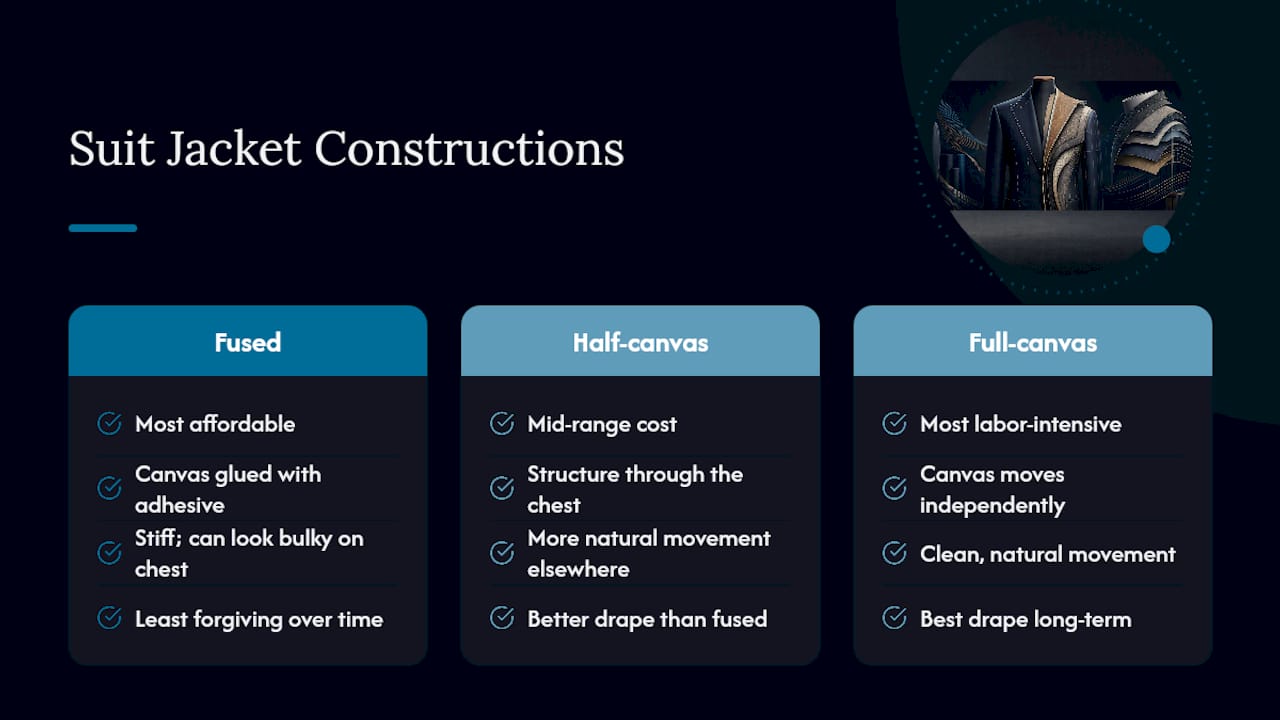
Construction matters just as much as fabric weight. Fused construction is the most affordable but the least forgiving. It bonds the canvas to the fabric with adhesive, which can look stiff and bulky on a larger chest. Half-canvas construction offers a middle ground: structure through the chest with more natural movement elsewhere. Full-canvas construction is the most labor-intensive and gives the cleanest drape over time, since the canvas moves independently of the outer fabric rather than being glued to it.
Pattern scale deserves attention too. Larger checks, wider stripes, and classic pinstripes generally suit bigger frames better than small, tight patterns, which can look cramped when stretched across more fabric. Lining choice affects comfort directly: a breathable lining reduces friction and heat buildup during a long day. Fabric ranges built for extended sizing, including CCO Menswear’s big and tall suits, commonly include wool, wool blends, and seersucker options specifically for this reason.
Pro Tip: Look for wool blends with a small percentage of stretch fiber woven in. They hold a tailored shape all day without the stiffness of pure wool, which matters if you’re sitting through meetings or standing for long stretches at an event.
How Much Do Big and Tall Suits Cost, and How Long Do They Take?
Ready-to-wear big and tall suits are the cheapest and fastest option, often available the same day, but customization is limited to what’s already on the rack. Made-to-measure typically runs a few weeks for delivery, since a tailor has to adjust a base pattern and often build the garment after your fitting. Bespoke takes the longest, frequently 6 to 12 weeks or more, because the pattern is built from nothing and usually requires multiple fittings along the way.
Lead times at a glance:
-
Ready-to-wear: available immediately to a few days, depending on alteration needs.
-
Made-to-measure: roughly 2 to 6 weeks from order to delivery.
-
Bespoke: roughly 6 to 12 weeks or longer, depending on fabric availability and fitting schedule.
Price climbs with every added layer of customization: full-canvas construction over fused, hand-stitched details like pick-stitching, and custom linings all add cost, but they also add durability and drape you’ll notice years later. Extensive alterations on a bought-off-the-rack suit can quietly add up to a meaningful chunk of the original price, so it’s worth asking upfront.
Before you commit anywhere, ask directly about the alteration policy, the return or exchange window, and whether rework after a fitting carries an extra fee. A tailor who answers those questions clearly, without hedging, is usually a tailor worth trusting with a bigger order.
Why Ron & Rich Fits the Big and Tall Buyer’s Needs
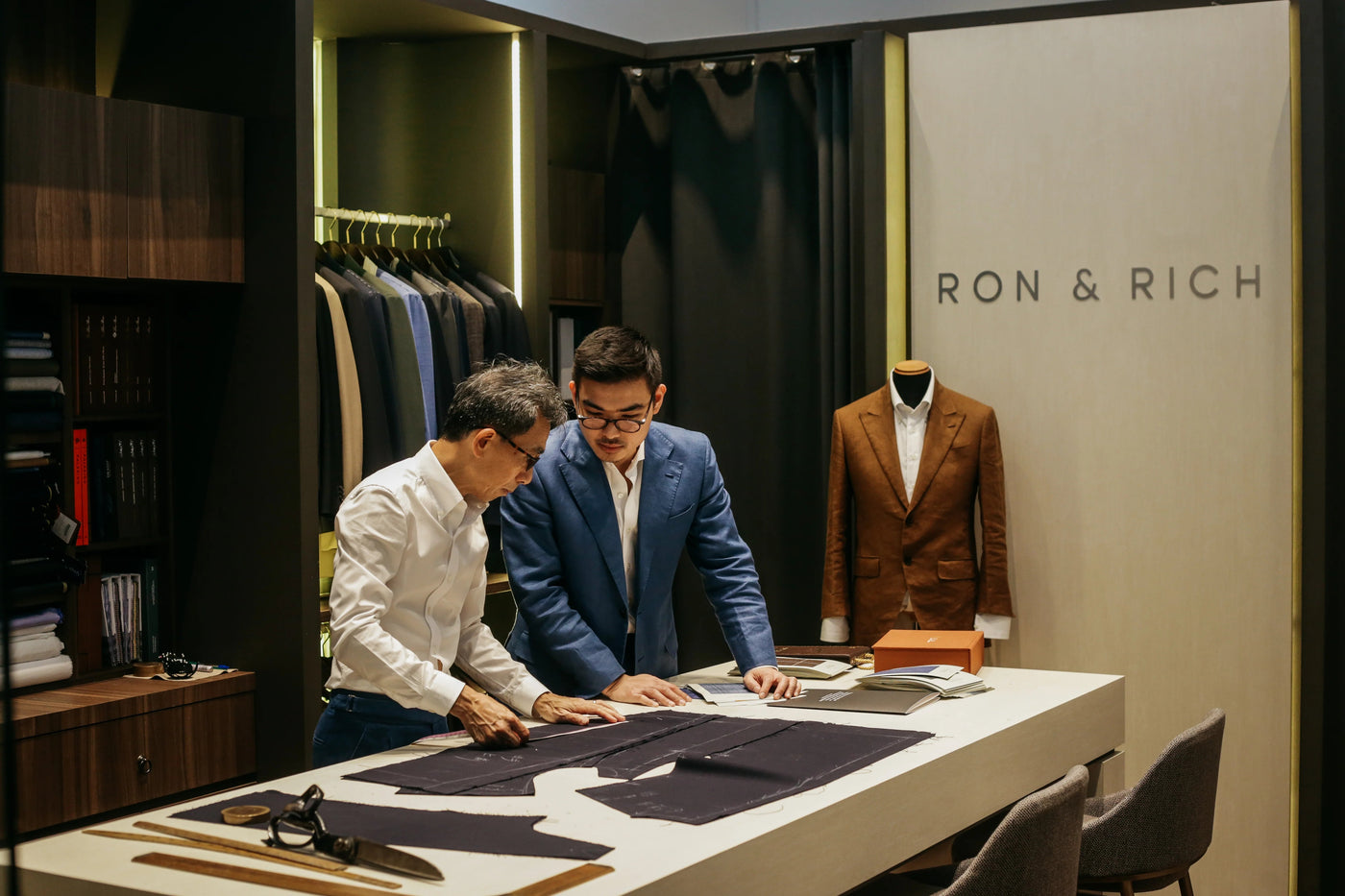
Ronandrich builds bespoke garments around a client’s actual proportions, which is precisely what a larger or taller frame needs instead of a scaled-up standard pattern. Founded in 1979 by master tailor Richard Fan, the house has spent decades refining fit for bodies that standard sizing simply wasn’t built around.
What a big and tall client can expect when booking:
-
A showroom appointment where measurements are taken by hand, not estimated from a size chart.
-
Fabric selection across weights and constructions suited to your climate and how often you’ll wear the suit.
-
One or more fittings to adjust shoulder, sleeve, and trouser proportions before the final garment is finished.
-
A finished suit built from a pattern created for your body, not adapted from someone else’s.
You can review the full bespoke tailoring process before booking, or browse the suits and jackets collection to see current offerings.
Pro Tip: Bring a suit you already own, even an ill-fitting one, to your first appointment. A tailor can often diagnose exactly what’s wrong with it faster than describing the problem out loud.
A Tailor’s Note on Fitting Bigger Frames
The work I care about most isn’t the fabric or the stitching count, it’s making sure a bigger man’s shoulders and chest carry the suit instead of the suit carrying him. A frame that’s been guessed at, rather than measured, always shows in how the jacket sits when he raises his arms or sits down at a table.
Book Your Fit With Ron & Rich
Ron & Rich gives big and tall buyers something a sizing chart never can: a pattern built around your actual measurements instead of a guess at where you fall on a chart. Where ready-to-wear racks force a compromise between shoulder fit and waist fit, Ron & Rich starts with your body first, then builds the jacket and trousers to match.
If you’ve read this far and recognized your own fitting frustrations in the RTW-versus-separates trade-offs above, a fitting appointment is the logical next step. Explore the bespoke suit tailoring service to see how the process works from first measurement to final delivery, or browse the luxury tailored suits collection to get a sense of fabric and construction options before you book. Either way, the next move is simple: get measured properly, once, by someone who builds around your frame rather than around a standard chart.
Frequently Asked Questions
What’s the difference between big and tall suits and standard suits altered to fit? Big and tall suits are designed from the start with extended sizing and proportionally larger torso, sleeve, and body room, rather than simply resized from a standard pattern. Garments built this way tend to hang more naturally and avoid the baggy look that comes from scaling up a standard cut.
Are suit separates more expensive than a matched suit set? Separates often cost slightly more than a pre-matched set, but the fit improvement usually outweighs the price difference for larger frames where jacket and trouser sizes don’t naturally align.
How many fittings does a made-to-measure suit usually need? Most made-to-measure orders need one to two fittings, while bespoke suits, built from an original pattern, often require three or more, particularly on a first order.
Can big and tall suits still look modern and tailored, not boxy? Yes. A modern tailored cut, trimmed through the waist while leaving room through the chest and shoulders, achieves a sharper silhouette without the restriction of a true slim cut, which usually removes too much fabric for larger frames.
How long does a bespoke suit typically take from order to delivery? Bespoke suits generally take 8 to 12 weeks or longer, depending on fabric availability and how many fittings are scheduled along the way.