Bespoke Suit Price in Singapore: What You Will Pay
A bespoke suit in Singapore starts from $2,170 at our house, and the final figure depends chiefly on fabric, construction and the number of pieces you commission. Other tailors in the city price across a wide band, from entry-level made-to-measure to premium full bespoke, so the useful question is less “what is the cheapest?” than “what does this price actually include?” This guide sets out how bespoke pricing works, what moves it, and how to read a quote before you commit.
TL;DR
- Our bespoke suits start from $2,170, tuxedos from $2,270 and sports jackets from $1,790, as published on our pricing page.
- The price is shaped by fabric, canvas construction, lining and trims, the number of pieces, and the amount of hand work and fitting time.
- True bespoke involves a pattern drawn for you and several fittings; made-to-measure adapts an existing pattern. The two are priced differently for good reason.
- Choose a breathable wool for Singapore’s heat and humidity, and ask for the fabric name, weight and mill in writing.
- Compare quotes line by line: fittings, alterations after delivery, timeline and what is excluded.
Table of Contents
- What a bespoke suit costs in Singapore
- What shapes the price
- Bespoke versus made-to-measure
- What is usually included, and what often costs extra
- How fittings affect time and cost
- How to read a Singapore tailor’s quote
- Our perspective
- Choosing where to spend
- Book a fitting with Ron & Rich
- FAQ
- Sources
What a bespoke suit costs in Singapore
Prices in the city fall into broad tiers, and the tier tells you more than any single number.
Entry level. Made-to-measure and fused or half-canvassed suits, usually from a standard pattern adjusted to your measurements. These suit occasional wear and a first custom piece.
Mid to upper range. Full-canvas construction, better cloth, more fittings and more hand finishing. This is where most professionals who wear a suit several days a week settle.
Premium. Fine Italian or English cloth, a pattern cut entirely for you, extensive hand work and a master tailor overseeing the garment from first chalk mark to final press.
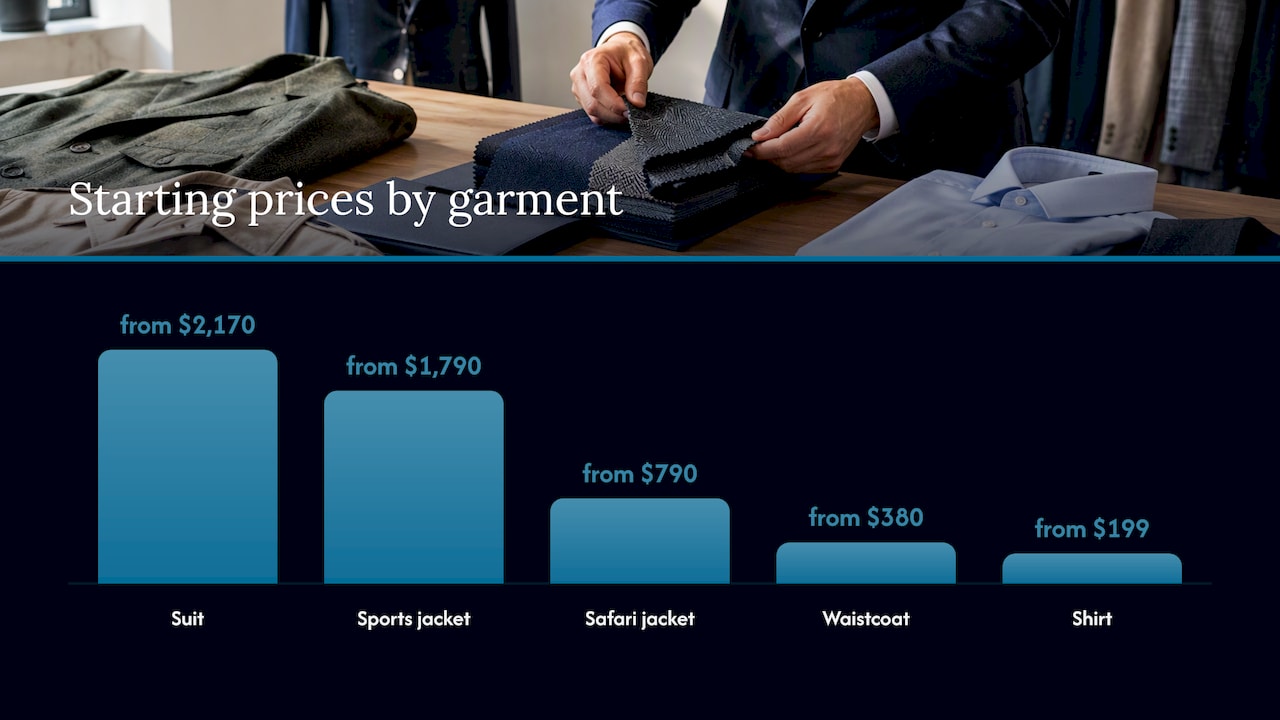
We sit firmly in the craftsmanship-led end of that range. Our published starting prices, which are the figures to hold any quote against, are:
| Garment | Starting price |
|---|---|
| Suit | from $2,170 |
| Tuxedo | from $2,270 |
| Sports jacket | from $1,790 |
| Safari jacket | from $790 |
| Chore coat | from $790 |
| Waistcoat | from $380 |
| Trousers | from $290 |
| Shirt | from $199 |
The current list is always on our pricing page. “From” marks the starting point: cloth, details and the number of pieces move the figure upward from there.
What shapes the price
Two suits that look similar on a hanger can differ greatly in cost. These are the factors behind that gap.
Fabric
Cloth is the largest variable. Fabric differs in fibre, yarn fineness, weight and the mill that wove it. A lighter, finer wool costs more than a standard worsted, and a well-known mill costs more than an unbranded cloth.
Fabric also decides how the suit lives in this climate. Tatsuya Nakamura, creative director of Beams, recommends a breathable wool base for Singapore, noting that linen and cotton wrinkle easily here and make weaker choices. We select premium fabrics suited to Singapore’s climate, and we would rather steer you to a cloth you will wear comfortably for years than to the most expensive bolt on the table.
Construction
A full-canvas jacket has a floating inner structure that moulds to your chest over time. A fused jacket is glued and quicker to produce. The canvas takes more hours of skilled hand work, which is why it costs more and why it tends to keep its shape for longer.
Hand work and fitting time
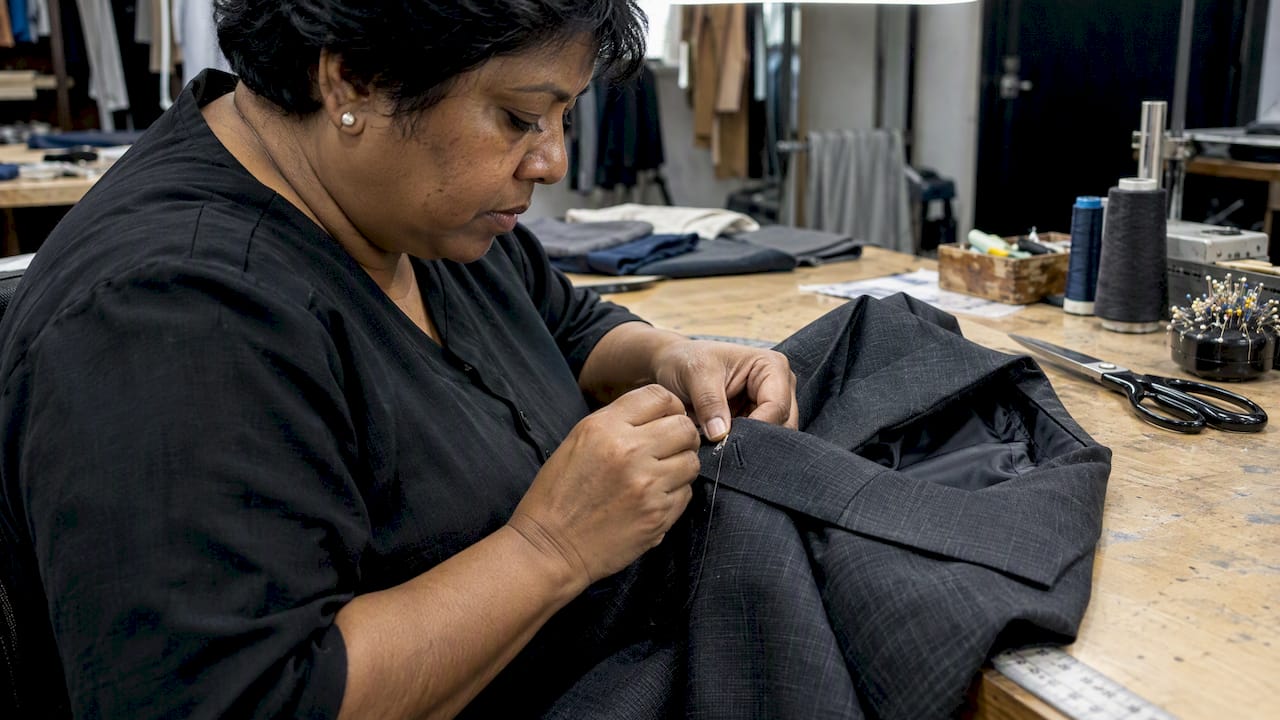
Hand-sewn buttonholes, padstitched lapels, hand-set sleeves and hand-finished linings add hours. So does every fitting, because each one is a tailor’s time spent refining the cut for your body.
Pieces and details
A two-piece suit, a three-piece with waistcoat, a double-breasted cut, working cuffs, a custom lining and monogramming all change the figure. A second pair of trousers is one of the more sensible additions: suit trousers wear faster than jackets.
Your body
Sloping shoulders, a prominent posture, an asymmetry in the hips or an unusual proportion call for extra pattern work. This is precisely what bespoke is meant to solve, and the time spent is part of what you pay for.
Bespoke versus made-to-measure
The two terms are often used loosely, and the price gap between them is real.
| Made-to-measure | Bespoke | |
|---|---|---|
| Pattern | Existing block, adjusted to your measurements | Drawn from scratch for you |
| Fittings | Often one | Commonly several |
| Fit issues | Handles standard variations | Addresses individual posture and proportion |
| Construction | Varies, often machine-led | Typically more hand work |
| Cost | Lower | Higher |
Neither is wrong. Made-to-measure is a sensible way to start if your build is close to a standard shape. Bespoke earns its price when off-the-rack and adjusted patterns never quite sit right, or when you want a garment that improves with each fitting. If a tailor calls a suit bespoke, ask whether a personal pattern is drawn and how many fittings are included.
What is usually included, and what often costs extra
A clear quote lists these items. Ask about each one.
Usually included
- Consultation and measurement
- A personal pattern for true bespoke
- The agreed fittings
- The fabric you selected, to the stated specification
- Standard lining, buttons and canvas
Frequently extra
- Premium cloth above a stated tier
- Additional trousers or a waistcoat
- Monogramming and special linings
- Fittings beyond the agreed number
- Alterations after delivery, for example if your weight changes
- Rush production
We always recommend asking which of these is covered before you pay a deposit. A reputable house will answer plainly.
How fittings affect time and cost
The process is slower than ordering a ready-made suit, and the reason is the fitting. As we have set out in our guide to bespoke business suits in Singapore, expect the tailor to take upwards of 20 measurements and to schedule two to four fittings before the suit is finished.
A typical path looks like this:
- Consultation. You discuss how you will wear the suit, your preferences in cut and cloth, and your budget.
- Measurement and pattern. Your measurements and posture are recorded and the pattern is prepared.
- First fitting. The jacket is tried in a basted or early state so the balance, shoulders and collar can be corrected.
- Further fittings. Adjustments to sleeve pitch, waist suppression and trouser break.
- Final fitting and collection. A last check and pressing.
The number of fittings is the clearest sign of how much the tailor invests in your garment. Allow several weeks overall, and confirm the timeline in writing, particularly if you are buying for a fixed event such as a wedding.
How to read a Singapore tailor’s quote
Before committing, check these seven points.
- The fabric. Name, composition, weight and mill, not just “premium wool”.
- The construction. Full canvas, half canvas or fused.
- The pattern. Bespoke, made-to-measure or adjusted block.
- The fittings. How many are included and how many are charged.
- The timeline. A delivery date, and what happens if it slips.
- After-sales alterations. Whether adjustments are free, for how long, and at what cost afterwards.
- What is in the price. Itemised pieces, with extras listed separately.
If you are comparing several houses, our guide on how to choose a custom suit tailor in Singapore goes through the questions in more depth. A very low quote is not automatically a bargain: ask which of the points above has been trimmed to reach it.
Our perspective
Our house was founded in 1979 by master tailor Richard Fan, and nearly five decades on, we still believe a suit should be built around the man who wears it, not the other way round.
When clients ask us about price, we speak first about value over years. A suit cut to your own pattern, fitted until the shoulders and collar sit quietly, and made from cloth chosen for Singapore’s climate, is worn more often and kept longer. The cost per wear falls with every season.
We keep our process honest and visible. Each garment is made with traditional tailoring techniques, with modern design in the proportions, so that the result feels timeless rather than fashionable for a single year. Our published starting prices are there so that you can plan with confidence before you step into the room.
If you are weighing your first bespoke suit, we would encourage you to begin with a single, well-chosen piece in a versatile cloth, and to build the wardrobe around it.
Ron
Choosing where to spend
Your budget goes furthest when it follows how you live.
The daily professional. Invest in a mid-weight wool in navy or charcoal, full-canvas construction and a second pair of trousers. Our business suits are made for this wearer.
The groom. Spend on fit and on cloth you will wear again, rather than on a one-day novelty. A bespoke tuxedo or a wedding suit in a refined tone can serve for years of black-tie and celebratory occasions.
The occasional wearer. A well-fitting jacket may serve you better than a full suit. Our sports jackets start from $1,790, and they pair with trousers from $290 for a smart casual rotation.
The wardrobe builder. Start with a suit, then add shirts from $199 and waistcoats from $380 over time. Ordering pieces in the same house keeps the fit and style consistent.
Book a fitting with Ron & Rich
If you are ready to move from comparison to a conversation, we welcome you to a consultation at our house. We will discuss your use, your cloth, your timeline and your budget, and quote each piece plainly. Our full range of suits and jackets and our current pricing are available to browse beforehand.
Gift cards are also available for those who would like to give a bespoke piece to someone else.
FAQ
How much does a bespoke suit cost in Singapore?
Prices vary widely by tailor, cloth and construction. Our own bespoke suits start from $2,170, with the final figure depending on fabric and details. Ask any tailor for an itemised quote so you can compare like with like.
Is bespoke worth more than made-to-measure?
It depends on your build and how often you wear the suit. Bespoke draws a pattern for you and usually involves more fittings, so it suits those whose posture or proportions are hard to fit. For regular wear, many clients find the improved fit and longevity justify the difference.
How long does a bespoke suit take?
Expect several weeks, because the process includes measurement, pattern work and two to four fittings. If you need the suit for a wedding or a fixed date, begin early and agree the delivery date in writing.
What is the best fabric for a suit in Singapore?
A breathable wool is the usual recommendation, as linen and cotton tend to wrinkle quickly in local conditions according to Beams creative director Tatsuya Nakamura. We will advise on weights and weaves suited to your working day.
Do prices include alterations?
This differs between tailors, so ask before you pay. Fittings during the making are normally part of the bespoke process, while changes long after delivery may be charged. Get the policy in writing.