Bespoke Suit Meaning: 50+ Hours, Fittings, and How to Spot Fake Labels
A bespoke suit is a garment cut from a unique paper pattern drafted for one client and finished largely by hand, not adapted from a standard block or size run. The Savile Row Bespoke Association ties this to strict practical standards, typically 50 or more hours of work and several fittings. At Ron & Rich, that distinction shapes everything from the first consultation to the final press.
TL;DR:
- A genuine bespoke suit is crafted with a pattern drafted from scratch based on detailed measurements and multiple fittings, requiring about 50 hours of hand-work.
- The process includes several key fittings, especially the baste fitting, which is essential for correcting structural issues before finishing.
- Cost factors include fabric quality, extensive hand-sewing, house reputation, and custom details, often making bespoke significantly more expensive than made-to-measure or ready-to-wear.
- The term “bespoke” is increasingly used loosely in marketing, so verification of a unique pattern and multiple fittings is crucial for authenticity.
- Bespoke suits are especially beneficial for those with unusual proportions or posture, providing better fit, support, and longevity compared to off-the-rack options.
Table of Contents
- What does bespoke actually mean?
- Bespoke vs made to measure vs ready-to-wear: what’s the real difference?
- What happens at each bespoke fitting appointment?
- How long does bespoke take, and what drives the cost?
- Is a bespoke suit worth the investment?
- Does “bespoke” always mean genuine hand tailoring?
- How Ron & Rich approaches genuine bespoke tailoring
- Our take: what most guides get wrong about bespoke
- Ready to start your own bespoke suit?
- Sources
- FAQ
What does bespoke actually mean?
The word comes from the old verb “bespeak”, meaning to speak for or arrange in advance. Cloth chosen for a specific customer was described as “spoken for”, and by the nineteenth century Savile Row tailors had turned that phrase into a trade term for garments made from scratch for one man rather than pulled from stock.
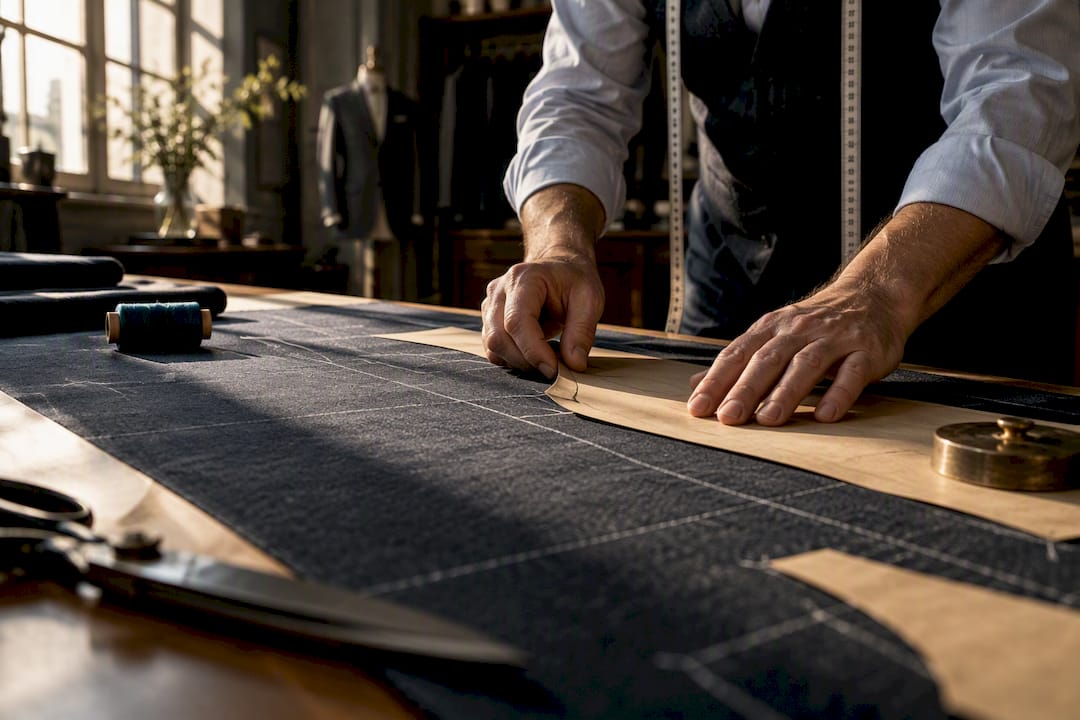
That history explains why the technical bar for bespoke sits so high. Bespoke tailoring means the garment is cut from an individual paper pattern drafted specifically for the client, built on far more measurements than a standard size chart uses, and finished with a substantial amount of hand-work.
The Savile Row Bespoke Association codifies this into a working checklist:
- A unique paper pattern drafted from scratch for the individual client, not adjusted from an existing block.
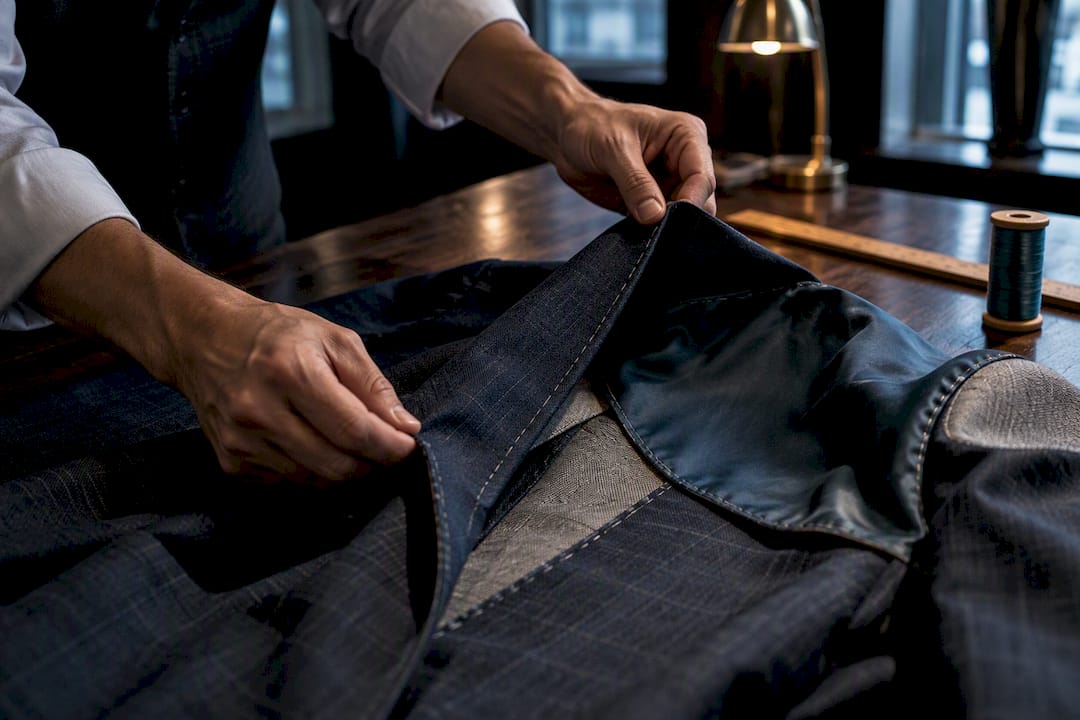
- Hand canvassing, where the chest and lapel structure is basted by hand into the cloth rather than fused.
- A minimum of around 50 man-hours per garment, according to Savile Row Bespoke.
- Multiple in-person fittings across several months, not merely weeks.
Anyone who spends that long apprenticing under this standard understands why the label matters, and why looser use of the word in advertising has become such a sore point among traditional tailoring houses.
Bespoke vs made to measure vs ready-to-wear: what’s the real difference?
The three terms get used interchangeably in shop windows, but the difference between bespoke and made to measure comes down to where the pattern starts and how much of the garment is built by hand.
- Ready-to-wear: cut from a factory-graded size (38R, 40L and so on), with no individual pattern and no fitting beyond trying it on.
- Made to measure: an existing block pattern is adjusted using the client’s measurements, usually with machine construction and one fitting, sometimes none.
- Bespoke: a pattern is drafted from scratch for that one client, with extensive hand-work and multiple fittings to correct the pattern as the garment takes shape.
Fit precision follows the same ladder. Ready-to-wear fits an average build reasonably well. Made-to-measure corrects the obvious mismatches, such as sleeve length or trouser rise, but works within the geometry of the original block. Bespoke can reshape that geometry entirely, which matters if you carry weight asymmetrically, have a pronounced forward shoulder, or simply want a silhouette no off-the-shelf block was drawn to produce.
Budget and timeline decide a lot of this for people in practice. Ready-to-wear suits you when time and cost matter more than a precise fit. Made-to-measure is a sound middle ground for a fairly standard build on a working timeline. Bespoke or made to measure both improve on ready-to-wear, but bespoke is the right call when your proportions are unusual, or when you want a suit built to your exact posture rather than corrected towards it.
What happens at each bespoke fitting appointment?
A bespoke suit is not made in one sitting. It moves through a defined sequence of appointments, and each one exists to catch a different kind of problem before it becomes permanent in the cloth.
- Consultation and fabric selection. The tailor discusses how the suit will be worn, then measurements are taken alongside notes on posture, such as a dropped shoulder or a forward-leaning stance that a tape measure alone would miss.
- Pattern drafting. Those posture notes feed directly into the paper pattern. This is the step experts describe as diagnostic work, translating balance and proportion into pattern shape rather than simply recording numbers.
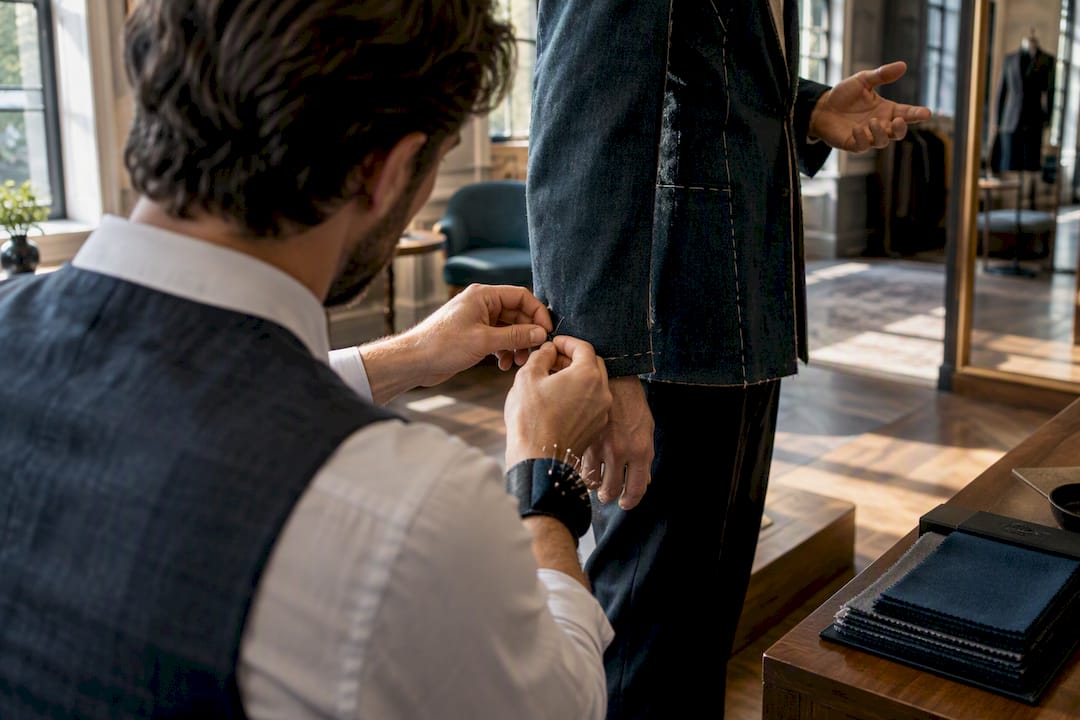
- Baste fitting. The garment arrives held together with loose, visible stitching and no lining. This is deliberate: the baste stage exists to expose structural issues, such as a pulling seam or an uneven hem, while they can still be corrected on the pattern rather than patched on the finished cloth.
- Forward fitting. With canvassing and construction further along, the tailor checks collar roll, sleeve pitch, trouser seat, and confirms hem and cuff lengths.
- Final fitting. Buttonholes, pressing, and finishing details are completed, and any last, small adjustments are made before the suit is handed over.
Pro Tip: Wear the shoes and shirt you intend to wear with the finished suit to every fitting, and say what feels wrong even if you cannot name it. A tailor can diagnose a “tightness across the back” comment far more usefully than silence.
Ron & Rich’s own bespoke process follows this same sequence, and clients who show up ready to give honest, specific feedback at each stage tend to get the sharpest result.
How long does bespoke take, and what drives the cost?
A full bespoke suit typically takes several weeks to a few months from first consultation to final collection, spanning the baste, forward, and final fittings described above. That timeline reflects genuine labour. Savile Row’s own figure of 50 or more man-hours per garment covers hand canvassing, hand-finished buttonholes, and repeated pattern corrections that machine production skips entirely.
Price moves with a handful of clear factors:
- Fabric: mill, weight, and fibre content shift cost more than almost anything else.
- Hand-work: hand-sewn buttonholes, hand-set sleeves, and hand-padded lapels all add hours.
- House reputation and location: established ateliers price their accumulated skill, not just the cloth.
- Custom details: working cuff buttons, personal linings, and unusual cut requests all add to the final bill.
Before committing, ask any tailor directly about turnaround time, how many fittings are included, and whether the quoted price covers alterations if your body changes.
Is a bespoke suit worth the investment?
Bespoke earns its price when fit correction actually matters. Because the pattern is drafted around your posture rather than corrected towards a standard block, it can address genuine structural quirks, uneven shoulders, a longer torso, a pronounced stomach, that ready-to-wear and even made-to-measure struggle to solve cleanly.
- Best candidates: men with unusual proportions, professionals who want a small, high-performing signature wardrobe, and grooms marking an occasion worth building for.
- Real pay-off: better posture support, longer garment life, and comfort that holds up through a full working day.
- When it’s not necessary: a fairly standard build, a tight deadline, or a one-off event where high-quality made-to-measure or ready-to-wear does the job perfectly well.
If you are weighing that decision in cost terms, it is worth reading why investing in a tailored suit tends to outlast cheaper alternatives in practice.
Does “bespoke” always mean genuine hand tailoring?
Not necessarily, and this is where buyers get caught out. The Advertising Standards Authority has accepted a looser reading of “bespoke” in advertising, effectively allowing it to describe anything made to order, even when no unique pattern or hand-work is involved. Modern production methods have also blurred the line further, so the label alone tells you less than it used to.
Heuristic worth remembering: traditional Savile Row bespoke runs to roughly 50 or more man-hours per garment. If a “bespoke” suit is priced and turned around like a ready-to-wear purchase, that hour count almost certainly isn’t there.
Ask what’s actually hand-sewn, how many fittings are included, and whether a unique pattern is kept on file for you.
How Ron & Rich approaches genuine bespoke tailoring
Ron & Rich has built suits and tailored menswear since 1979, when master tailor Richard Fan founded the house on the same principle Savile Row still defends: a garment should be built around the client, not adjusted towards him.
That means a proper consultation and fabric selection, a pattern drafted for your measurements and posture, and fittings that follow through baste, forward, and final stages before the suit leaves the workshop. It is the same sequence described above, applied with nearly five decades of accumulated technique behind it.
Our take: what most guides get wrong about bespoke
Most explainers treat bespoke as a synonym for expensive, or a synonym for handmade, and stop there. Neither captures what actually earns the label. The real test is the pattern: was one drafted from scratch for your body, or was an existing block adjusted around your numbers? Everything else, hand canvassing, fitting count, the hours logged, flows from that single decision.
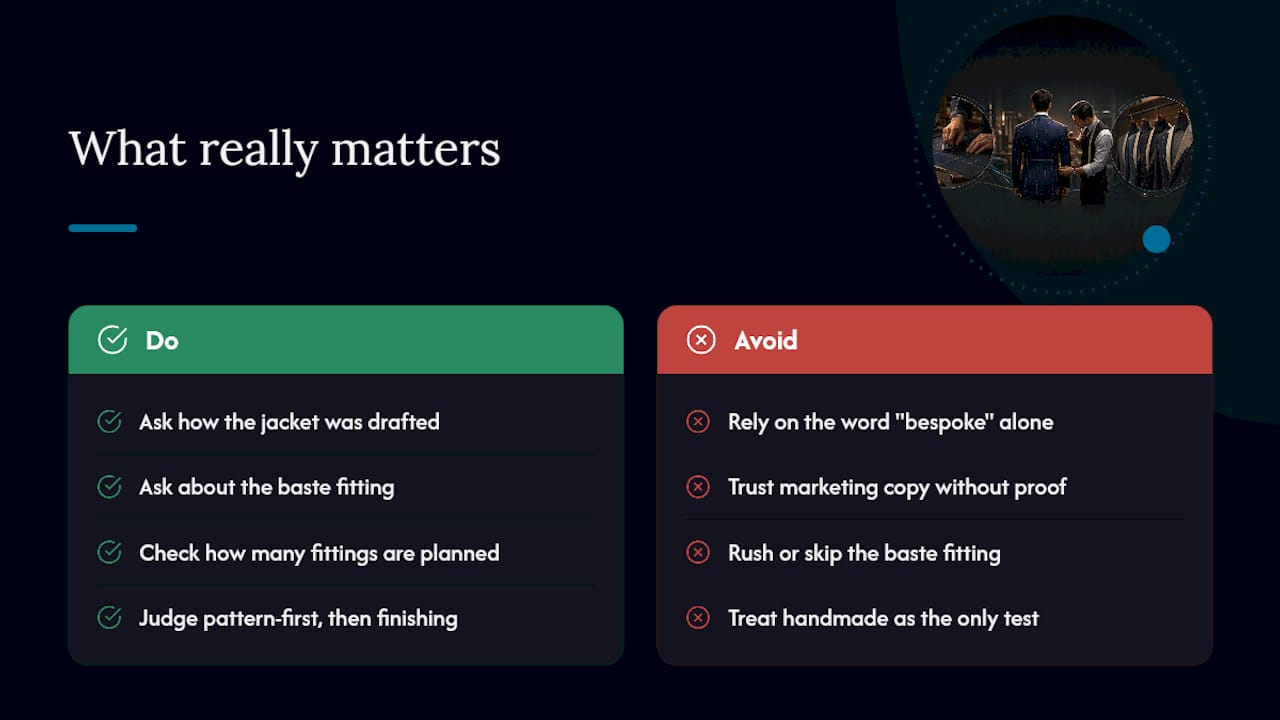
The conventional advice to “just ask if it’s bespoke” falls short because, thanks to how loosely the ASA allows the word to be used commercially, the honest answer to that question is often technically yes and practically misleading. The sharper question is about the pattern and the fittings, not the label.
If you take one thing from this, prioritise the baste fitting. It is the least glamorous appointment and the one most people are tempted to rush, yet it is where a genuine bespoke house catches the structural problems that a rushed process buries underlining and finishing. A tailor who treats that stage seriously is telling you more about their standards than any amount of marketing copy.
— Richard Fan
Ready to start your own bespoke suit?
This company offers bespoke suits built from individually drafted patterns, fitted across proper baste, forward, and final stages.
A bespoke suit starts from $2,170, a bespoke sports jacket from $1,790, and a tuxedo from $2,270, each covering the full consultation and fitting process. Bring an idea of how you’ll wear the piece, whether that’s boardroom, wedding, or everyday, and expect the full process to run several weeks given the hand-work involved.
If you’re not ready for a full bespoke commitment, browse our ready-to-wear range or explore the full suit collection to see the craft up close first. A bespoke suit is a genuine investment of time and cloth, and it’s one we’ve been building carefully since 1979.
Sources
- Bespoke tailoring - Wikipedia
- About Us - Savile Row Bespoke - Savile Row Bespoke
- What is included in a bespoke suit fitting process? - FAULT Magazine
FAQ
Why is it called bespoke?
The word comes from “bespeak”, meaning to speak for something in advance. Cloth reserved and cut for one specific customer was described as “spoken for”, which became “bespoke” in tailoring language over time.
Does bespoke mean luxury?
Not automatically. It means a garment cut from a unique pattern with substantial hand-work, which is usually costly given the 50 or more hours involved, but the ASA permits looser marketing use of the word, so “bespoke” pricing doesn’t always reflect that labour.
Is a bespoke suit worth it?
It’s worth it if fit correction and longevity matter to you, particularly for unusual proportions, a signature work wardrobe, or a wedding. For a standard build on a tight budget or deadline, quality made-to-measure or ready-to-wear is often the more practical choice.
What is the difference between bespoke and tailored suits?
“Tailored” is often used loosely to describe any suit that’s been adjusted to fit, including made-to-measure and even altered ready-to-wear. Bespoke specifically means a pattern drafted from scratch for one client, built through multiple fittings such as the baste, forward, and final stages.
How much does a bespoke suit cost at Ron & Rich?
Ron & Rich’s bespoke suits start from $2,170, with sports jackets from $1,790 and tuxedos from $2,270. Full pricing across jackets, trousers, shirts, and waistcoats is listed on the pricing page.