Bow Leg Trousers: Cuts and Tailoring That Hang Straight
The best trousers for bow legs are cut with a straight, unbroken line from hip to hem, in a firm cloth, with room at the thigh and knee and a pattern shaped to the way you stand. Off-the-rack trousers are drafted for a straight leg, so they seldom manage this. A bespoke pair is built around your own measurements, which is why we make tailored trousers from $290 at Ron & Rich.
This guide explains what happens in the cloth when legs curve outwards, which cuts and fabrics work, how rise and length change the picture, and what to ask for when you order.
TL;DR
- Choose a straight leg with generous thigh and knee room. Very slim, tapered legs cling to the knee and the calf and exaggerate the curve.
- Pick firm, dense cloths such as twill or high-twist wool, which hold their shape and resist creasing at the knee.
- Keep the break slight and the hem clean, and tell your tailor which shoes you will wear.
- A correction cut into the pattern from the start is more convincing than one added to a finished pair, so bespoke is the most reliable route.
- Our trousers start from $290, and our suits from $2,170.
Table of Contents
- What bow legs do to a pair of trousers
- The cut: straight, with room at the thigh and knee
- Fabric: firm cloth keeps the line
- Rise, pattern and colour
- Length, break and cuffs
- Why a pattern correction beats a patch
- Choosing styles that flatter before you order
- Our view on bow legs and bespoke trousers
- Our trousers and how to order
- FAQ
- Sources
What bow legs do to a pair of trousers
Bow legs curve outwards at the knee. Trousers are normally drafted for a leg that runs straight down from hip to ankle, so on a bowed leg the cloth has to travel a longer way around the outside of the knee than the pattern allows.
The result is easy to recognise. According to a trouser pattern guide, diagonal folds point towards the outer knee and the hem swings inwards. You may also notice the leg opening sitting off-centre over the shoe, drifting towards the heel on one side and floating away on the other. A Put This On article describes exactly this: even a simple taper from the knee down has to account for how a bow-legged man stands, or the opening will not hang centred.
There is a second, quieter problem. Knee creasing is usually caused by trousers that are too narrow and obstructed by the calf, as The Rake explains. On a bowed leg the calf pushes the cloth outward just where it is cut closest, so the line breaks.
The aim is therefore not to hide the legs under volume. It is to give the cloth a continuous line, so the eye reads one clean vertical from the waistband to the shoe.
The cut: straight, with room at the thigh and knee
The reliable answer is a straight-leg trouser in firm cloth. In the same pattern guide, wide and straight legs fall clear of the knee, while slim and tapered legs follow it closely and so show every curve.
In practice, this means three decisions.
Keep the thigh and knee generous
Room at the thigh and knee lets the trouser hang rather than cling. A moderate fullness is far more flattering than a close fit, and pleats can help: tailoring writers note that pleats add volume and comfort in a fuller-cut trouser, as GQ’s tailoring guide puts it. A single forward pleat, for instance, gives the thigh space without making the leg look wide at the hem.
Taper from the knee down, not at the knee
A neat leg opening is still possible. The principle is that any narrowing begins below the knee, so the cloth is never pulled across the curve. How far to narrow depends on your calf and your shoes, which is a conversation for a fitting rather than a number from a chart.
Let the leg opening follow your stance
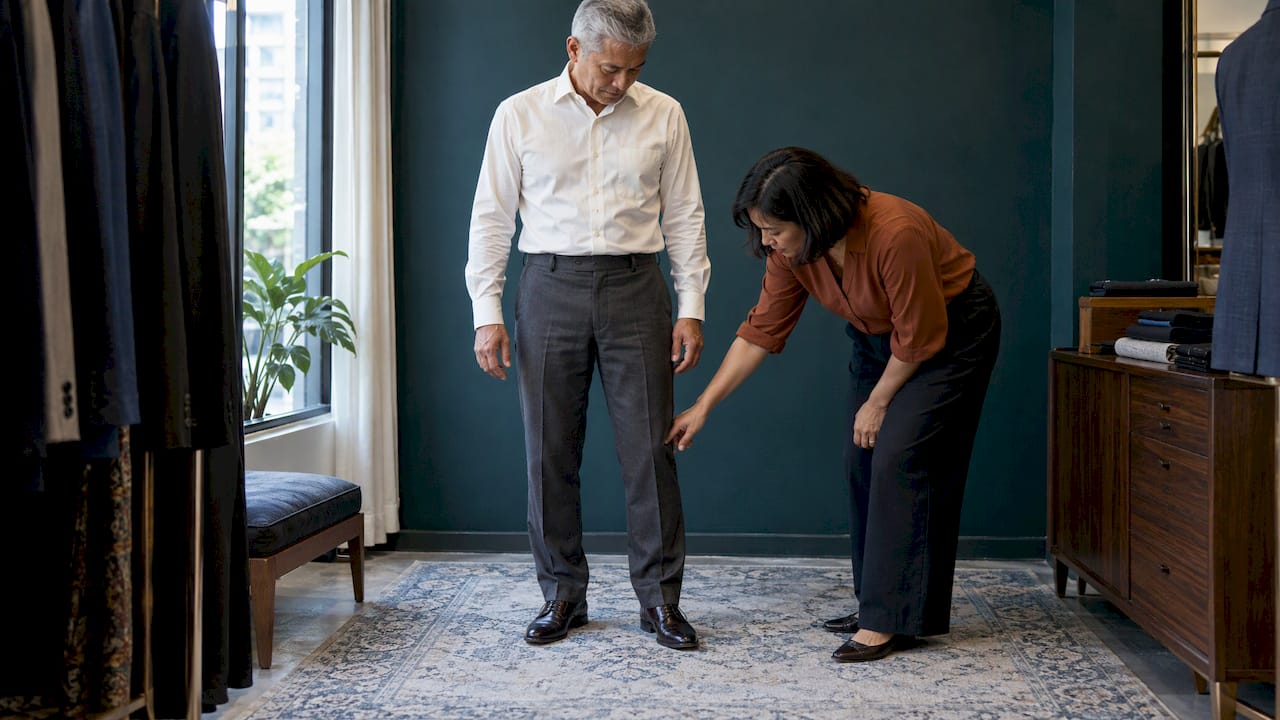
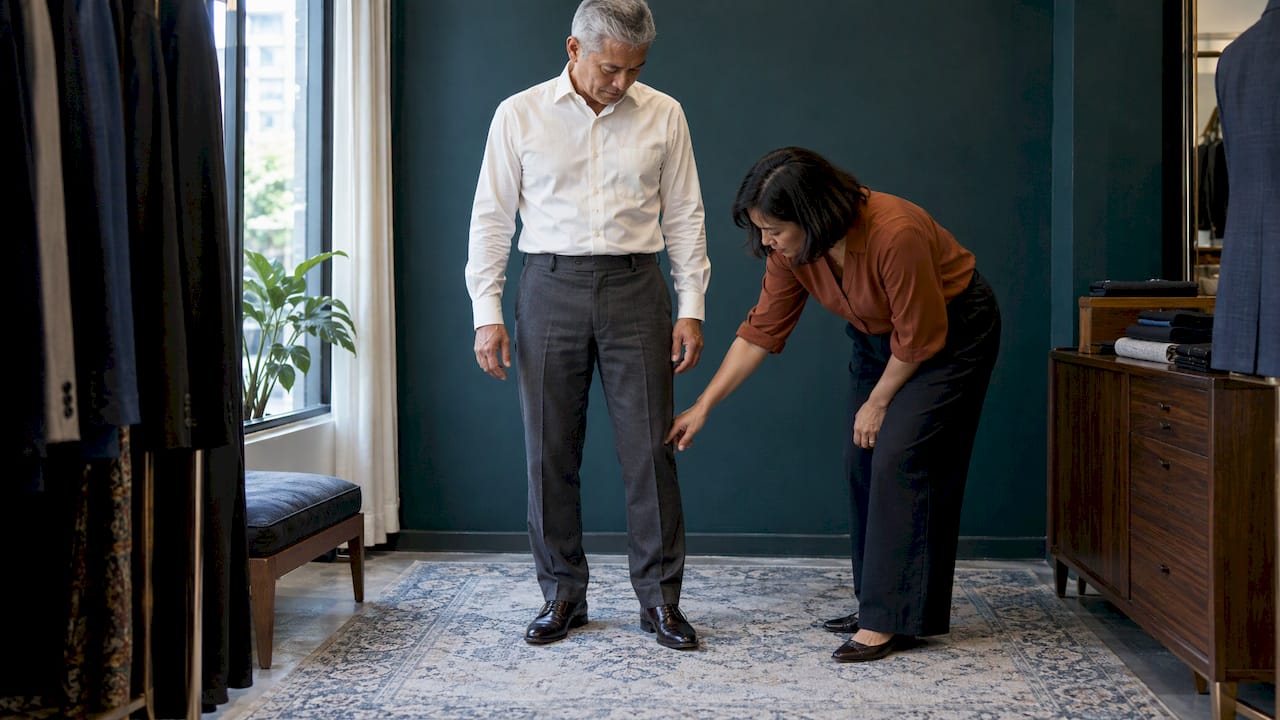
Because the foot and heel sit differently under a bowed leg, the opening should be balanced to your standing position. This is the step that ready-made trousers almost never address, and it is where a fitting earns its place. Our own guide to the four trouser breaks explains the vocabulary you will use with us.
Fabric: firm cloth keeps the line
Cloth matters more for bow legs than for most figures. Soft, fluid fabrics collapse into the curve and crease at the knee. Firm ones keep their shape.
Permanent Style’s guide to trouser cloths says good trousers need crease resistance, shape resistance and a little natural stretch, and that dense weaves such as twill, together with strong yarns such as high-twist wool, help trousers hold their form.
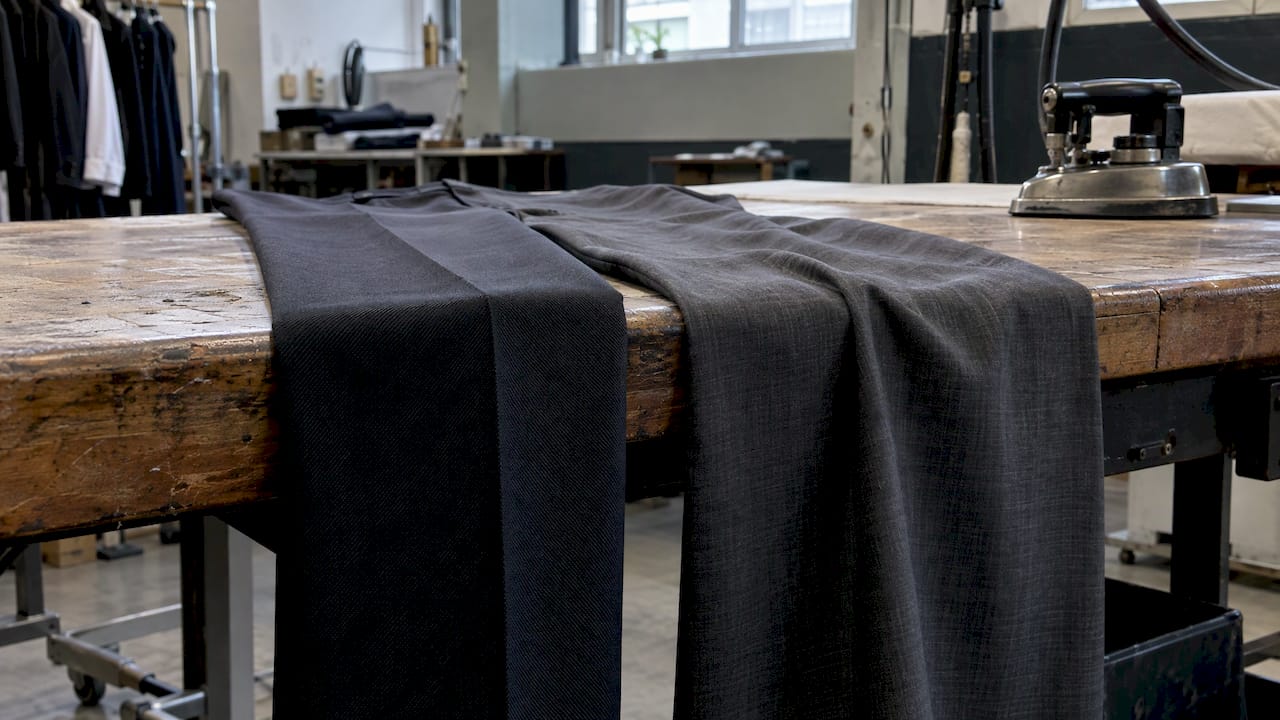
Singapore adds its own requirement: heat and humidity. A firm cloth need not be heavy. Our positioning is the use of premium fabrics suited to Singapore’s climate, so you can have the body and drape a bowed leg needs in a weight you will actually wear to the office at noon.
Some practical pairings:
| Occasion | Cloth character | Why it helps |
|---|---|---|
| Daily office wear | Worsted wool twill, mid weight | Dense weave resists creasing and holds a straight line |
| Client meetings and formal events | High-twist wool | Strong yarn recovers quickly and keeps its shape |
| Weekend smart casual | Firm cotton or wool blend | Keeps structure without the stiffness of a suit trouser |
Rise, pattern and colour
Rise
The rise is the distance from the crotch seam to the waistband. Tailoring experts stress that trousers must be right from the rise up: a correct waist, seat and thigh count for little if the rise is cut too low or too high, a point made in GQ’s tailoring feature. A well-judged rise lets the front panel fall evenly over the knee. We explain the options in our trouser rise guide, and what to test in the fitting room is useful whichever way you buy.
Pattern and colour
A plain, mid to dark cloth gives the longest uninterrupted vertical. Strong horizontal checks and bold windowpanes can draw the eye across the knee. Fine, subtle textures and small all-over patterns are gentler. A thin pinstripe can work when the trouser is cut straight, because it follows the line you want to emphasise, but a plain trouser is the safest start.
Pressed creases
A sharp crease is a straight line laid over a curved leg, and any mismatch is obvious. A softer press, or a crease set by the tailor to follow your leg, looks more natural. A Styleforum thread on tailoring for bow legs also notes that altering only the crease has a small cosmetic effect without changing the drape. The drape comes from the pattern.
Length, break and cuffs
Slight length changes can make a large difference.
A hint of a break, with the hem just touching the top of the shoe, is described by GQ’s tailoring guide as the most timeless way to cut trousers. For bow legs it has a practical benefit: a clean hem with little excess cloth prevents the trouser from bunching and swinging at the ankle. Very full breaks add folds exactly where the leg opening is already inclined to drift.
Two habits help:
- Bring your shoes to every fitting. Heel height changes where the hem should fall, and the leg opening must be judged over the shoe you will really wear.
- Fix the length while standing naturally. Bow-legged stance varies, so check the hem from the front, side and back, not only in the mirror ahead.
Cuffs add weight at the hem, which helps some trousers hang, but they also add a horizontal line. Our cuffs versus clean hems guide sets out how a 3.5 to 5 cm cuff behaves, so you can decide with your tailor. For black tie in a warm climate, a Singapore style writer notes that trousers carry a single row of braid on each outer leg and no cuffs, as Deployant’s dress code guide sets out. That vertical braid is a quiet ally for a straight line.
Why a pattern correction beats a patch
The underlying fix is a change to the pattern. As a Styleforum discussion on bow-leg trousers describes it, the correction moves the front panel so the outside seam gains length, the inside seam shortens to straighten the inner line, and circumference is added at the knee and calf. The Dreams & Designs trouser guide adds that the width moves towards the outside at the knee.
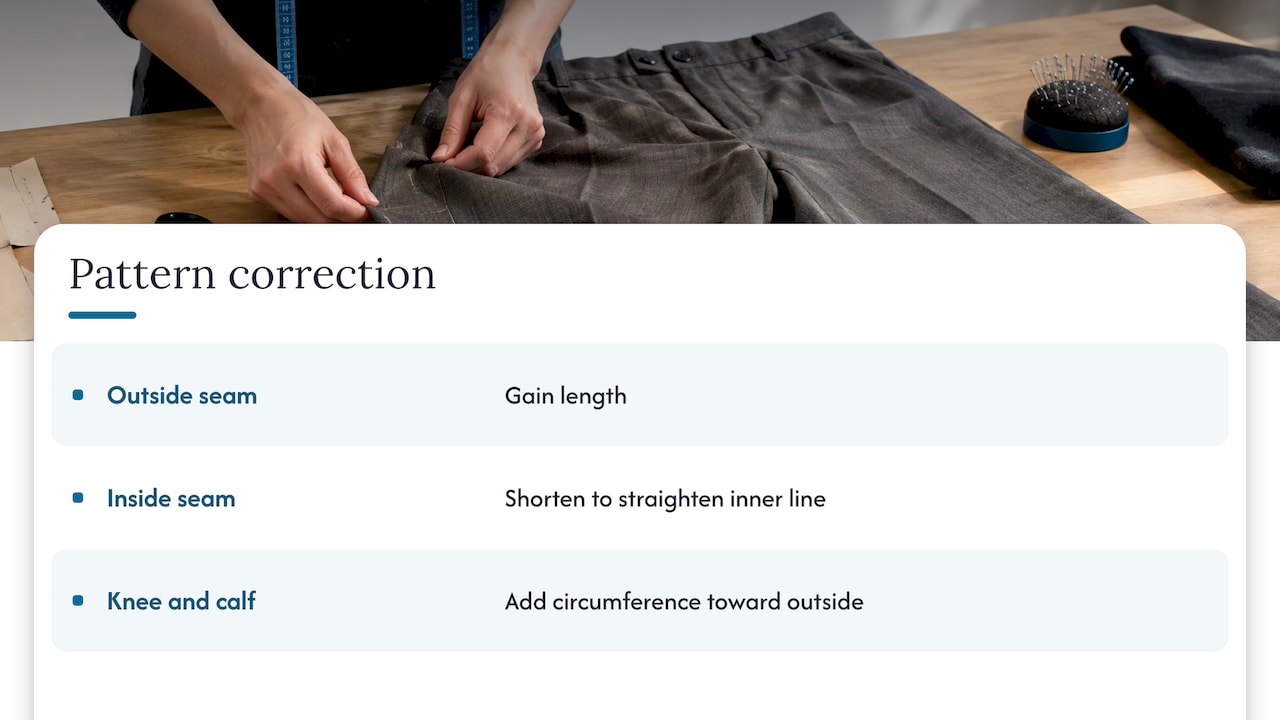
It can be applied to a finished pair, but the same Styleforum thread says altering a finished garment may get you perhaps 50 to 80 per cent of the way there, and not as far as cutting the adjustment in from the start. Ready-to-wear trousers can also be improved slightly by letting out one seam and taking in the other near the knee, but that is a modest correction to a pattern drawn for another shape.
So when the aim is trousers that hang as if the curve were not there, the advantage lies in building the correction into the first cut. That is the case for bespoke, and it is the case for coming in for a fitting rather than buying a pair and hoping.
Choosing styles that flatter before you order
If you are comparing silhouettes before you book, a guide to trouser styles that disguise bow legs can help you see how straight and relaxed cuts behave in practice. Look for gentle tapers, minimal breaks and no heavy distressing or sharp fading near the knee.
When you are ready to specify, take these into the fitting:
- A straight or gently tapered leg, narrowing only from below the knee.
- Firm cloth in a weight suited to Singapore.
- Generous thigh and knee, with a pleat if you want extra comfort.
- A slight break, and your usual shoes.
- A leg opening width you like, which can still be narrow if it is cut correctly.
If you also want a suit, the trouser should be planned with the jacket so the proportions agree. Our suit measurement guide shows nine points you can take at home before your first appointment.
Our view on bow legs and bespoke trousers
Richard Fan founded our house in 1979, and in the decades since, the lesson has remained the same: a trouser should be built around the man who wears it.
A bow leg is not a flaw to be concealed. It is a shape, and shape is what a master tailor is trained to read. When we fit trousers we work from your exact measurements and your preferences, with personalised fittings that address the particular fit challenges of the individual client.
That is why we encourage men with bow legs to come to bespoke. A pattern that is made for you can give the knee and calf the room they need and keep the line from hip to hem unbroken, and the cloth can be chosen for the way it holds that line in Singapore’s climate.
The craft is traditional, but the result should look modern: clean, balanced and comfortable from the first morning to the last meeting.
Ron
Our trousers and how to order
Our tailored trousers begin from $290, and you can see the full range in our price list: suits from $2,170, sports jackets from $1,790, tuxedos from $2,270, waistcoats from $380 and shirts from $199. Each is made with traditional tailoring techniques, to your measurements and with attention to individual fit.
If you are choosing wedding attire, a tuxedo or wedding suit can be planned with the same fit considerations for the trouser. You can read how an appointment unfolds on our bespoke tailoring process page, then book your fitting with us.
FAQ
What trousers should I wear if I am bow-legged?
Choose a straight-leg trouser in a firm cloth, with room at the thigh and knee. Wide, straight legs fall clear of the knee, whereas very slim legs follow the curve closely. A bespoke pair gives you the most control over this.
Do slim trousers work with bow legs?
They can, when the narrowing begins below the knee and the pattern allows for how you stand. A leg opening that is narrow but correctly cut looks clean. A slim trouser cut for a straight leg tends to crease at the knee and calf.
How long should trousers be for bow legs?
A slight break, with the hem just touching the top of the shoe, keeps the line tidy. Fit the length with the shoes you intend to wear, because heel height changes where the hem should fall. Our trouser break guide shows the four options.
Can a finished pair of trousers be altered for bow legs?
Some improvement is possible, such as letting out one seam and taking in the other near the knee. A correction drafted into the pattern from the start gives a more complete result, which is the reason we recommend custom-made trousers.
Sources
- Men’s figures: stomach, leg length and age, Trousers: The Complete Guide
- How To Spot An Ill-Fitting Suit, The Rake
- The Guide to Trouser Cloths, Permanent Style
- A Bespoke Tailor Explains How Trousers Should Fit, Put This On
- Tailoring 101: trousers, GQ
- Pants with bow legs, Styleforum
- Decoding the Dress Code for Gentlemen, Deployant