Blazer for Broad Shoulders: How to Choose the Right Fit
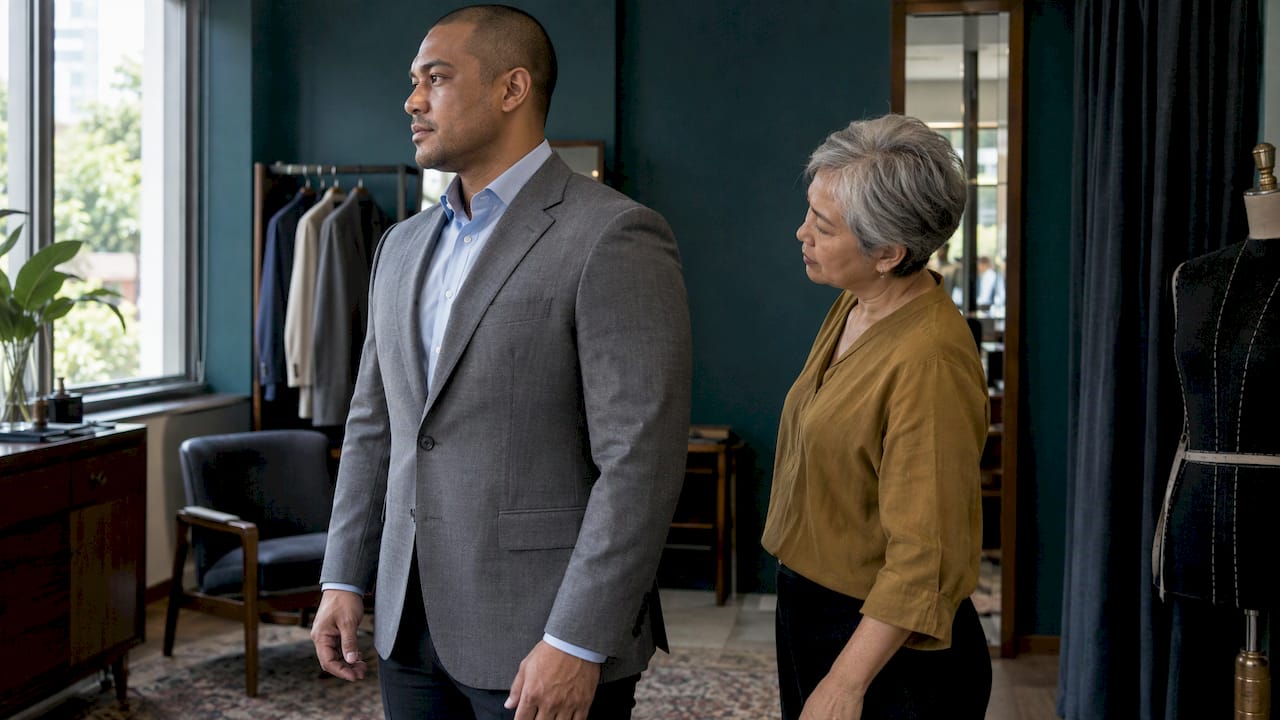
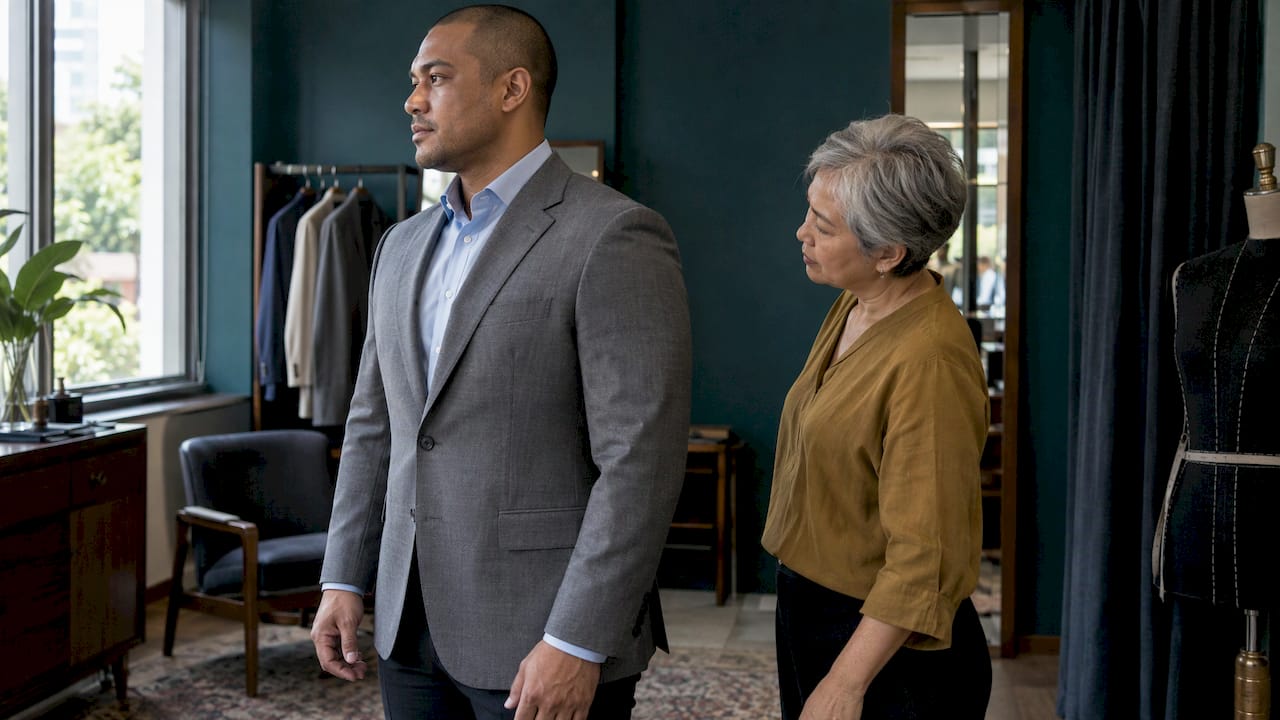
A blazer for broad shoulders begins at the shoulder seam, not at the chest or the waist. If the seam sits where your shoulder ends, the rest of the jacket can be refined around it. If it does not, nothing else will rescue the line. In our house, a broad-shouldered client is a matter of proportion, and a jacket made to your measurements, with a soft shoulder and a defined waist, lets that frame look as strong as it is.
This guide sets out what to check, which constructions flatter a broad upper body, and how to wear the result in Singapore’s heat.
TL;DR
- The shoulder seam must end at the point where your natural shoulder ends. This is the first check, and the hardest to change later.
- Choose a soft, lightly padded or natural shoulder and a single-breasted front. Heavy padding adds width you already have.
- A notch lapel, a slightly shorter length and a defined waist keep the proportions balanced.
- A pulling back, a collar gap or an X-shaped crease at the closed button means the size or cut is wrong, not that you need a bigger jacket.
- Lightweight, breathable cloth keeps a structured cut comfortable in Singapore.
Table of Contents
- Why broad shoulders change the way you buy a blazer
- Check the shoulder first
- Soft shoulders and the construction that suits you
- Lapel, buttoning and length: balancing the upper body
- A quick guide by detail
- Cloth for Singapore’s climate
- Balancing the rest of the silhouette
- How to wear it: office, wedding and weekend
- From the tailor’s bench
- Your blazer, made for your shoulders
- FAQ
- Sources
Why broad shoulders change the way you buy a blazer
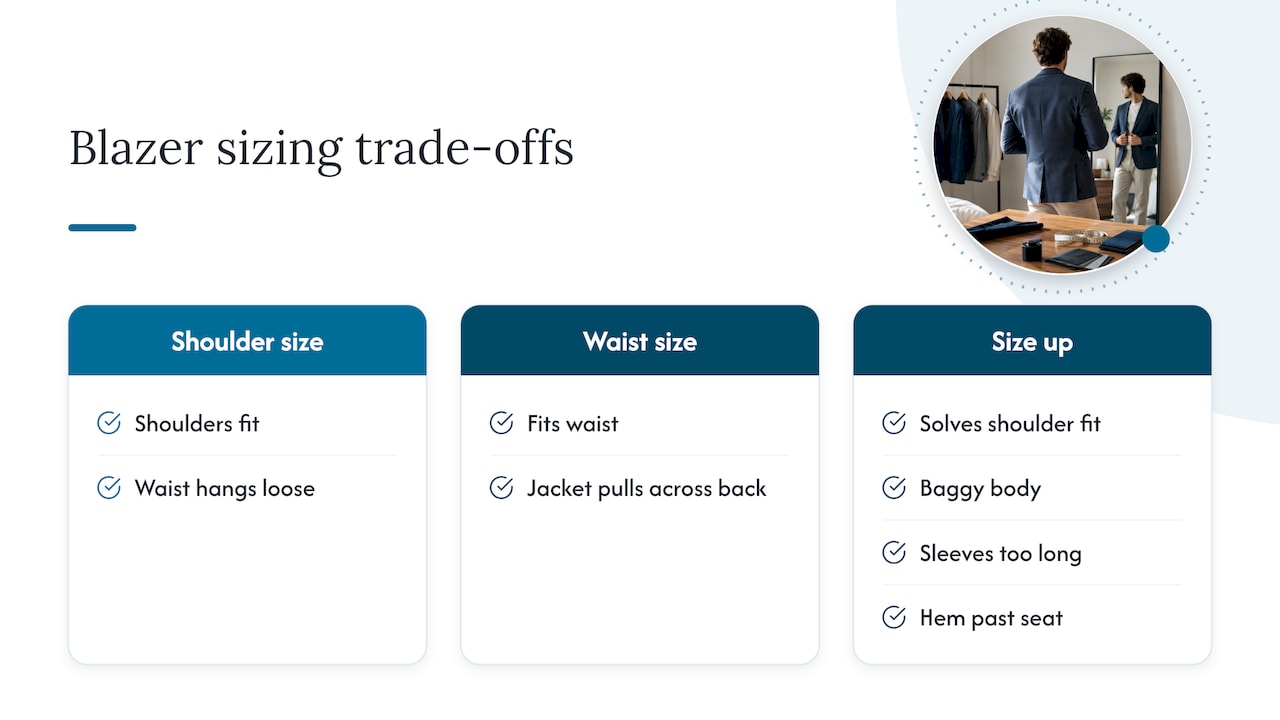
Most jackets are drafted around an assumed relationship between shoulder, chest and waist. When your shoulders and upper back are broad and your waist is comparatively narrow, the gap between those measurements is larger than the pattern expects. Choose a size to suit the shoulders and the waist hangs loose. Choose a size to suit the waist and the jacket pulls across the back.
The usual instinct is to go up a size. That solves the shoulder and creates three new problems: a baggy body, sleeves that are too long and a hem that drops past the seat. The better answer is a cut that follows your proportions. This is what bespoke tailoring does by definition, and it is why men with a strong upper body tend to find the difference more striking than anyone.
A fuller explanation of why the shoulder matters so much is on our page about shoulder fits and what to know.
Check the shoulder first
The shoulder is the part of a jacket that is hardest to change once it has been made, because it is tied to the collar, the armhole and the sleeve head. That is why every fitting should start there.
According to The Manual’s guide to how blazers should fit, the shoulders should line up with the top of your arms, with a natural shoulder preferred and only a little padding if you want a bolder line. In practice:
- Seam position. The seam should rest at the bony tip of your shoulder. If it extends beyond, you will see a divot in the sleeve head. If it falls short, the fabric pulls diagonally toward the chest.
- Back. Stand straight with your arms relaxed. There should be no horizontal wrinkling or tightness across the shoulder blades.
- Reach. Extend your arms forward as if to shake hands, then lift them. The collar should stay on your neck and the body of the jacket should not ride up sharply.
- Collar. It should lie flat against your neck without a gap, even when you move.
- Closed front. Fasten the button. A flat hand should slide between the lapel and your chest. If the fabric forms an X around the button, the chest is too tight.
A jacket that fails the reach test or the closed-front test across a broad frame is telling you the cut is wrong for your proportions. Fitting it again in a larger size rarely changes that.
Why the sleeve and length come second
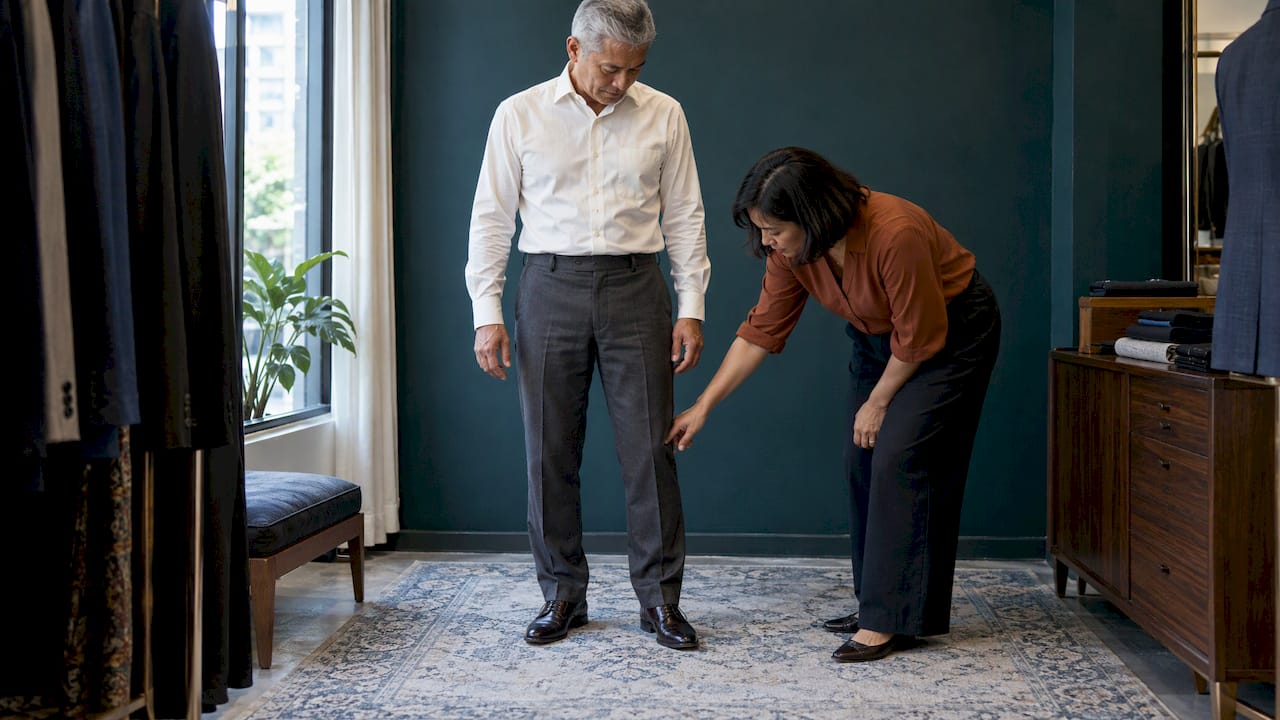
Once the shoulder is right, the sleeve should end just above the wrist bone, and the jacket should be a touch shorter than the seat, per the same guidance from The Manual. These are the adjustments a tailor can refine. CNA Lifestyle’s alteration feature reports that alteration specialists in Singapore can adjust a blazer’s length and width, but cannot resize the garment itself, and that shortening a sleeve properly is done from the shoulder so the buttons stay in position. The lesson is to get the shoulder and chest right in the making, and leave the fine-tuning to sleeve and hem.
Soft shoulders and the construction that suits you
Shoulder construction is the single biggest style decision for a broad frame. There are three broad approaches.
- Natural or unstructured shoulder. Little or no padding, so the jacket follows the line of your own shoulder. It reads relaxed and elegant, and it adds no extra width.
- Lightly padded shoulder. A modest amount of structure that gives a clean, tidy line without exaggerating it. This suits executives who need a more formal silhouette.
- Strongly padded shoulder. A sharp, architectural line. On a frame that is already broad, it tends to push the shoulder outward and make the upper body look boxy.
For most broad-shouldered men, the first two are the choice. Because a soft shoulder lets the cloth fall naturally from your frame, it also feels lighter and moves with you. In Singapore, where a jacket may be worn between air-conditioned offices and the humid street, that comfort is considerable.
Our sports jackets and suits are made to your measurements and preferences, so the shoulder can be as soft or as structured as you wish. Sports jackets begin from S$1,790 and suits from S$2,170, as published on our pricing page in 2026.
Lapel, buttoning and length: balancing the upper body
Once the shoulder is settled, three details decide how balanced the whole jacket looks.
Lapel
A notch lapel has a horizontal line where the collar meets the lapel. That line gives the eye a place to rest and keeps attention from travelling out toward the shoulder. A wide peak lapel points upward and outward, so on a broad frame it can emphasise the width. A peak can still work when the waist is strongly shaped and the lapel is kept in proportion, and it has its own place in a considered wardrobe.
We discuss the choice in detail in our guides to notch versus peak lapel and to choosing your lapel style. As a rule for broad shoulders, begin with a notch of moderate width, one that does not extend toward the edge of the shoulder.
Single or double breasted
A single-breasted jacket with a two-button stance creates a vertical line down the front, which draws the eye down and narrows the impression of the torso. A double-breasted jacket adds layers of cloth across the chest. It can be handsome on a broad man when it is cut with care, with the buttons placed for your proportions and the waist suppressed, and our double-breasted suits and jackets are made in just that way. If you are choosing your first jacket, single-breasted is the easier path.
Length
A jacket that is slightly shorter keeps a broad upper body in proportion with the legs, while a long jacket adds weight to the torso. Aim for a hem that covers the seat without hanging well beyond it. The Manual describes the same benchmark: a length a little shorter than the seat.
Waist
Broad shoulders and a narrower waist call for suppression through the middle. A gentle taper from chest to waist makes the shoulders look like part of a deliberate V rather than a wide block. This is where the waist adjustment is the easiest and most rewarding refinement on any jacket.
A quick guide by detail
| Detail | Works well | Use with care |
|---|---|---|
| Shoulder | Natural or lightly padded | Heavy padding |
| Front | Single-breasted, two buttons | Low-set double-breasted buttoning |
| Lapel | Notch of moderate width | Very wide peak without a shaped waist |
| Length | Covers the seat, slightly shorter | Long, boxy hems |
| Waist | Shaped, tapering from the chest | Straight, unshaped body |
| Cloth | Lightweight, breathable, with some give | Stiff, heavy weaves |
Cloth for Singapore’s climate
A structured jacket across broad shoulders carries more fabric around the upper back and chest, so the choice of cloth matters. Heavy, stiff cloth makes that area feel restrictive and warm. Lightweight wool, wool blends with a little stretch, and breathable cotton or linen blends move better and breathe in the heat.
We select premium fabrics suited to Singapore’s climate, and we advise on the weight and weave that will serve your daily routine, whether that means a boardroom, a wedding or a long evening. A jacket that fits well but feels hot will not be worn, so cloth deserves the same care as cut.
Balancing the rest of the silhouette
If you want to think about proportion more broadly, particularly how an inverted-triangle frame (shoulders noticeably wider than hips) is balanced across the whole outfit, this guide to dressing an inverted triangle frame is a helpful companion.
Within the jacket itself, a few principles hold:
- Keep the trousers straight or gently tapered, with a little fullness at the thigh so the lower half carries equal visual weight. Our tailored trousers start from S$290.
- Wear a shirt that fits cleanly at the collar and chest. Broad men often find that a collar gap or strain at the chest buttons spoils an otherwise good jacket. Our tailor-made shirts begin from S$199.
- Prefer simple structure at the pockets. Flap pockets with heavy detailing, or patch pockets set high, add emphasis at the chest. Straight, modest pockets keep the line quiet.
How to wear it: office, wedding and weekend
A well-cut navy blazer is the most versatile starting point. CNA Lifestyle calls it the hardest-working piece in a Singapore man’s wardrobe, and notes that it should fit properly from shoulder to sleeve length, lapel size and button placement. It also suggests pairings such as a navy shirt with indigo trousers, or a checked shirt with chinos.
For a broad frame, these combinations are sound:
- Business. A single-breasted navy or charcoal jacket with a soft shoulder, a notch lapel and matching trousers. Keep the shirt plain and the tie narrow enough not to compete with the lapel. Our business suits are made for this daily use.
- Weddings. Grooms with broad shoulders benefit from a clean, uncluttered line. A waistcoat, from S$380, creates a vertical focus through the centre and reinforces the taper. For black-tie occasions, tuxedos begin from S$2,270; see our tuxedo page.
- Smart casual. An unstructured sports jacket in cotton or linen blend, worn with a fitted shirt and chinos. Safari jackets and chore coats, each from S$790, offer a relaxed alternative that still follows your shoulder.
From the tailor’s bench
Richard Fan founded our house in 1979, and in the years since, the most common lesson we have repeated to clients is this: begin with the shoulder.
A broad-shouldered man is not a difficult fit. He is a man whose proportions deserve a jacket drafted for them. When the shoulder is cut to your own line, with a soft finish and a shaped waist, the jacket does not fight your frame. It frames you.
This is why we pair traditional tailoring techniques with personalised fittings. Each garment is made to your exact measurements and preferences, and that includes the details discussed here: the shoulder, the lapel width, the length and the cloth for our climate.
Come in wearing the shirt you wear most often. We will take it from there.
Ron
Your blazer, made for your shoulders
At Ron & Rich we make custom-tailored suits, sports jackets, tuxedos, trousers, shirts and more, built on traditional techniques with a modern, sophisticated eye. For a broad-shouldered man, that means a jacket measured to your frame, rather than a size chosen to approximate it. Browse our suits and jackets or see the full range and published starting prices on our pricing page.
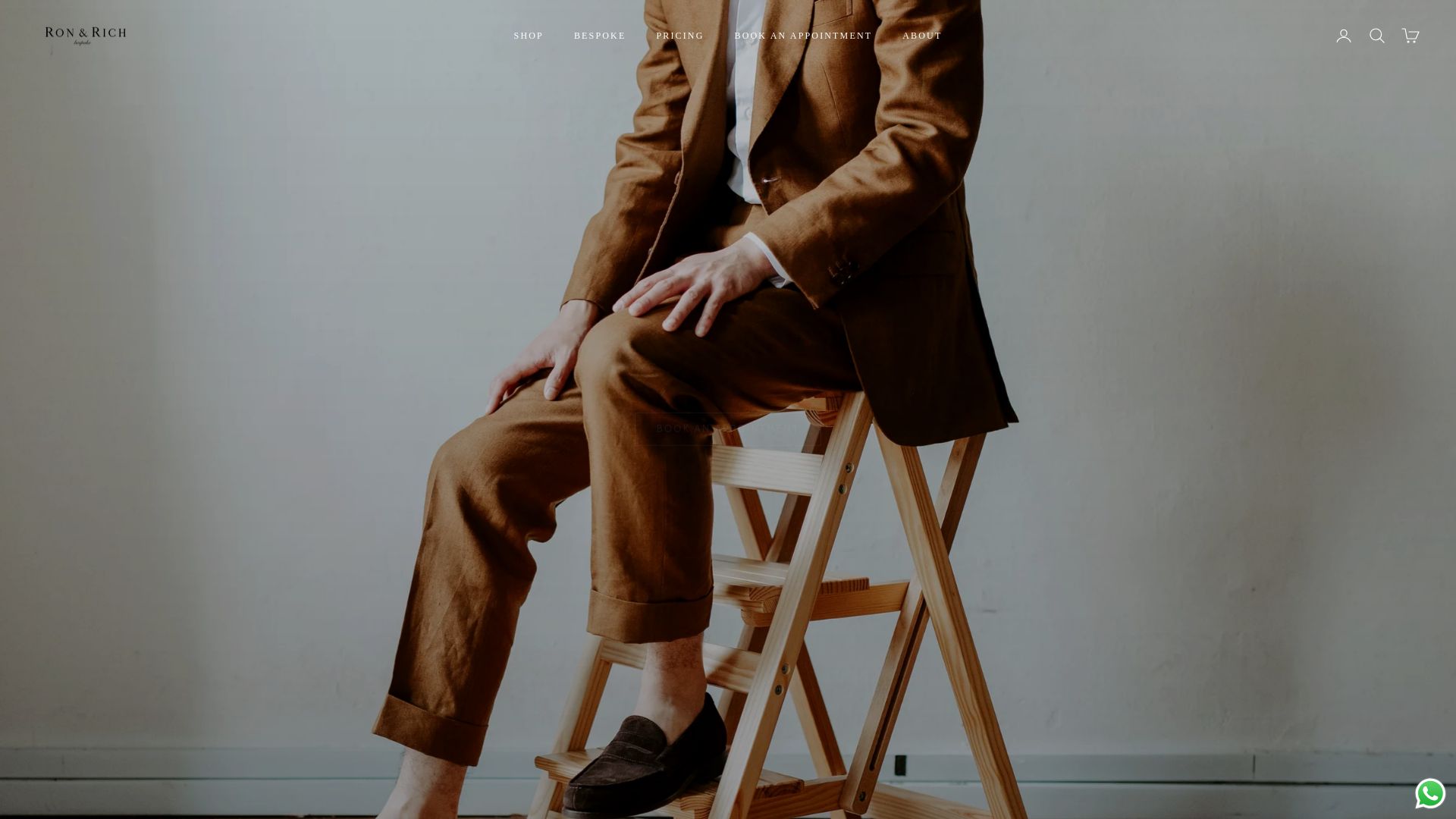
Book a consultation and fitting to discuss shoulder line, lapel, length and cloth in person.
FAQ
How should a blazer fit across broad shoulders?
The shoulder seam should end where your natural shoulder ends, with no divot at the sleeve head and no diagonal pull toward the chest. The back should be smooth when you stand straight, and the jacket should close without an X-shaped crease at the button.
Which blazer style is best for broad shoulders?
A single-breasted jacket with a soft or lightly padded shoulder, a moderate notch lapel and a shaped waist is the dependable choice. Keep the hem close to the seat and select cloth that is light and breathable for Singapore’s heat.
Should I buy a larger size if a blazer feels tight across the back?
A larger size usually brings baggy sleeves and a loose body. A jacket cut to your proportions is the better answer, because it fits the shoulder and the waist together. This is the strength of a made-to-measure approach.
Are peak lapels a bad idea for broad shoulders?
Not necessarily. A wide peak lapel can draw the eye outward, so a notch lapel is the safer starting point. If you favour a peak, keep it proportionate and pair it with a clearly shaped waist. Our guide to notch versus peak lapels explains how to choose.
Sources
- How blazers should fit, The Manual
- Why a navy blazer is your best investment, CNA Lifestyle
- Clothes alteration: how to get your clothes to fit better, CNA Lifestyle