Dress Shirts for Muscular Men: Fit, Fabric and Tailoring
A muscular build rarely fits a shirt cut for an average one. Shirts made for the general market are drawn around a straight torso, so the chest, shoulders and biceps strain while the waist hangs loose. The reliable answer is a shirt made around your own measurements. At Ron & Rich, our tailored shirts start from $199, and each is cut to the proportions of the man who will wear it.
This guide explains what goes wrong, how to judge a shirt on your body, which fabrics suit Singapore’s climate, and when alteration is enough.
TL;DR
- Buy for the least adjustable measurements first: collar, shoulders, chest, upper back and arms. Waist excess can be taken in; missing chest and shoulder fabric cannot be added.
- A good fit shows no “X” of strain at the chest buttons, a shoulder seam at the edge of the shoulder bone, and only slight blousing at the waist when tucked.
- In Singapore’s heat, choose breathable weaves and a cut that gives the chest room without excess fabric elsewhere.
- If sizing up fixes the chest but ruins the waist or sleeve length, the problem is proportion, not size. That is the point where a tailored shirt makes sense.
Table of Contents
- Why standard shirts fail a muscular build
- How a shirt should fit, area by area
- The five measurements that matter
- Choosing fabric for Singapore’s climate
- Ready-to-wear, altered or tailored
- Tucked in or worn out: a final test
- Your shirt, made to your measurements
- FAQ
- Sources
Why standard shirts fail a muscular build
A standard shirt is graded in steps: as the chest grows, the waist grows with it. A man with a broad chest, wide back and developed arms, but a comparatively narrow waist, sits outside that pattern. The difference between chest and waist is called the drop, and it is the measurement most off-the-rack shirts do not allow for.
The result is familiar. A shirt that closes over the chest billows at the waist. A shirt that fits the waist pulls across the chest. Singapore guidance on dress shirt fit makes the same observation: a broad chest with a narrow waist can make a slim shirt fit the waist but strain at the chest buttons, so a tailored fit, or a larger size taken in at the waist, usually works better.
Sizing up is the instinctive remedy, and it brings its own faults. The shoulder seams drift past the edge of the shoulder, the sleeves lengthen, and the body of the shirt grows even fuller around the middle. When one size up cures the chest but spoils everything else, the garment is telling you its proportions are wrong for you.
How a shirt should fit, area by area
Work from the top down. The upper body is the hardest part to correct afterwards, so it deserves the strictest test.
Collar and neck
A developed upper back and trapezius often mean a thicker neck. Fasten the top button, as you would for a tie, and you should be able to slip one or two fingers inside. Any tighter and the collar will choke you by midday; any looser and it will gape and fall away from the tie. If a collar gap troubles you, our notes on fixing a collar gap explain the causes.
Shoulders
The seam should rest at the edge of the shoulder bone. If it sits up on the slope toward the neck, the shirt is too small across the shoulders. If it slides down the upper arm, the shirt is too large. Shoulder problems are among the most difficult to repair, which is why they are checked before anything else.
Chest and upper back
Button the shirt and stand naturally. There should be no “X” of creases radiating from the buttons, and you should be able to pinch a little spare fabric. Then cross your arms and reach forward: persistent tension across the shoulder blades means the back is cut too narrow. Buttons that gape when you are standing relaxed point to the same fault.
Our own advice on gaping shirt buttons separates quick office fixes from a lasting solution.
Sleeves and cuffs
Bend your elbow. The sleeve should move with the bicep, without binding or dragging the cuff up your forearm. With the arm relaxed, the cuff should reach the base of the thumb, near the wrist bone. A sleeve that is wide enough for the bicep but loose at the wrist is not a fault; a sleeve that is tight at the bicep always is.
Waist and length
Tuck the shirt in and sit down. A little blousing is natural. Large folds of fabric above the belt, or a side pinch of more than a couple of inches, show that the waist is too generous. This is the one area where alteration works well, and where a tailored cut gives you the cleanest line.
The five measurements that matter
If you are buying, ordering or having a shirt altered, measure these five points and keep them to hand. A fit guide for athletic builds lists them as the ones that count:
| Measurement | Where to take it | Why it matters |
|---|---|---|
| Chest | Fullest part, arms relaxed | Decides whether buttons pull |
| Shoulder width | Seam to seam across the back | Sets where the sleeve hangs |
| Bicep | At its widest point | Determines sleeve comfort |
| Waist | Natural waistline | Shows how much fabric to remove |
| Chest-to-waist drop | Chest minus waist | Tells you whether a standard cut can work |
The same guide gives the governing rule: buy to the largest measurement that cannot be altered, which for a shirt means chest and shoulder, and tailor everything smaller from there. It is sound logic. Fabric can be removed from a waist; it cannot be invented for a chest.
Never rely on the letter on the label. A “large” from one maker and a “large” from another can differ by several centimetres in the chest, and neither accounts for your drop.
Choosing fabric for Singapore’s climate
Fit is only half of comfort. A shirt that clings to a warm, damp body is no more pleasant than one that pulls.
In Singapore’s heat, a slim fit looks crisp in an air-conditioned office but can feel stifling on the walk from the MRT. A muscular man carries more mass to cool, so breathability matters even more. A few weaves are worth knowing:
- Poplin: smooth and light, the dependable weave for the office.
- Oxford: thicker and more casual, hard-wearing for weekends.
- Twill: resists creasing but is warmer.
- Linen and linen blends: very breathable, though they crease quickly.
- Non-iron finishes: save time, but are less breathable.
Untreated cotton can shrink in the first few washes, so wash gently and hang dry.
Some men also like a little give in the cloth for movement through the chest and arms. A four-way stretch dress shirt is one ready-made route to that. Where we cut a shirt for you, we pair a precise pattern with premium fabrics suited to Singapore’s climate, so comfort comes from the cut as well as the cloth.
Ready-to-wear, altered or tailored
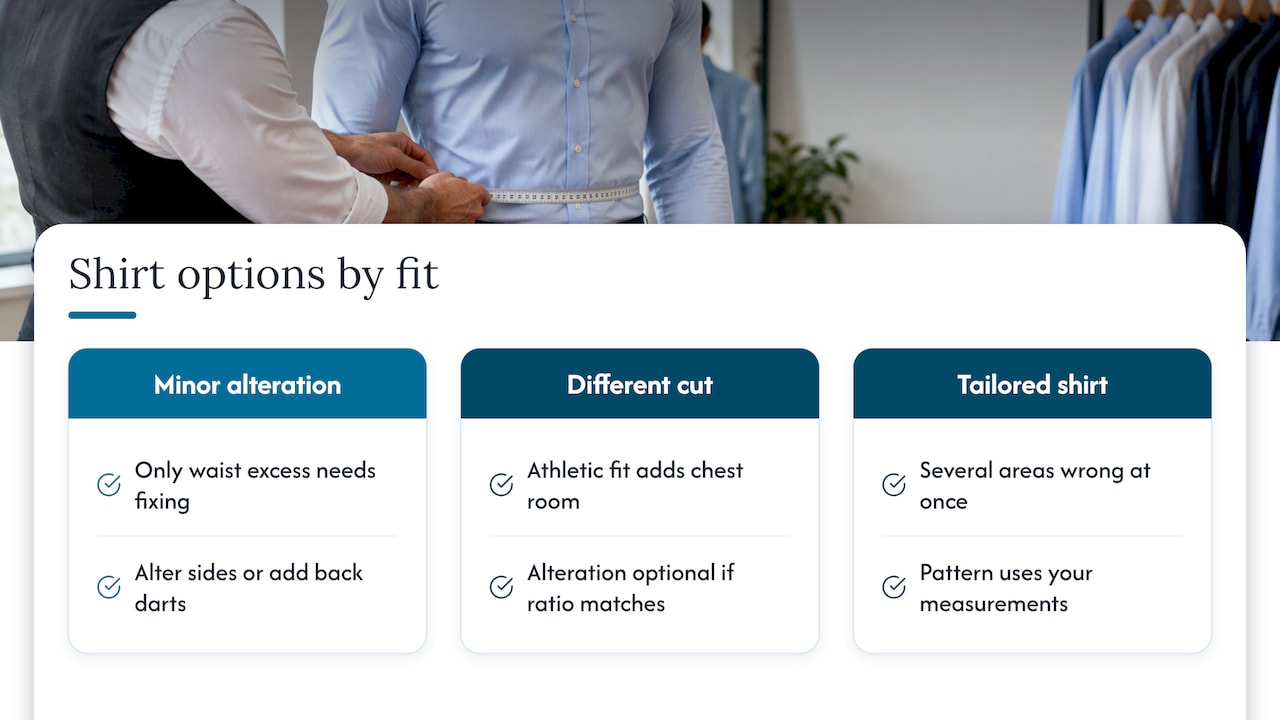
There are three honest routes, and which one suits you depends on how many areas of the shirt already fit.
Ready-to-wear with minor alteration. If the collar, shoulders, chest, upper back and arms all pass, and the only fault is excess at the waist, a local alterations tailor can usually take in the sides or add back darts at modest cost. Darts are small tucks sewn into the back that let the shirt follow the taper of your waist. Our guide to fixing a billowing waist explains which fixes hold and when to tailor.
A different cut. Athletic or muscle-fit lines add room in the chest and shoulders. If a line already matches your chest-to-waist ratio, alteration is optional polish.
A tailored shirt. When several areas are wrong at once, patching one fault tends to expose the next. This is the situation a tailored shirt resolves. The pattern begins from your own measurements, so the shoulder, chest, bicep and waist are each decided deliberately, not inherited from an average body.
A useful test is to treat one size change as an experiment. If moving up a size repairs the upper body but breaks the waist, sleeve length or body length, stop moving through sizes. The proportions are mismatched, and no size will correct that.
For a closer look at the three checks worth making, see our note on shirt fit problems and tailor checks.
Tucked in or worn out: a final test
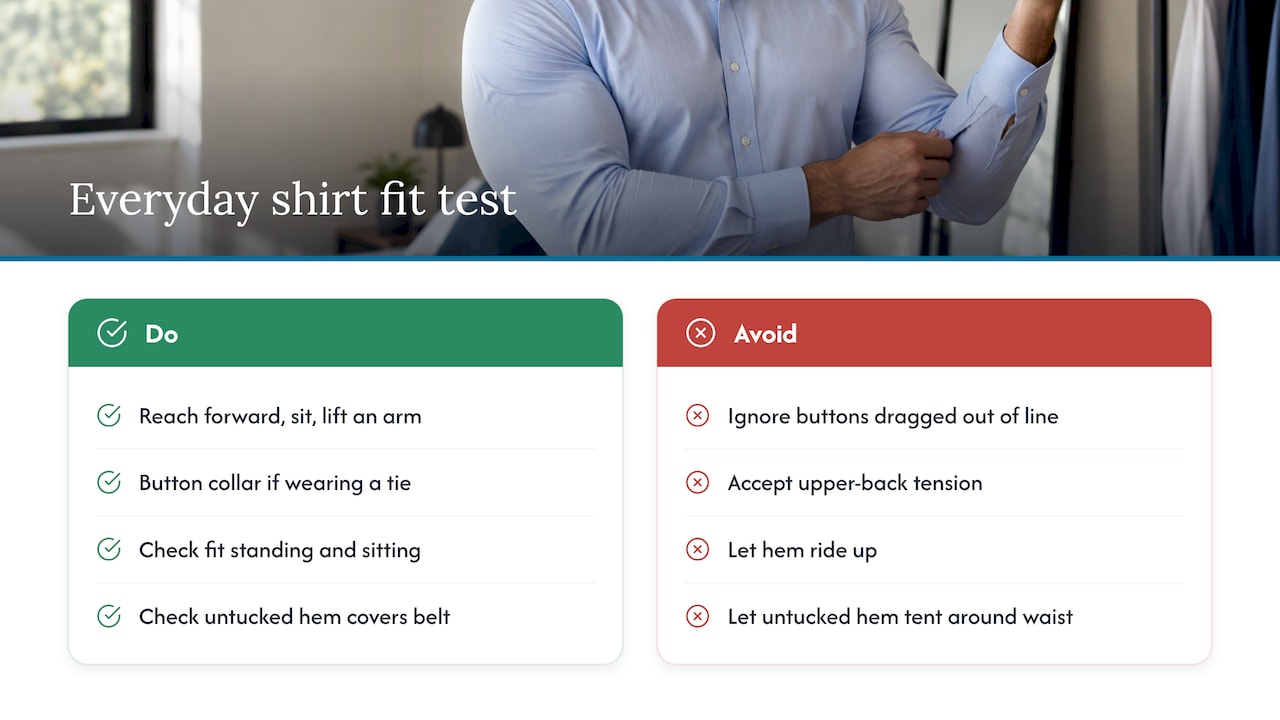
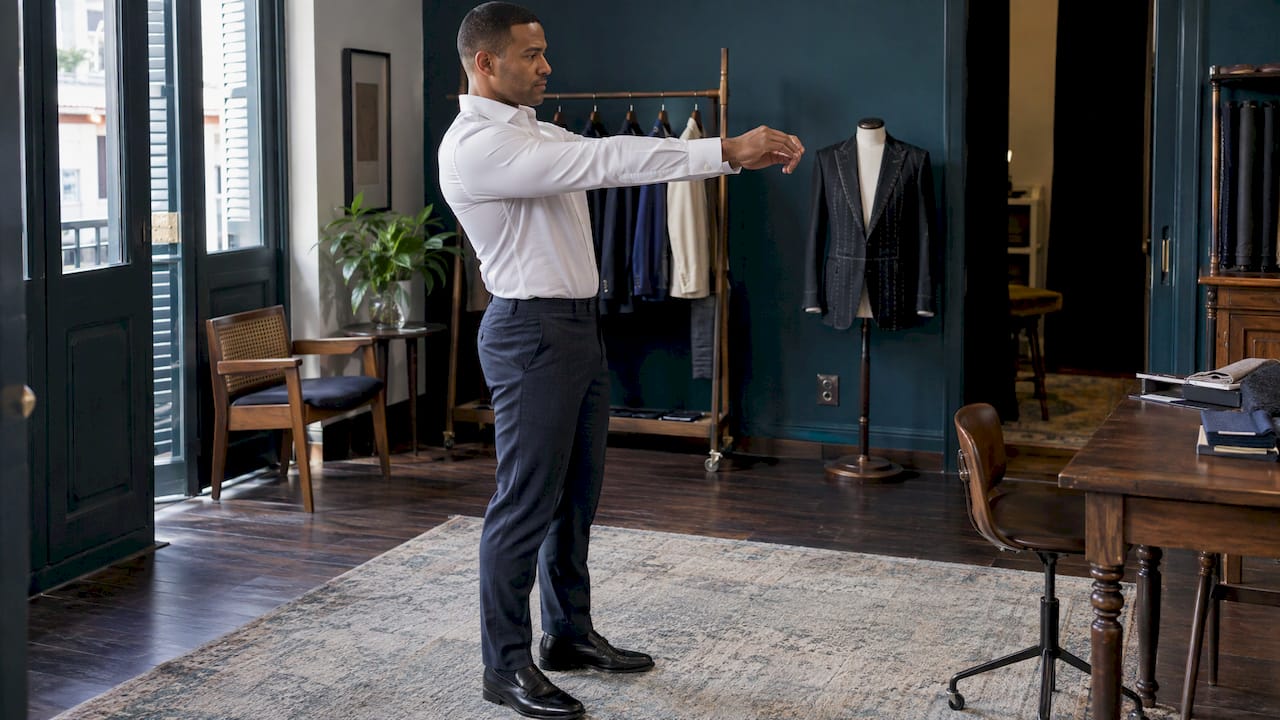
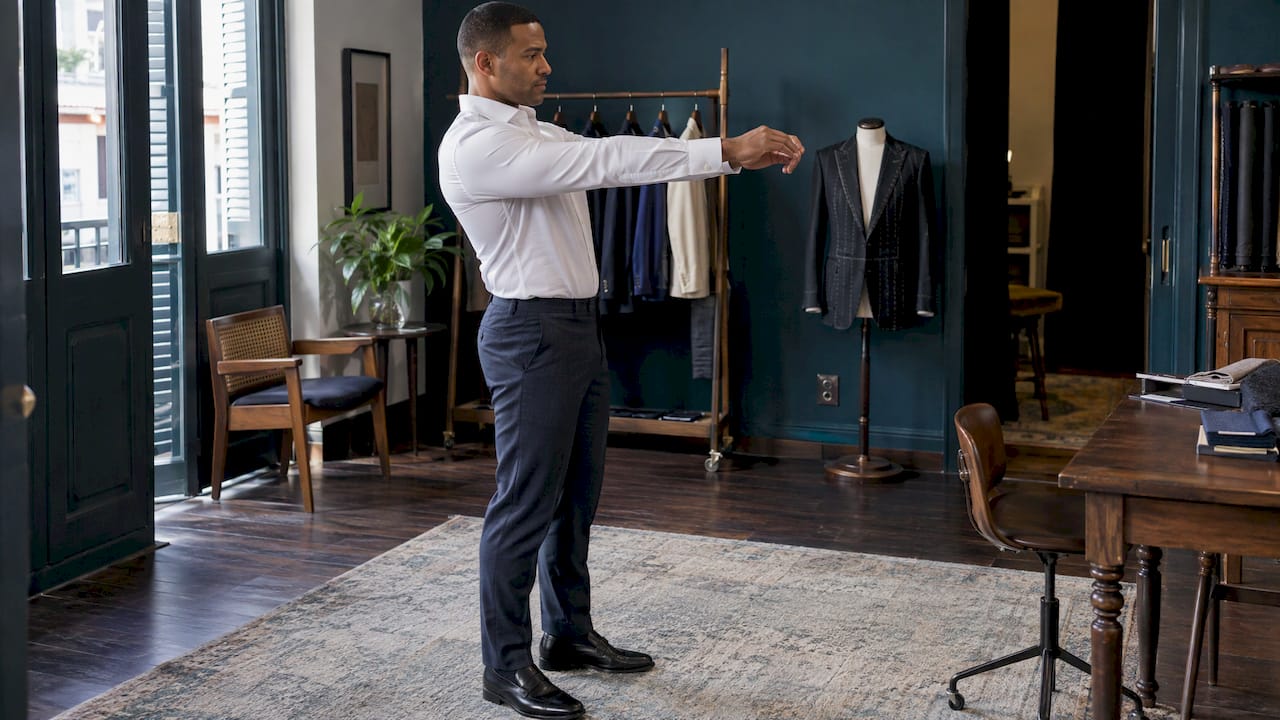
Before committing to a shirt, put it through the movements of an ordinary day. Reach forward as if to a keyboard, sit down, lift an arm to a shelf. Watch for buttons dragged out of line, tension across the upper back, or a hem that rides up and leaves you pulling it down.
Test the collar the way you will wear it: buttoned, if a tie is part of the day. Then look at the resting shape. Standing and sitting, the collar, waist, sleeves and hem should all fall where they should. If the shirt will be worn untucked, check that the hem is long enough to cover the belt without becoming a tent around the waist.
Our view from the cutting table
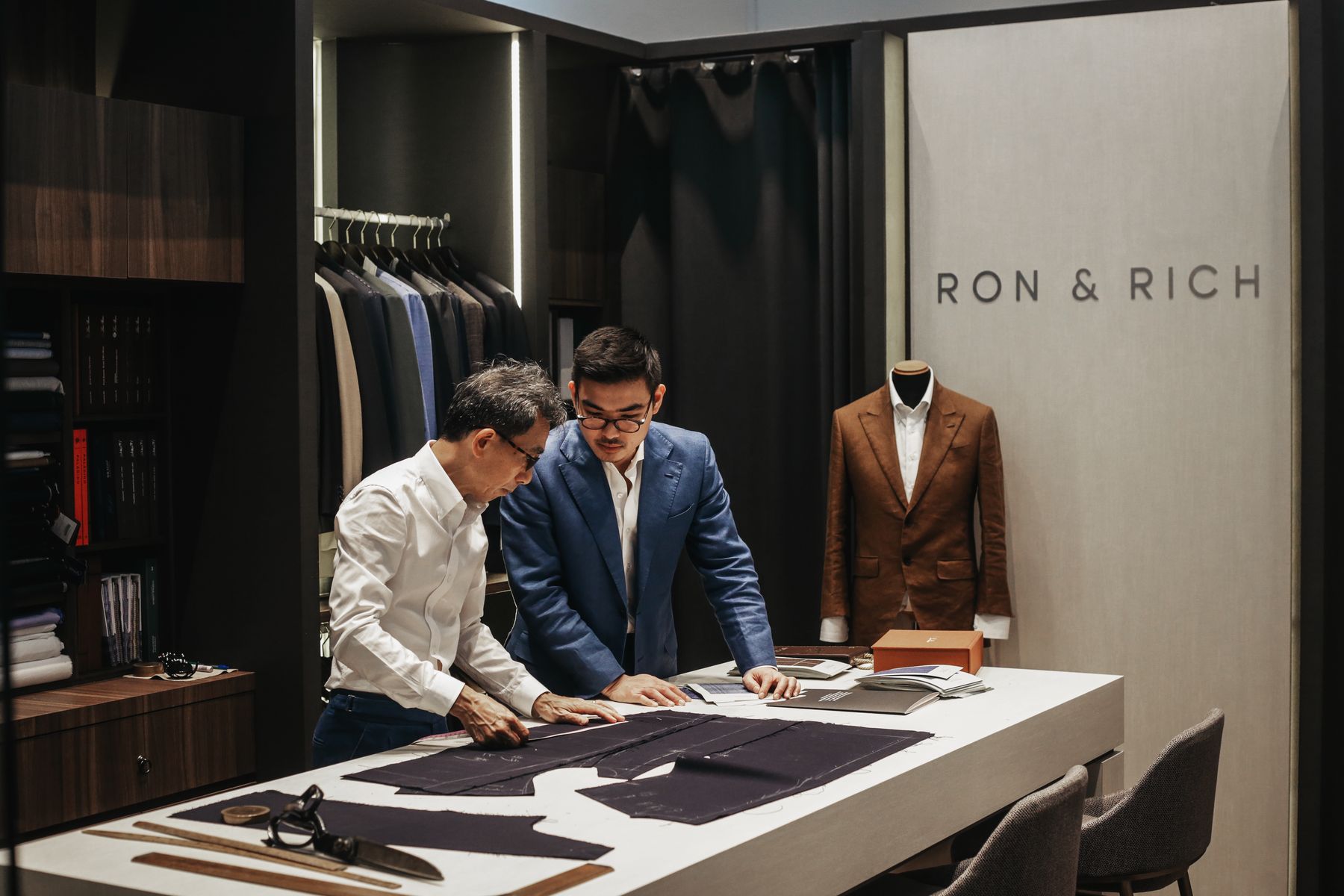
Our house was founded in 1979 by master tailor Richard Fan, and the principle he built it on has not changed: a garment should be made for the man, not the man adjusted for the garment.
A muscular build is not a flaw to be disguised. It is a set of proportions, broad shoulders, a full chest, strong arms and a narrower waist, that a well-made shirt should follow. When we take measurements, we are recording those proportions so that the pattern respects them.
We believe this is why a tailored shirt serves the muscular man better than the endless cycle of sizing up and taking in. Personalised fittings address the individual fit challenges that a size chart cannot, and our approach joins traditional craftsmanship with a modern, sophisticated line.
Ron
Your shirt, made to your measurements
Our shirts are tailored to your exact measurements and preferences through an in-person consultation and fitting. You can see our tailor-made shirts and browse the full shirting collection. Shirts start from $199, and the complete range, from trousers at $290 to suits from $2,170, is on our pricing page.
If you are also considering a suit, our guide to athletic fit suits for muscular men applies the same thinking to the jacket and trousers, so the shirt and suit work as one.
FAQ
What is the best dress shirt cut for a muscular man?
The best cut is one that gives room across the chest, shoulders and biceps while tapering to the waist. Standard and slim cuts often pull at the chest or billow at the waist. A tailored shirt follows your own chest-to-waist drop, so neither fault arises.
Should I buy a bigger size and have it taken in?
Only if the collar, shoulders, chest, upper back and arms already fit well. Waist excess can be removed with side seams or back darts, but shoulder and collar faults are much harder to fix. If a larger size spoils the sleeves or shoulders, a tailored cut is the better route.
Which fabric is best for muscular men in Singapore?
Choose breathable weaves such as poplin for the office, with oxford for casual wear. Linen breathes well but creases quickly, while twill resists creases but is warmer. Because the climate is hot and humid, the cut should also avoid excess fabric that traps heat.
How do I know a shirt fits across the chest?
Button it and stand naturally. There should be no “X” of strain at the buttons and a little pinchable ease. Cross your arms and reach forward: if you feel persistent pulling across the upper back, the shirt is too narrow for you.
How much does a tailored shirt cost at Ron & Rich?
Our shirts start from $199. The full price list, including trousers, waistcoats and jackets, is published on our pricing page.
Sources
- Dress shirt fit guide: slim vs regular, collars and cuffs (Singapore)
- Clothing fit guide for athletic build: fitting a muscular physique